 Skip to content
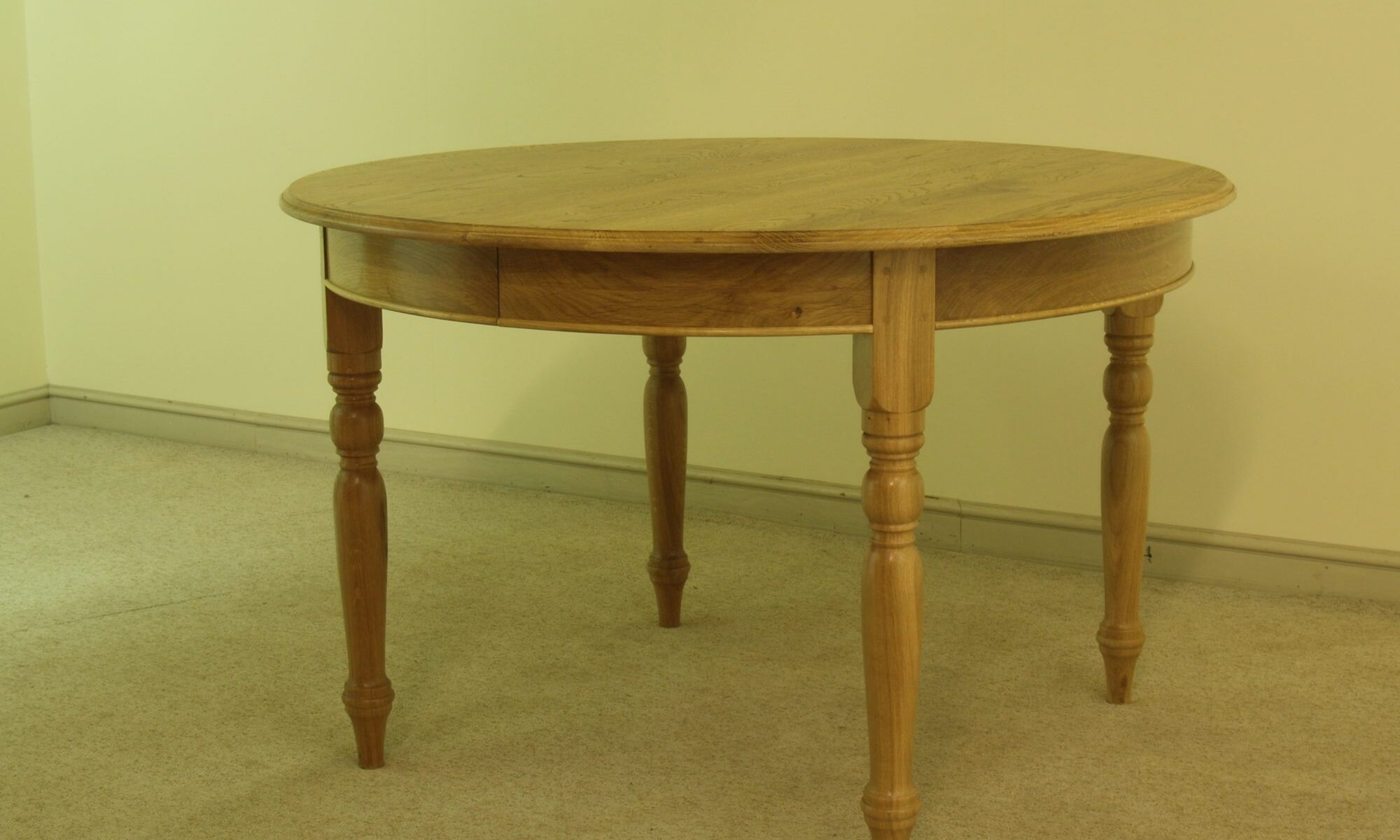
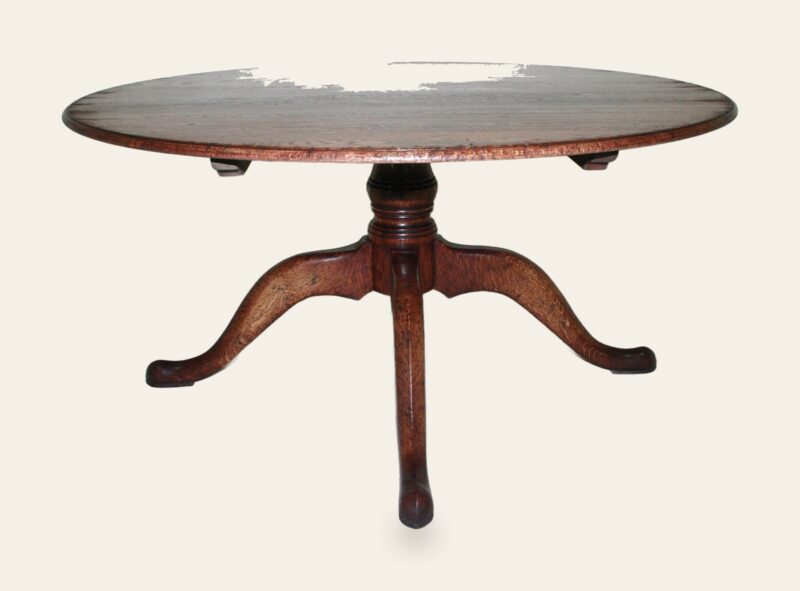
A pedestal table carries its top on a central column and a splayed foot rather than on legs at the corners. The point is legroom: nobody sits astride a leg, chairs pull in square, and an extra person can always be fitted at a corner. An extending table does the other useful thing — it changes size. Between them these two ideas cover most formal dining, and both are made to order in solid oak, cherry, mahogany or walnut.
The forms we make
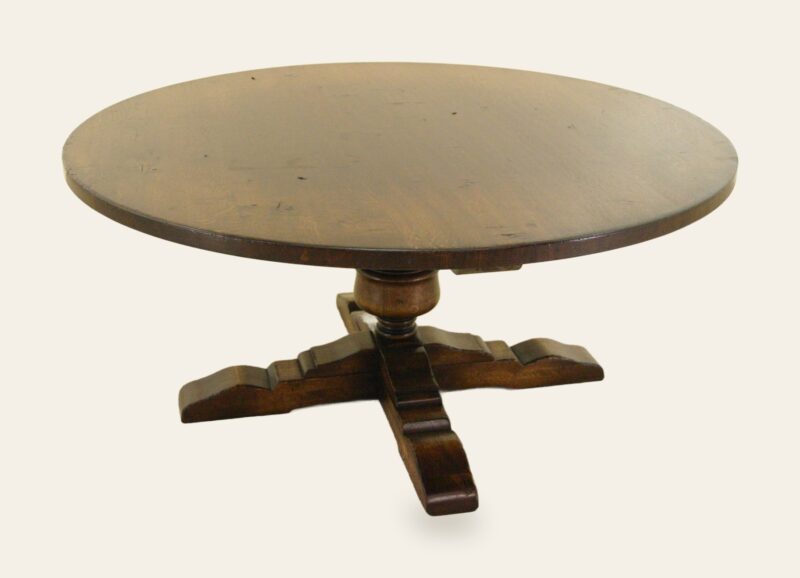
Single pedestal. One column, one splayed foot, one top. The best answer for a round or oval table seating four to six, and the form that takes carving best.
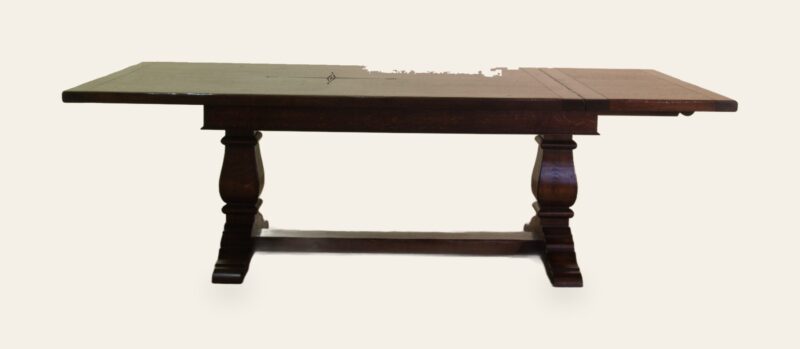
Double pedestal. Two columns under a longer rectangular or oval top: a table for eight or ten with no corner legs at all. The pedestals sit inboard of the ends, so a carver at each end pulls straight in.
Four-column round extending pedestal. A round top on a cluster of four columns rising from one splayed base, with an extending action that opens to take leaves. The most substantial of the round forms and the steadiest when extended.
Round square-cut pedestal. The column cut square rather than turned, for flat faces and a more architectural line.
Bandsaw twin pedestal. Broad shaped standards cut from the solid instead of turned columns, in the same family as the bandsaw-base refectory.
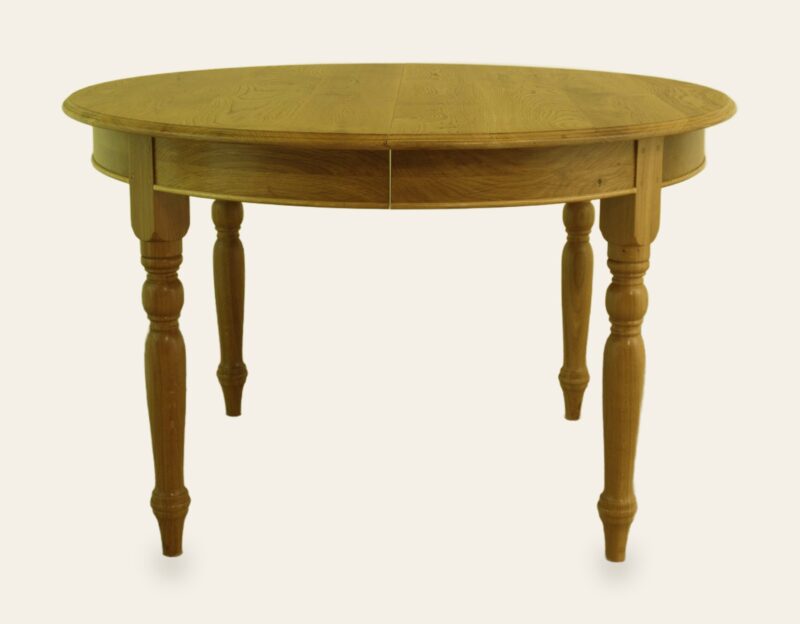
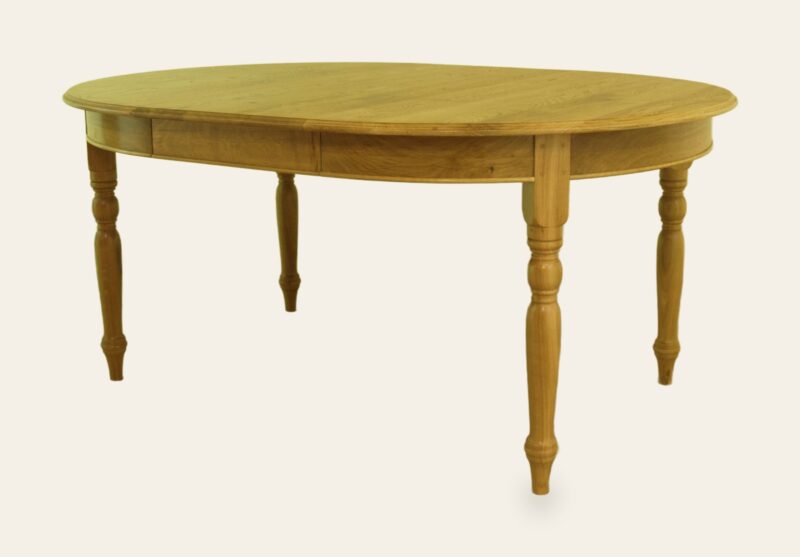
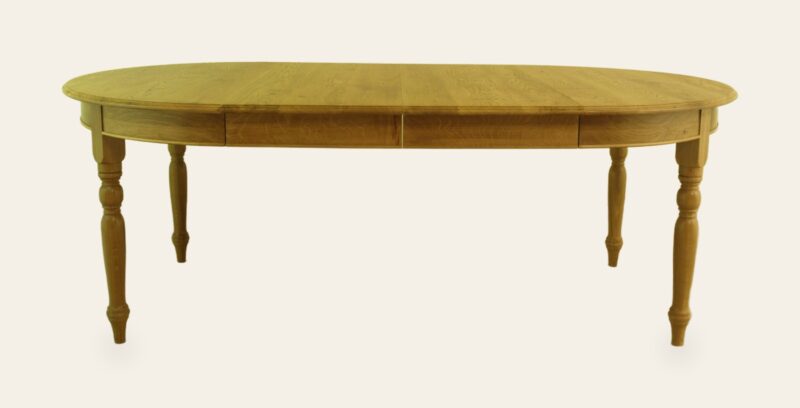
Circular extending. A round top opening on slides to take one or more leaves, becoming an oval.
Round kitchen table with two leaves. The same idea at kitchen scale: round day to day, with one or both leaves in when there are more of you.
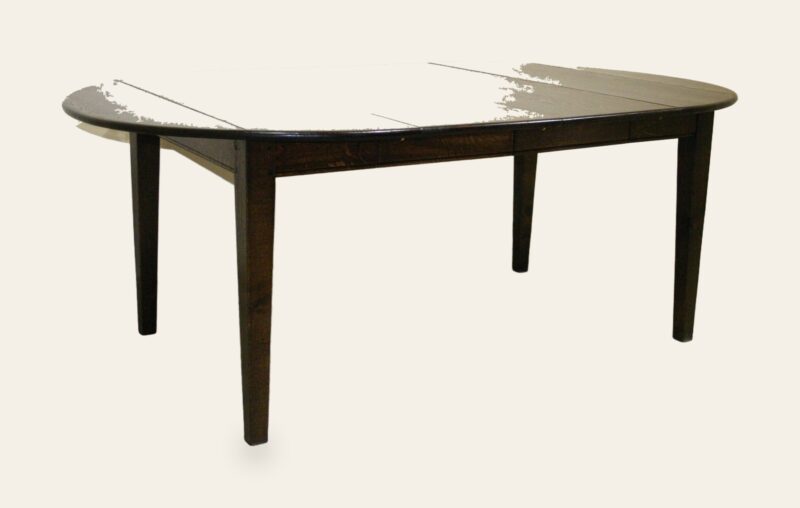
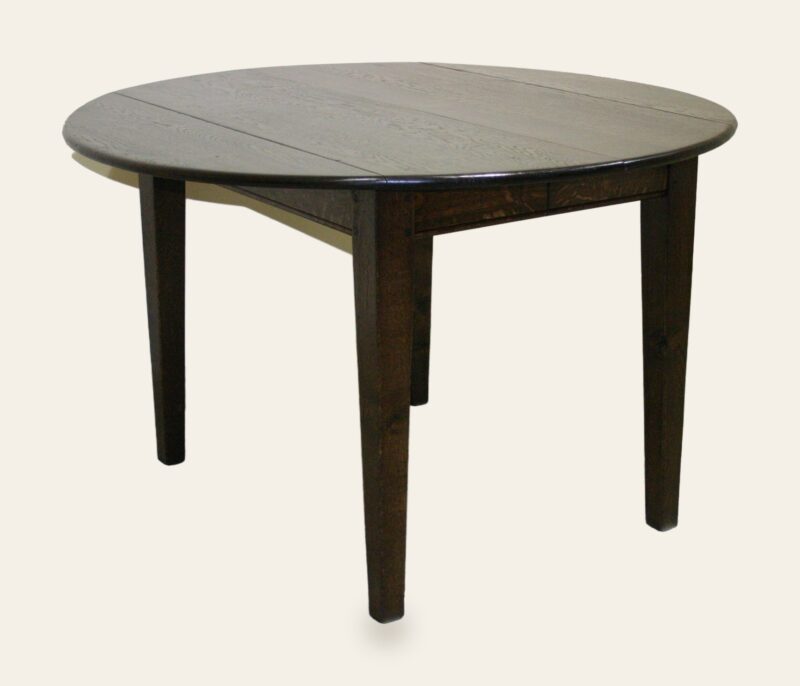
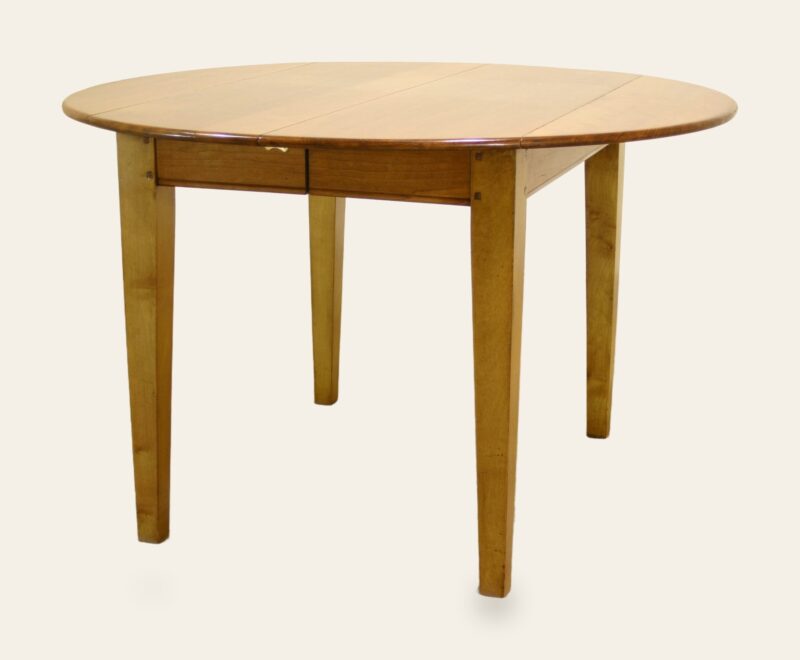
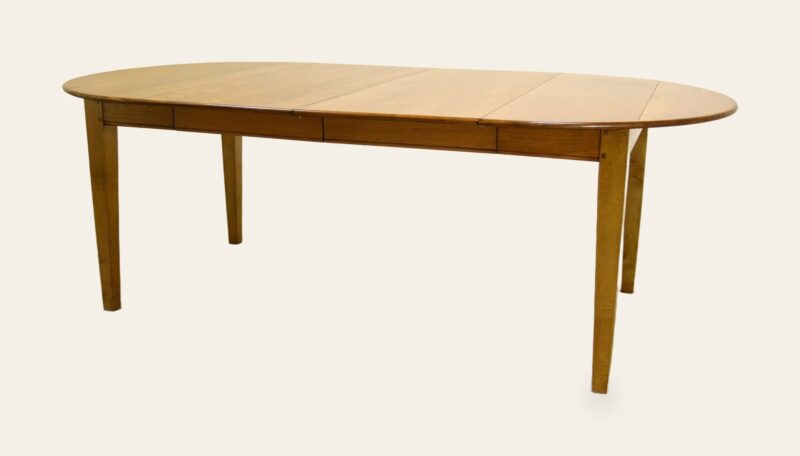
Sussex. Extending tables with tapered or turned legs and drop leaves, so the leaves come up at the sides and the frame opens for insert leaves. Frequently specified in cherry.
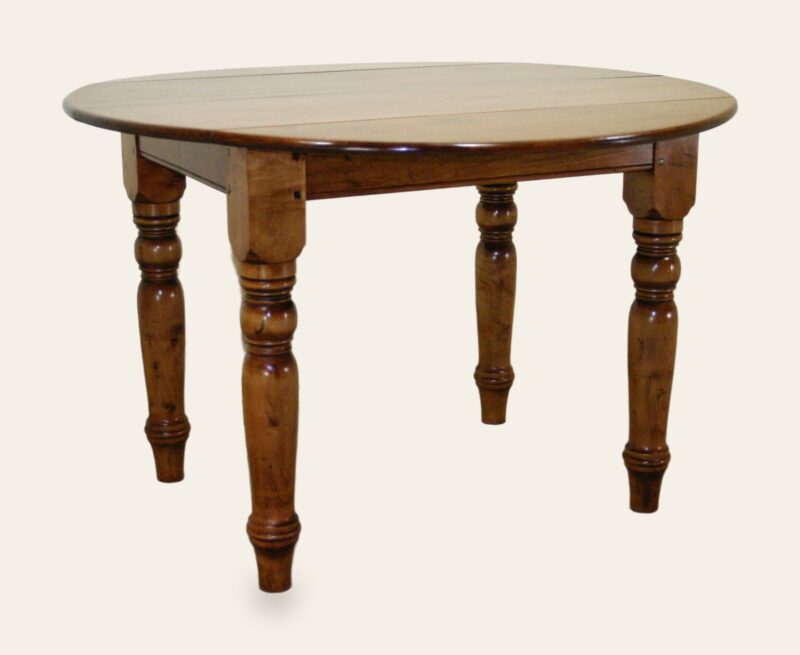
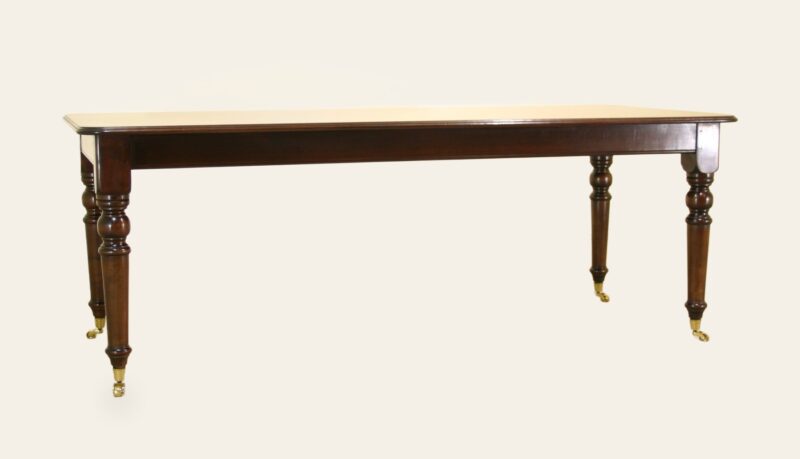
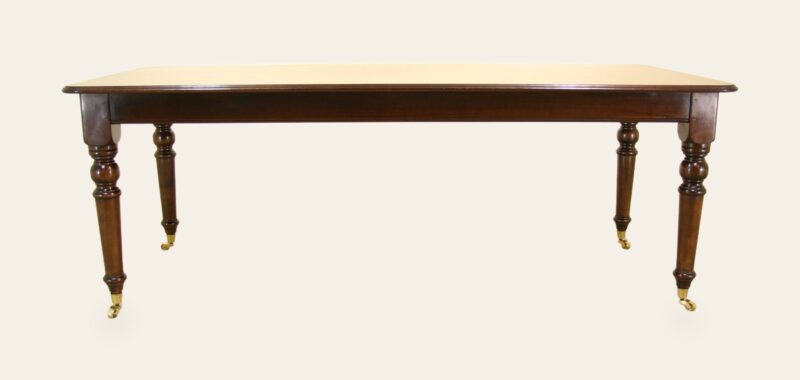
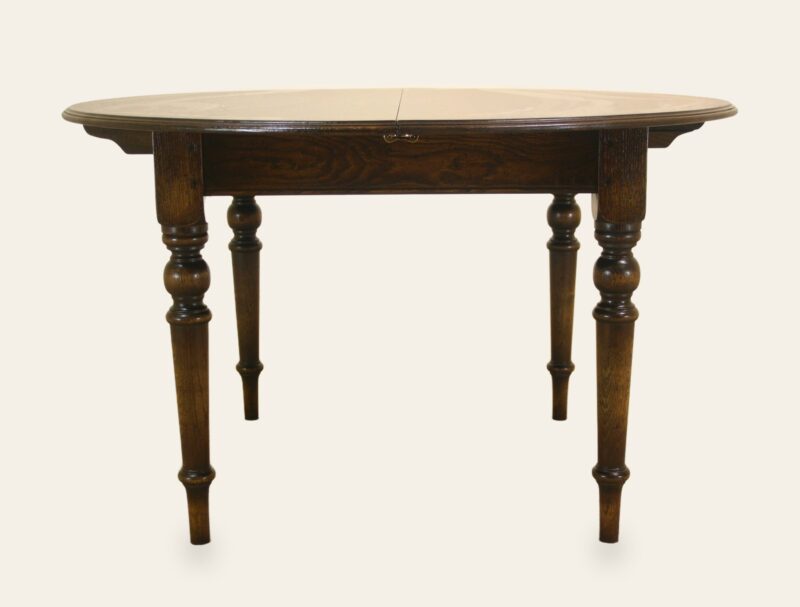
Victorian. The nineteenth-century dining table proper, on heavier turned legs, with or without leaves. Shown here in cherry.
For tables that extend without a loose leaf to store, see drawleaf tables.
Sizes
Made to your dimensions. These are the sizes we build most often.
| Form | Typical size closed | Typical extended | Height (in) |
|---|---|---|---|
| Single pedestal, round | 48–54in diameter | — | 30 |
| Circular extending | 48–54in diameter | Oval, plus 18–36in | 30 |
| Four-column round extending | 54–60in diameter | Oval, plus 18–36in | 30 |
| Double pedestal, rectangular | 72–96in long | Plus leaves as required | 30 |
Allow about 24in of table edge per person and about 36in of clearance behind the chairs, measured at the extended size rather than the closed one. A 54in round seats five or six; opened to an oval it will take eight.
Timbers
Oak, cherry, mahogany and walnut as standard, and every table is made in all four. Mahogany and walnut suit the Victorian and pedestal forms; cherry is the usual choice for Sussex; oak carries the bandsaw and square-cut columns.
Specials, quoted on application: character oak; pippy oak in light, medium and heavy grades, for tops; oak selected for medullary ray, within or without the timber; and clean timber with no knots at all. Finishes: polished, painted, limed, sand-blasted, rub-through paint, natural, or colour matched to a sample you send us.
A round top is a large uninterrupted area of timber, so figure and colour matter more here than on almost any other piece.
Made to your size
Diameter, length, depth, height, column profile, foot shape and the number and size of leaves are all yours to set. Common changes: a column carved to match an existing piece; a foot reduced so a rug sits flat; leaves sized to a particular extended length; pedestal spacing altered so a set of chairs pulls in.
Where the piece is a new design rather than a variation, our designers draw it before anything is cut. See bespoke and commissioning.
Chairs to go with it
Usually specified with the dressier chair patterns — panel back, Cromwellian, Chippendale-style and Caquetoire carvers — with drop-in or fully upholstered seats. See chairs.
Prices
Quoted to size and specification. Tell us the form, the closed and extended dimensions, the timber and the finish and we will give you a guide price. Special timbers and finishes are priced on application. Standard lead time is typically ten to twelve weeks.
Frequently asked questions
What is the advantage of a pedestal dining table?
Legroom and flexibility. With no legs at the corners, chairs pull straight in, nobody sits astride a leg, and you can always fit one more person at a corner.
How many people does a round pedestal table seat?
Five or six at 54in across, four at 48in. An extending version taking one or two leaves will usually seat eight when opened out to an oval.
Single or double pedestal?
Single for a round or small oval top seating up to about six. Double for a rectangular or long oval top seating eight or more, where one column would not carry the overhang.
What is a Sussex table?
Our Sussex pattern is an extending table with tapered or turned legs and drop leaves, so it works in three sizes or more: closed with the leaves down, closed with them up, and opened out with insert leaves. Frequently made in cherry.