 Skip to content
Gothic is the range for anyone who wants furniture with real architecture in it. The vocabulary is ecclesiastical: pointed arches, tracery, and panel work that borrows from church joinery rather than from the drawing room.
On this page
It is a strong look and it does not sit quietly. A Gothic bed in a plain room becomes the room. If your house has arched doorways, stone, exposed timbers or leaded glass, the range tends to look inevitable rather than applied.
Most Gothic pieces are made in cherry, which cuts cleanly for tracery and darkens over the years to a deep reddish brown that suits the carving.
The details that define it
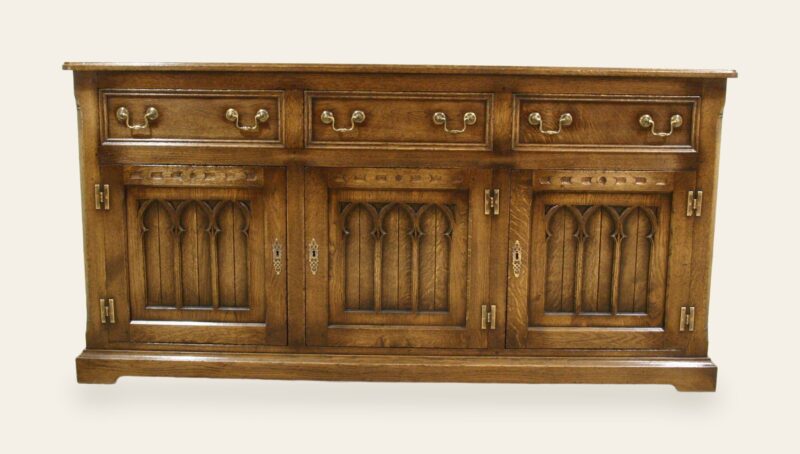
Pointed-arch tracery. The pointed arch is the governing shape, worked into door panels, bed ends and headboards. Tracery is the pierced or applied work inside that arch, and it is the detail that takes the time.
Ecclesiastical panel treatment. Panels are shaped to the arch rather than left square, so a run of doors reads as a run of windows.
Carved detail. Where a piece calls for it, carving is cut by hand. We will tell you honestly when a detail would be too much for a given size.
What the range covers
Gothic is unusual in this catalogue because it runs across a whole bedroom rather than sitting in one type.
| Piece | Notes |
|---|---|
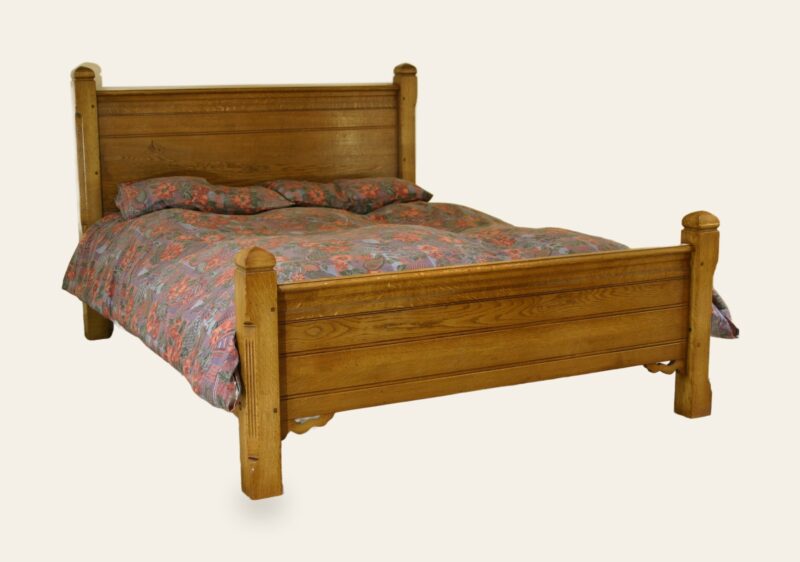
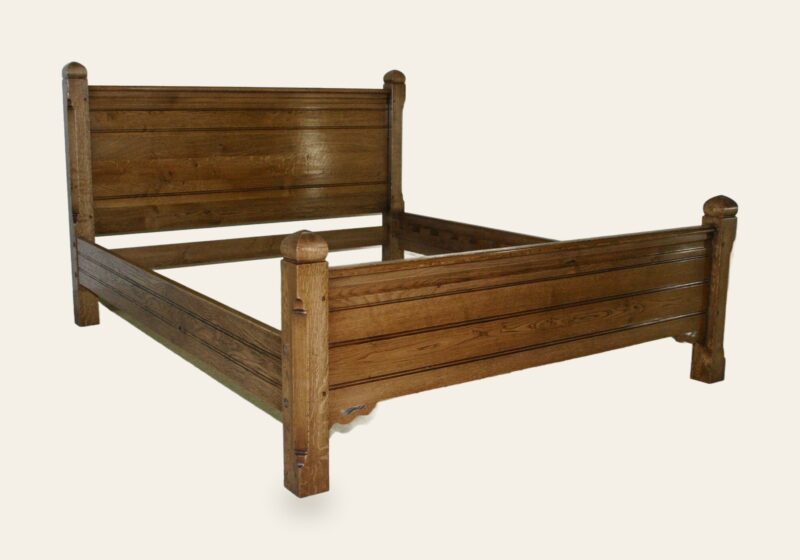
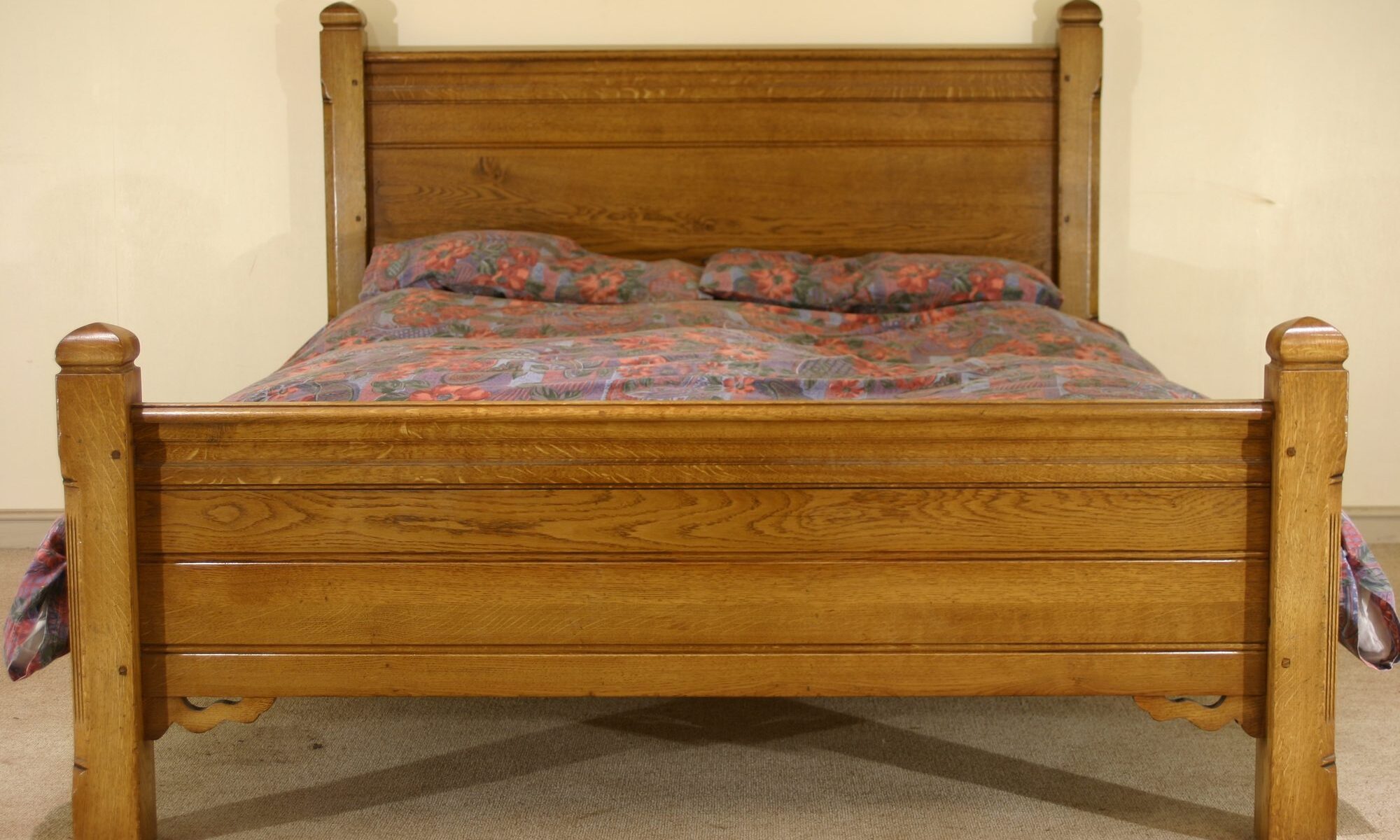
| Gothic bed | Panelled and arched bed ends |
| Gothic wardrobe | Usually made in cherry |
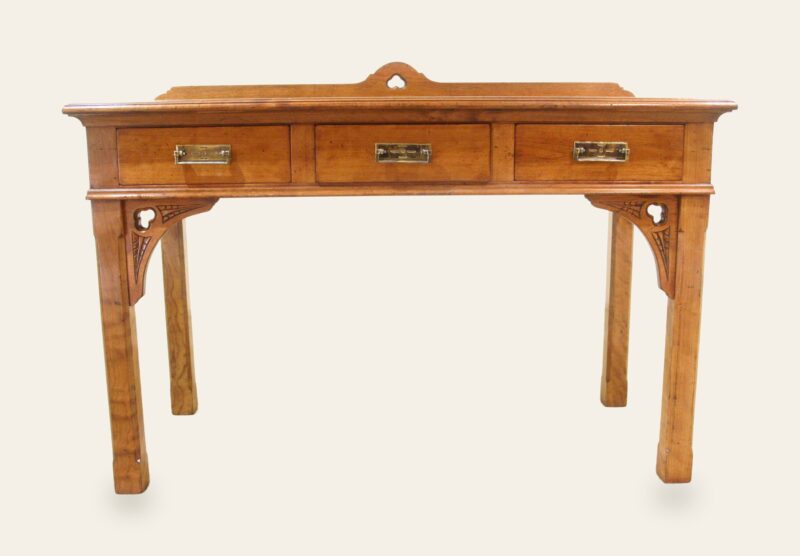
| Gothic dressing table | Usually made in cherry, with a matching stool |
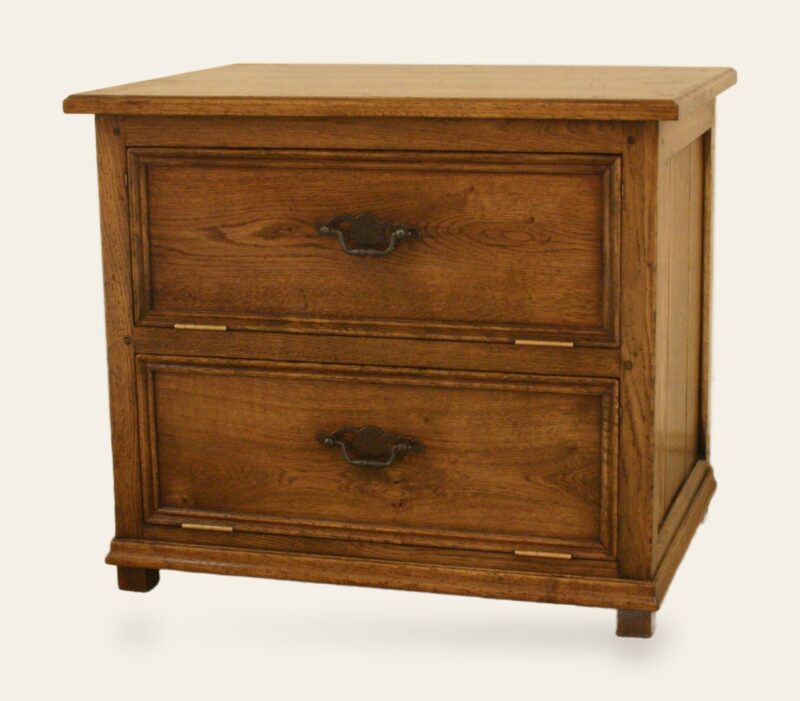
| Gothic bedside cabinet | Usually made in cherry |
| Gothic dresser base | Made in a three-drawer form |
| Gothic chair | A chair pattern in its own right |
Related type pages: beds, panelled beds, four poster beds, wardrobes, dressing tables and mirrors, dresser bases, cupboards and cabinets and chairs.
Beds are made to the size you need rather than to a fixed list, and a Gothic four poster or half tester can be made bespoke on the same principles. Nothing in the range is held in stock, so the question is always what the room wants. Standard designs are normally twelve weeks from order to delivery, and when the workshop is busy that can run to fifteen or sixteen. A genuine one-off usually adds around four weeks. Your date is confirmed when you order.
Timbers
Gothic is priced, like every catalogue piece, in the four standard timbers: oak, cherry, mahogany and walnut.
Cherry is the usual specification. Oak gives a heavier, more medieval result and suits a large bed. Mahogany is the most formal of the four. Walnut carries the strongest figure, which can compete with tracery rather than support it.
Character oak, pippy oak for tops, oak selected for medullary ray and clean timber with no knots at all are available on application. More on our timbers.
Much of the Gothic work is specified in cherry. See cherry furniture for how it ages.
Make it yours
Gothic is a language rather than a fixed set of carcasses, which makes it one of the more flexible ranges to commission.
- Dimensions. Bed width and height, wardrobe height to a sloping ceiling, dressing table height to a specific chair.
- How much tracery. From a single arched panel to a fully worked front. This is the main lever on both character and cost.
- Carving. Added, simplified or left out.
- Ironmongery. Solid brass knobs, swan neck handles, turned wooden knobs, or ironwork chosen to suit the arch.
- Interior. Hanging heights, shelf positions, drawer arrangements, storage sized around what you actually keep.
- Finish. Polished, painted, limed, sand-blasted, rub-through paint or natural, and colour matched to a sample you send us.
Gothic details also transfer well onto fitted work, so a fitted wardrobe run or a panelled wall can be made to match a freestanding bed. See fitted furniture and how commissioning works.
Order timber and finish samples before choosing between cherry and oak, because the difference in this range is considerable.
Questions about Gothic
Can I have a complete Gothic bedroom?
Yes. The bed, wardrobe, dressing table, stool and bedside cabinets are all pieces in the range, and they are drawn to work together. Fitted wardrobes can be made in the same language, so the freestanding and fitted pieces match.
Is Gothic only made in cherry?
No. Cherry is the usual choice because it cuts and ages well, but Gothic is priced in oak, cherry, mahogany and walnut like everything else in the catalogue.
Can the amount of carving be reduced?
Yes. Tracery and carving are specified piece by piece. A simplified arched panel with no pierced work keeps the character and reduces both the labour and the visual weight.
Will Gothic work in a modern house?
It can, though it needs space and light around it. One strong Gothic piece in a plain room often works better than a whole suite.
How long does a Gothic piece take?
Standard designs are normally twelve weeks from order to delivery, and when the workshop is busy that can run to fifteen or sixteen. A genuine one-off usually adds around four weeks. Your date is confirmed when you order. A heavily traceried or carved piece sits at the longer end.