 Skip to content
Occasional furniture is the small stuff, and the small stuff is what a room is used through. The table a lamp stands on. The one a drink goes down on. The chest at the end of the bed that everything gets thrown into. Nobody plans a room around them and everybody notices when they are wrong.
On this page
They are also the pieces most often bought in the wrong size, because the space between a sofa and a chair is not a standard dimension. Everything here is made to order, so it can be the size the gap actually is.
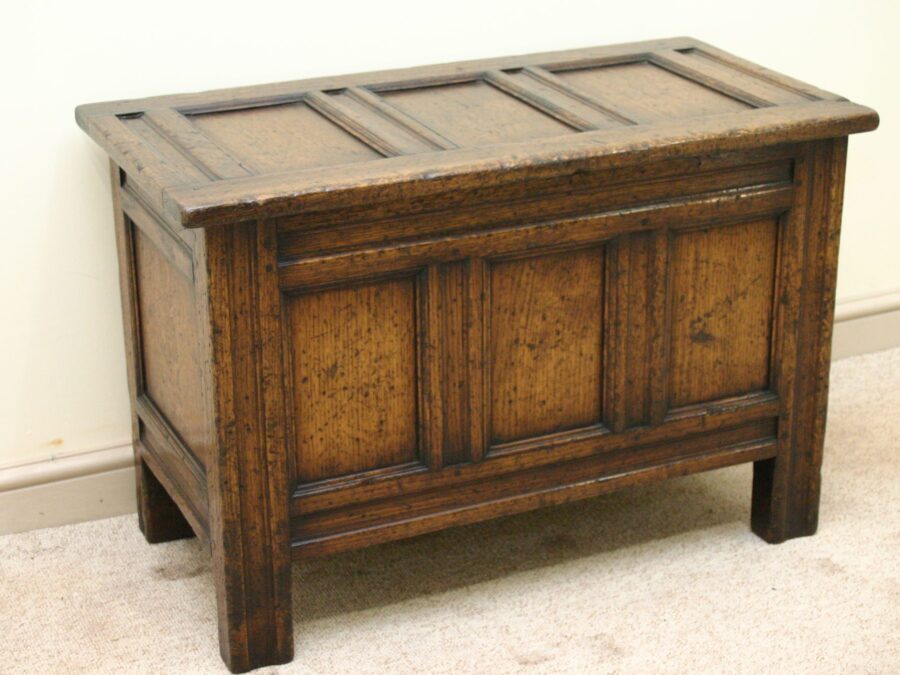
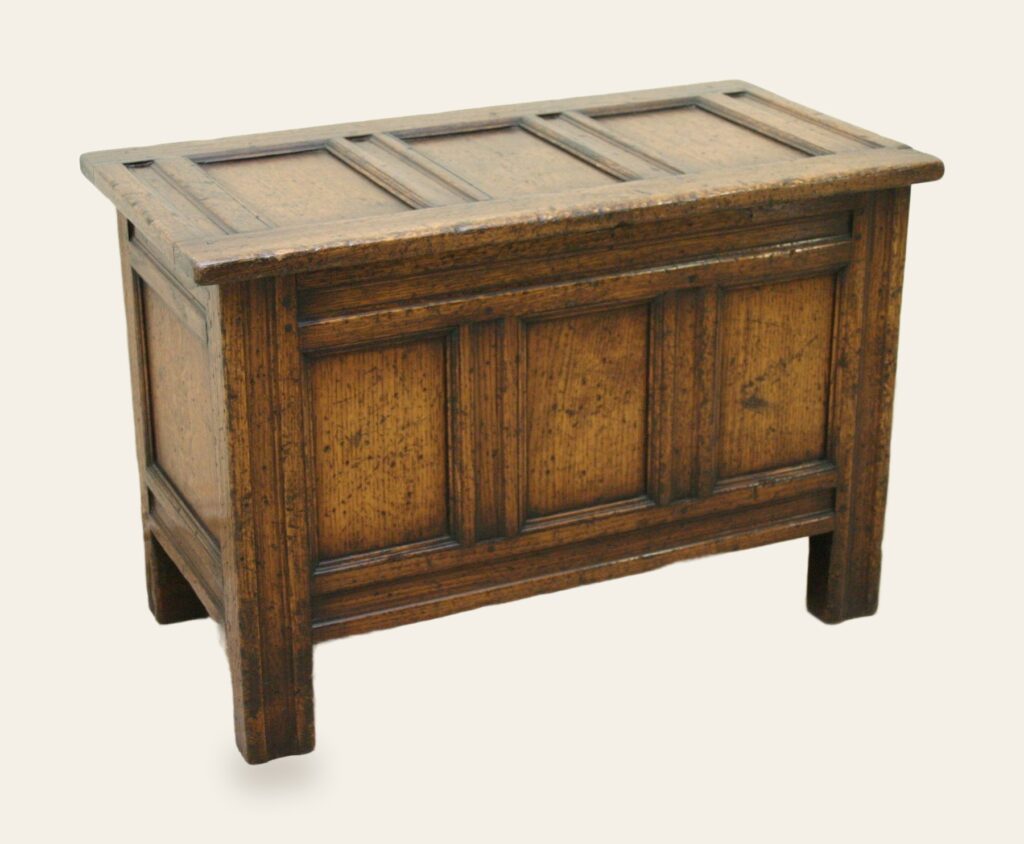
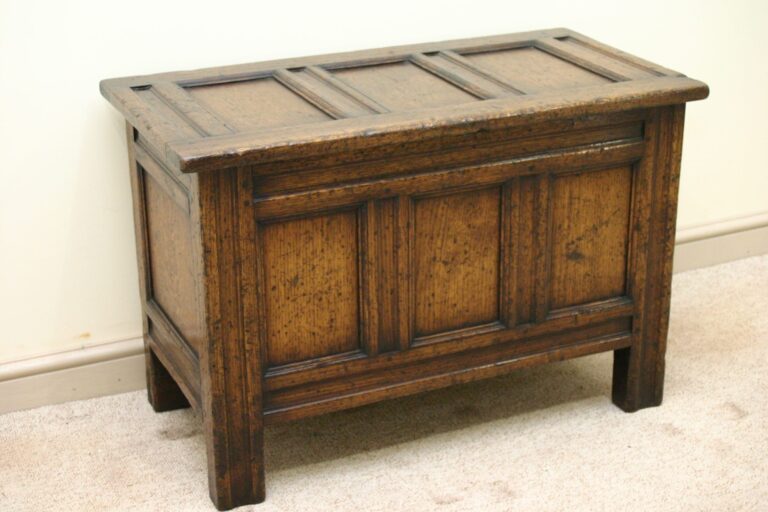 Oak Blanket Chests and CoffersOak blanket chests and coffers made to order in Suffolk. Carved and plain blanket chests and the panelled coffer, in oak, cherry, mahogany and walnut.
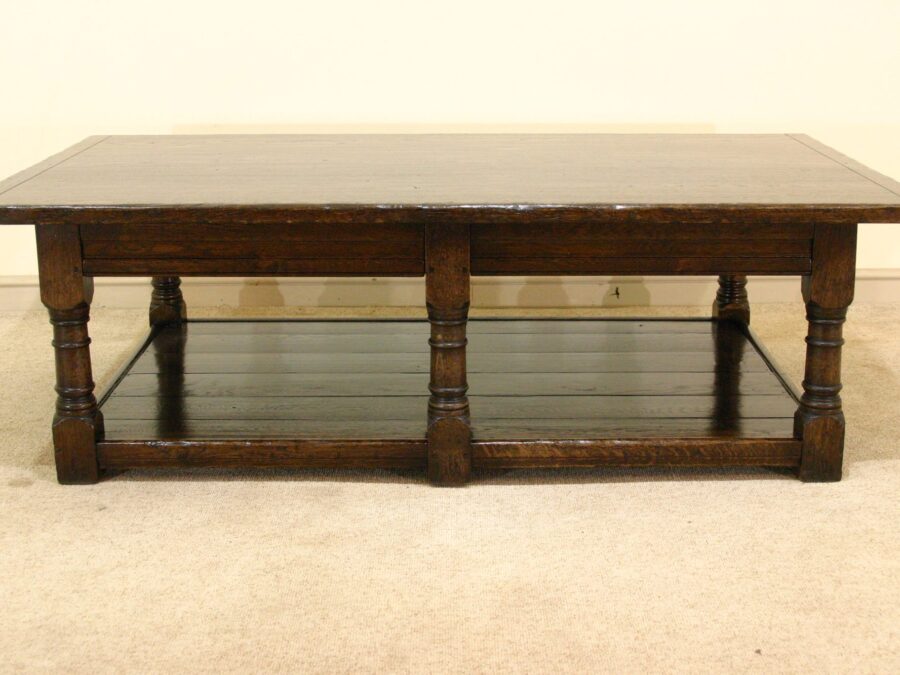
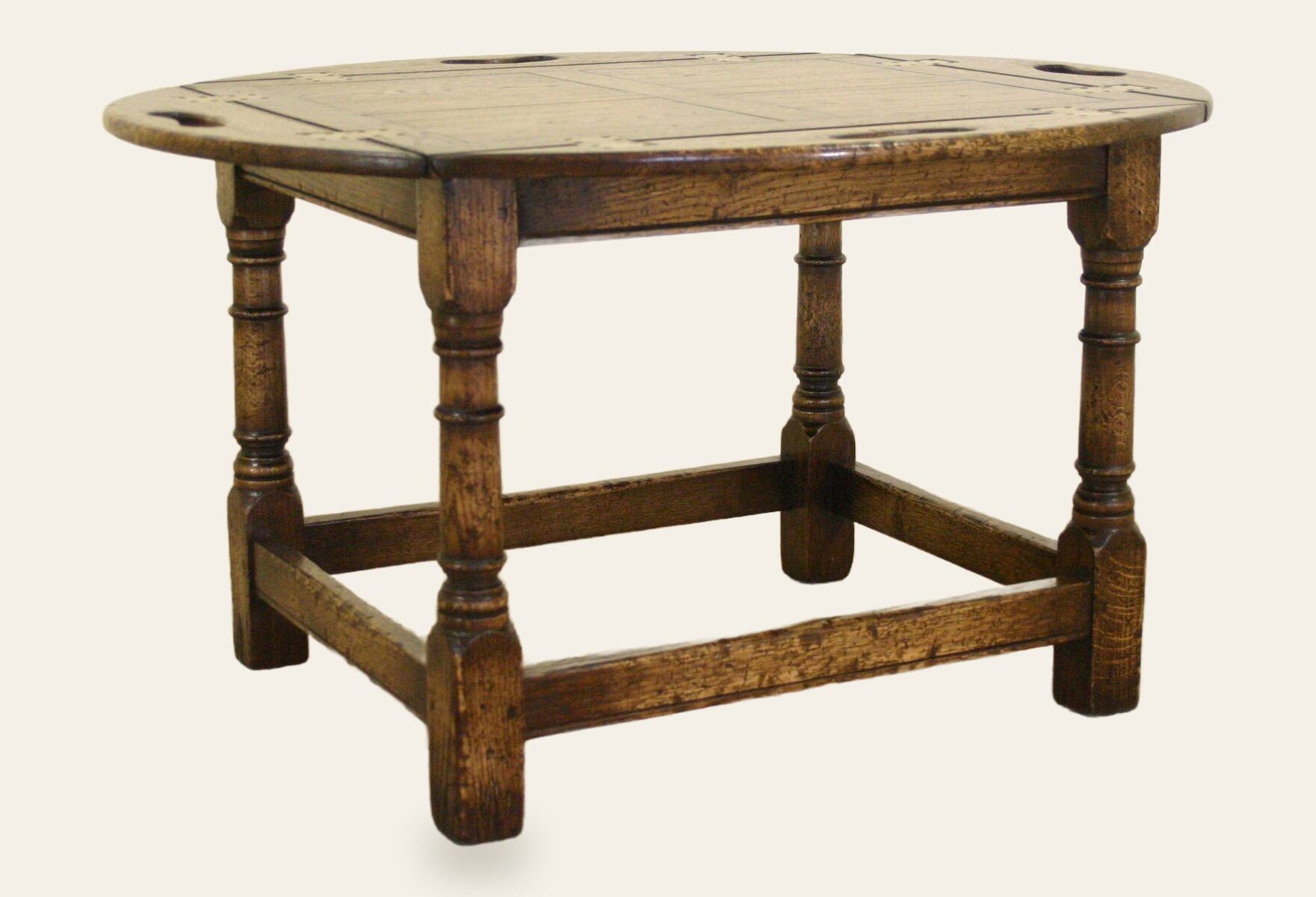
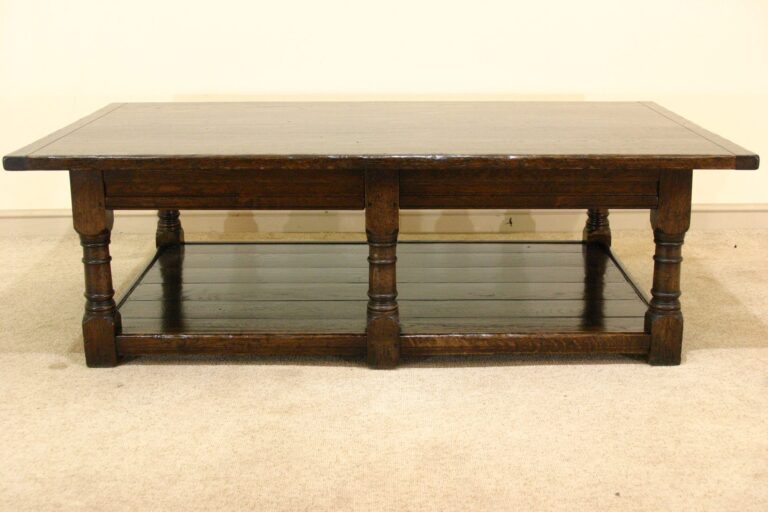 Solid Oak Coffee TablesSolid oak coffee tables made to order in Suffolk: farmhouse, potboard, drawer, parquet top, burr walnut, carved, wakes and refectory patterns.
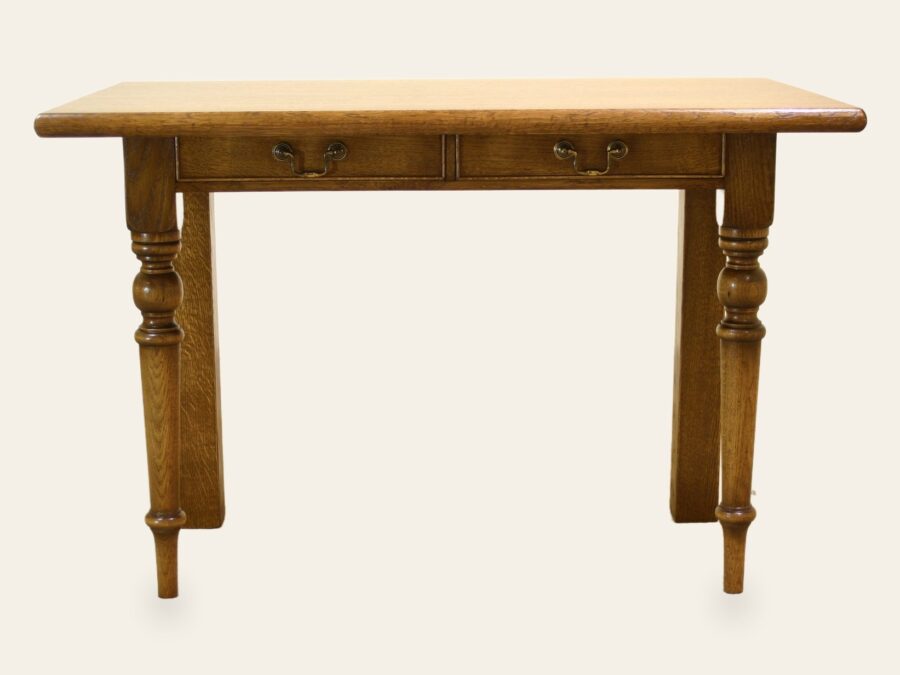
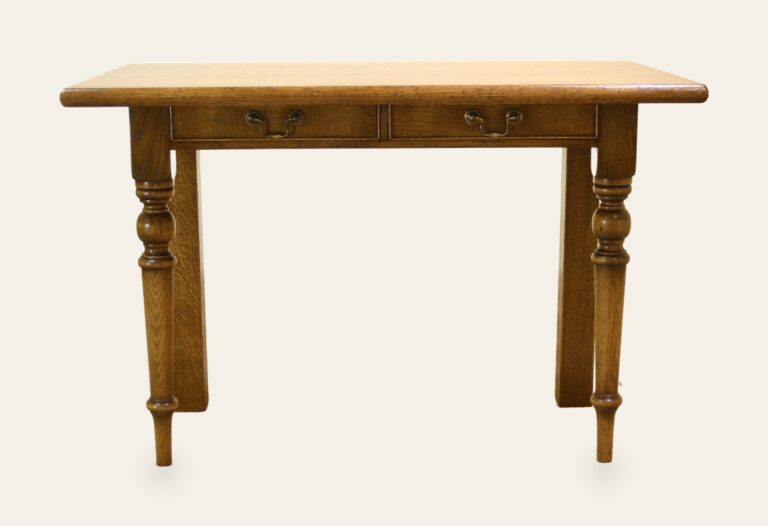 Oak Lamp Tables and Side TablesOak lamp and side tables handmade in Suffolk: clover leaf, bobbin, gateleg and drop leaf lamp tables, hall tables, half round, low boy and joint stools.
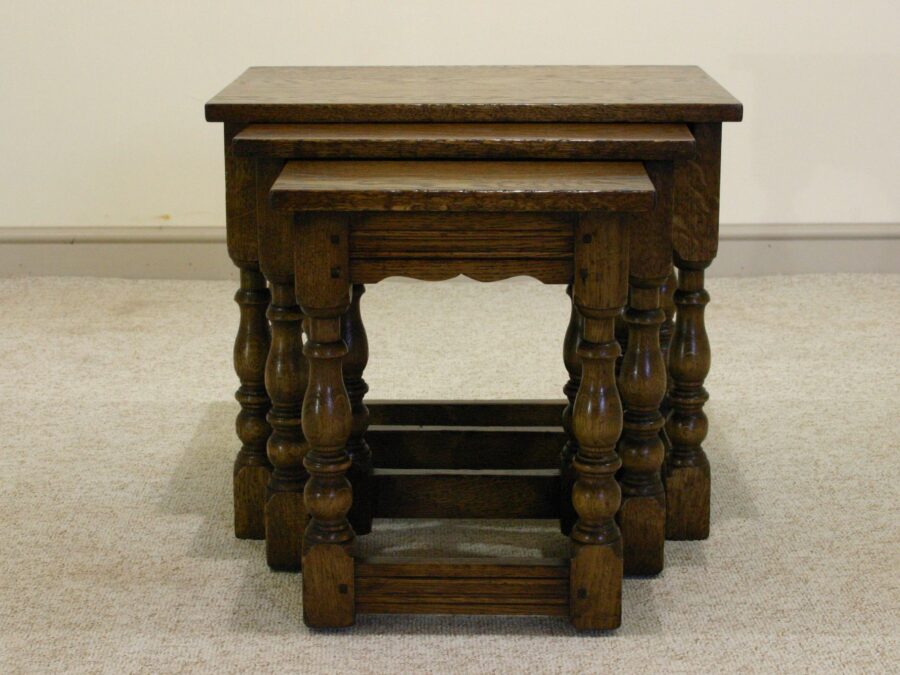
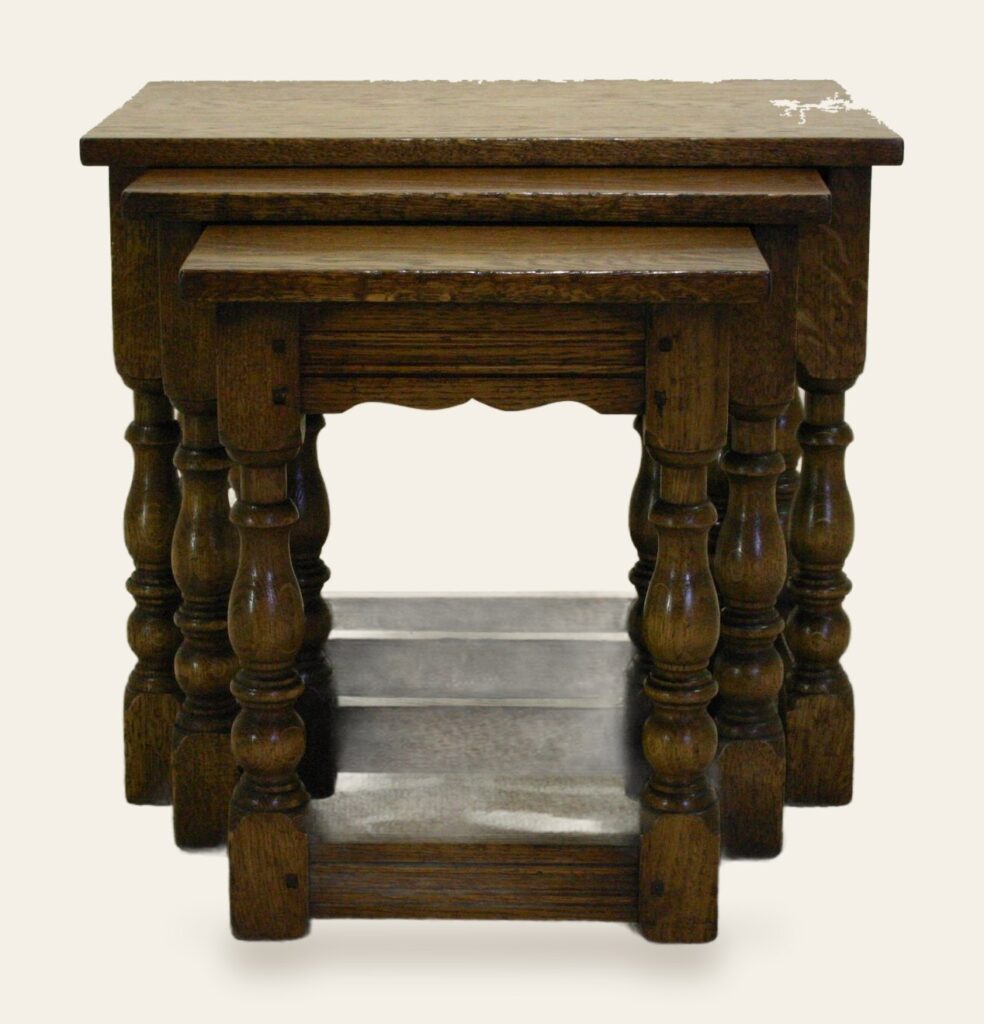
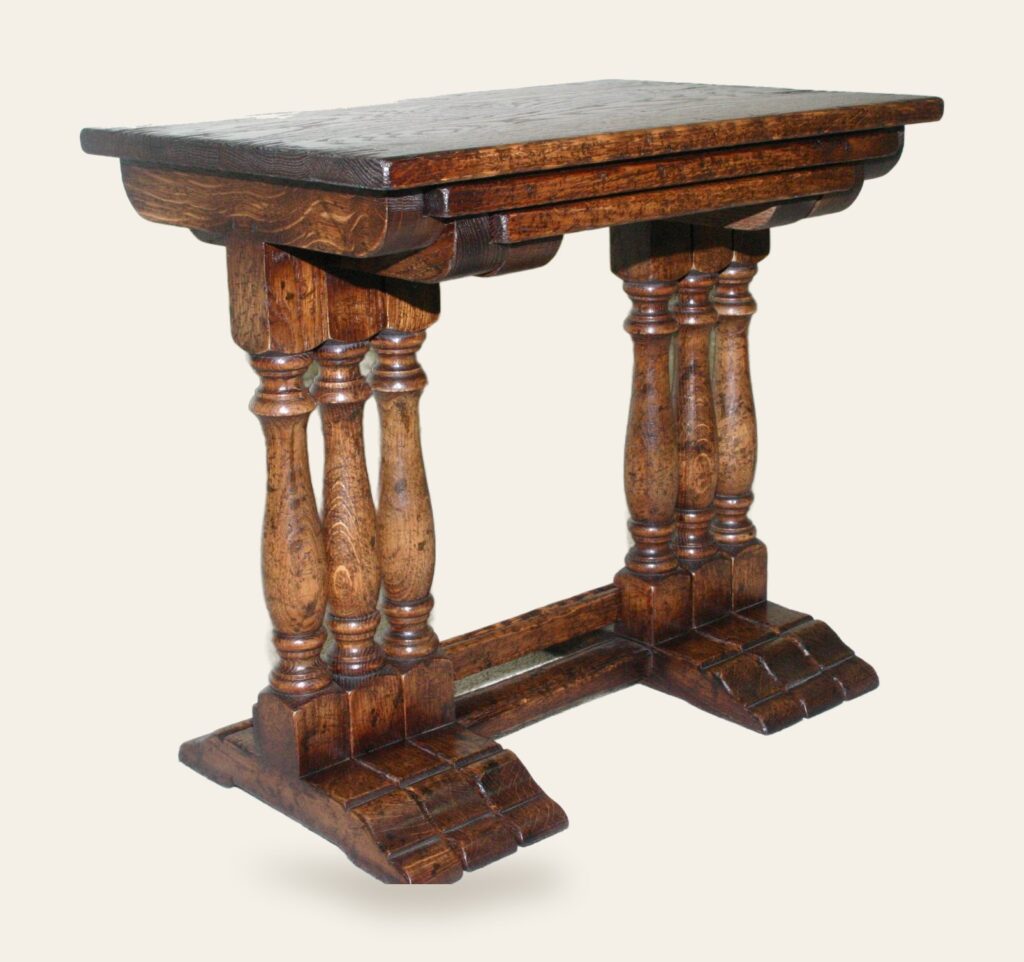
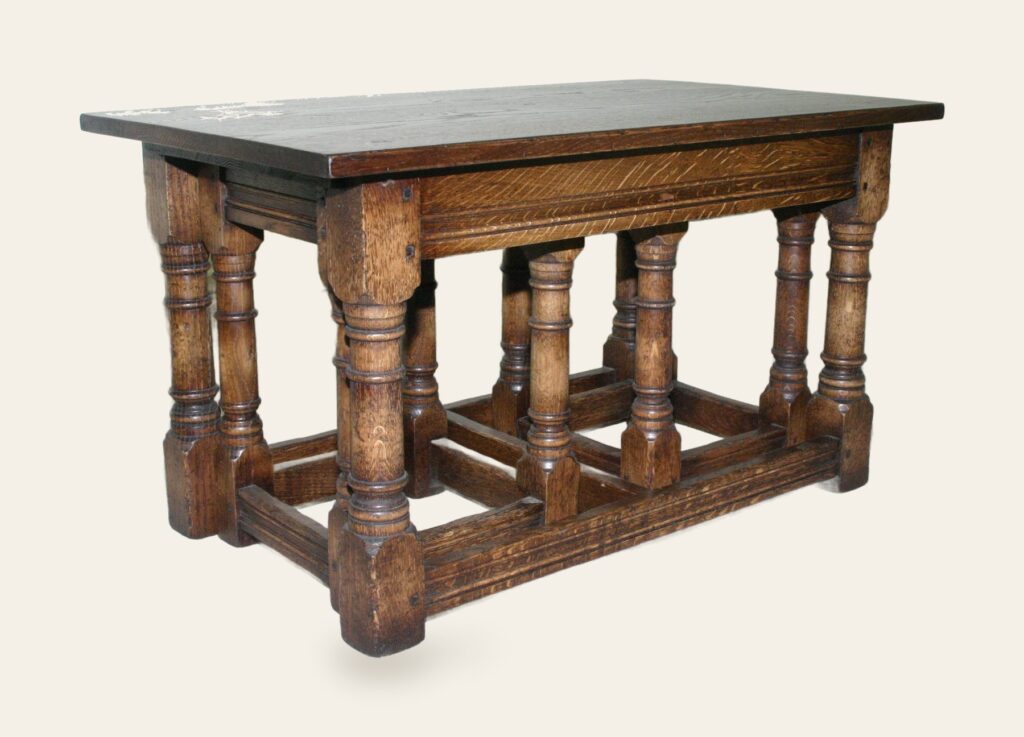
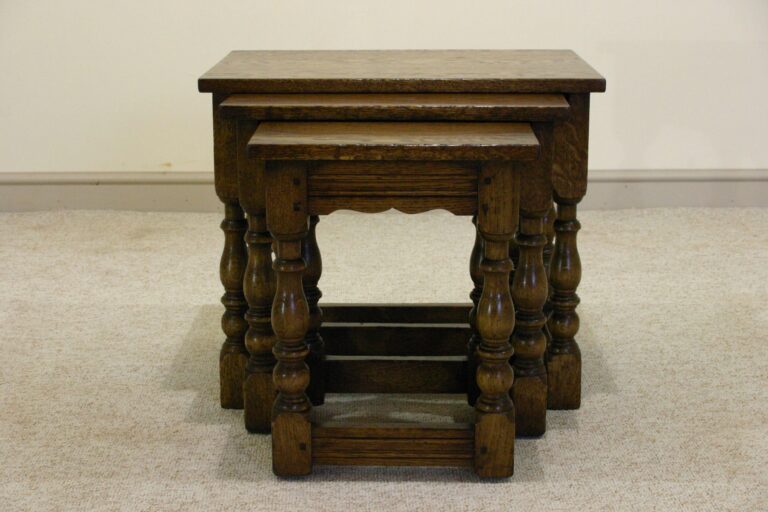 Oak Nest of TablesSolid oak nests of tables handmade to order in Suffolk: rectangular, oval top, trestle and Long John patterns, in oak, cherry, mahogany or walnut.
The types we make
Coffee tables — farmhouse, potboard, four- and six-drawer potboard, square potboard, double gateleg, parquet top, burr walnut, carved, Jugendstil, wakes, refectory, six-leg, single pedestal with drop leaves and bandsaw base.
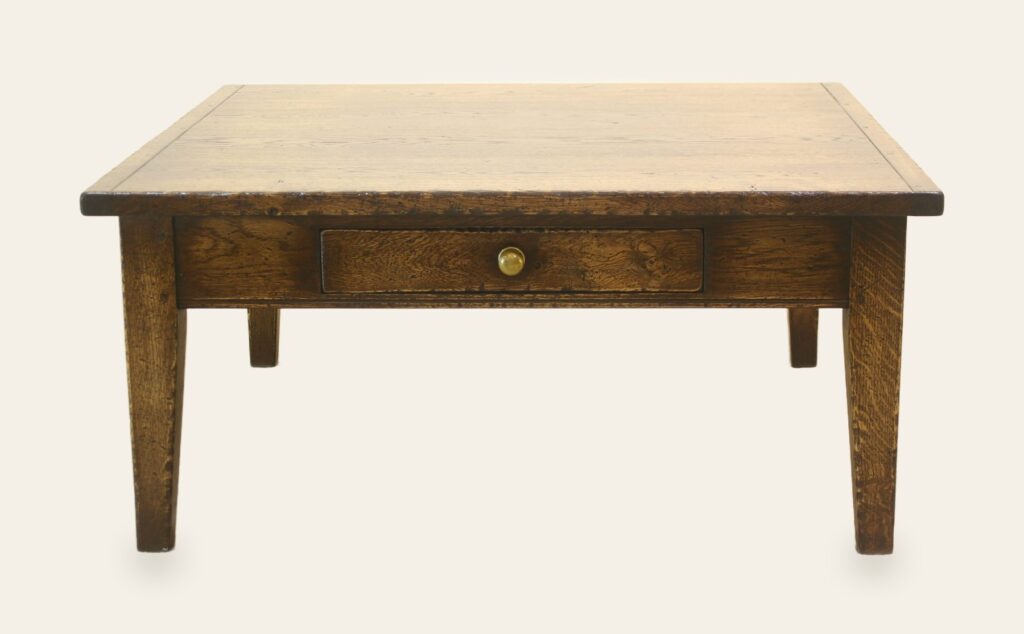
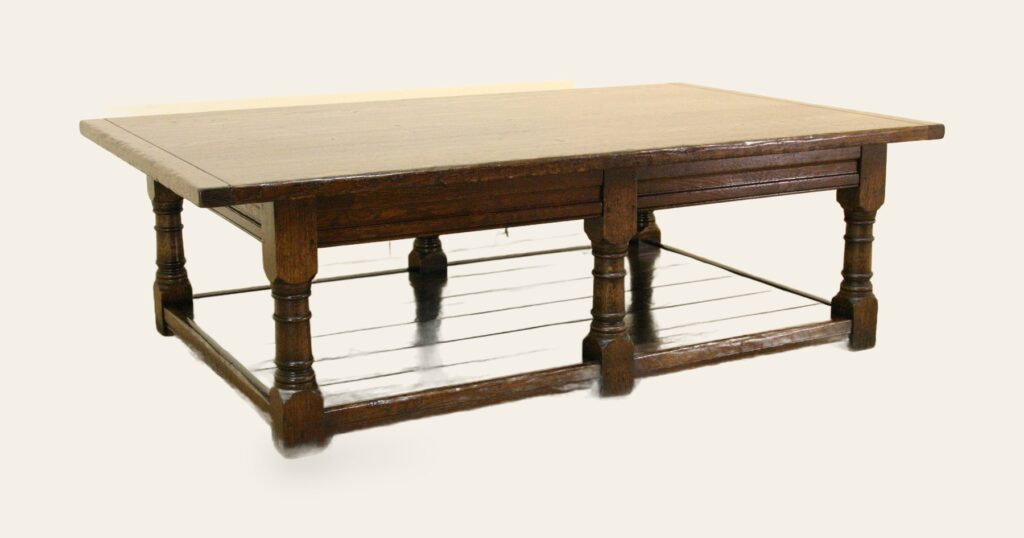
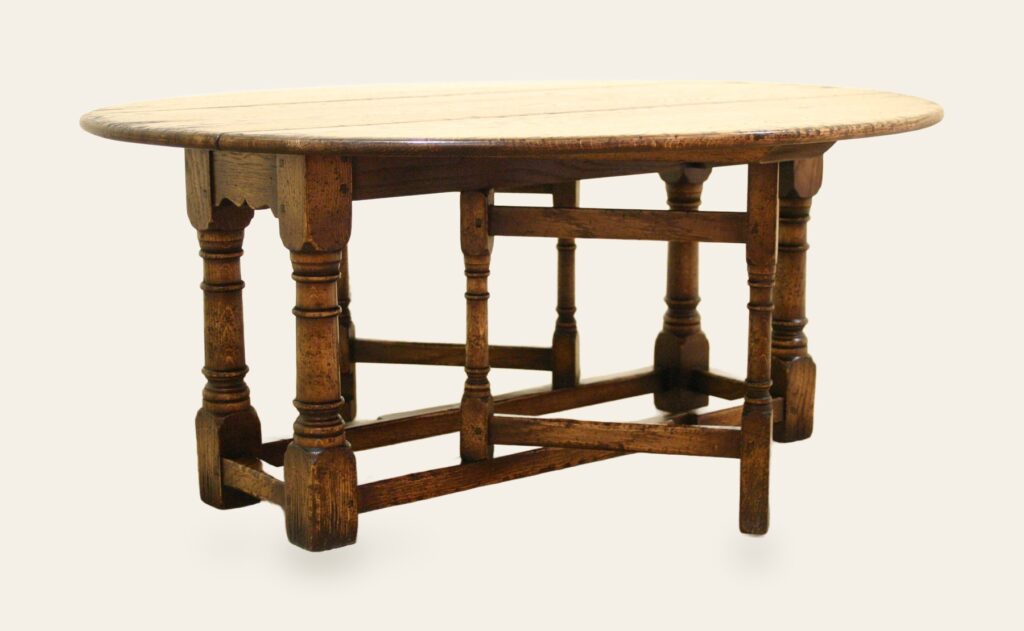
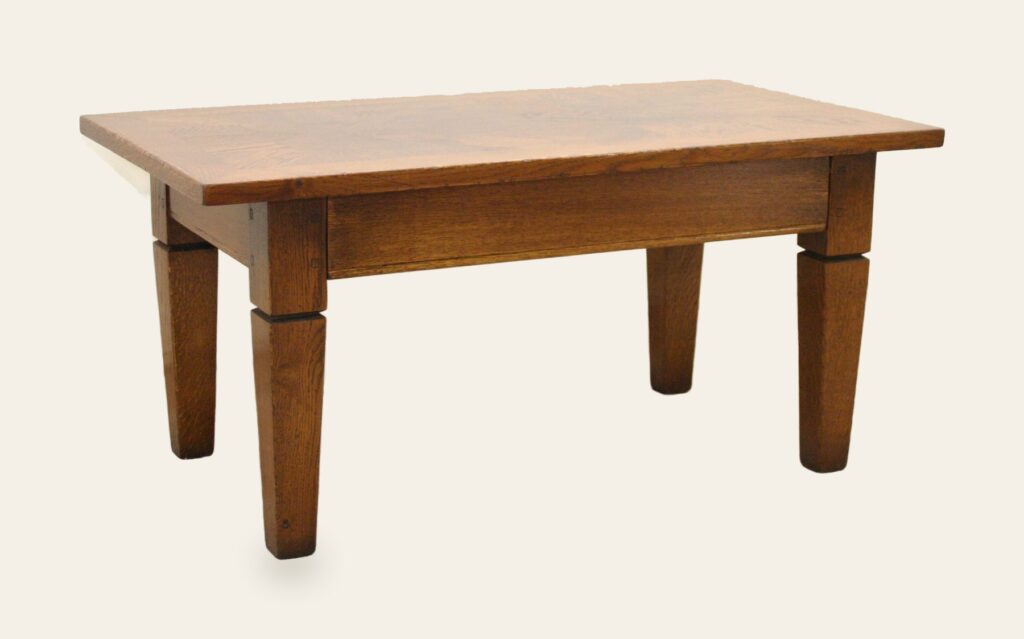
Lamp and side tables — clover leaf, bobbin side, drop leaf and gateleg lamp tables, farmhouse lamp tables, canted corner, half round, hall tables with cross, H and X stretchers, round tripod, low boy and joint stool.
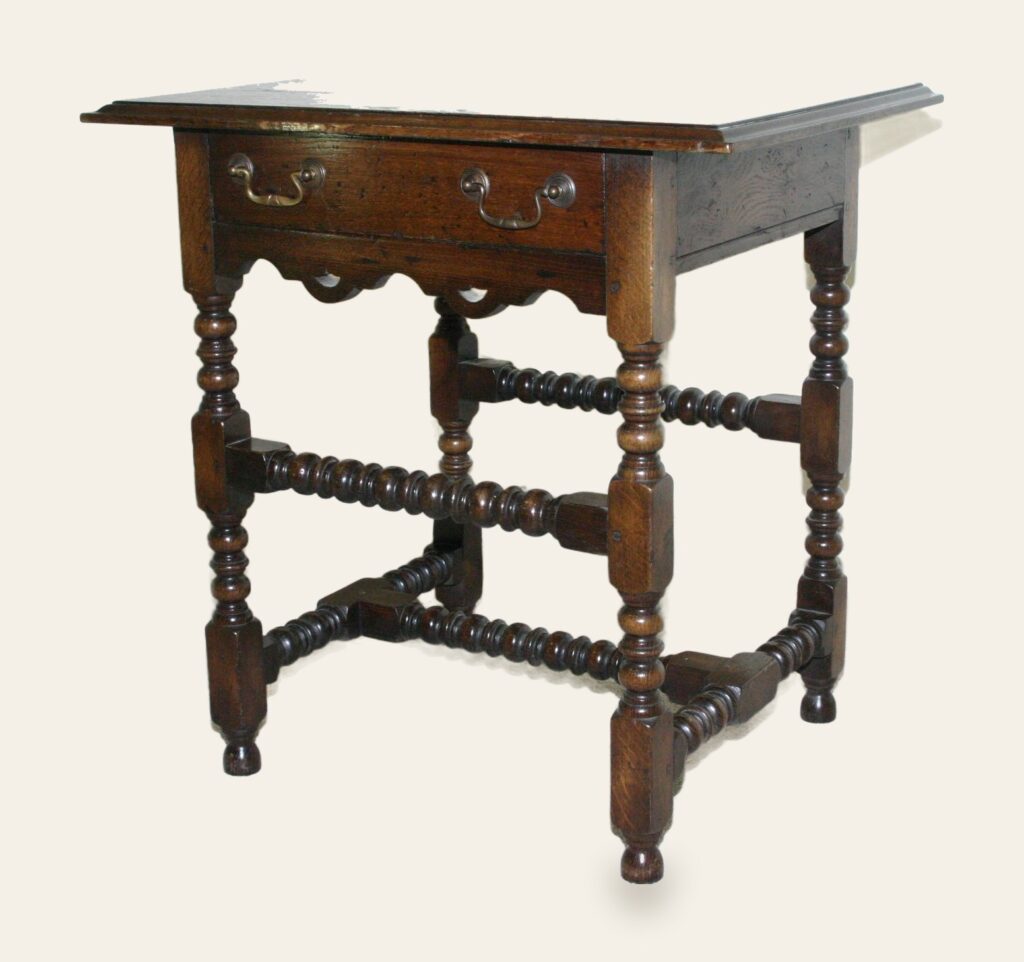
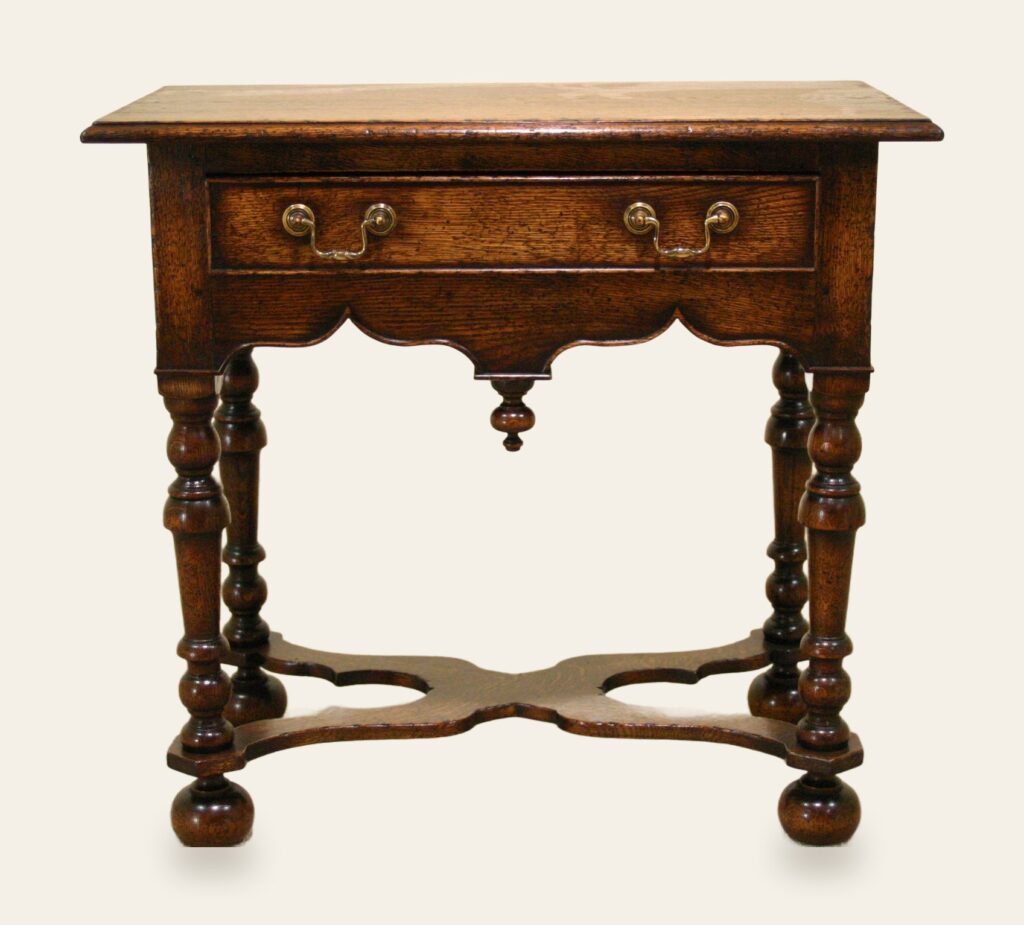
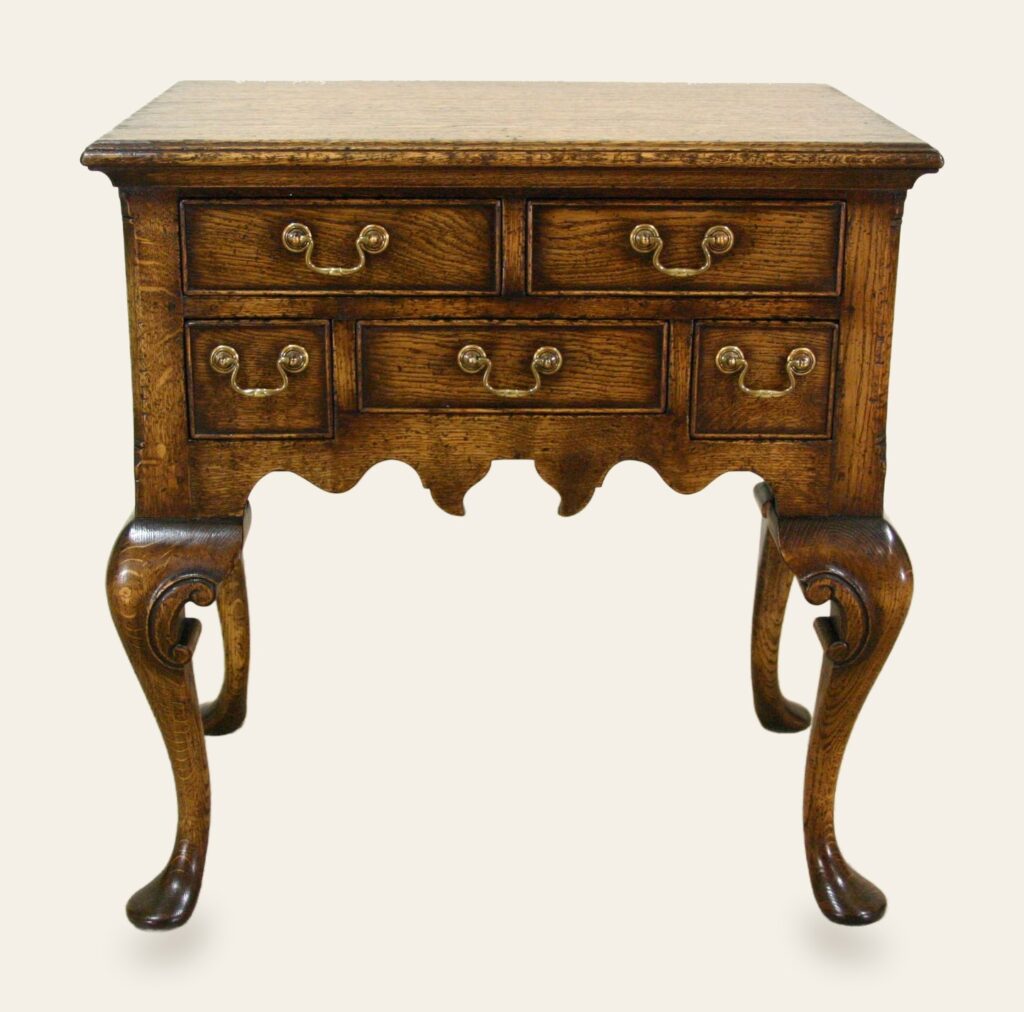
Nests of tables — rectangular, oval top, trestle and Long John.
Blanket chests and coffers — carved and plain blanket chests, and the traditional panelled coffer.
Smaller pieces made alongside them
Butler’s tray. A tray with hinged, pierced sides that fold flat, on its own folding base. It comes into a room, does its job and goes away.
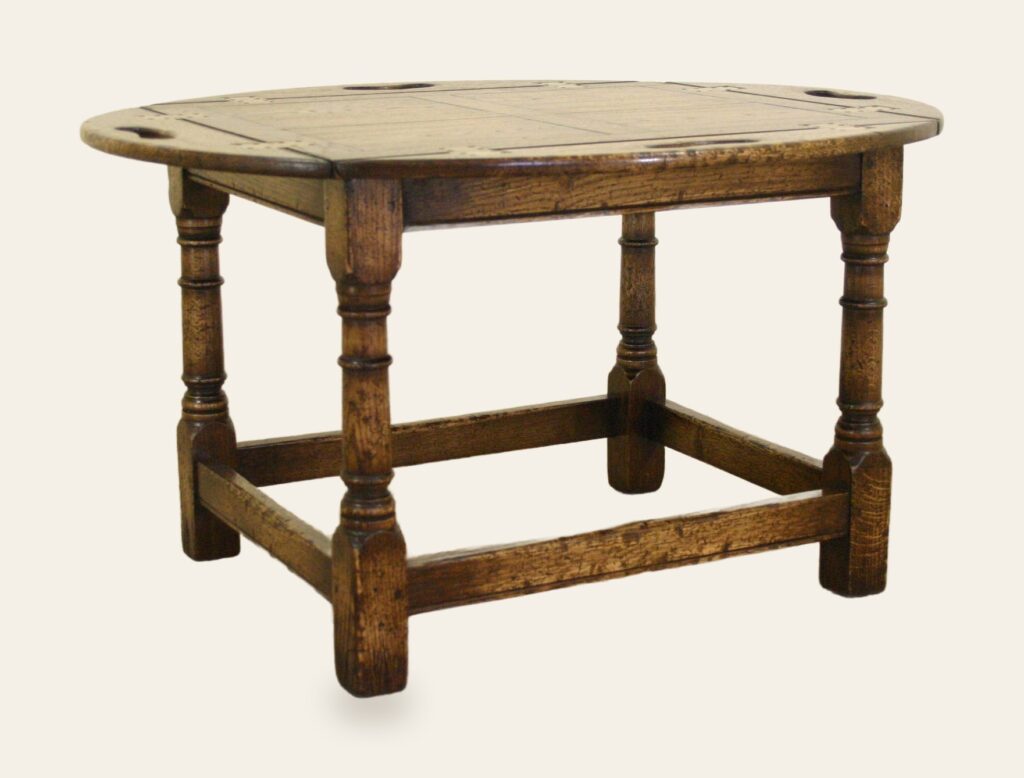
Magazine table. An oval-topped table with a rack below for papers. Spin CD stand. A revolving disc stand, and still a good way to store anything small in quantity.
Footstools and joint stools. In matching patterns to the settles and benches, and equally useful as a low table beside a chair.
Tea trolleys and wine racks. Covered with the sideboards and servers.
How to choose the size
Coffee table height. Level with the sofa’s seat cushion, or very slightly below. A table taller than the cushion looks wrong from every seat in the room.
Lamp table height. Level with, or a little above, the arm of the chair beside it, so a glass is not lifted over the arm to be put down.
Length. A coffee table looks best at roughly two thirds the length of the sofa it faces — a rule of thumb, which goes out of the window in front of a fire.
Send us the sofa dimensions, the seat height and the room plan and we will tell you what will work.
Potboards and drawers
Many of these pieces carry a potboard — a low open shelf between the legs, originally for cooking pots and now for books and baskets, explained in full on the potboard dresser bases page. Drawers are the other option, made to open from one side or both, which matters when a table stands in the middle of a room.
Timbers
Oak, cherry, mahogany and walnut are the standard four, and every piece here is made in all of them. Small pieces are where the more decorative timbers earn their place: burr walnut appears in specific coffee tables, and cherry is the usual choice for the Rowton caddy-top pieces.
Specials, on application: character oak; pippy oak in light, medium and heavy grades, for tops — a small top is exactly where a heavy pippy figure is worth having; oak selected for medullary ray, the silver figure across quarter-sawn oak; and clean timber with no knots at all.
Finishes: polished, painted, limed, sand-blasted, rub-through paint, natural, or colour matched to a sample. We can match furniture that is 100 years old to new reproduction purchases made the year before.
Order timber and finish samples. Occasional pieces sit with furniture you already own rather than lead a room, so matching is the whole job.
Standard sizes
These are the sizes we make as standard. They are starting points rather than limits — occasional pieces are altered more often than anything else we make, because they are fitted into gaps. Every size we make is listed on the sizes page.
| Piece | Width | Depth | Height |
|---|---|---|---|
| Coffee table with potboard | 36, 42, 54 or 60in (91–152cm) | 20, 24 or 30in (51, 61 or 76cm) | 18in (46cm) |
| Coffee table with potboard and two drawers | 36, 42, 54 or 60in (91–152cm) | 20, 24 or 30in (51, 61 or 76cm) | 18in (46cm) |
| Farmhouse coffee table | 28 or 55in (71 or 140cm) | 36in (91cm) | 18in (46cm) |
| Four-drawer potboard coffee table | 53 or 63in (134 or 160cm) | 27 or 30in (69 or 76cm) | 18in (46cm) |
| Six-drawer potboard coffee table | 72in (183cm) | 36in (91cm) | 18in (46cm) |
| Square potboard coffee table | 24, 30 or 40in (61, 76 or 102cm) | 24, 30 or 40in (61, 76 or 102cm) | 18in (46cm) |
| Farmhouse lamp table | 20in (51cm) | 20in (51cm) | 24in (61cm) |
| Joint stool / lamp table | 19in (48cm) | 11in (28cm) | 20in (51cm) |
| Lamp table with potboard, no drawer | 18in (46cm) | 18in (46cm) | 22in (56cm) |
| Lamp table with potboard, with drawer | 18in (46cm) | 18in (46cm) | 22in (56cm) |
| Clover leaf lamp table, small | 18in (45cm) | 18in (45cm) | 20in (51cm) |
| Clover leaf lamp table, large | 22in (56cm) | 22in (56cm) | 26in (66cm) |
| Bobbin side (hall) table | 30in (76cm) | 30in (76cm) | 18in (46cm) |
| Nest of tables | 20in (51cm) | 14in (36cm) | 17in (43cm) |
Made to your size
Small pieces are the easiest to alter and the most worth altering, because they are fitted into gaps.
Common changes: height set from a specific sofa or chair; length set to the wall between two doors; a drawer added, doubled or made to open from both sides; a potboard added to a pattern that does not normally carry one; leaves added so a lamp table becomes a small dining table; a set of pieces made to match across a room.
If what you want does not exist yet, our designers draw it first. See bespoke, commissioning and contemporary furniture.
Prices
Quoted individually. Tell us the piece, the size, the timber and the finish and we will give you a guide price. Special timbers and finishes are on application. Standard designs are normally twelve weeks from order to delivery, and when the workshop is busy that can run to fifteen or sixteen. A genuine one-off usually adds around four weeks. Your date is confirmed when you order.
An occasional piece is often one part of a larger scheme. When it is, the panelling and built-in work alongside it come from Reeve & Co Interiors, and the kitchen from Square & True — the same benches, the same hands.
Frequently asked questions
What height should a coffee table be?
Level with the seat cushion of the sofa, or fractionally lower. Measure the cushion compressed, with someone sitting on it, and tell us that figure. Our standard coffee tables are 18in (46cm) high.
What height should a lamp table be?
Level with, or a little above, the arm of the chair beside it. Our standard lamp tables run from 20in to 26in (51–66cm) depending on the pattern.
Can you make a set of occasional pieces that match?
Yes — a coffee table, two lamp tables and a nest in the same timber, finish and detail. Ordering them together means they come from the same boards, which matters more than most people expect.
Can these pieces be made in a plain modern style?
Yes. The same construction and the same finishing shop produce clean contemporary pieces with no mouldings and simple sections. See contemporary furniture.
Which pieces have storage?
Most of them can. Drawers, potboards and lift-up tops are all available, and a blanket chest is storage first and furniture second.
See the occasional furniture in the shop, with prices and timbers for each.