 Skip to content

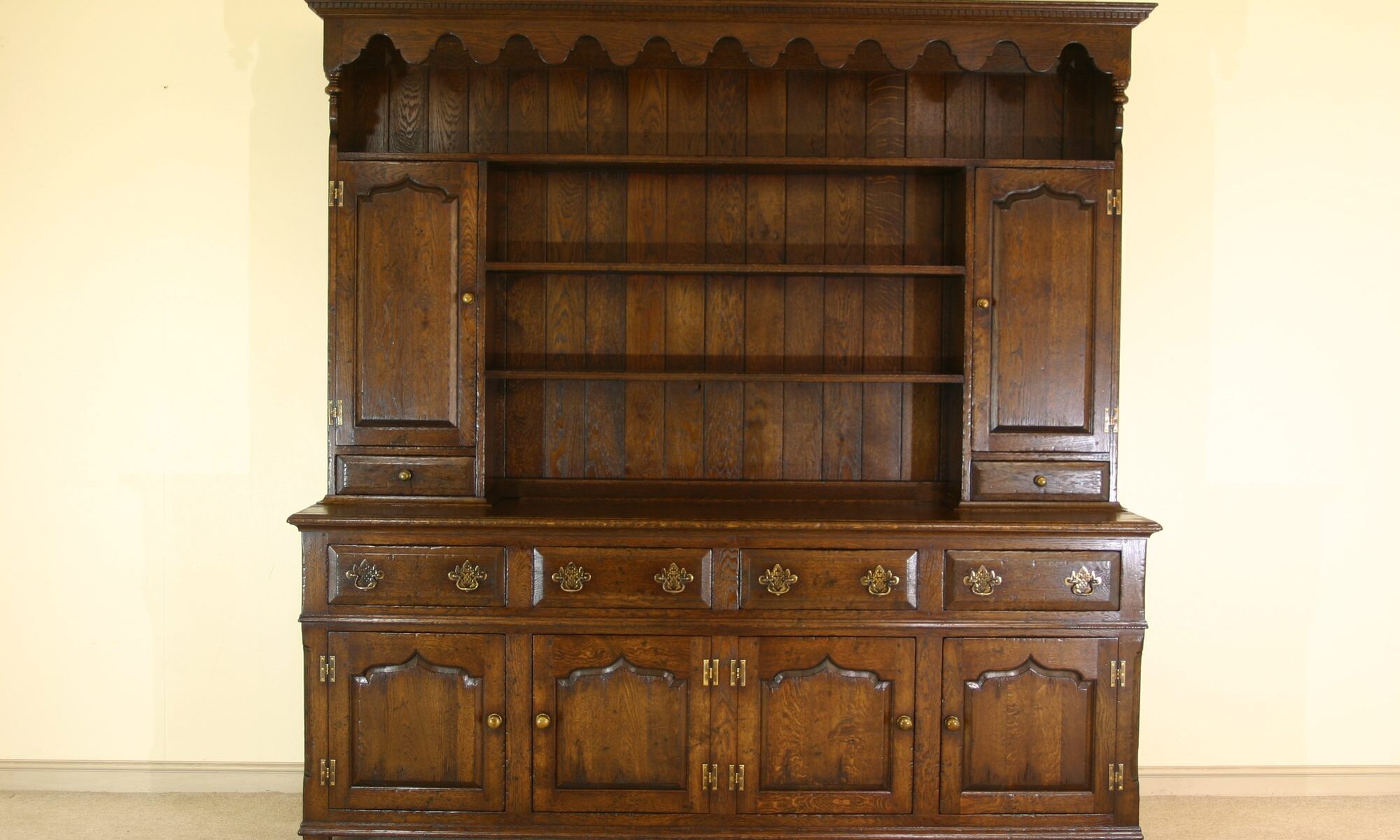
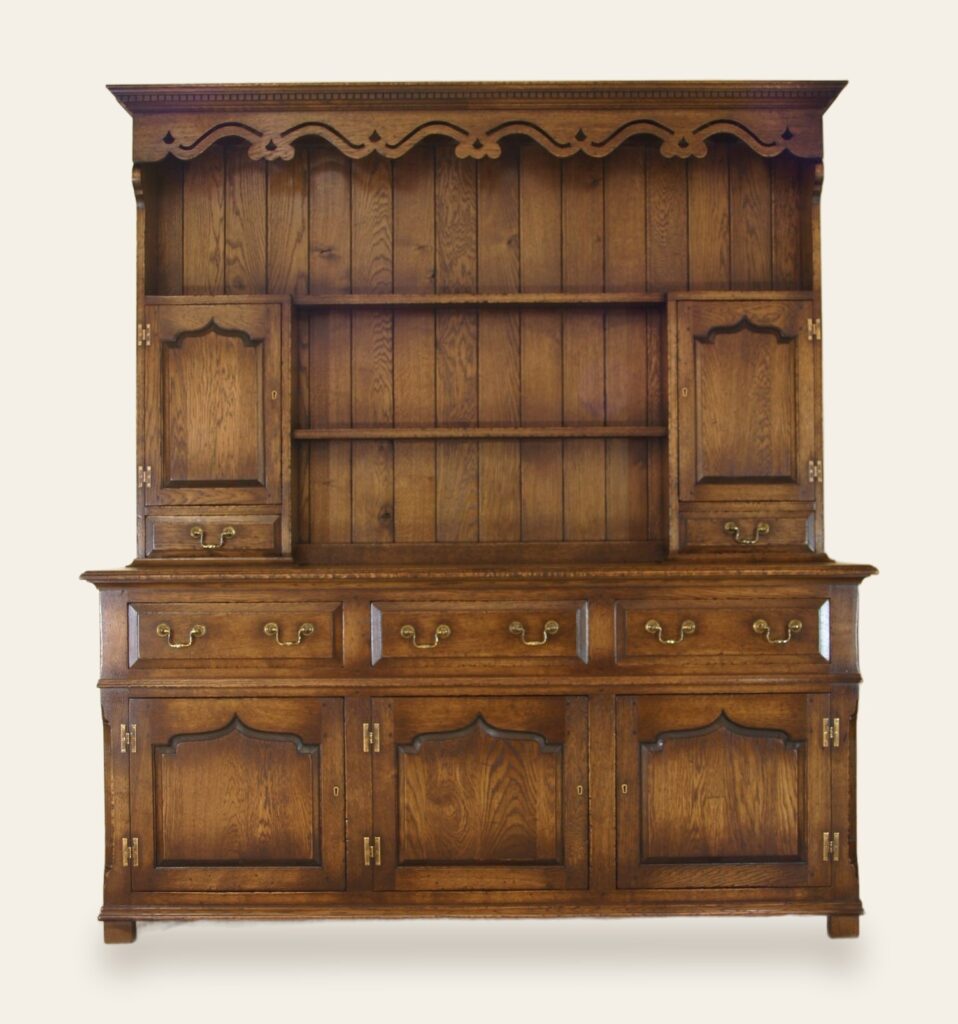
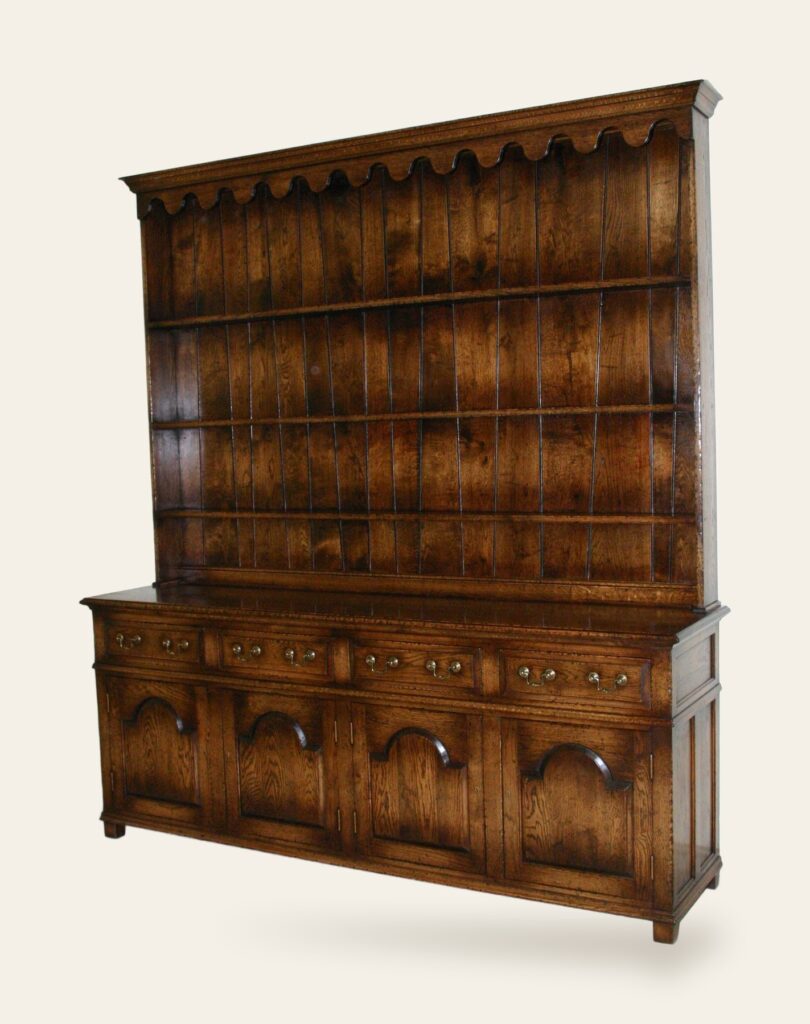
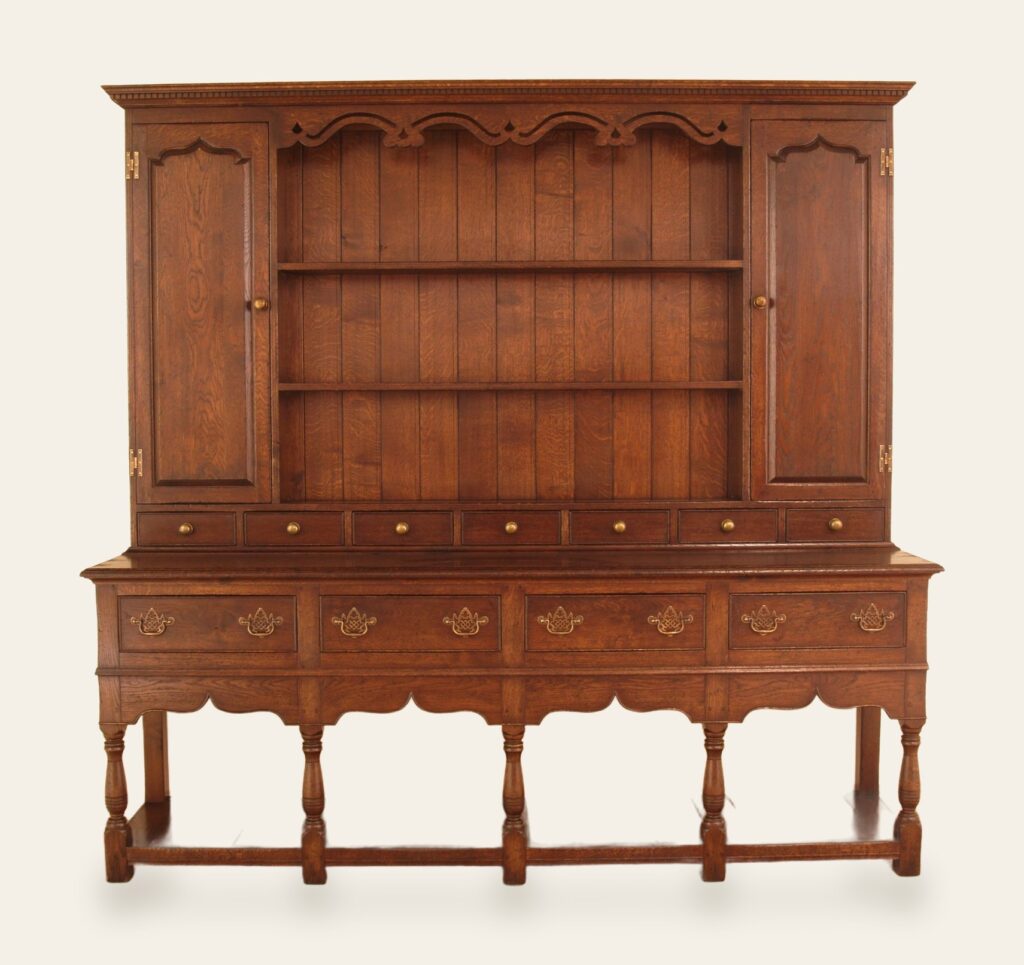
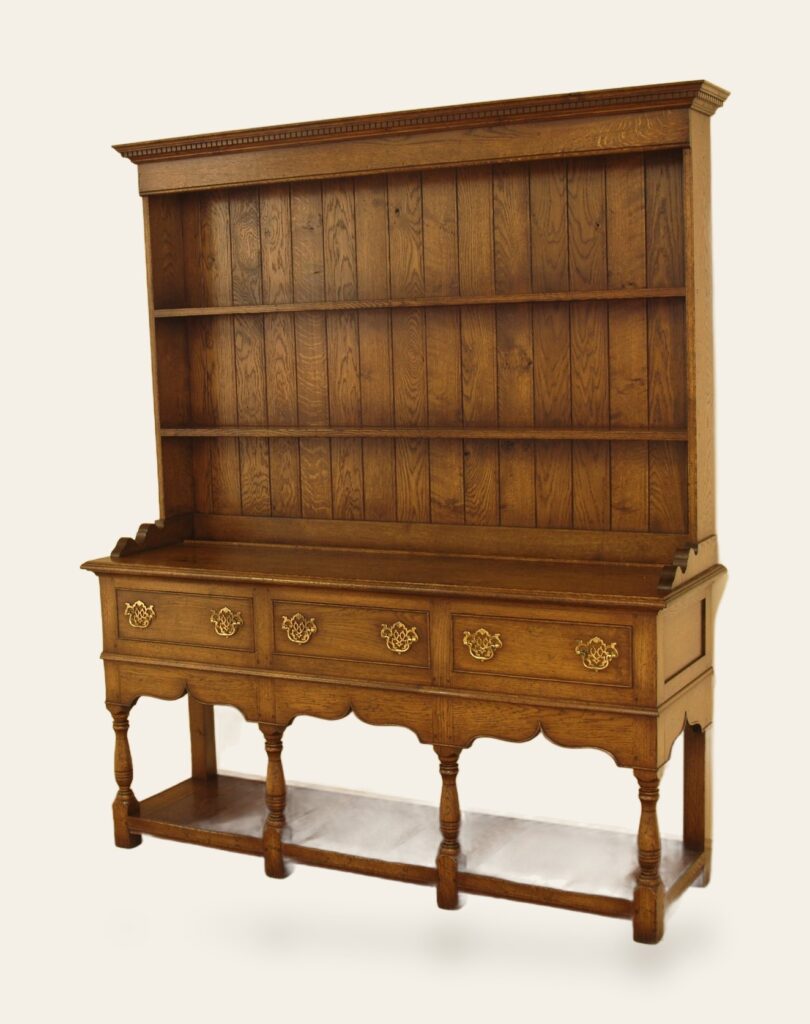
A dresser is two pieces of furniture that live together. Underneath is the base — a cupboard-and-drawer carcase at worktop height, with a solid top you use. Above it sits the rack — an open shelved structure for plates, jugs and glass, which stands on the base rather than being built into it.
On this page
That division is the whole form, and it is why a dresser is still the most useful thing you can put along a kitchen or dining room wall. The base does the work of a sideboard. The rack does the work of a display cabinet, without a door in the way.
It is also why you do not have to have both. A great many of the dressers we make leave the workshop as a base only.
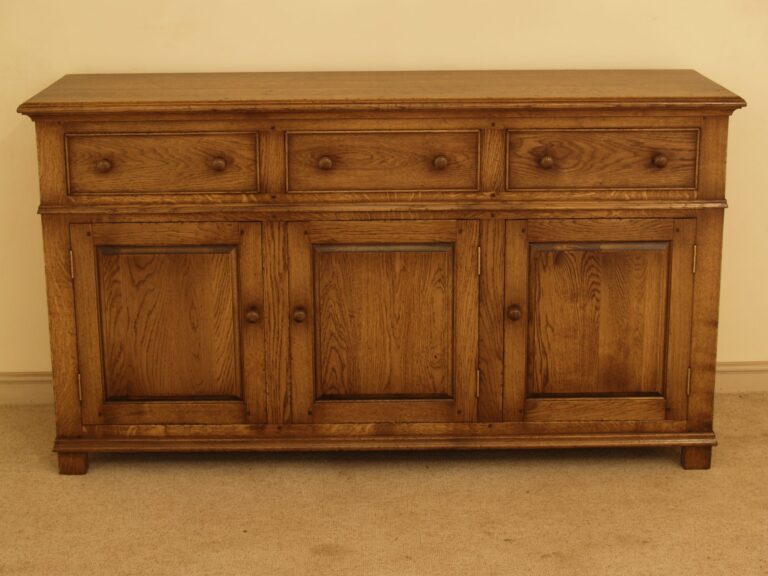 Oak Dresser BasesOak dresser bases made to order in Suffolk: Denbigh, Oakamoor, Montgomeryshire, Corwen, Georgian, Windrush limed oak and gothic patterns, in any size.
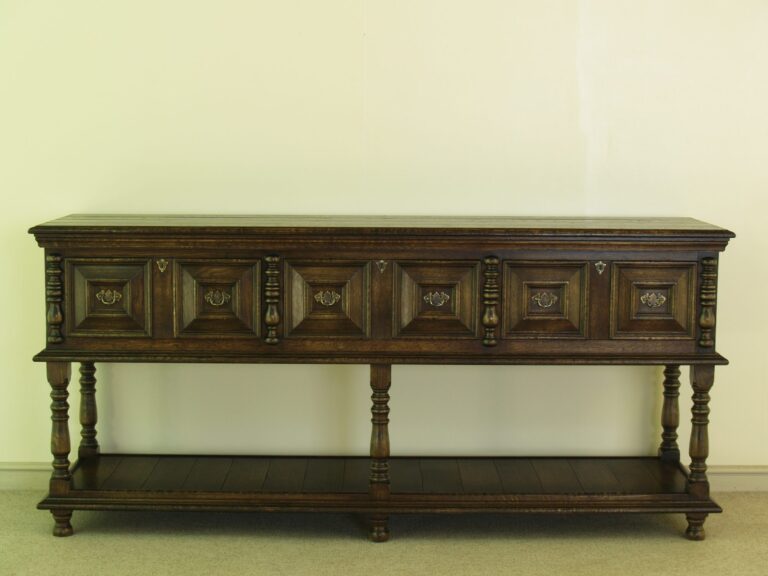 Potboard Dresser BasesPotboard dresser bases handmade in Suffolk. What a potboard is, why to have one, and the three, four, five drawer, six leg and carved versions we make.
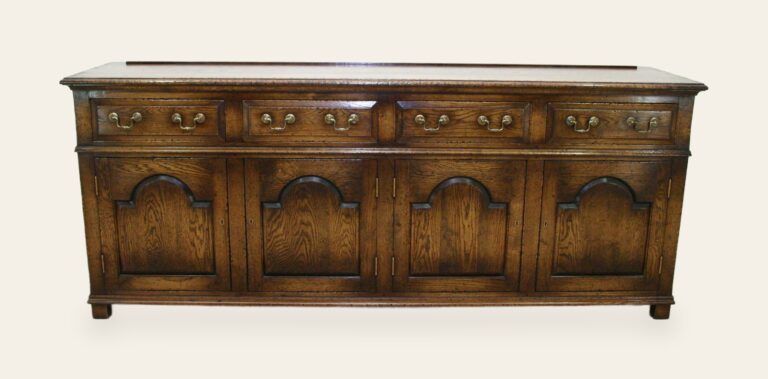 Welsh Dressers in Solid OakWelsh dressers in solid oak, made to your size in Suffolk. Denbigh, Ruthin and Montgomeryshire dressers and racks, potboard dressers and delft racks.
The base
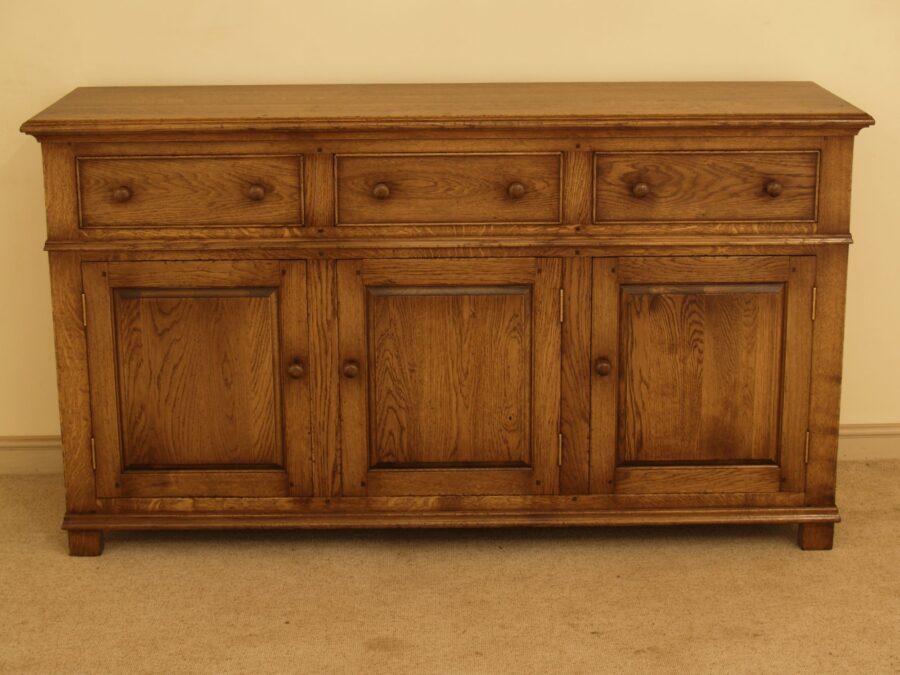
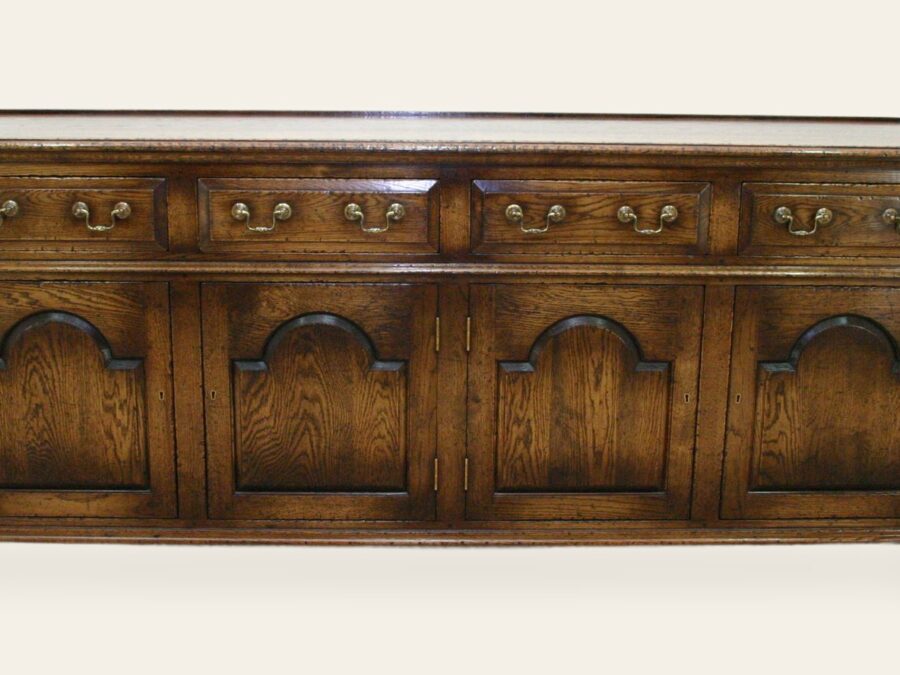
The base carries the load, so it is built like a cabinet rather than a table. In the formal patterns you get a row of drawers across the top and panelled doors below; in the country patterns you get drawers over an open shelf near the floor.
Details vary by range. Denbigh uses raised and fielded panelled doors — the panel thicker in the centre and chamfered away at the edges, so it catches light like a shallow pyramid — with cock beaded drawer fronts. Oakamoor does the opposite: plain wide front framing and the oak left to do the talking.
The rack
The rack is shelving with a back and a cornice. What changes between patterns is shelf depth, the height of the plate groove, whether the back is boarded or open, whether there are small drawers in the rack, and whether the sides are shaped or square.
A rack is sized around what goes in it. Tell us the height of your largest jug and the diameter of your largest charger, and the shelf spacing is set from that rather than from a drawing.
The three forms we make
Welsh dressers — the complete dresser and rack. Denbigh, Ruthin and Montgomeryshire patterns in three- and four-door configurations, plain and shaped racks, potboard dressers with an open rack above, and delft racks to hang on their own.
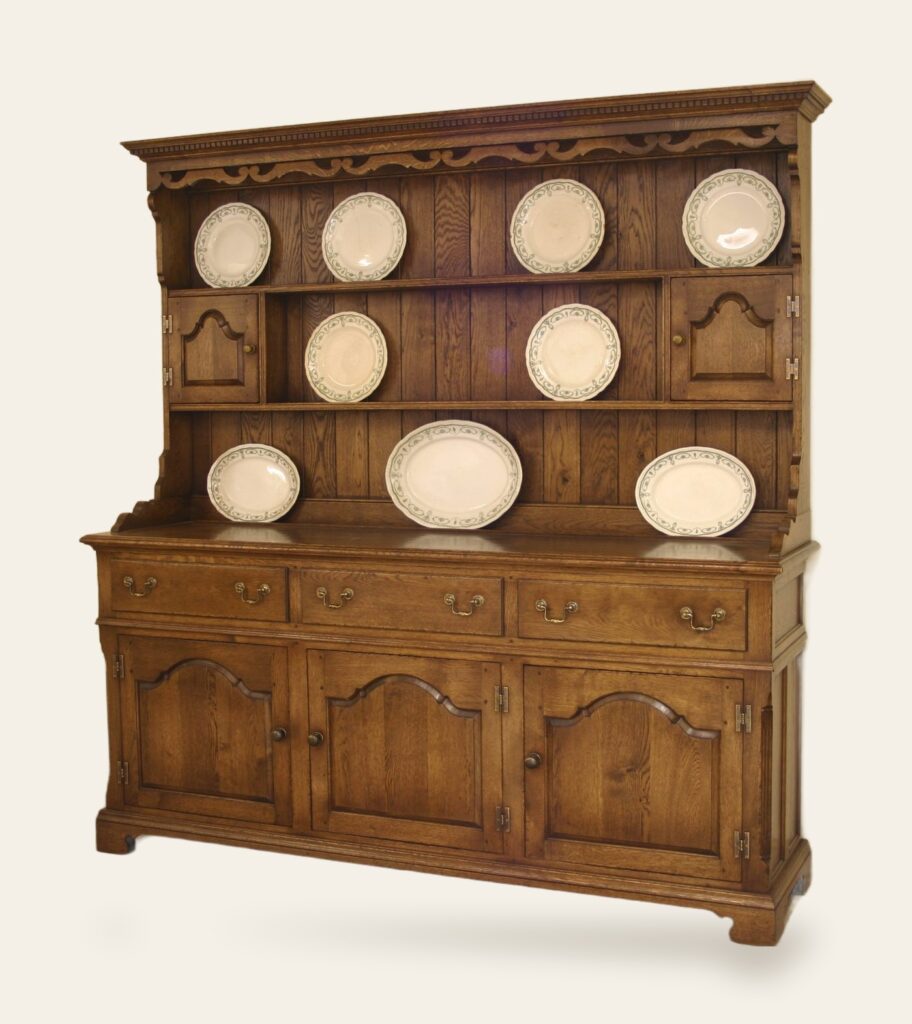
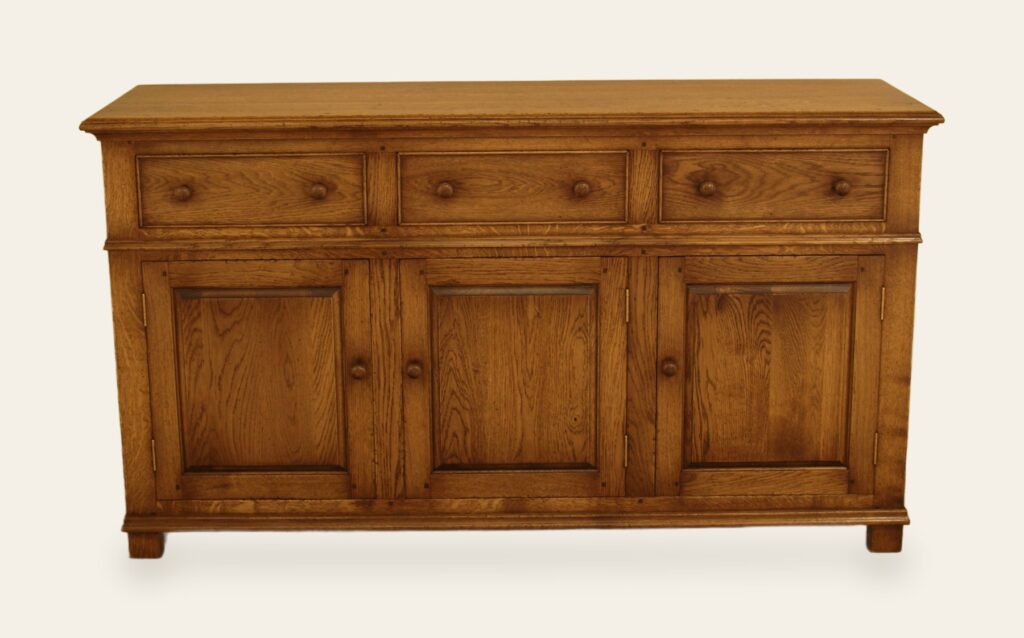
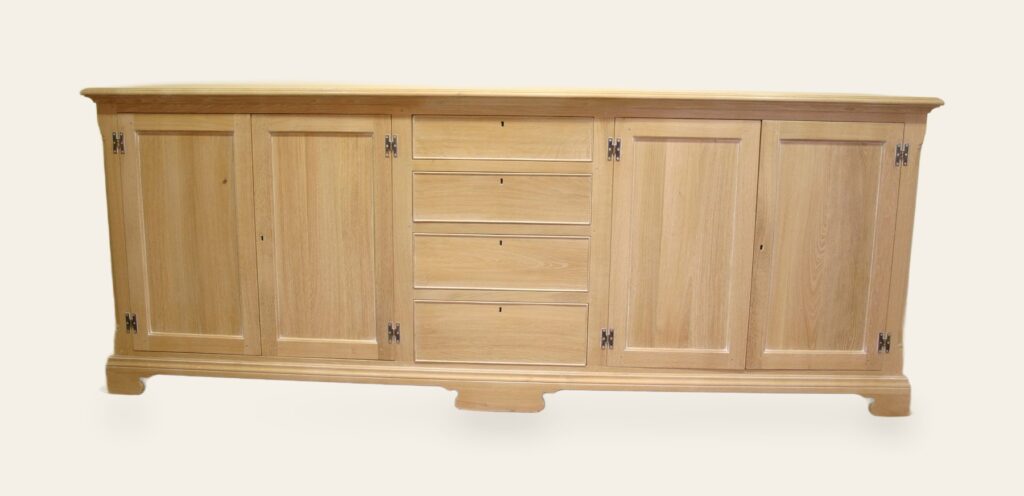
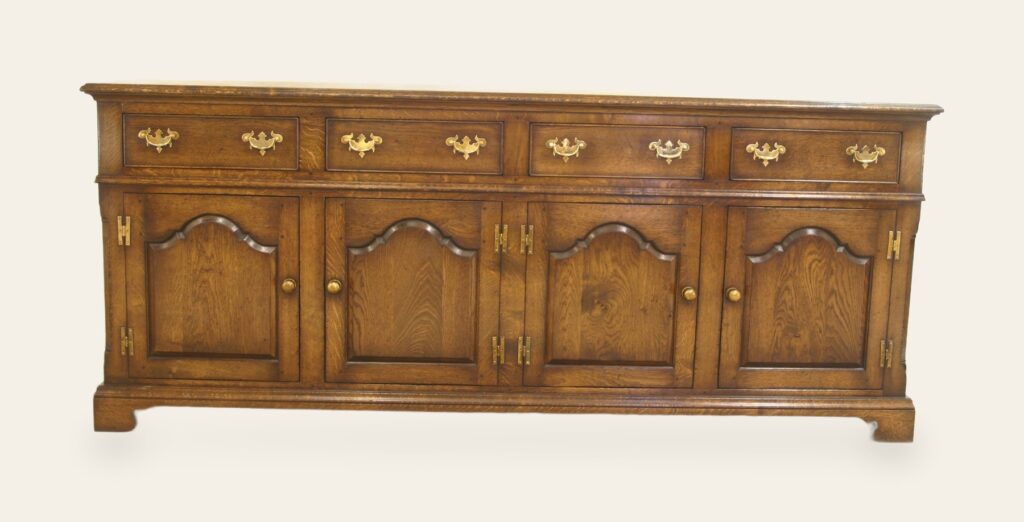
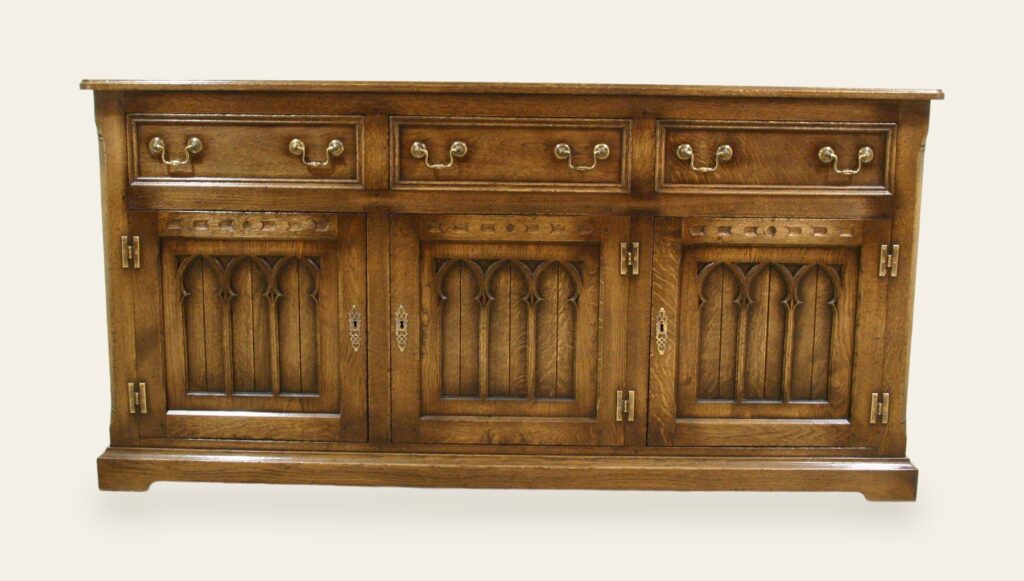
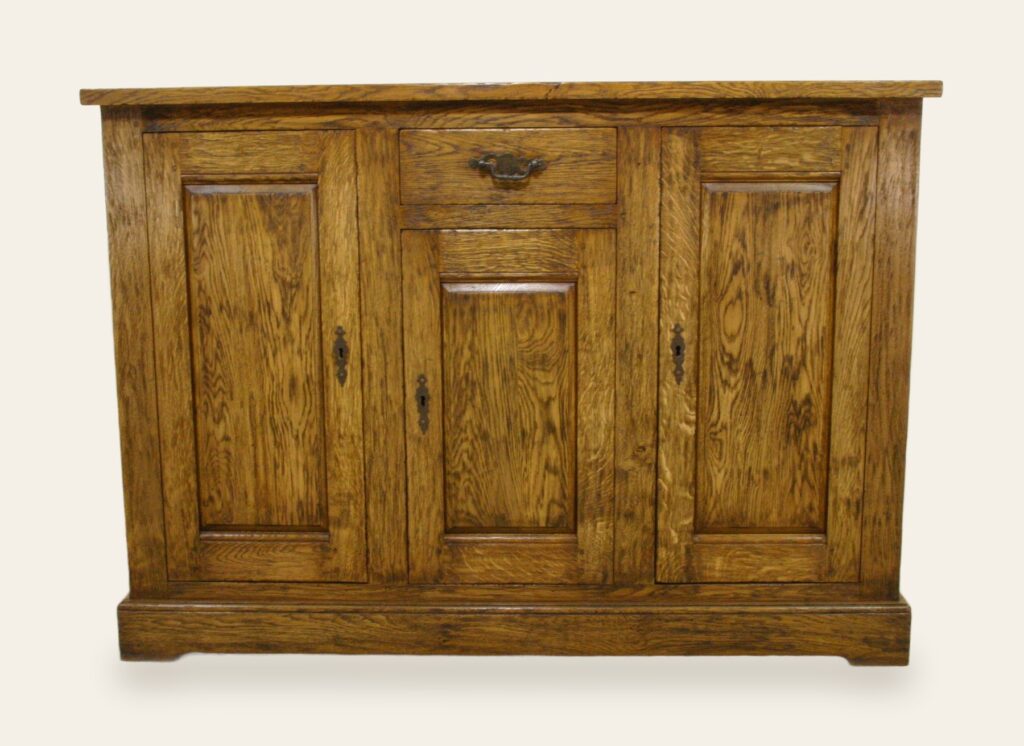
Dresser bases — the base alone, used as a sideboard or a kitchen run. Denbigh three- and four-door, Oakamoor three-drawer, Montgomeryshire and its architectural variant, Corwen with false drawers, Georgian-style, Windrush in limed oak, gothic and cherry versions.
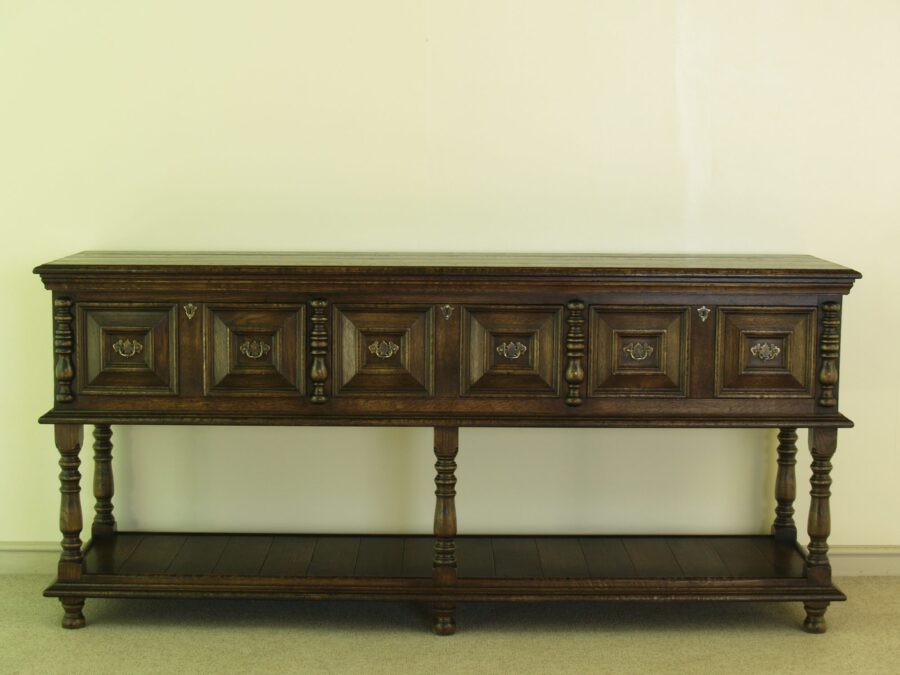
Potboard dresser bases — the country form, with drawers over a low open board between the legs. Three-, four- and five-drawer versions, the South Wales five-drawer, moulded fronts, carved bases with candle drawers, and six-leg versions.
Variants worth knowing about
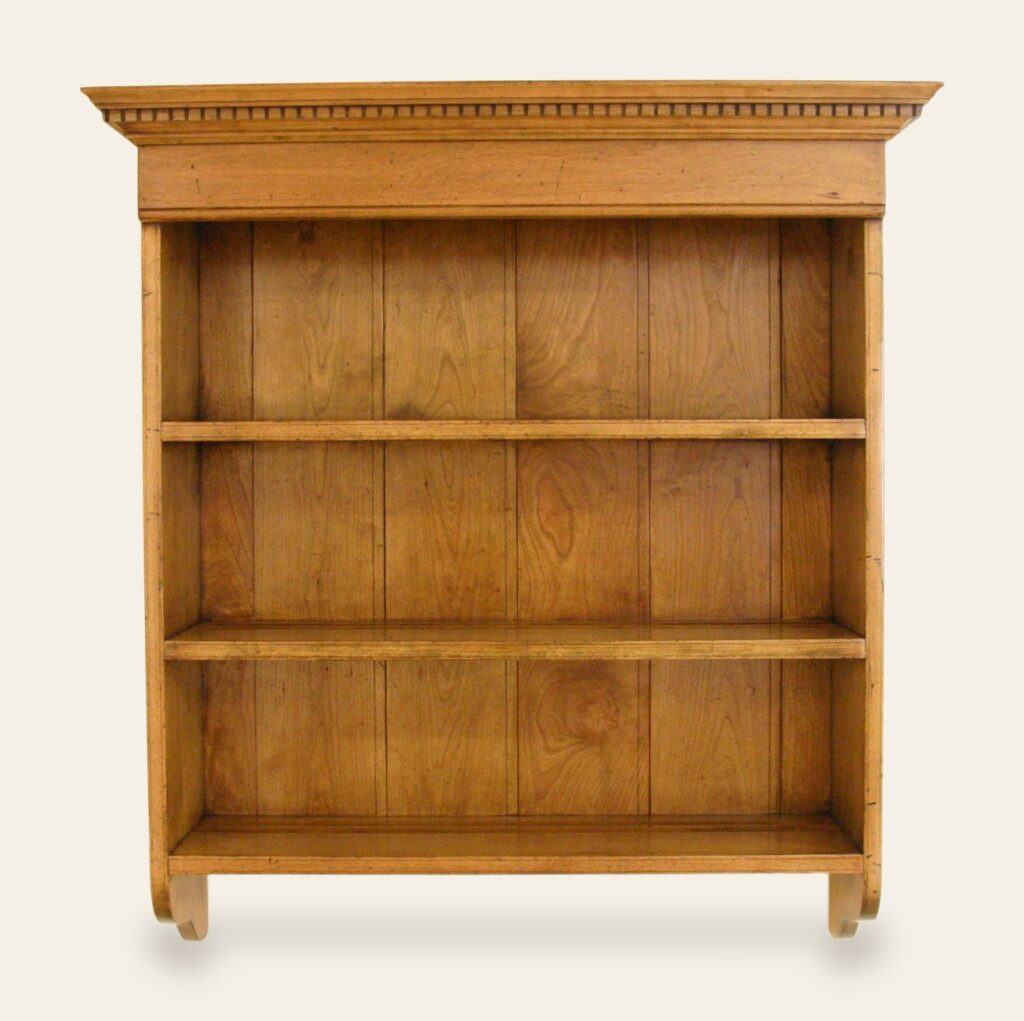
Delft racks. A rack without a base, hung on the wall, made with or without a row of small drawers along the bottom. The right answer where a full dresser would swallow the room.
Denbigh base with a glazed bookcase top. A glazed upper stage instead of an open rack, for rooms where dust is the enemy.
Denbighshire Tridan. A distinct cabinet form in its own right, related to the dresser family but not a dresser and rack.
Timbers
Oak, cherry, mahogany and walnut are the standard four, and every dresser and base is made in all of them. Oak is much the most specified. Cherry is the usual choice for the Gothic and Rowton patterns and darkens considerably over the first few years.
Specials, quoted on application: character oak, with knots and movement left in; pippy oak in light, medium and heavy grades, for tops; oak selected for medullary ray, the silver-grey figure that flashes across quarter-sawn oak, within or without the timber; and clean timber with no knots at all.
Finishes run from polished to painted, limed, sand-blasted, rub-through paint and natural, or colour matched to a sample. We can match furniture that is 100 years old to new reproduction purchases made the year before.
Order timber and finish samples. A dresser is the largest single area of timber most people put in a room, and two oak shades are not a small difference across that much surface.
Made to your size
A dresser usually has to fit between two fixed points, so almost every one is altered. Every dimension is open.
Common changes: the base cut to an alcove width; the rack shortened to clear a beam or a sloping ceiling; the rack made narrower than the base so the top stays usable; shelf spacing set around particular china; drawers swapped for cupboards; a potboard added to a pattern that does not normally carry one; brass swan neck handles changed for turned wooden knobs.
If what you want does not exist yet, our designers draw it before anything is cut. See bespoke and commissioning.
Prices
Quoted individually, because no two dressers are the same size. Tell us the pattern, the width, the timber and the finish and we will give you a guide price. Special timbers and finishes are priced on application. Standard lead time is normally twelve weeks, and up to sixteen when the workshop is busy. Your date is confirmed when you order.
Every dresser we make leaves the same Suffolk workshop as our fitted joinery. Where a project also calls for panelling, a library or a fitted kitchen, that work is done by our sister companies, Reeve & Co Interiors and Square & True.
A dresser base with an open shelf just above the floor is a potboard dresser base, made with three, four or five drawers.
Frequently asked questions
What is the difference between a dresser and a dresser base?
A dresser is the base and the rack together. A dresser base is the lower cupboard-and-drawer half on its own, used as a sideboard. Both are made to the same construction; the rack simply stands on top.
Can I add a rack later?
Yes, and it is a common way to order. Tell us at the outset that a rack may follow, and we will record the base dimensions and the finish so the two match when the time comes.
What is a potboard?
The low open shelf between the legs of a country dresser base, originally used for cooking pots. See potboard dresser bases.
Will a dresser fit under my ceiling?
Tell us the ceiling height and the position of any beam and we will size the rack to suit. Racks are routinely shortened, and the proportions are redrawn rather than simply cut down.
See the dressers in the shop, with prices and timbers for each.