 Skip to content
A dining table is the one piece of furniture in a house that has to be right to the inch. It has to seat the number of people you actually feed, clear the chairs, clear the door, and leave room to walk behind someone who is sitting down. We make ours to order, which means the size is a decision rather than a compromise.
On this page
Every table below is built from scratch at our workshop in Mickfield, Suffolk. Choose a form, choose a timber, tell us the length and depth you need, and that is the table you get.
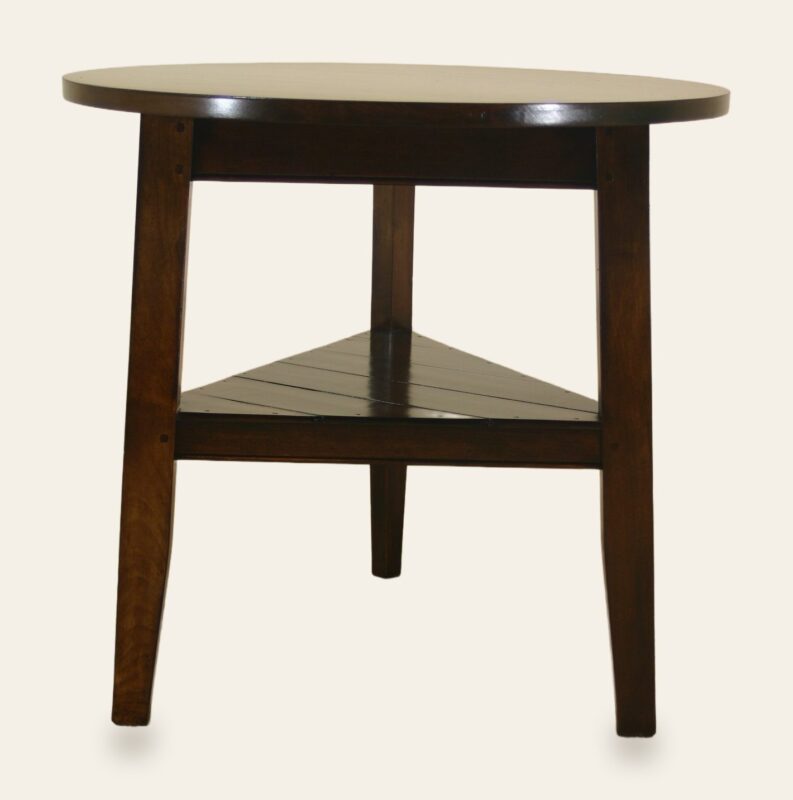
 Oak Cricket TablesThree-legged oak cricket tables made to order in Suffolk. The traditional form for uneven floors, made in oak, cherry, mahogany or walnut to your size.
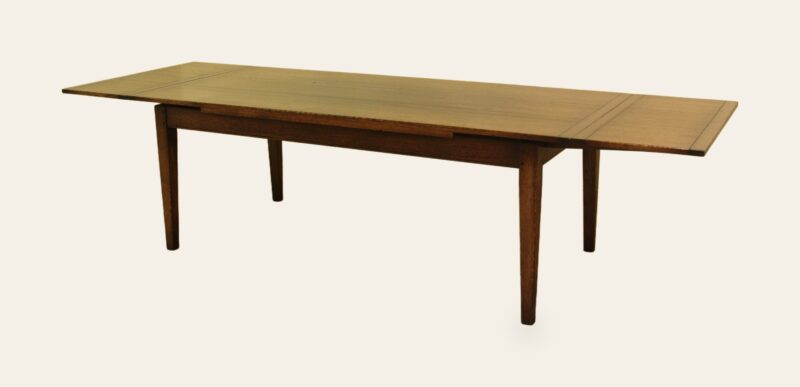
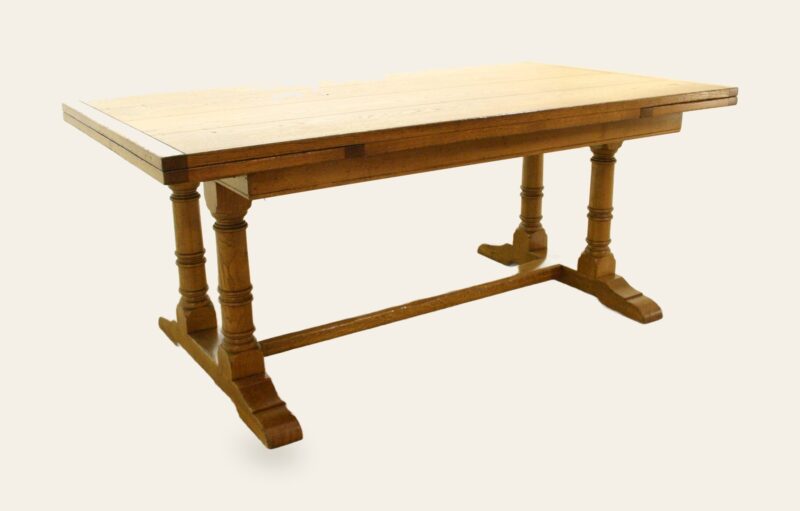
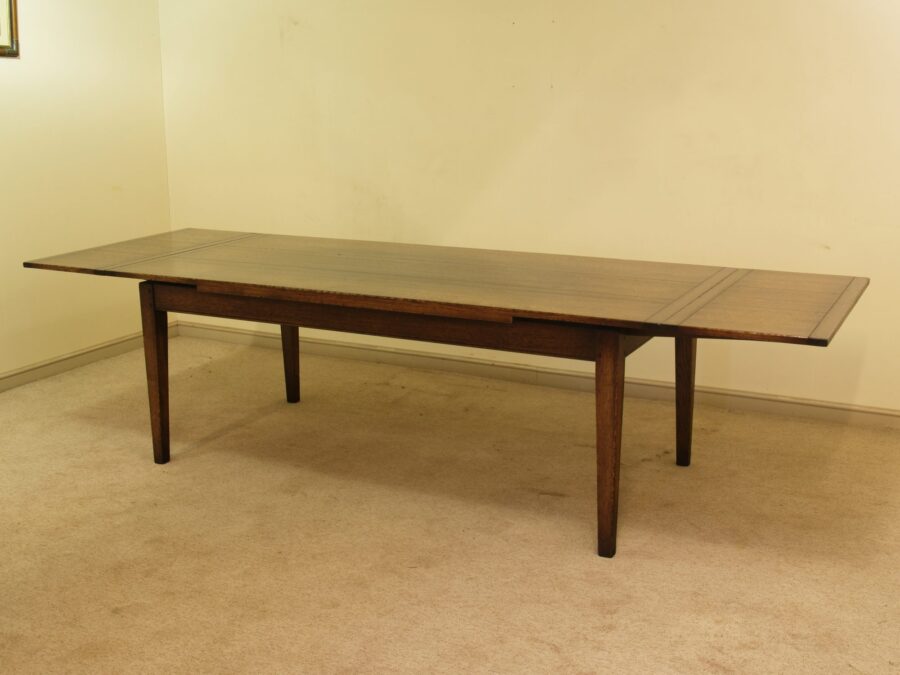
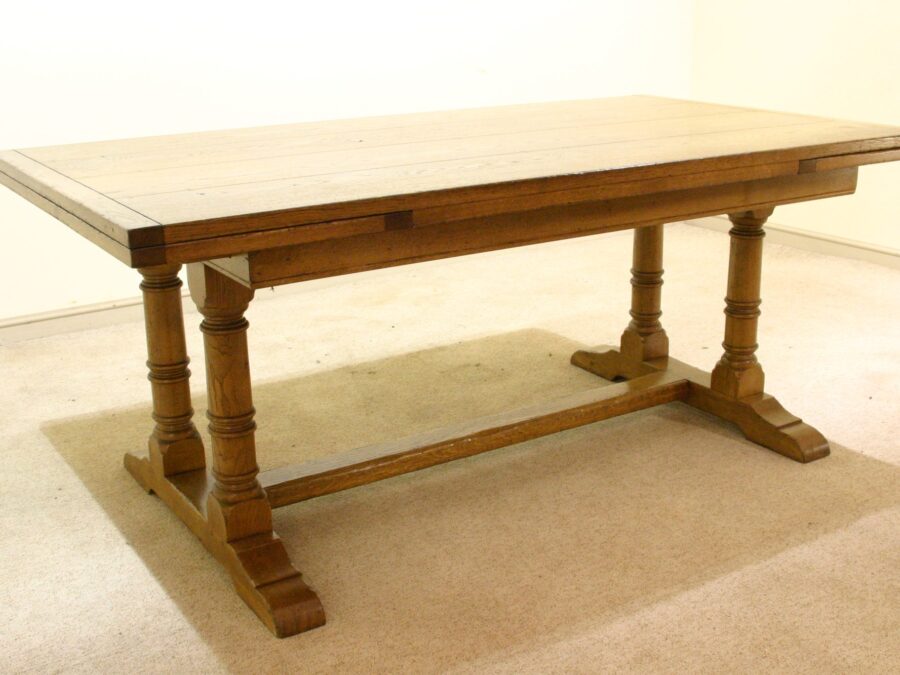
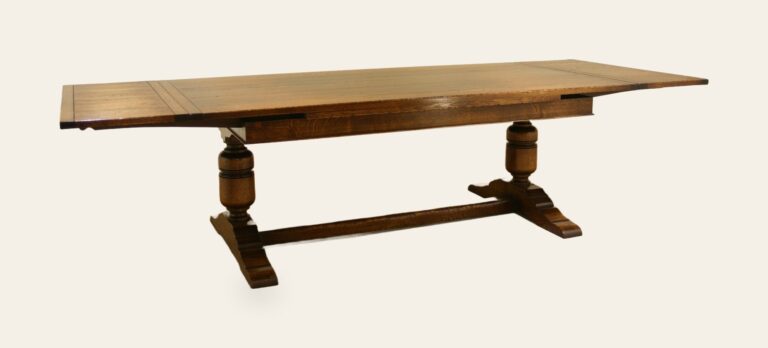
 Oak Drawleaf TablesOak drawleaf tables made to order in Suffolk. Two leaves stored under the top draw out level in seconds: extra length, nothing to store. Quoted on request.
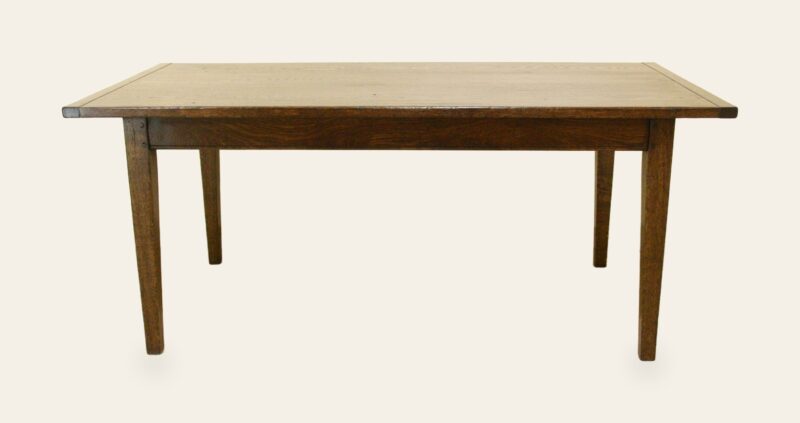
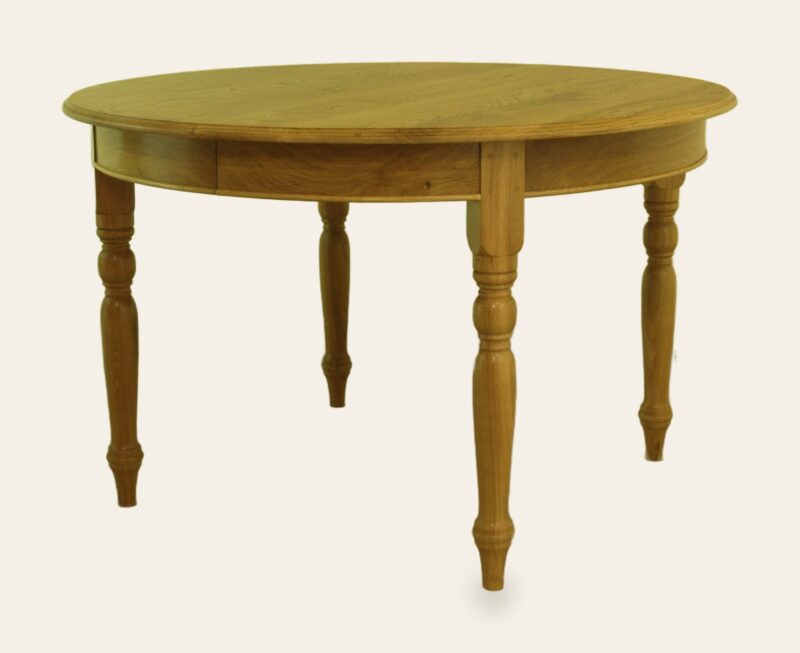
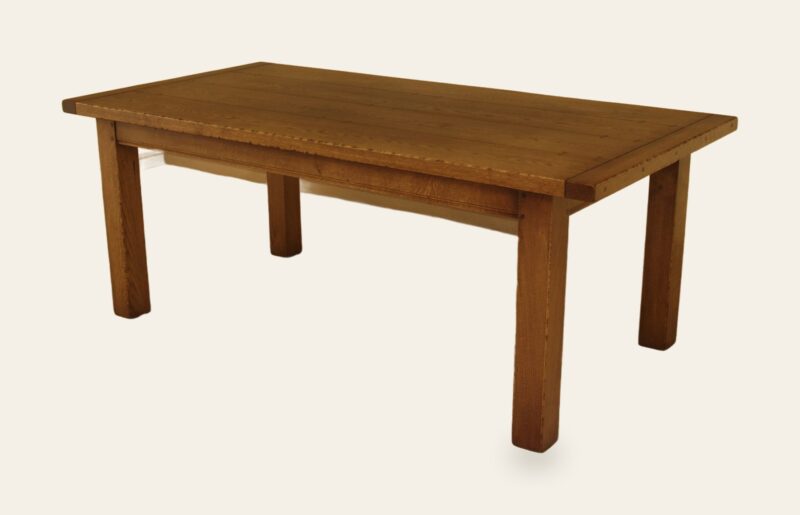
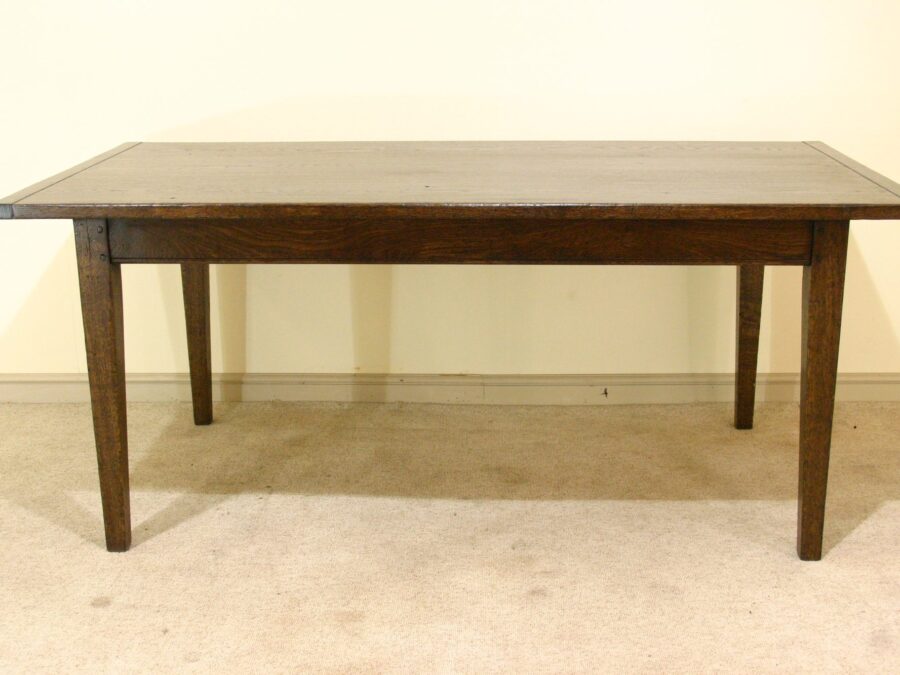
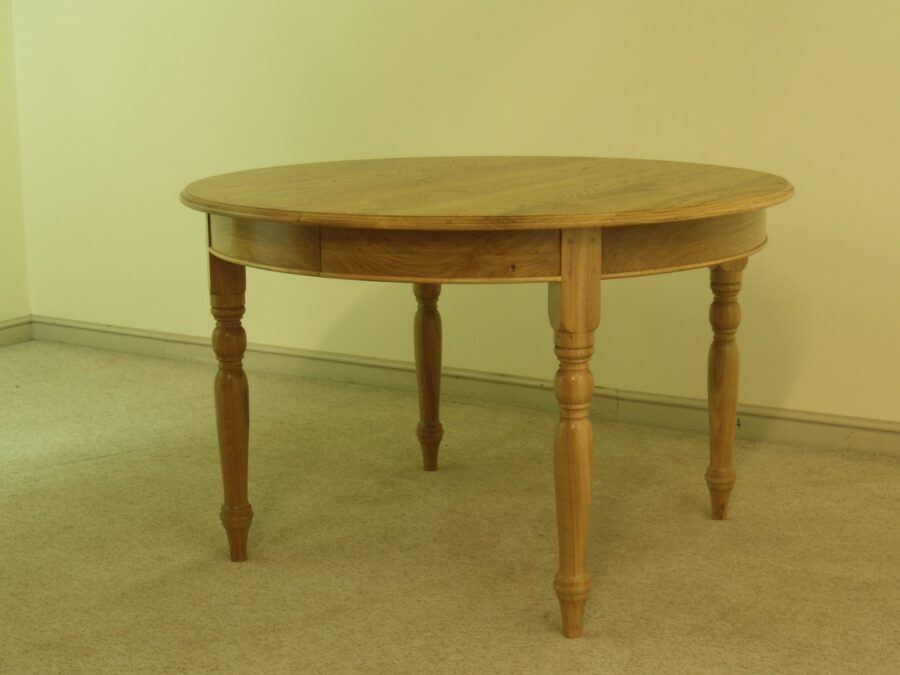
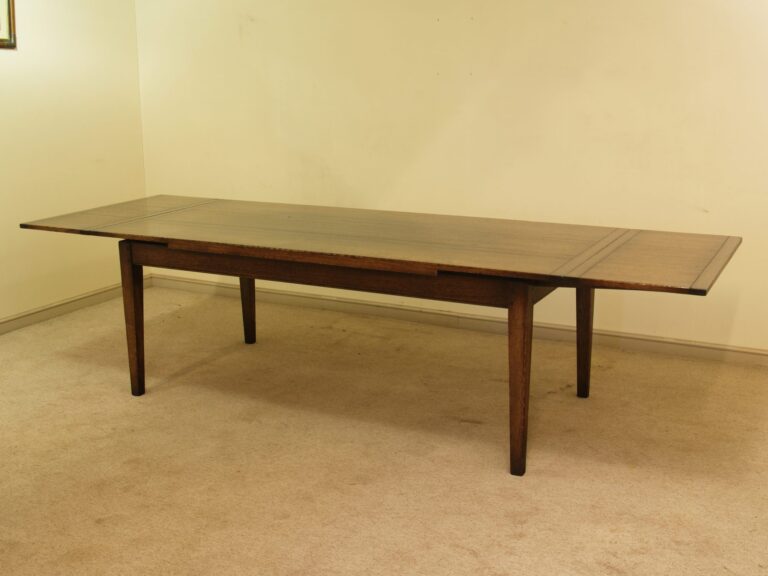
 Farmhouse Dining Tables in Solid OakSolid oak farmhouse dining tables made to order in Suffolk. Tapered or turned legs, drawers, drawleaf, round and oval. The Pendleton range, made to your size.
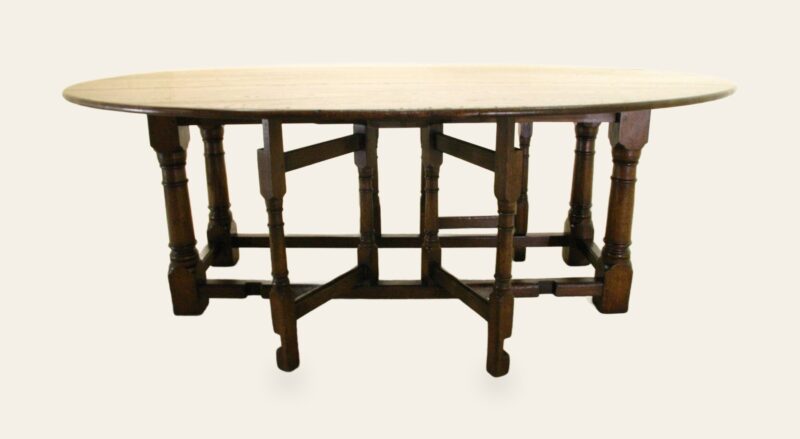
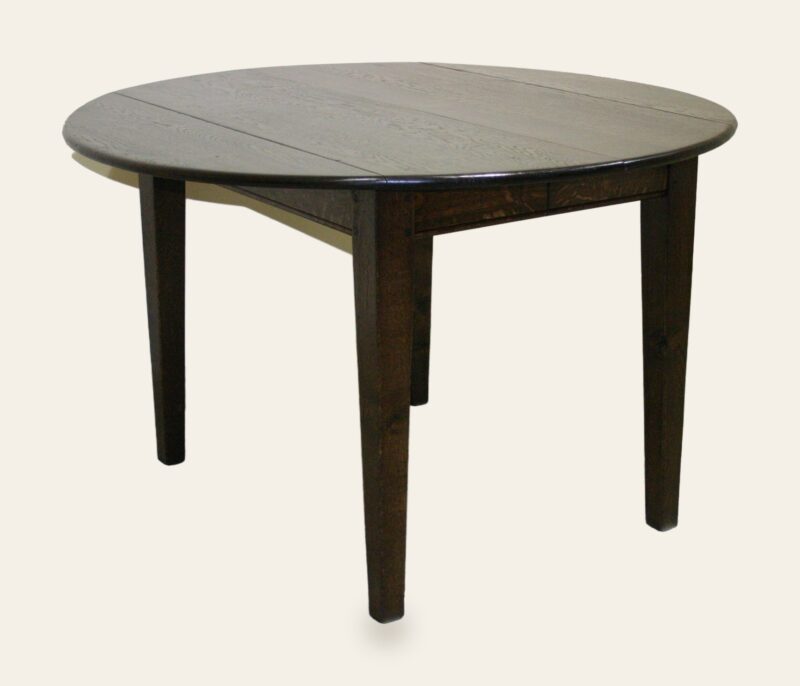
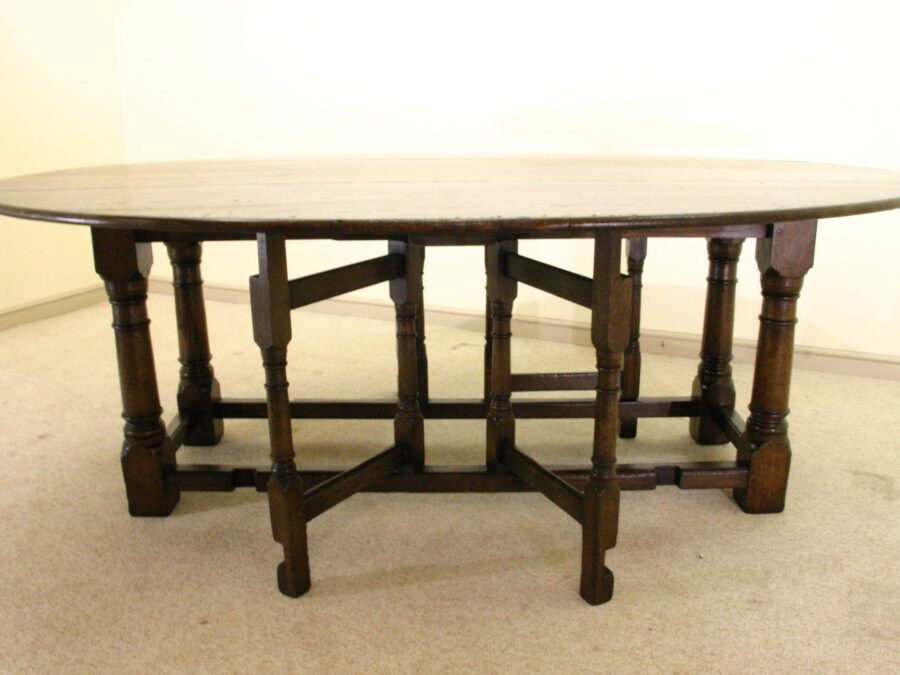
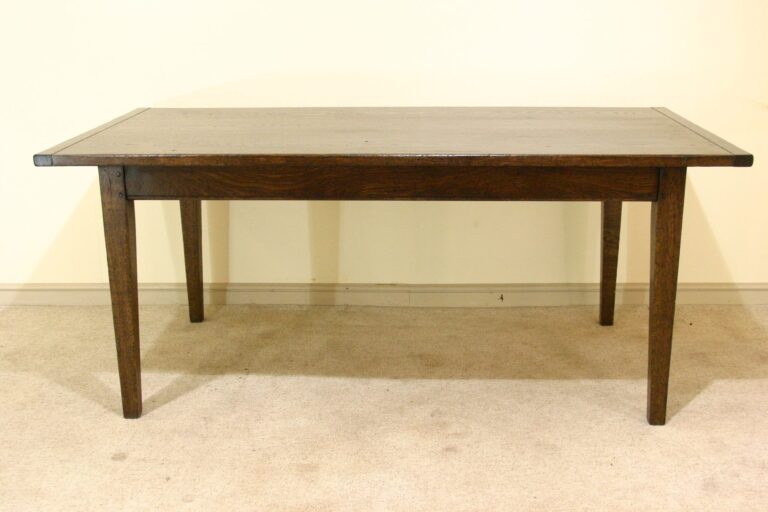
 Oak Gateleg TablesOak gateleg tables made to order in Suffolk — double gateleg oval, turned-leg round and single gateleg with drawer. Made to your size, quoted on request.
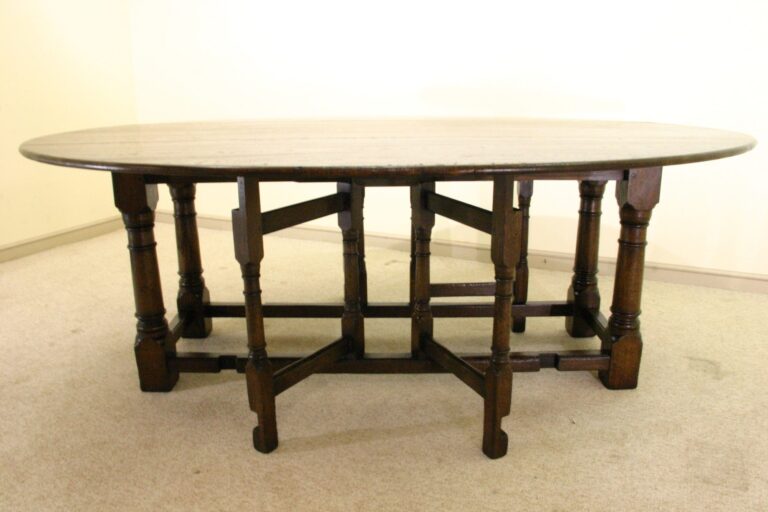
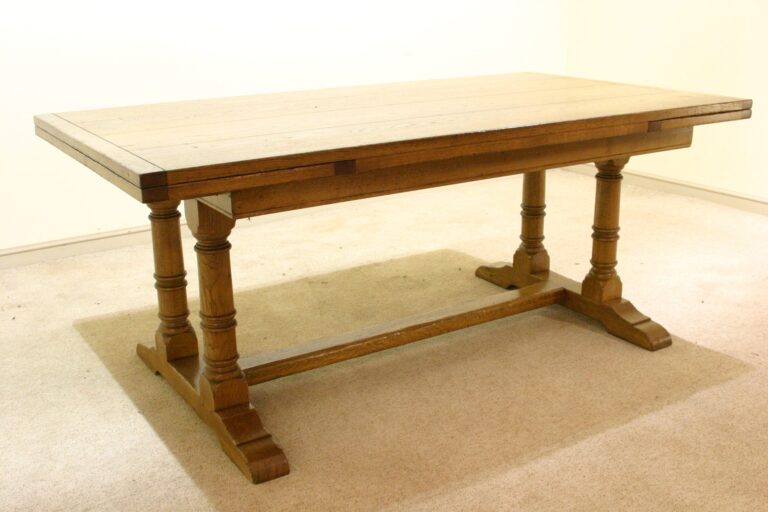 Monks’ TablesOak monks' tables made to order in Suffolk — the settle-table form that turns from seat to table, and the round cross-stretcher version with leaves.
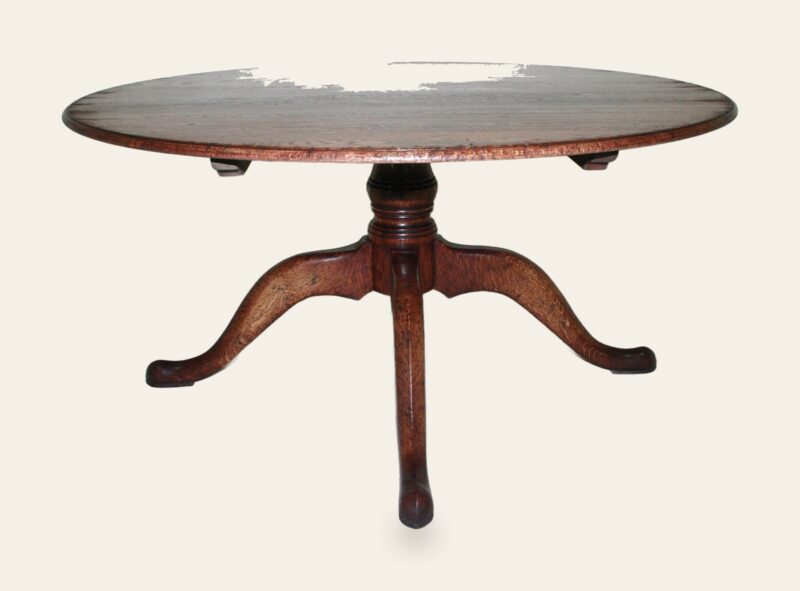
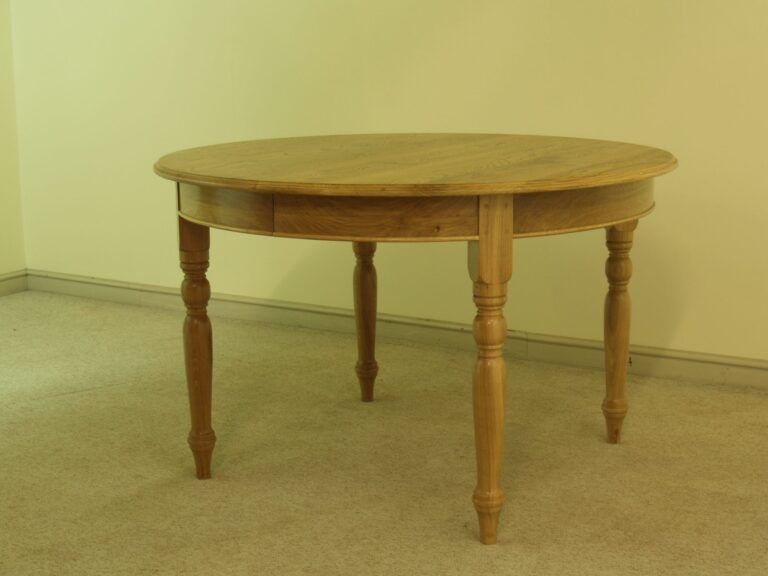 Pedestal Dining TablesSingle and double pedestal dining tables made to order in solid oak, cherry, mahogany or walnut. Triple pedestal too, with round, oval or rectangular tops.
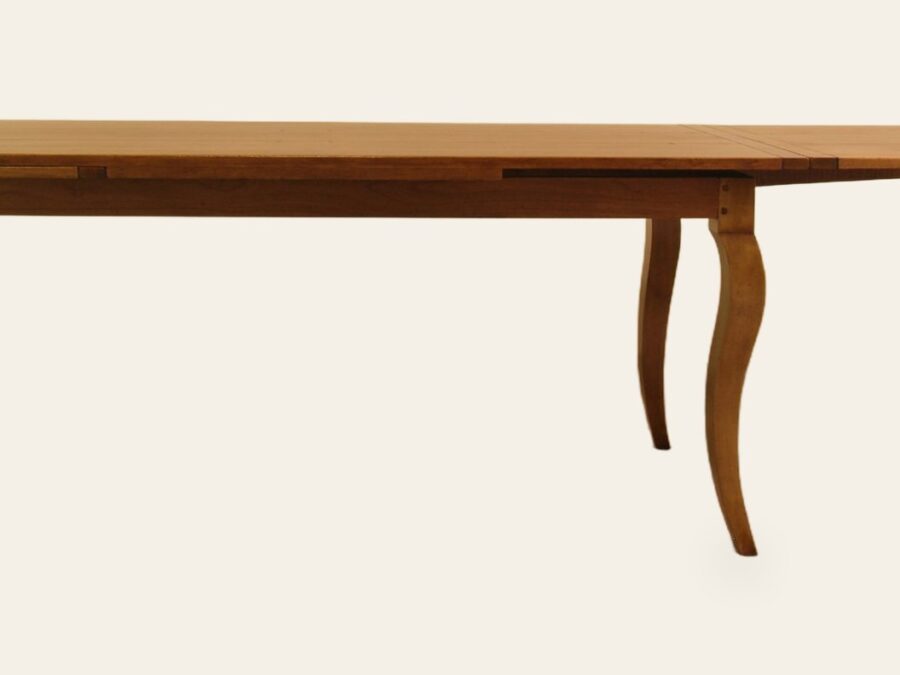
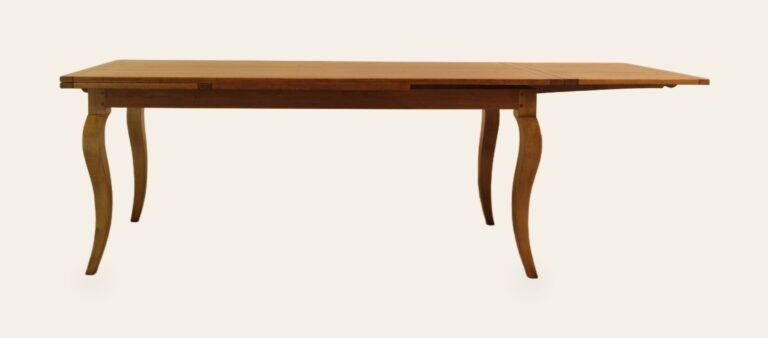 Extending Dining TablesExtending dining tables made to order in solid oak, cherry, mahogany or walnut. Draw-leaf and telescopic mechanisms, sized to your room open as well as closed.
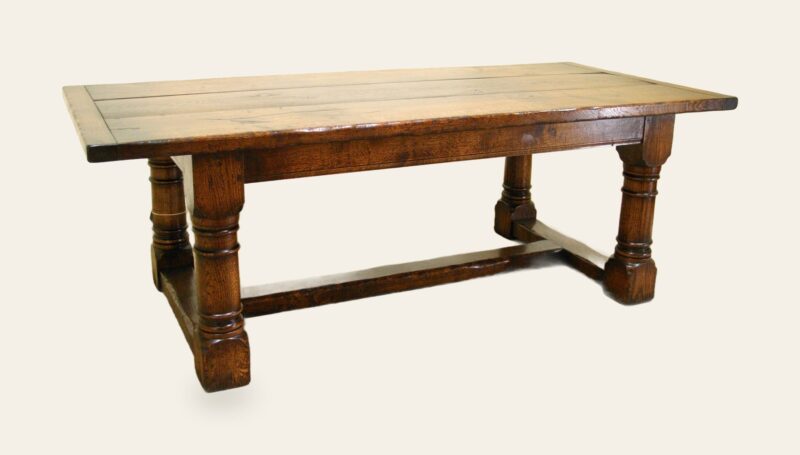
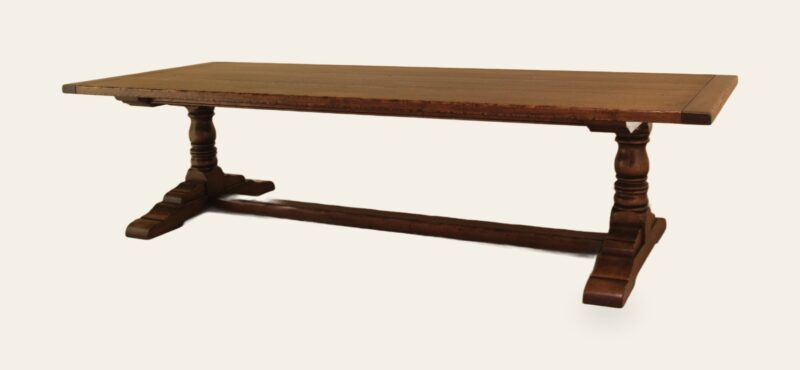
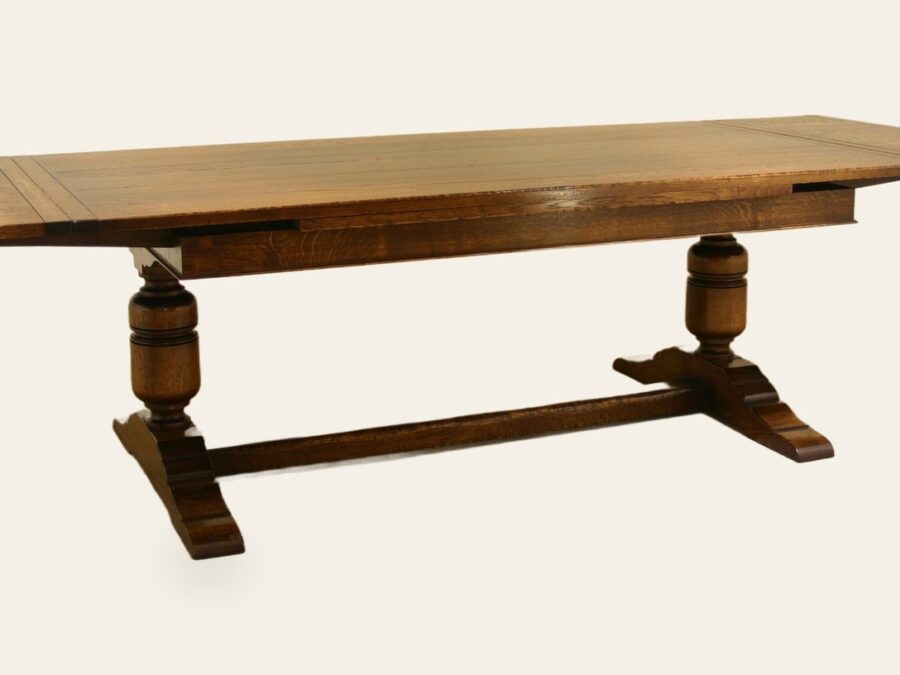
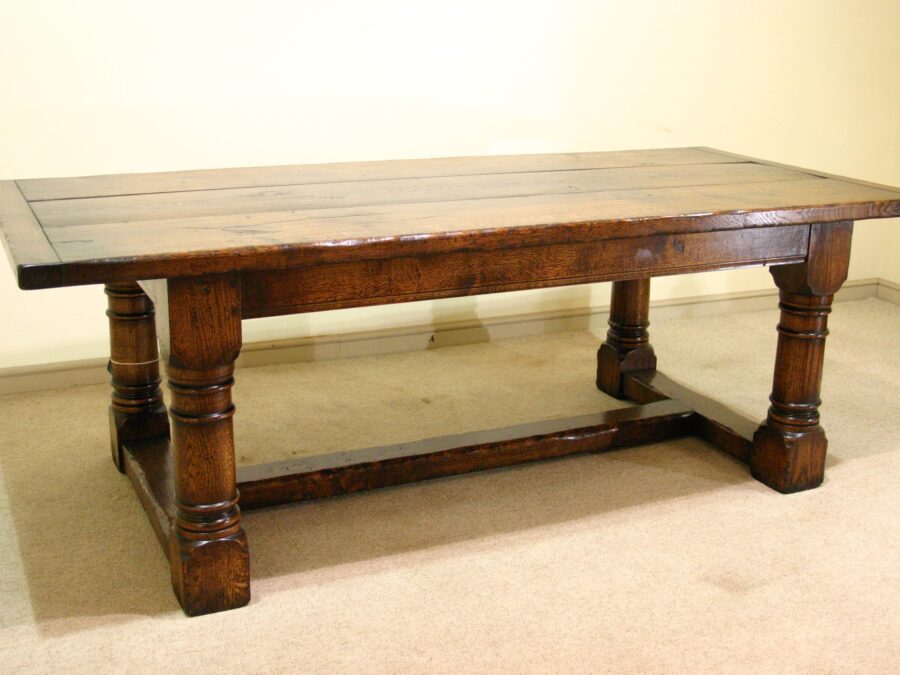
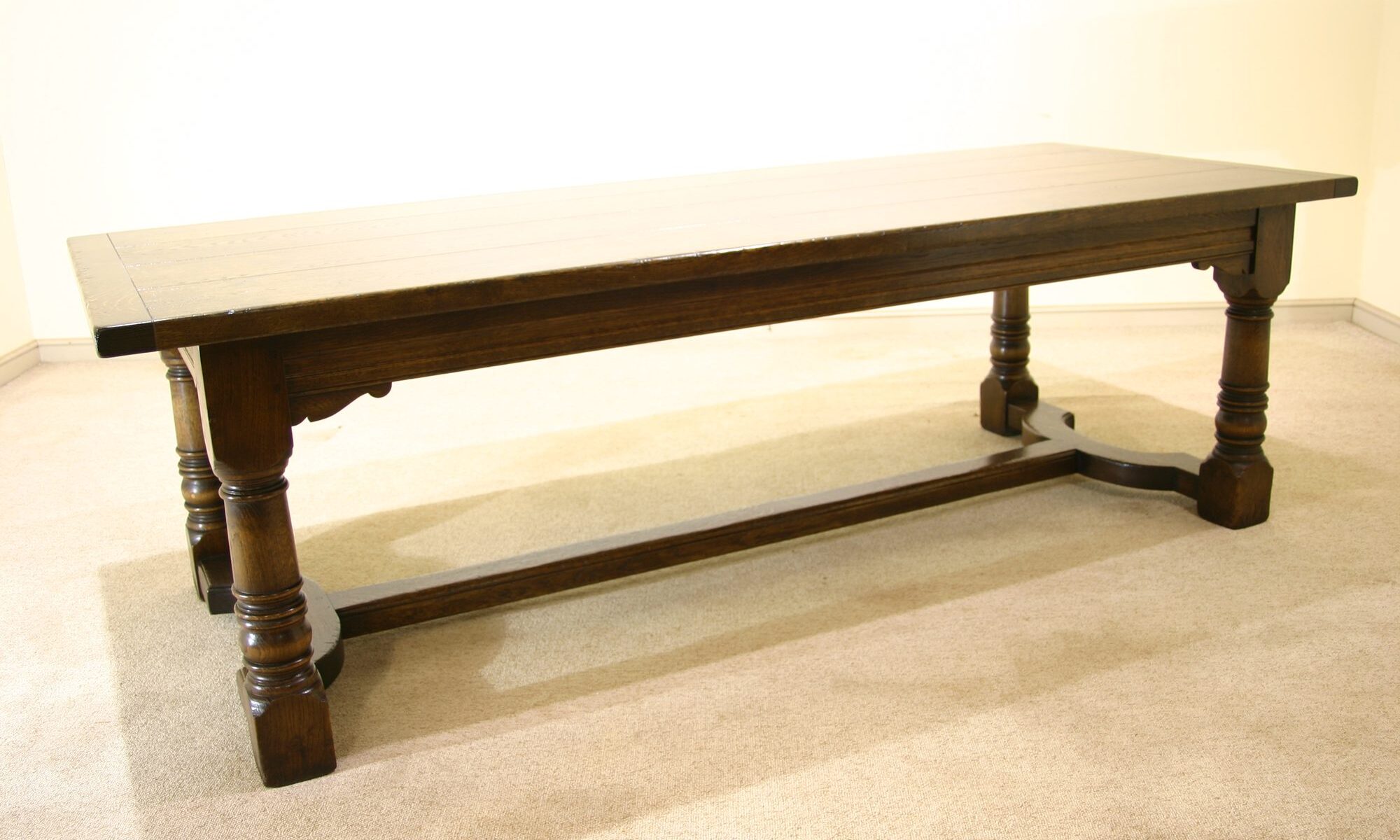
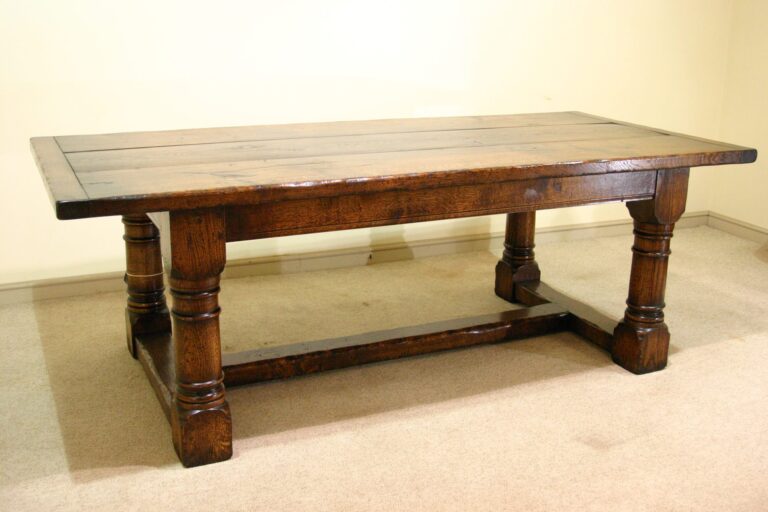 Oak Refectory TablesOak refectory tables made to order in Suffolk: planked 2in tops, baluster and bandsaw bases, drawleaf and fixed. Made to your size, quoted on request.
The forms we make
| Form | What it is | Best for |
|---|---|---|
| Refectory | Planked top on a stretchered base, often a nominal 2in top | Long rooms, big gatherings |
| Farmhouse | Frame table, tapered or turned legs, usually with drawers | Kitchens and family dining |
| Drawleaf | Leaves stored under the top, drawn out level | Two sizes, nowhere to store a loose leaf |
| Gateleg | Hinged leaves supported by swinging gates | Small rooms, occasional extra covers |
| Monks’ | Settle-table: the back swings down to make a top | Halls and snugs |
| Cricket | Three-legged, usually round | Uneven floors, small kitchens, hallways |
| Pedestal and extending | Central column or columns, no corner legs | Legroom, formal dining |
How to choose
Start with the room, not the table. Mark out the largest rectangle you could live with, and work inwards.
Then decide whether you need one size or two. If you host at Christmas and eat as a four the rest of the year, a drawleaf beats a very long fixed table you only use one end of.
Finally, decide how much you want the table looked at. A refectory table in character oak is what people notice on the way in; a farmhouse table with two drawers is what they sit at without thinking.
Sizing guidance
These are general furniture-industry rules of thumb, and a good place to start a conversation.
Table per person. Allow roughly 24in (600mm) of table edge per place setting. A 72in table therefore seats three a side, or eight in total with one at each end.
Depth. A table 35in deep takes place settings facing each other with a little room down the middle; at 39in you have a comfortable centre channel for dishes, boards and candles. Below about 33in, facing diners compete for space.
Clearance. Allow about 36in (900mm) between the table edge and the nearest wall, so a chair can be pushed back and sat in, and 42–48in (1050–1200mm) where people walk behind a seated diner. If you cannot achieve that on every side, put the tight side against a wall or a bench.
Round tables. A 48in round seats four, a 54in round five or six. A pedestal base removes the corner legs that get in the way of knees. Standard dining height throughout is 30in.
Send us the room dimensions and we will tell you what will work, including whether the top will get through your door in one piece. Every standard size we build is listed on the sizes page.
Timbers
Every table is made in oak, cherry, mahogany or walnut as standard. Oak is traditional for refectory and farmhouse forms; cherry darkens with age; mahogany and walnut suit the pedestal and Victorian forms.
Beyond the standard four, and quoted on application: character oak, with the knots and movement left in; pippy oak in light, medium and heavy grades, for tops; oak selected for medullary ray, the silver figure across quarter-sawn oak, specified within or without the timber; and clean timber with no knots at all.
Painted bases with a pippy or standard oak top are a signature treatment on the Pendleton and Georgian ranges. Finishes otherwise run from polished to limed, sand-blasted, rub-through paint and natural, or colour matched to a sample you send us.
Order timber and finish samples first. Oak in a photograph and oak in your hand under your own light are two different materials.
Standard sizes
6 piecesOval fixed-top table
Width 69, 84 or 96″ (175, 213 or 244cm)5ft 9in, 7ft or 8ft175, 213 or 244cm1750, 2130 or 2440mmDepth 57, 60 or 67″ (145, 152 or 170cm)4ft 9in, 5ft or 5ft 7in145, 152 or 170cm1450, 1520 or 1700mmHeight 30″ (76cm)2ft 6in76cm760mm
Oak, cherry, mahogany or walnut
Fixed top Oakamoor table
Width 60, 84 or 96″ (152, 213 or 244cm)5ft, 7ft or 8ft152, 213 or 244cm1520, 2130 or 2440mmDepth 35, 39 or 42″ (90, 100 or 107cm)2ft 11in, 3ft 3in or 3ft 6in90, 100 or 107cm900, 1000 or 1070mmHeight 30″ (76cm)2ft 6in76cm760mm
Oak, cherry, mahogany or walnut
Square legged table with painted legs & pippy oak top
No stretcher
Width 60, 72 or 84″ (152, 183 or 213cm)5ft, 6ft or 7ft152, 183 or 213cm1520, 1830 or 2130mmDepth 36″ (91cm)3ft91cm910mmHeight 30″ (76cm)2ft 6in76cm760mm
Hand-painted · oak, cherry, mahogany or walnut beneath
Square legged table, painted legs & pippy oak top
No stretcher
Width 84, 90 or 96″ (213, 229 or 244cm)7ft, 7ft 6in or 8ft213, 229 or 244cm2130, 2290 or 2440mmDepth 39″ (99cm)3ft 3in99cm990mmHeight 30″ (76cm)2ft 6in76cm760mm
Hand-painted · oak, cherry, mahogany or walnut beneath
Square legged table, painted legs & standard oak top
No stretcher
Width 60, 72, 84, 90 or 96″ (152–244cm)5ft, 6ft, 7ft, 7ft 6in or 8ft152, 183, 213, 229 or 244cm1520, 1830, 2130, 2290 or 2440mmDepth 36 or 39″ (91 or 99cm)3ft or 3ft 3in91 or 99cm910 or 990mmHeight 30″ (76cm)2ft 6in76cm760mm
Hand-painted · oak, cherry, mahogany or walnut beneath
Pendleton table, Base painted, pippy oak top
2 draw, turned legs
Width 66, 72, 78 or 84″ (168–213cm)5ft 6in, 6ft, 6ft 6in or 7ft168, 183, 198 or 213cm1680, 1830, 1980 or 2130mmDepth 35″ (90cm)2ft 11in90cm900mmHeight 30″ (76cm)2ft 6in76cm760mm
Hand-painted · oak, cherry, mahogany or walnut beneath
These are the sizes we make as standard. Every piece is made to order in our own workshop, so any size between — or beyond — those listed can be made for you. Heights and depths can be altered to suit a room, and dimensions are nominal.
Made to your size
Any table here can be made longer, shorter, deeper, narrower, higher or lower. Common changes: a heavier or lighter top; legs moved inboard so a bench fits underneath; a drawer at each end; a leaf added to a fixed-top design; a base from one pattern under a top from another.
If the change is large enough that it is really a new design, that is a one-off commission and our designers will draw it first. See bespoke and commissioning.
Prices
Quoted individually, because no two are the same size. Tell us the form, the size, the timber and the finish and we will give you a guide price. Special timbers and finishes are on application. Standard lead time is normally twelve weeks, and up to sixteen when the workshop is busy; a one-off commission usually adds about four weeks.
We make each dining table to sit in a room our own joiners have frequently fitted. Reeve & Co Interiors handles the built-in work and Square & True the kitchens, all from the same yard in Mickfield.
In the room
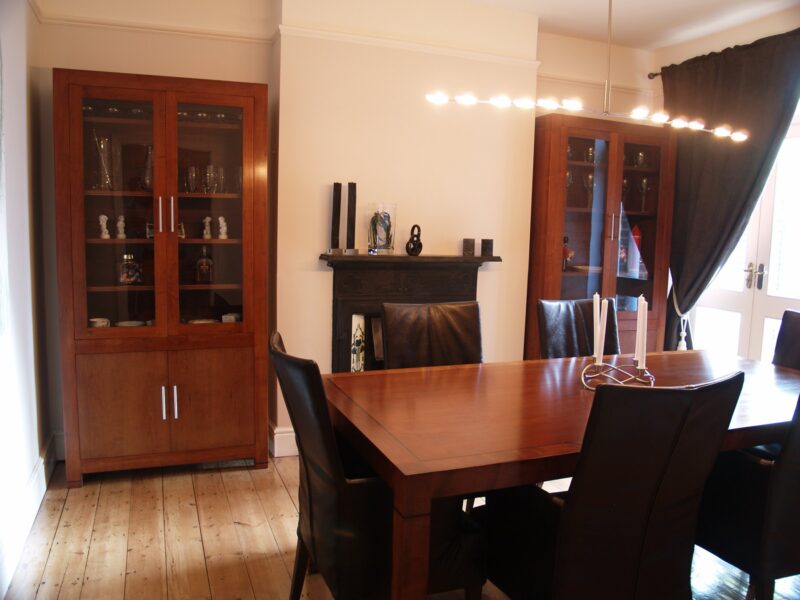
A dining room reads best when the table, the chairs and whatever stands against the wall were drawn together. The room below was one commission: extending table, leather-backed chairs and a pair of glazed cabinets, all in the same timber and through the same finishing shop.