 Skip to content
Contemporary furniture, made to order in Suffolk. The pieces below are built exactly as our period work is built — the difference is in the form, not the standard.
On this page
Bryn Hall is best known for period and reproduction work. That is where most enquiries start, and it is what thirty years of drawings sit in.
It is not the limit of what the workshop makes. The same construction, the same timber selection and the same finishing shop go into a clean modern piece. What changes is the form, not the standard.
What stays the same
A contemporary cabinet from this workshop is built the way a Denbigh cabinet is built.
The carcass is made properly. Framed and jointed, not screwed together from panels. A drawer runs on a drawer runner cut to fit it, and it will still run in fifty years.
The timber is selected before it is machined. Boards are chosen for figure and matched across a front, which matters more on a plain modern piece than a period one. There is no moulding to distract the eye, so a mismatched pair of doors has nowhere to hide.
The finish is the same finish. Polished, painted, limed, sand-blasted, natural, or colour matched to a sample, applied by the same polishers. Modern furniture in a period house very often needs matching, and that is the hardest part of the job in either style.
It is made to your size. Same as everything else here. Nothing is stock.
What changes
Clean modern work is less forgiving, not more. Take the mouldings away and everything that is left has to be exactly right: the proportion, the reveal around a door, the thickness of a top, the line where two surfaces meet.
A cock bead hides a gap. A flush front does not. So the joinery is set out more tightly on a contemporary piece, and more of the work goes into fitting rather than decorating.
That is one of the reasons a workshop with a period background makes good modern furniture. The hand skills are the same skills.
The pieces we can show you
These are made pieces, photographed, not renderings.
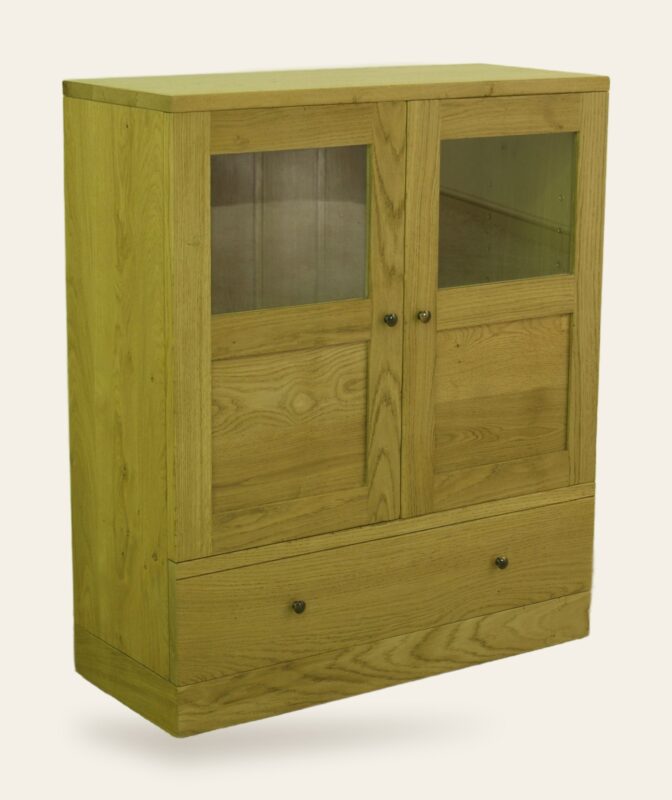
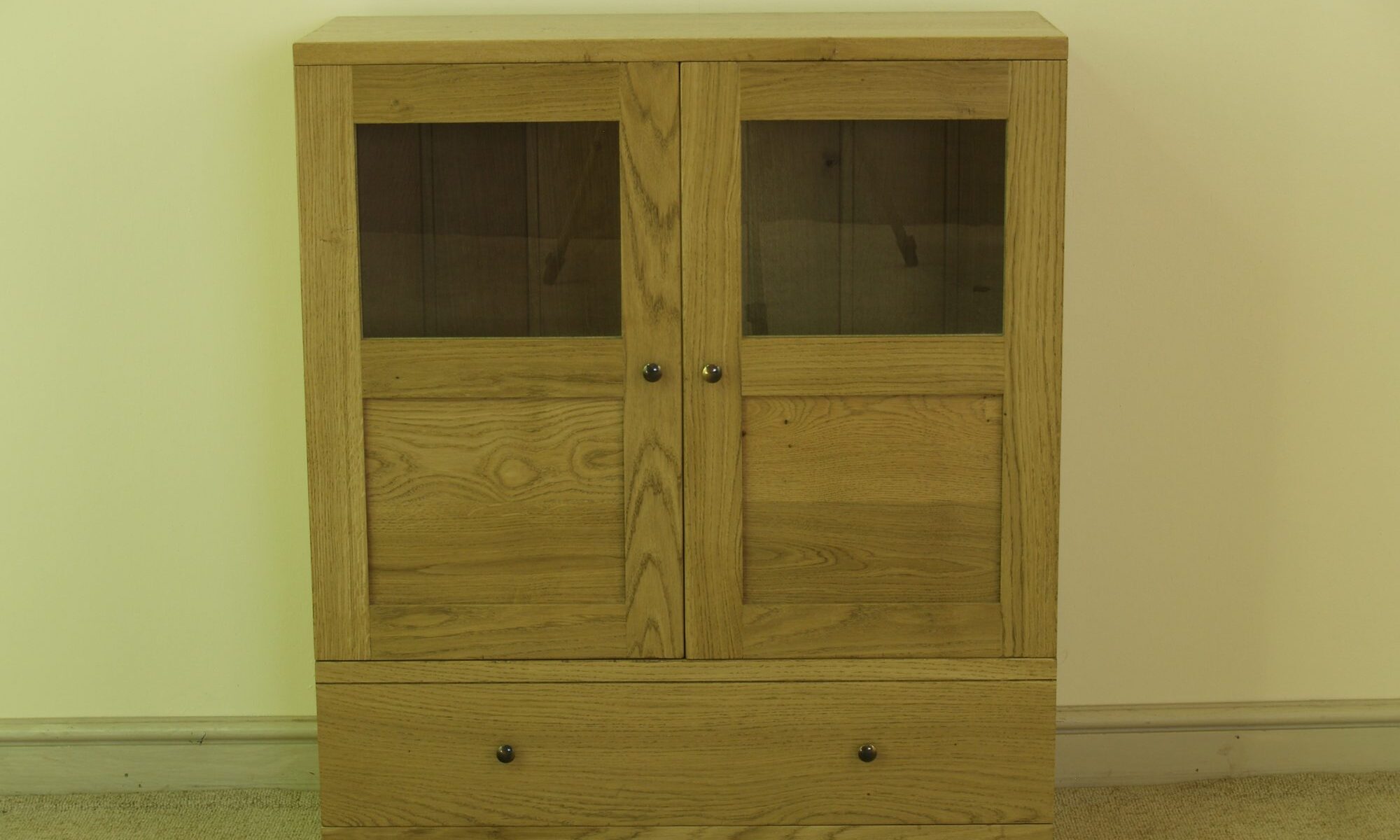
Contemporary two glass door cabinet with one drawer. A plain glazed display cabinet with a single drawer below. Clean stiles, no applied ornament, the glazing bars kept as fine as the structure allows.
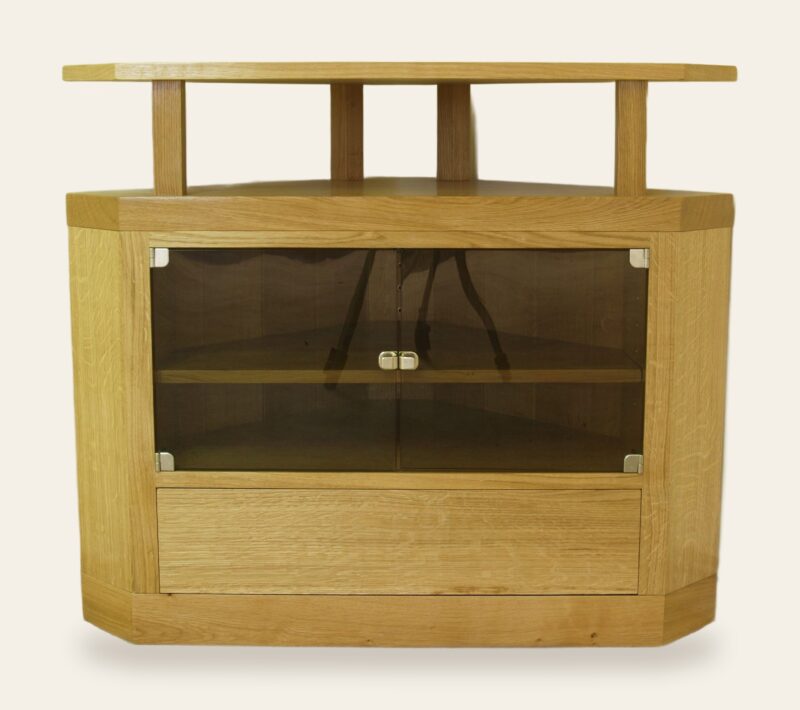
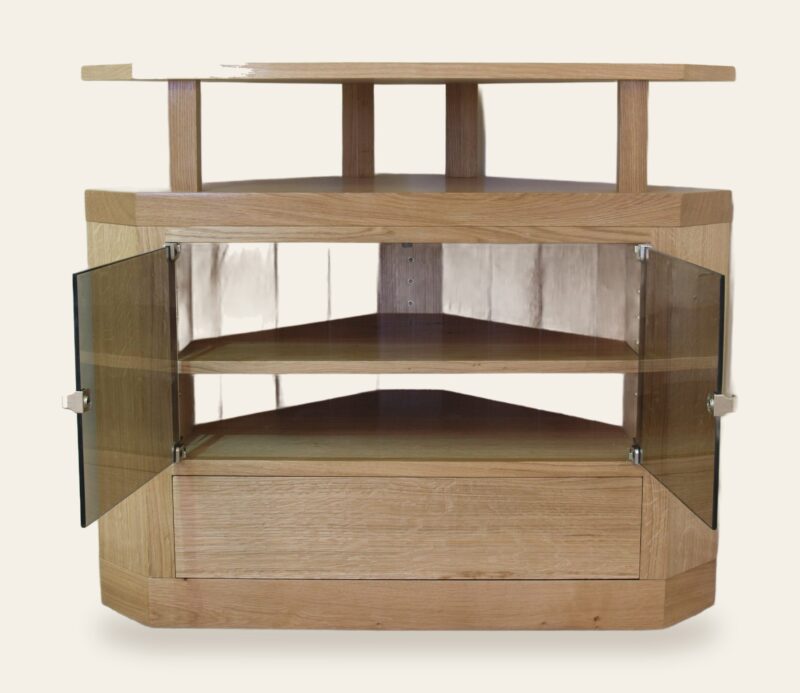
Contemporary TV stand. Doors that open to take equipment, a flat top, no visible fuss. If you want the screen out of sight entirely, we also make rise-and-fall TV lift cabinets, which very few makers offer.
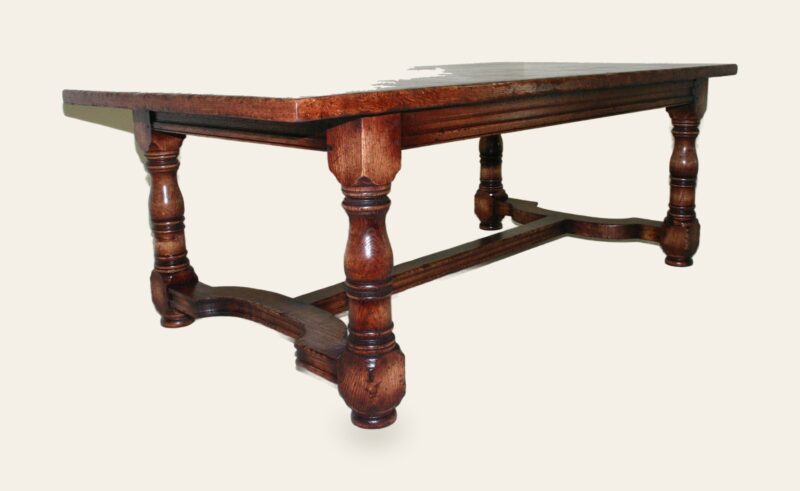
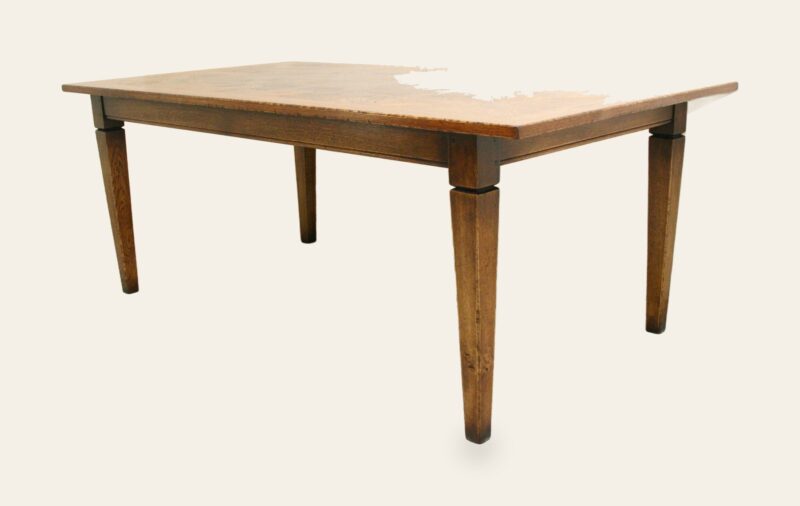
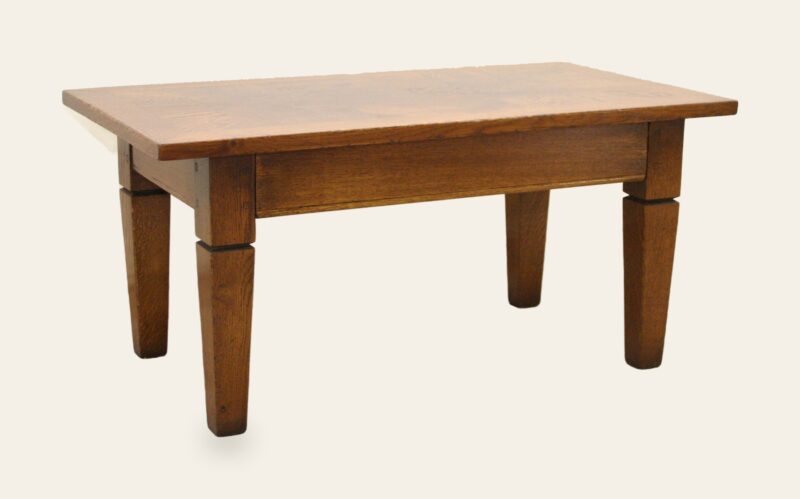
Parquet-top tables. Available as a dining table with a C stretcher, as a farmhouse-type table, and as a coffee table. The parquet top is a geometric field of short pieces laid up into a pattern — a decorative surface that reads as contemporary because the pattern is the only ornament on the piece.
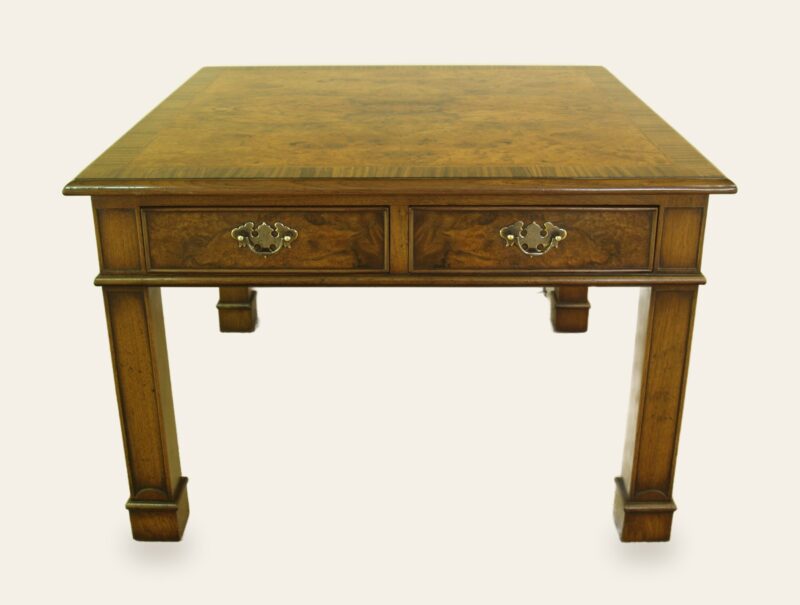
Burr walnut coffee table. Burr walnut is figure at its most extreme: dense, swirling, unrepeatable. On a plain rectangular form with no moulding, the timber does all the work.
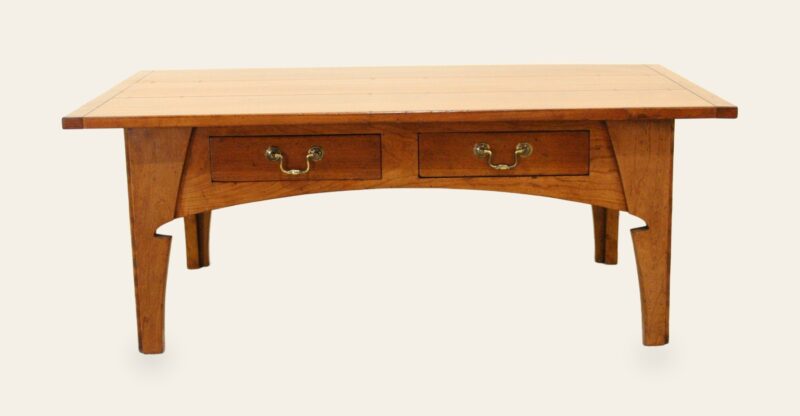
Jugendstil coffee table with two drawers. Jugendstil is the German and Austrian turn-of-the-century movement that ran alongside Art Nouveau, and it sits comfortably between period and modern. Restrained, geometric, and much closer to a contemporary room than most people expect.
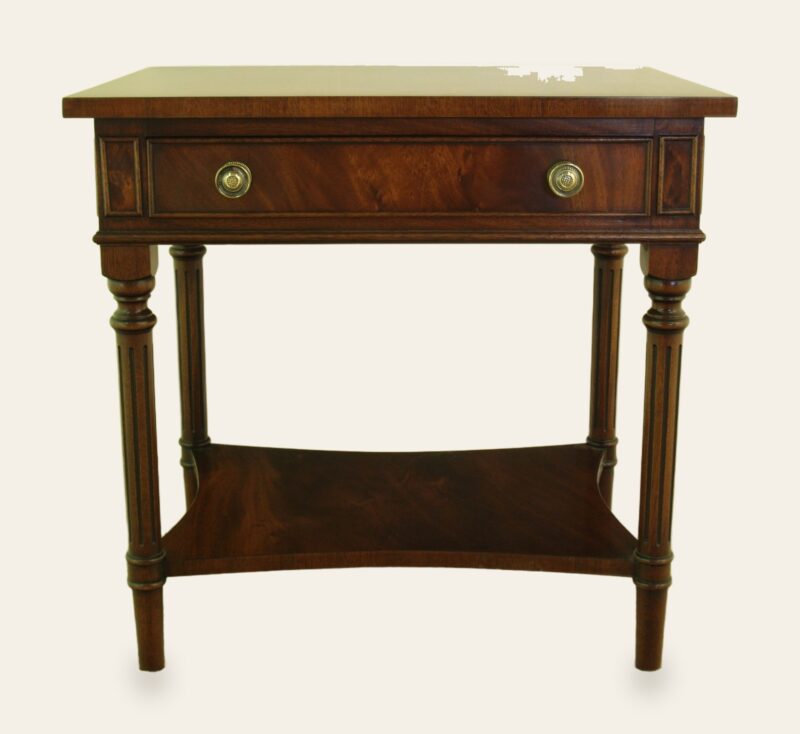
Mahogany end table. A simple side table, mahogany, with the emphasis on proportion.
Alongside these, a number of pieces in the catalogue are effectively modern already: trestle tables, bandsaw-base tables, nests of tables, and the plainer Oakamoor forms, where the whole point of the range is the oak rather than the decoration.
Being honest about it
We are not going to claim a contemporary portfolio we cannot put in front of you. Most of what this workshop has made in thirty years is period work, and most of the photography reflects that.
Contemporary work is a growing part of what we do, and it is growing because clients ask for it: a modern kitchen that needs a table with the same weight as the room, a period house with one room that is deliberately not period, a piece of storage designed around a television or a hi-fi rather than around a linen press.
If that is what you want, ask. The construction is proven, the drawings get made either way, and you will see the design before anything is cut.
Commissioning a contemporary piece
It runs the same way as anything else, at the second level of the bespoke ladder: a piece that does not exist yet, drawn by our designers before it is made.
Tell us the space, the function, the timber and the finish. Send a photograph of the room. If there is a piece you have seen elsewhere that is close to what you want, send that too — we would rather understand the target properly than guess at it.
One-off pieces typically add around four weeks to the standard ten to twelve week lead time.
Timbers that suit modern work
Oak, cherry, mahogany and walnut are the standard four and all four work well. In practice, walnut and cherry tend to suit plain forms best: walnut for depth and contrast, cherry for an even, warm surface that darkens handsomely with light.
Clean timber with no knots at all is available on application, and it is worth asking about on a modern piece where a knot would read as an accident rather than as character. Burr walnut, burr oak and timber selected for medullary ray are available too. See timbers and finishes.
Ask us
Hold the timbers before you decide. They are free and they are posted out with nothing attached.
Order timber and finish samples · Enquire about a contemporary piece · 01449 710500