 Skip to content

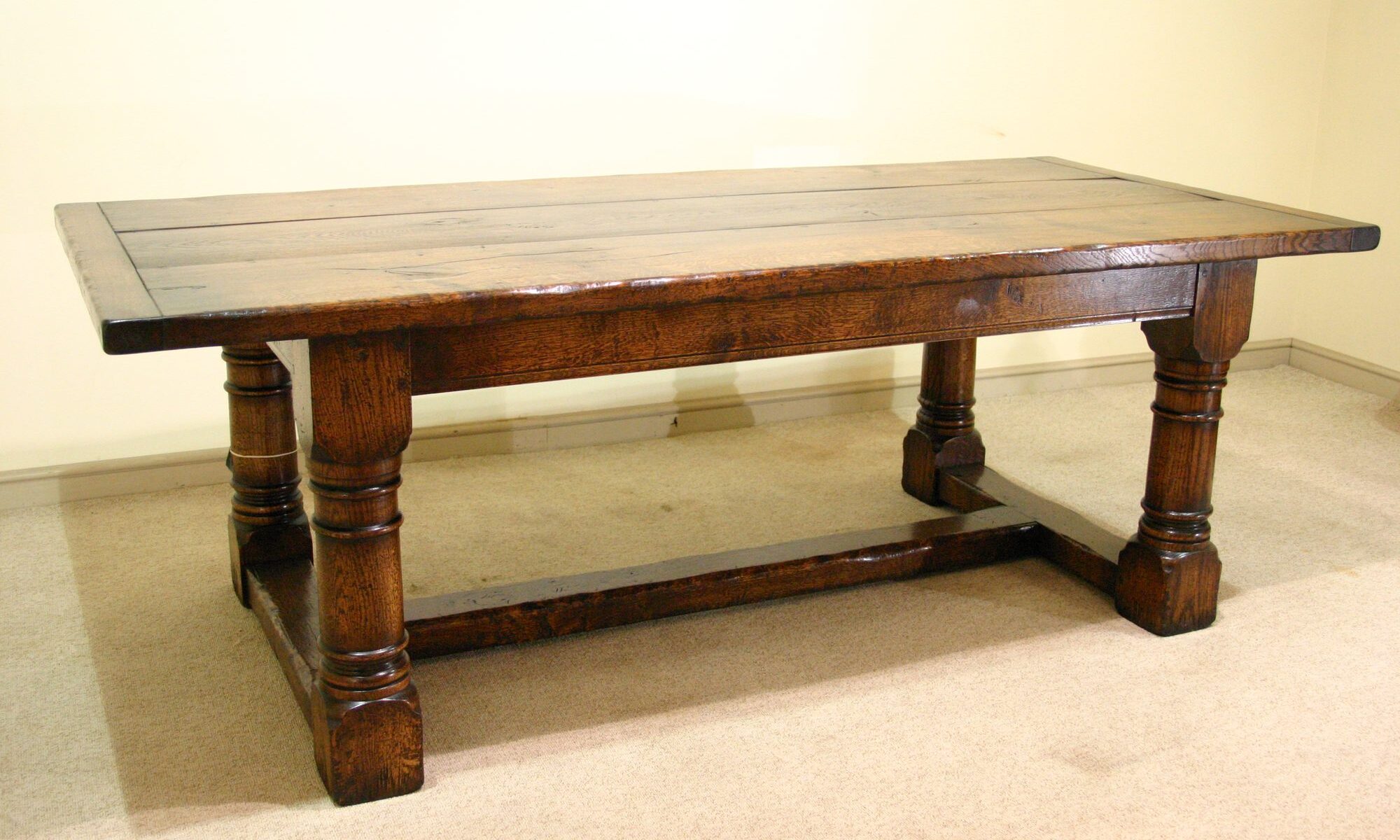
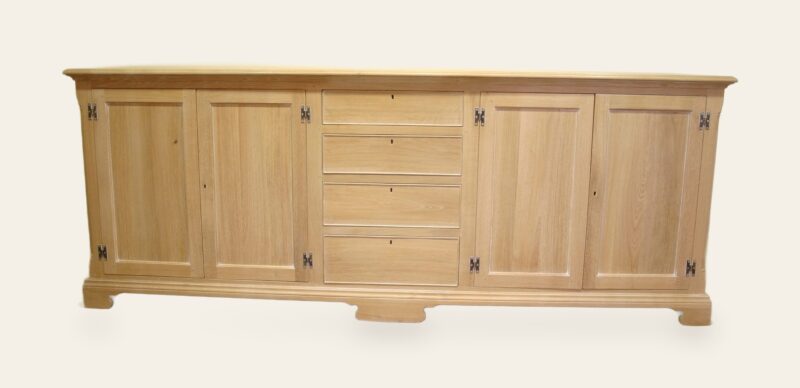
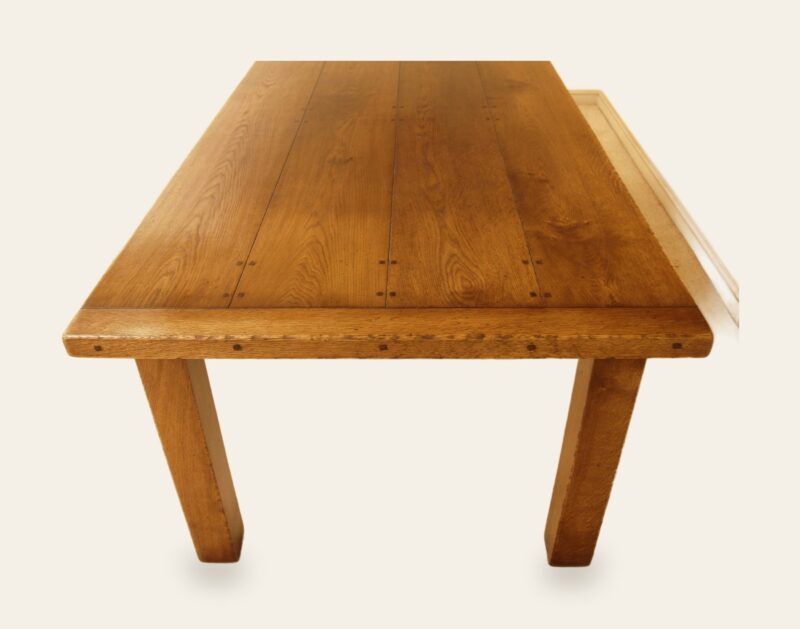
Solid oak furniture asks very little, and most of what it asks is about the room rather than the polish tin. Get the conditions right and a piece will outlast you. This is what we tell clients on delivery day. It applies equally to cherry, mahogany and walnut.
On this page
Dusting and everyday cleaning
Dust with a dry, soft, lint-free cloth, working along the grain. Lift ornaments off rather than sliding them: most of the scratching that dulls a top over ten years is grit dragged across it. For a mark a dry cloth will not lift, use a barely damp cloth, wrung out until it feels almost dry, then dry the surface at once.
What not to use
- Silicone-based spray polishes. They build a film that clouds, attracts dust and makes refinishing harder. The commonest damage we see.
- Household sprays, degreasers and antibacterial wipes. They dull or strip a polished finish.
- White spirit, methylated spirit, acetone or nail varnish remover. They dissolve finishes.
- Abrasive creams, scouring pads and melamine sponges. They cut the surface.
- Soaking wet cloths.
Waxing and polishing
A polished piece benefits from an occasional wax, applied thinly and buffed off properly. Wax that is not buffed out stays soft, holds dust and goes sticky. Put a very small amount on the cloth rather than the furniture, work it along the grain, leave it a few minutes, then buff hard until the surface feels dry.
- Recommended product: a good beeswax polish
- Recommended interval: every six to twelve months
Twice a year is plenty for most pieces, and once a year is enough for a piece that is lightly used. More frequent waxing does not improve a finish; it simply leaves more wax to buff off.
Heat and moisture
Use mats and coasters, with a cork or felt back rather than thin cloth. Heat is the more damaging of the two. A hot dish blooms the finish in seconds, and the mark goes into the polish rather than sitting on it. Standing water is next: a wet glass left for an hour leaves a white ring, and an overnight spill can lift the finish and raise the grain. Alcohol and perfume do damage almost instantly. A dresser standing hard against a radiator dries unevenly and can split at the joints.
Humidity and central heating
Timber takes up moisture from the air and gives it back. A centrally heated room in winter can be very dry, and that is when solid furniture shrinks: panels pull in slightly, fine gaps show at the edges of fielded panels, and drawers run freely. In a damp summer the reverse happens.
Our pieces are built to allow for it. Panels float in their frames and tops are fixed so they can move, which is why a fine line of unpolished timber may appear at a panel edge in February and vanish by June.
Avoid rapid, extreme swings. Something between 40 and 60 per cent relative humidity suits furniture and people alike, and a cheap hygrometer will tell you where you are.
Underfloor heating
Underfloor heating is not a problem in itself, but it changes where the heat comes from. Rather than rising from a radiator, it comes up through the floor into the underside of everything standing on it.
The parts at risk are those nearest the floor: potboards, plinths, low shelves, stretchers and the feet of a wardrobe. They dry faster than the rest of the piece, and uneven drying is what causes splitting.
Keep the floor temperature moderate and steady rather than cycling it hard, watch the room humidity, and put something between floor and furniture: a rug under a dining table, or felt pads under feet. Tell us at the enquiry stage if a room has underfloor heating.
Sunlight and colour change
Every timber we use changes colour, and light drives most of it. Oak warms and deepens, cherry darkens quickly in its first year or two, mahogany deepens, walnut mellows and lightens.
The problem is uneven exposure. A top with half of it in strong afternoon sun develops a visible line, and so does one left under a runner for a year. Move mats and objects about occasionally so the surface ages evenly.
Rings, marks and small damage
A white ring is moisture trapped in the finish rather than damage to the wood, and it will often fade of its own accord over days or weeks in a warm room. Give it that time, then try a gentle wax.
Do not attack a ring with heat, abrasives or a household product. Dark rings, heat blooms and deep scratches are refinishing jobs. Ring 01449 710500 before you experiment: we made the piece and we know what is on it.
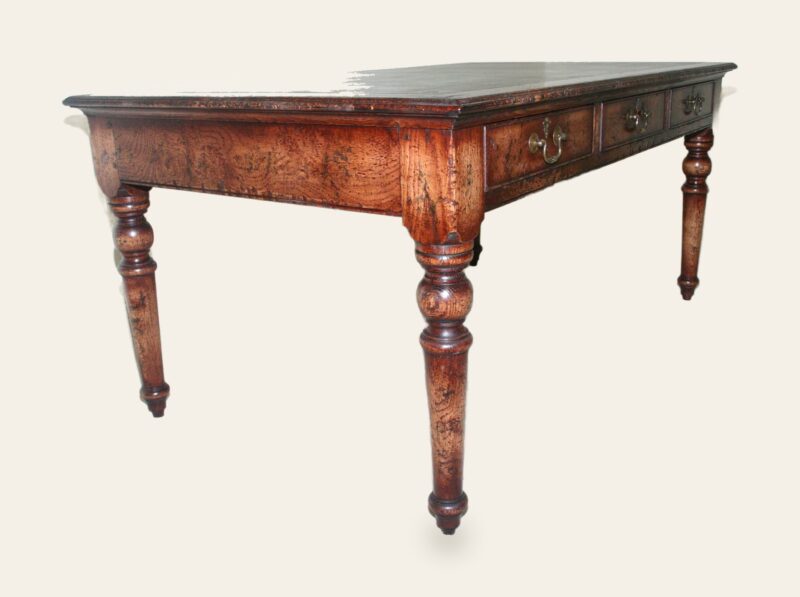
Caring for a leather desk top
Dust with a dry cloth, keep it dry and keep it out of direct sun, which fades and dries hide faster than anything else.
Blot spills rather than rubbing. Do not use household cleaners, solvents or saddle soap on a tooled or gilt-edged top: gold tooling lifts easily. Leather patinates with use, which is the point of it.
Dress the leather every six to twelve months with a proper leather dressing, applied sparingly on a soft cloth and buffed off. Keep it away from the tooling. As with wax, a thin application worked well in does more good than a heavy one.
Painted and limed finishes
Painted pieces, including rub-through and distressed paint, want a dry cloth and nothing more. Do not wax a painted surface or use a solvent-based cleaner on one. A gently damp cloth on a stubborn mark, dried at once, is the limit.
Limed oak, as on the Windrush pieces, carries white pigment held in the open grain. Scrubbing and abrasives pull the lime out and leave patchy grey areas, so dust with a dry soft cloth along the grain. Sand-blasted surfaces have deliberately raised grain, and a soft brush reaches into it where a cloth will not.
Moving a piece safely
Lift, do not drag. Dragging puts the whole weight through the joints in the wrong direction.
Empty drawers and cupboards, and either take the drawers out or tape them shut. Remove tops, racks and shelves first. Never carry a piece by its top, cornice, rack or handles: they were not made to take the weight below them. Two people, one at each end, lifting from the base. Chairs are lifted by the seat rails. For a long move, wrap in blankets rather than plastic sheeting, which traps moisture.
In the first few weeks
A new piece arrives from a workshop into a house that is probably warmer and drier. Expect a door or drawer to want a small adjustment as it settles. We would rather come and do that than have you live with it.
Questions
Ring 01449 710500 or email sales@brynhall.co.uk. See also our guarantee and our frequently asked questions.