 Skip to content
Every catalogue piece is priced in four timbers: oak, cherry, mahogany and walnut. Not a standard timber with three upgrades — four standards, priced across the whole catalogue, so the choice is yours to make on how the timber looks and behaves rather than on what it costs.
On this page
Beyond those four sit the specials, which are selected and priced individually. And behind all of it sits one fact that governs everything: timber is a natural material that never entirely stops moving.
The four standards
Oak
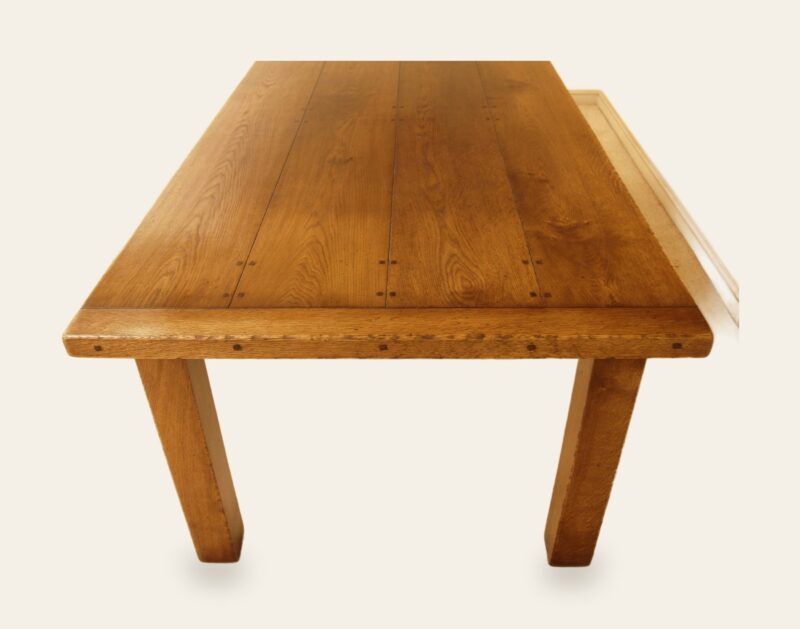
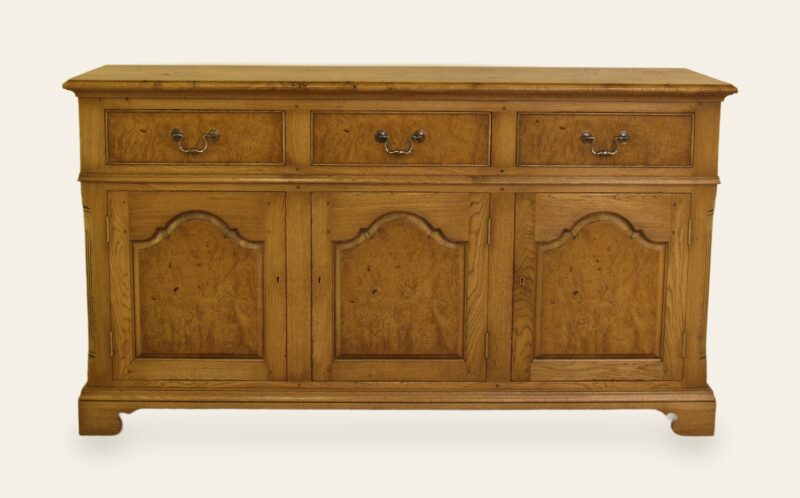
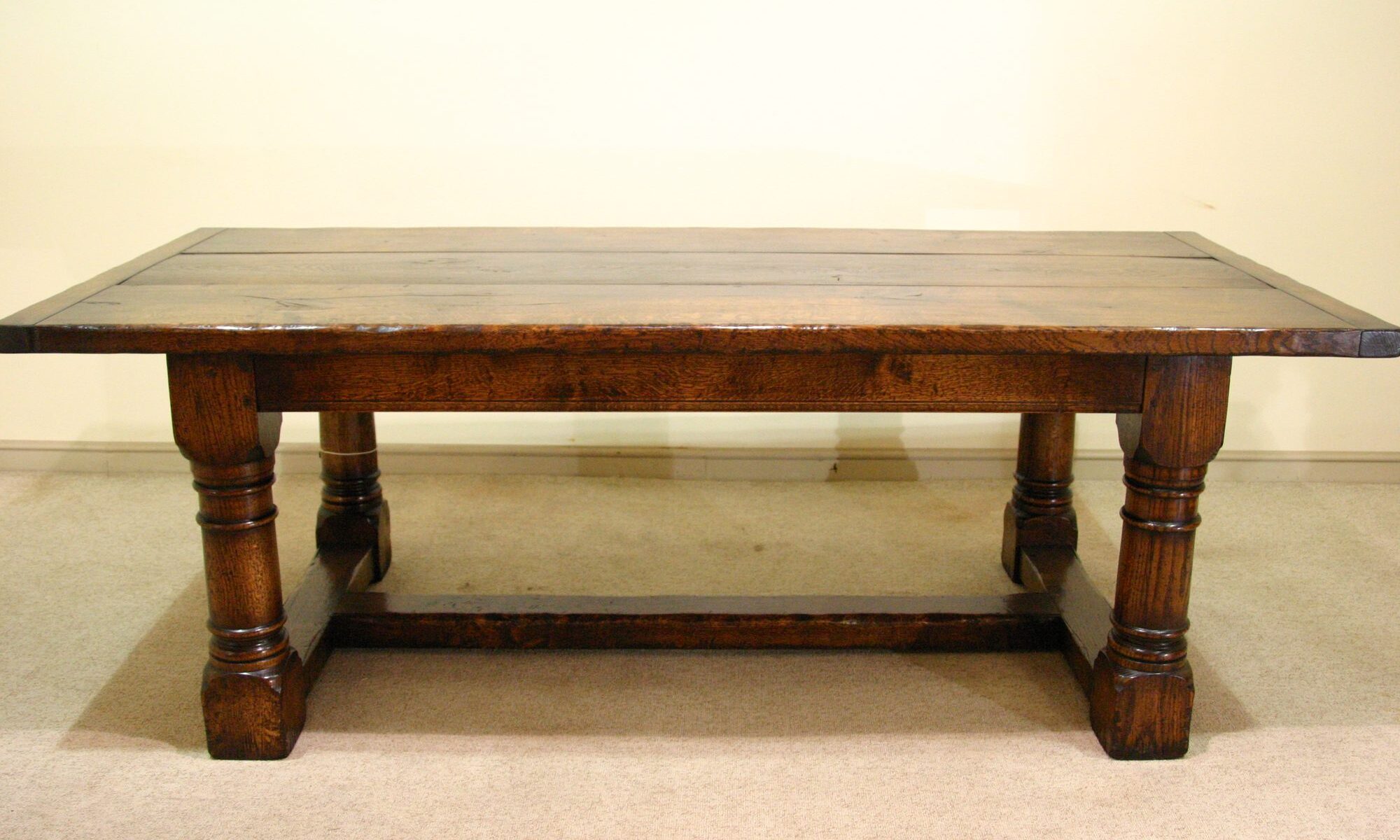
The traditional English furniture timber and much the most common choice here. Hard, heavy, open-grained and extremely durable. An oak table top in a nominal 2in section will take a century of use and look better for it.
Oak’s grain is assertive: strong figure, visible rays, and a texture you can feel. The Oakamoor range is built around that, with generous width in the front frame pieces specifically to show off the patternation of the oak.
How it ages. Oak darkens and warms, moving from a pale honey towards a deeper golden brown over years rather than months. It reacts with iron and with damp, so a wet iron object left on an oak top can leave a blue-black stain.
Cherry
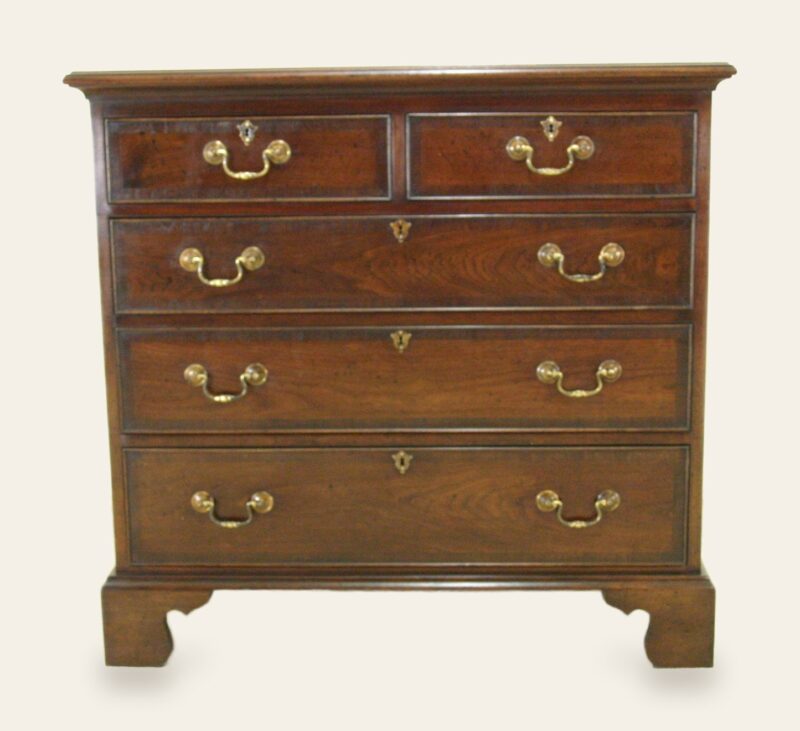
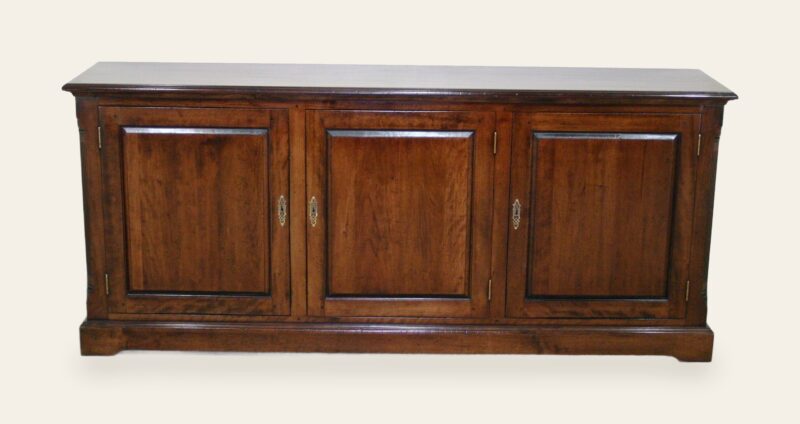
The cabinetmaker’s timber. Fine, even and close-grained, with very little figure to fight the form, which is why it suits both delicate period work and clean modern pieces. It machines beautifully and takes a polish that looks lit from within.
Much of our Gothic and Rowton work is specified in cherry.
How it ages. Cherry changes more than any other timber we use. It arrives a pinkish tan and darkens quickly, particularly in light, towards a deep reddish brown. Expect noticeable change in the first year. If a lamp or a runner sits on it for the first six months you will see the shadow of it afterwards, so move things around early on.
What we make in cherry, and how to live with it in its first year, is set out on the page for cherry furniture.
Mahogany
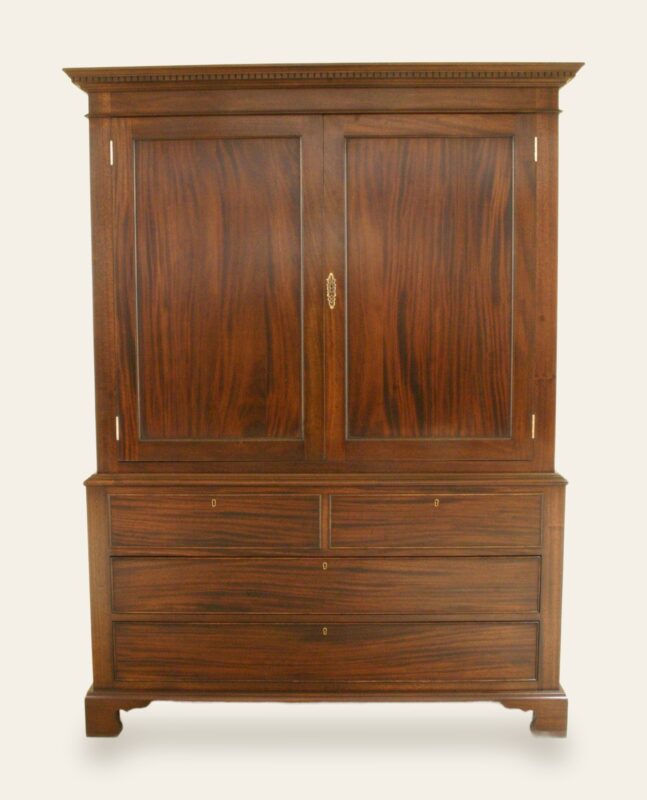
The formal timber. Stable, straight-grained, and capable of holding fine detail — carving, cross banding, string inlay, thin glazing bars — without breaking out. Where a piece needs to look architectural rather than rural, mahogany usually gets the job.
How it ages. Deepens and reddens gradually, and settles into a rich, even colour. It is one of the more stable timbers we work with.
The pieces most often made in it, and the matching work it is asked for, are on the page for mahogany furniture.
Walnut
The most decorative of the four. Chocolate to purple-brown, with dark streaking and a great deal of movement in the grain. Walnut has range: it can look grand or it can look thoroughly modern, depending entirely on the form it is cut into.
How it ages. Walnut tends to lighten rather than darken, and the contrast between the dark streaks and the background softens. A very dark walnut piece will mellow towards a warmer mid-brown.
Burr walnut, how walnut ages and what it suits best are covered on the page for walnut furniture.
The specials
These are selected from the stack for a particular job, and priced on application, because their availability depends on what comes in.
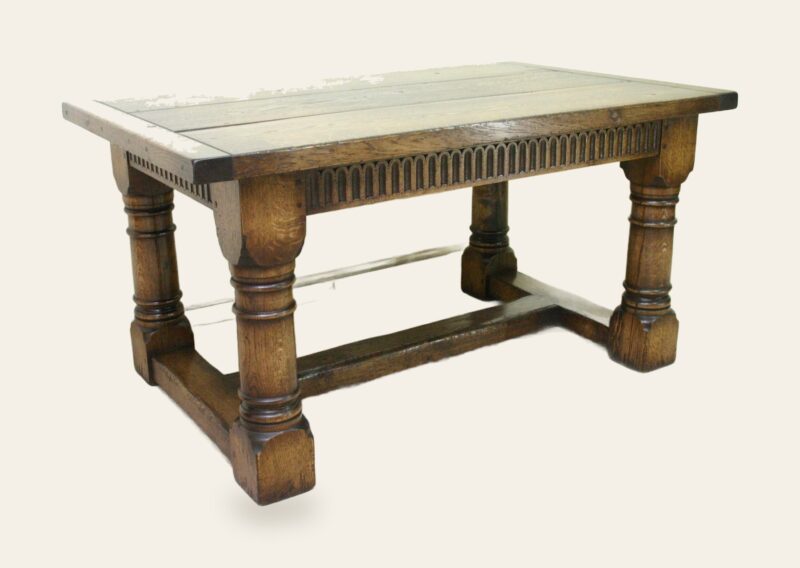
Character oak. Knots, shakes and pronounced figure deliberately left in, so a piece reads as old from the day it arrives. Widely requested on refectory and farmhouse tables. Character oak carries an uplift on tables because the selection and the extra work around the defects both cost time.
Pippy oak. Oak carrying dense clusters of small burr-like pips. Available in light, medium and heavy grades, so you can choose how loud it is: light for a scatter, heavy for a surface that is almost entirely figure. Pippy oak is used for tops only — it is too unpredictable structurally to put into a leg or a rail. A painted base with a pippy oak top is a signature treatment on the Pendleton and Georgian pieces.
Oak selected for medullary ray. The medullary rays are sheets of cells running radially through the trunk. Cut on the quarter, they appear as broad silver flecks flashing across the surface. We select for it two ways: within the timber, where the ray is present but subdued, and without the timber, where it is prominent and the surface shimmers as you move past it. Ask for the one you want, because they look quite different.
Clean timber with no knots at all. The opposite request, and just as much of a selection job. A wholly clean run of oak is harder to find than a character run. Worth specifying on plain modern forms where a knot reads as an accident rather than as character.
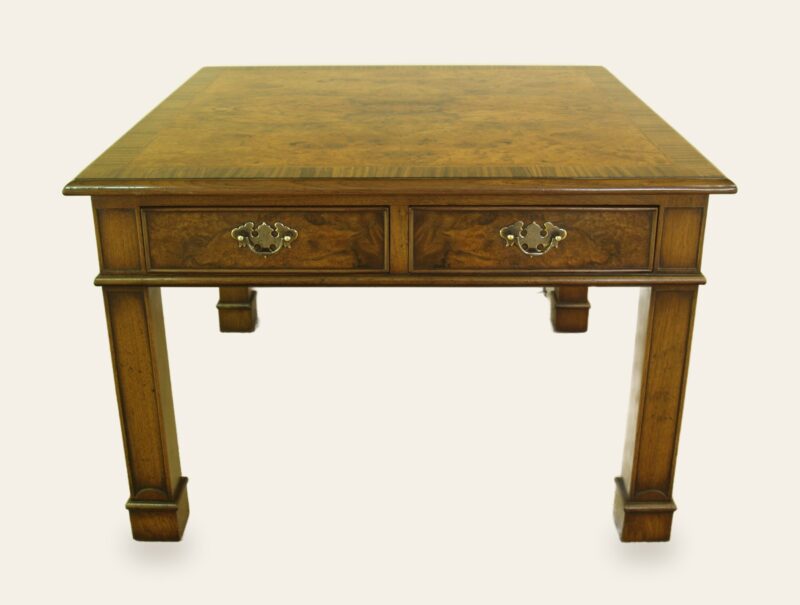
Burr oak and burr walnut. Burr is the growth on the outside of a tree, and it cuts into a swirling, dense, unrepeatable figure with no directional grain at all. Available on specific pieces — a burr oak table top, a burr walnut coffee table, burr oak on a dresser base top. Burrs are structurally weak and small, so they are used as decorative surfaces rather than as structure.
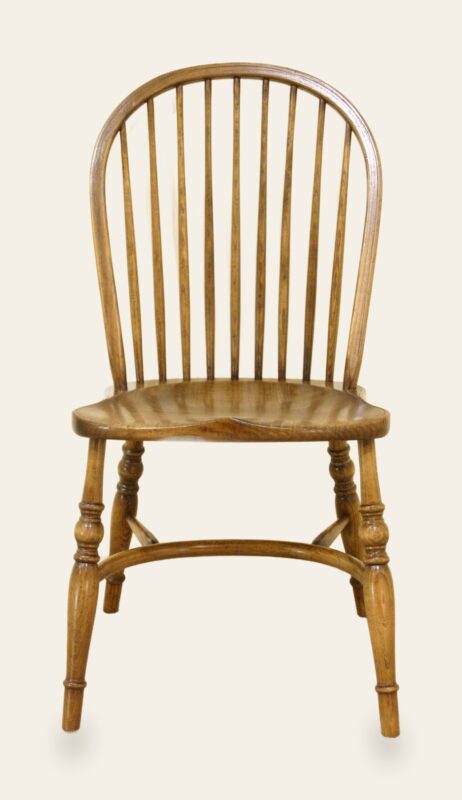
Ash. Used for Windsor chair frames. Ash is tough, elastic and steams and bends without breaking, which is precisely what a bow back or a bent arm needs. It is chosen for behaviour rather than looks. See Windsor chairs.
Limed oak is a finish rather than a timber, and it is on the finishes page. It is the defining characteristic of the Windrush range.
Modern and sheet materials, and why we use them
We use modern and sheet materials where they improve strength or carry a decorative element better than solid timber would. We say so plainly, because it is an engineering argument rather than an apology.
Solid timber is superb in some jobs and poor in others. It is unbeatable in a table top, a leg, a rail, a drawer front, a raised and fielded panel. It is a liability in a large flat unsupported panel, because a wide solid board wants to cup and split as it moves across the grain.
So a wide carcass back, a long shelf carrying several hundred kilos of books, or a substrate that has to stay dead flat under a veneer will be made from a stable engineered board, faced in the same timber as the rest of the piece. It will not move, it will not split, and it will outlast the solid alternative in that particular application.
Veneer works the same way. Cross banding, burr fronts and figured panels are veneered work by definition — you cannot get a burr in a solid board of any useful size, and if you could, it would tear itself apart. Veneering is how those effects have been achieved for centuries.
Where these materials appear in your piece, ask and we will tell you exactly where.
Movement and seasoning
Timber is hygroscopic. It takes up moisture from the air and gives it back, and as it does so it swells and shrinks across the grain. It barely moves along the grain at all.
We season and settle timber before it is worked, and we cut and rough-machine it before it goes to final size, so that most of the movement happens in the workshop rather than in your house. Then we build for the movement that is left: panels float in their frames rather than being glued in, tops are fixed so they can expand and contract, and joints are cut to accommodate it.
Your part is modest. Keep furniture away from radiators and out of the direct blast of underfloor heating and log burners, and it will be fine. A house that swings between very dry and very humid is harder on furniture than a cold one. See care.
Hold them in your own light
Screens do not tell you what oak looks like. Timber and finish samples are £10 each, refunded against your order, and posted out with nothing else attached.
Order timber and finish samples · Ask about a special timber · 01449 710500
Frequently asked questions
What timbers do you offer?
Every catalogue piece is priced in four standard timbers: oak, cherry, mahogany and walnut. They are four standards rather than one standard with three upgrades, so you choose on how the timber looks and behaves rather than on cost. Character oak, pippy oak, oak selected for medullary ray, knot-free timber, burr oak, burr walnut and ash are available on application.
Which timber should I choose?
Oak for a country piece and for hard daily use; cherry where you want a fine, even grain that does not compete with the form; mahogany where the piece needs to look formal and hold fine detail; walnut where you want the strongest figure. Order the samples and hold them in the room before deciding.
How will the colour change over time?
All four move. Oak darkens and warms from pale honey towards golden brown over years. Cherry changes fastest, from pinkish tan to deep reddish brown, with noticeable change in the first year. Mahogany deepens and reddens gradually. Walnut tends to lighten rather than darken, and its contrast softens.
What is pippy oak, and can I have it on anything?
Pippy oak carries dense clusters of small burr-like pips, in light, medium and heavy grades depending on how pronounced you want it. It is used for tops only, because it is too unpredictable structurally for legs and rails. A painted base with a pippy oak top is a signature treatment on the Pendleton and Georgian pieces.
Do you use anything other than solid timber?
Yes, where it is the better engineering. A wide carcass back, a long shelf carrying heavy books, or a substrate that has to stay dead flat under a veneer is made from a stable engineered board faced in the same timber. Burr and cross-banded work is veneered by definition. Ask and we will tell you exactly where it appears in your piece.