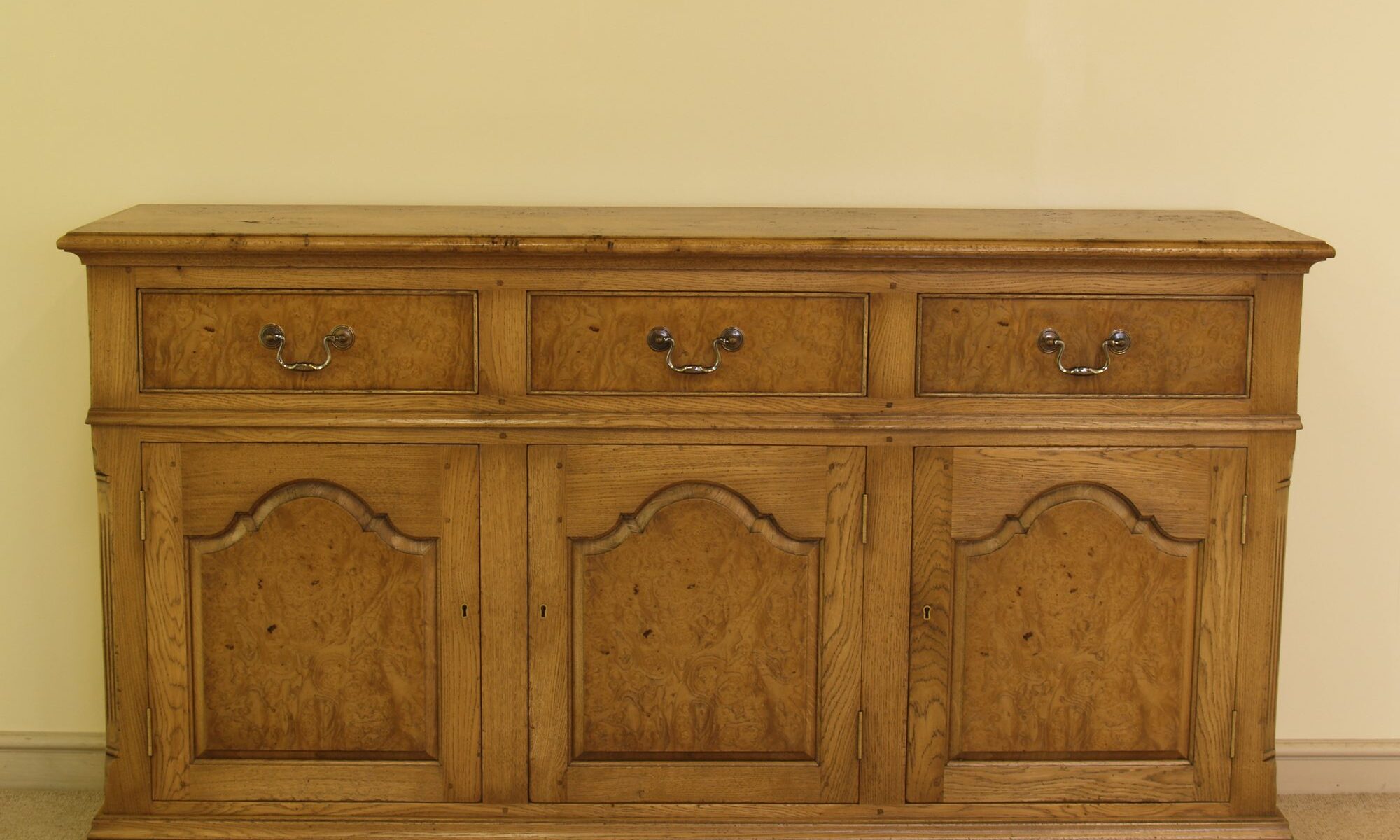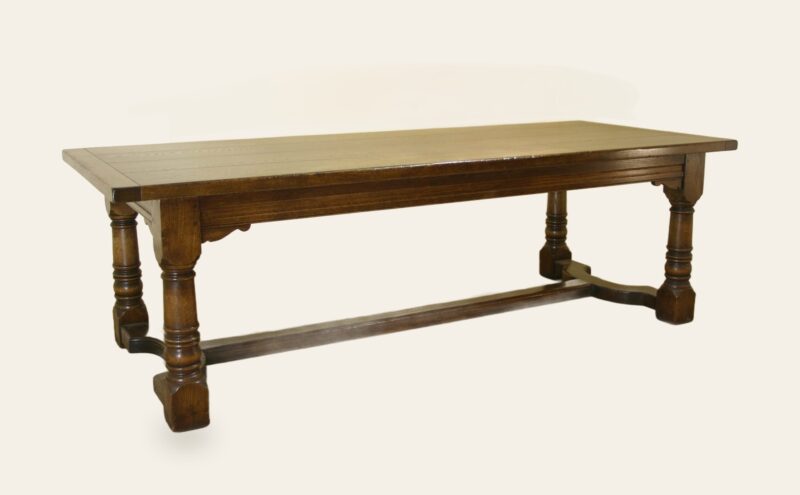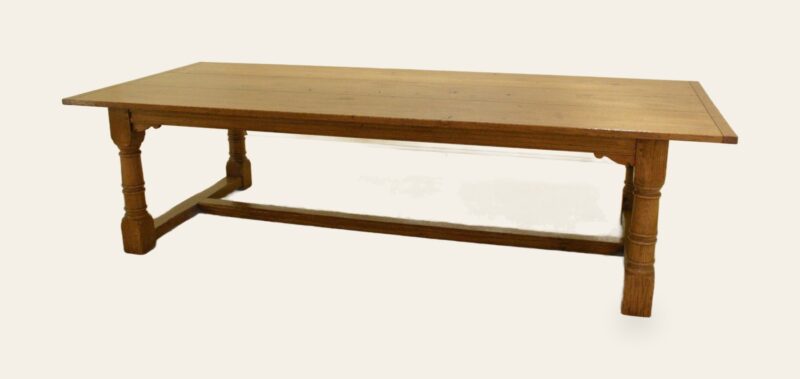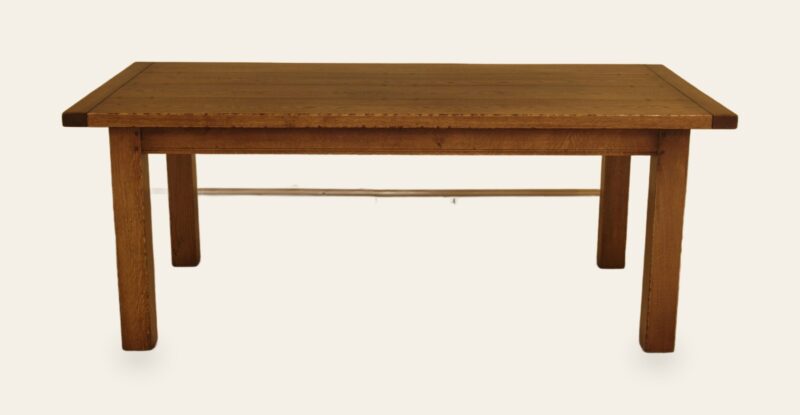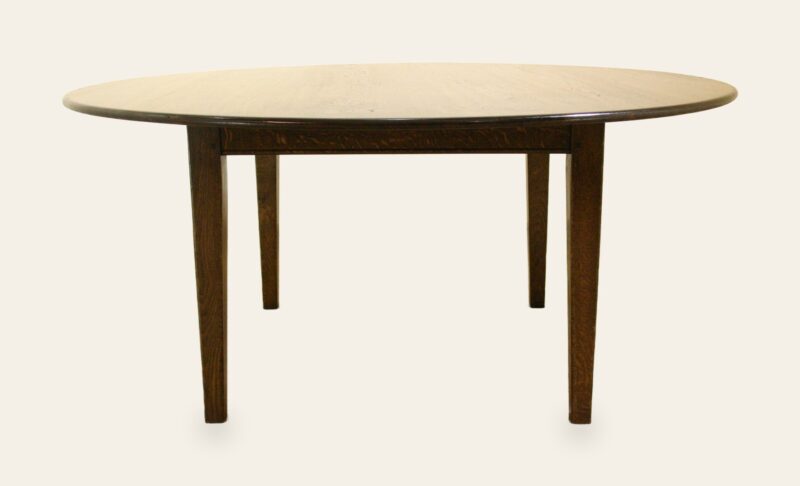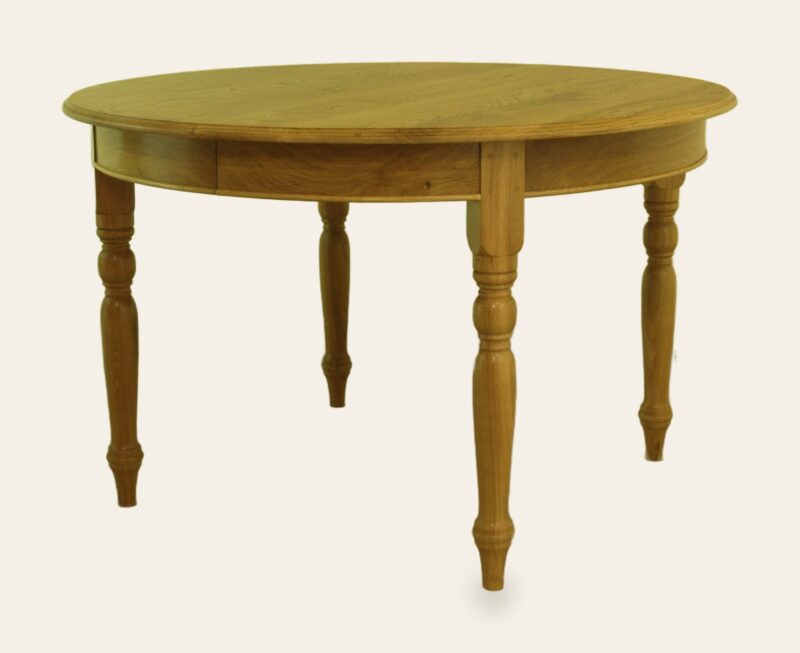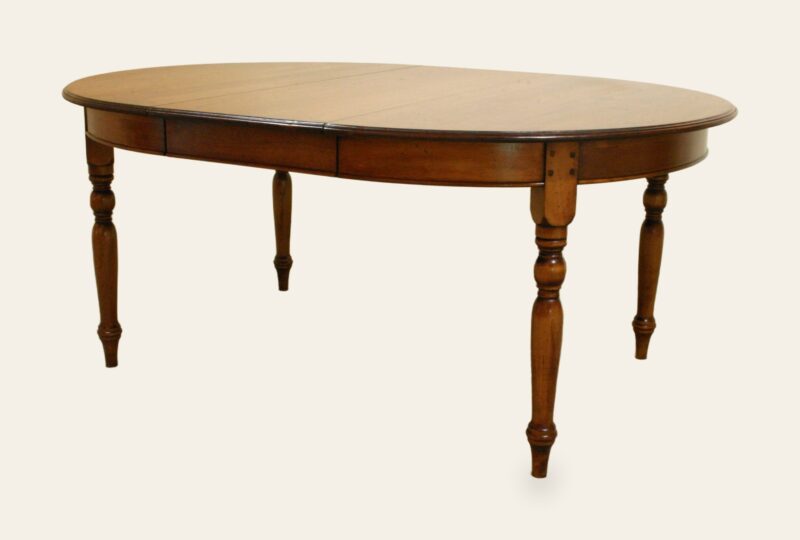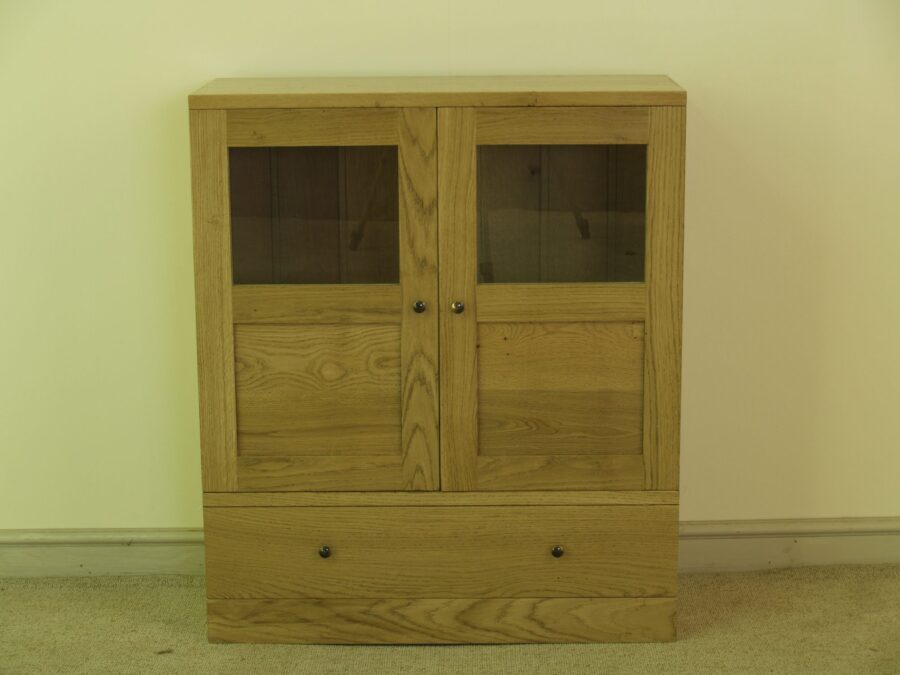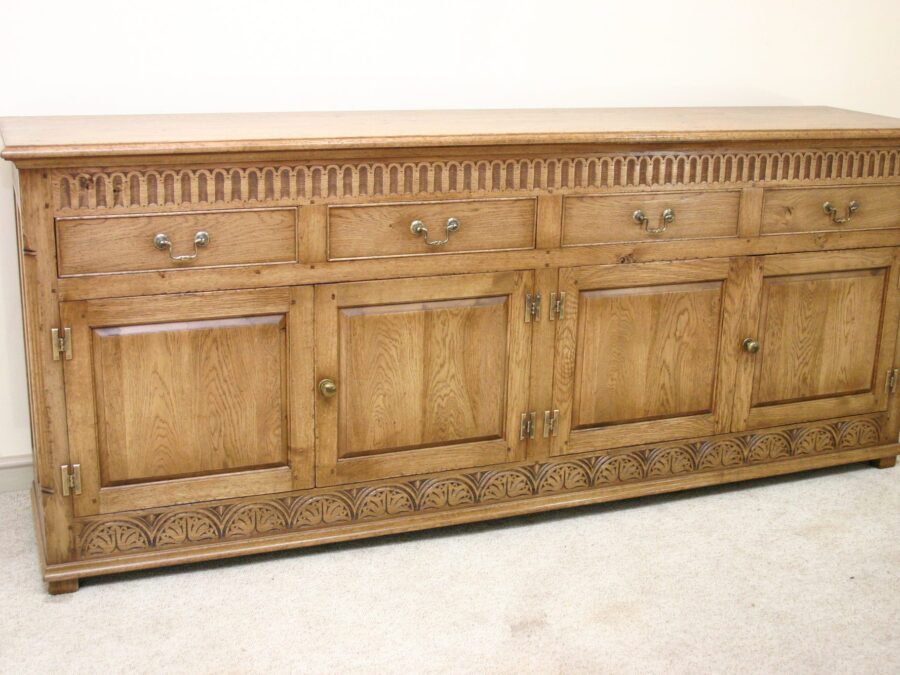
Nothing here is a stock item. Every piece is made from scratch, to your dimensions, in your timber, in your colour, on the benches at Mickfield in Suffolk. The catalogue is a starting point rather than a menu.
That is not a boutique flourish. It is what the work actually requires.
Everyone wants a variation
At this level nobody buys a stock piece of furniture. What people want is a variation. A couple of millimetres off the width so a dresser base drops into an alcove without a scribe. A different moulding under the top, because the room already has a moulding and two competing profiles will read as a mistake. A different colour, matched to a chest of drawers that came down through the family and is not going anywhere.
Once you accept that the variation is the norm, holding stock makes no sense. A warehouse of finished pieces in one size and one shade would be a warehouse of near misses. So we do not hold any. We take the order, then we make the piece.
Making to order is a deliberate choice. It is not a limitation we apologise for, and it is not a delay dressed up as a virtue. It is the only way to give you the exact piece rather than the closest available one.
Why there is no basket
You cannot add a made-to-order piece to a basket, because until we have spoken there is no piece to add.
We do not know your dimensions. We do not know whether the top should be a nominal 2in or something heavier. We do not know whether you want oak, cherry, mahogany or walnut, whether the oak should be clean, character or pippy, and whether the whole thing should be polished, painted, limed, sand-blasted or matched to a sample you post to us. Those decisions change the price, the timber we buy in, and sometimes the construction.
A checkout would force all of that into a set of dropdowns and then get it wrong. An enquiry costs you one message and gets it right.
So this site is enquiry-led, deliberately. You tell us the piece, the rough size, the timber and the finish. We come back with a guide price and the questions we need answered. Nothing is committed until you say so, and nothing is charged for a conversation.
If you would rather talk than type, ring 01449 710500.
Three ways to commission
Almost every enquiry falls into one of three levels. They differ in how much drawing is involved, not in how the piece is built. The construction and the finishing are the same at every level.
1. A catalogue piece, made to your size
The most common route by a wide margin. You have seen a piece you like — a refectory table, a Denbigh dresser base, a panelled bed — and you want it with changes.
Different handles. A thicker top. A different shade. A width of 1,420mm rather than 1,500mm. Turned legs instead of tapered. Drawers where the drawing shows a cupboard. A base from one range under a top from another.
The design already exists, so this is quick to price and quick to start. You are buying the drawing, not commissioning it. Browse the collections or furniture by type, find something close, and tell us what needs to move.
2. A one-off commission
A piece that does not exist yet. Details amalgamated from several designs, or an idea of your own that you have never seen made.
Carved detail to a motif that means something to you. Unique turnings. Storage sized around particular objects — a wine collection, a fold-out desk, a cabinet built around a piece of equipment that must be hidden when it is not in use. Our designers draw it first, and nothing is cut until you have approved the drawing.
One-off pieces typically add around four weeks to the standard lead time, because the drawing and the setting-out come before the machining.
3. A complete scheme
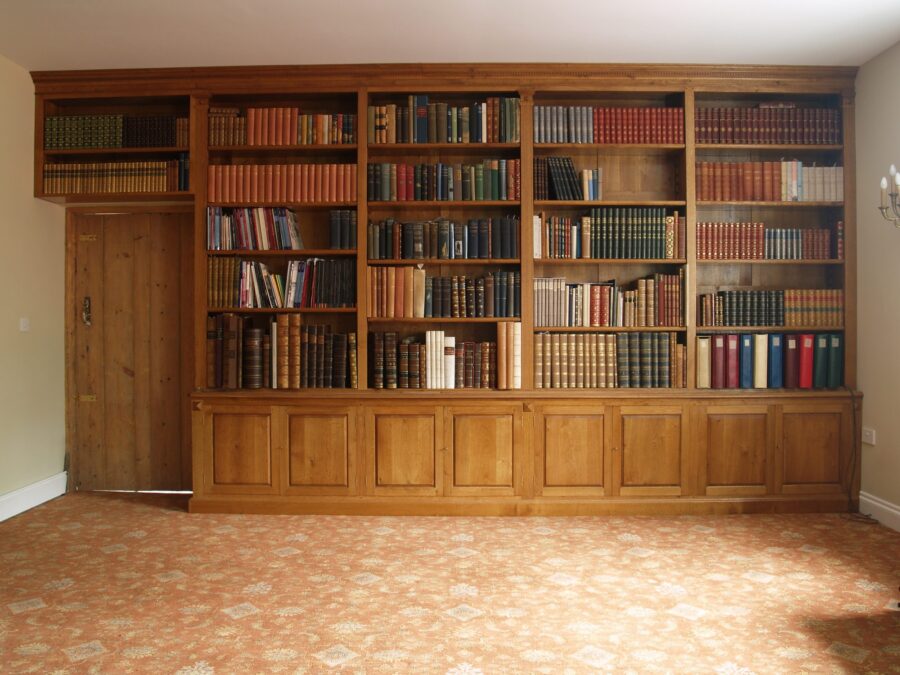
A whole room or project. A dining room furnished end to end, so the table, the chairs, the server and the dresser share one shade and one set of mouldings. Fitted cabinetry. Panelled walls. A library.
At this level we are usually working with your dimensions on site rather than a catalogue drawing, and freestanding and fitted work are designed together so that the two do not sit awkwardly beside each other. See fitted furniture for how that is handled, and for the point at which a project is better placed with our sister company, Reeve & Co Interiors.
How the process runs
The detail is set out on the commissioning page. In outline:
You enquire. Piece, rough dimensions, timber, finish, and when you would like it. Photographs of the room, or of a piece you want matched, are always useful.
We quote. A guide price against what you have described, with the questions we still need answered.
Samples go out. Free, by post, before you commit to anything. Timber and finish look different in your own light against your own walls.
We draw, where a drawing is needed. Tiers two and three always. Tier one where a change is significant enough to be worth seeing on paper first.
You confirm. Specification agreed, dimensions agreed, finish agreed.
We make. Timber selected and converted, machined, worked by hand, assembled, and through the finishing shop. The same people, the same benches, the same drawings that have made Bryn Hall furniture for thirty years. How a piece is made, in full, is on the craft pages.
We deliver. By our own arrangement, into the room. See delivery.
Standard lead time is typically ten to twelve weeks. One-off pieces usually add around four weeks. We would rather tell you that plainly at the start than promise something we cannot hold to.
Start with the samples. They are free.
Timber and finish samples are posted out at no charge and with nothing attached. Hold oak, cherry, mahogany and walnut in your own light, next to your own walls and your own existing furniture, and a decision that felt difficult on a screen usually makes itself.
If you have a piece you want the new furniture to sit alongside, this is where the work really starts. We can match furniture that is 100 years old to new reproduction purchases made the year before. Read how, on matching antique furniture.
And if what you want is plain, modern and precise rather than period, the same construction and the same finishing apply. See contemporary furniture.
Talk to us
One workshop designs, makes, polishes and delivers your piece. There is a single point of responsibility, and one number to ring.
Order free timber and finish samples · Enquire about a piece · Request the catalogue · Book a workshop visit · 01449 710500
Frequently asked questions
Can you make a piece to fit an exact alcove?
Yes. Give us the width at the top, the middle and the bottom, plus the height on both sides, and we will build to the tightest of those figures with a scribe where the wall is out. Working to a fixed opening is one of the most common reasons clients come to us.
Do I have to choose from the catalogue?
No. The catalogue is a starting point. A one-off commission can be drawn from your own idea, or amalgamated from details you like across several designs. Our designers draw it before anything is cut.
How much does bespoke cost compared with a catalogue piece?
A catalogue piece in a changed size is usually priced close to the standard piece. A one-off commission is quoted individually, because the drawing and the setting-out are part of the work. Special timbers, colour matching and natural finishes are priced on application.
Why can I not buy directly from the site?
Because there is nothing sitting on a shelf to sell you. Every piece is made after you order it, to dimensions and in a finish we need to agree first. An enquiry takes a few minutes and produces a price for the piece you actually want.