 Skip to content
We would rather list four things we actually do than write a page of ambition. So this page is short, and everything on it is true today.
On this page
What we do at the workshop
Solar panels on the workshop roofs. The buildings at Mickfield carry solar panels, generating power for the workshop itself.
EV charging on site. For staff and for visitors coming to appointments.
Waste timber is burnt for heating. Every workshop produces offcuts, shavings and dust. Ours heats the building. It is the oldest arrangement in the trade and still the sensible one: the waste from making the furniture warms the place where the furniture is made, and it does not go into a skip.
That is the list. We are not going to add to it with claims we cannot stand behind.
What we do not claim
We are not carbon neutral, and we do not say we are. We hold no FSC or PEFC certification and we are not going to imply otherwise. We publish no percentages, no tonnages and no targets, because a number without a method behind it is worth nothing and you have no way of checking it.
If any of that changes, this page will change with it.
Where the timber comes from
Our oak is French. Our walnut and our cherry are American. Mahogany and any other timber a piece calls for are bought as each commission requires.
We buy for the job in hand rather than from a standing stock, which is why boards are selected against your specification at the stack. If you want to know what is going into your piece before you commit, ask us and we will tell you.
The real argument: things that last
The most sustainable piece of furniture is the one nobody has to replace.
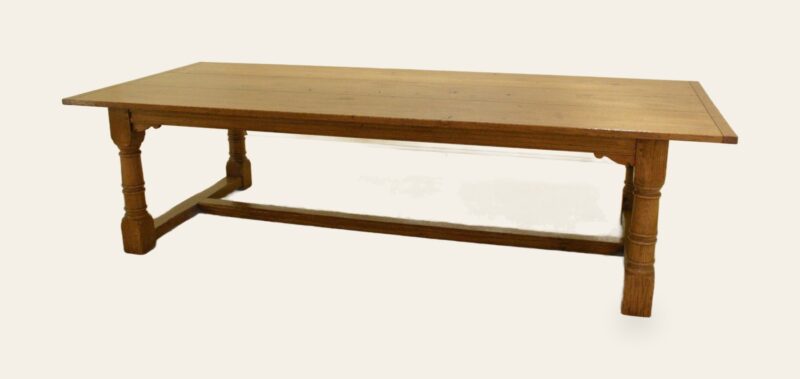
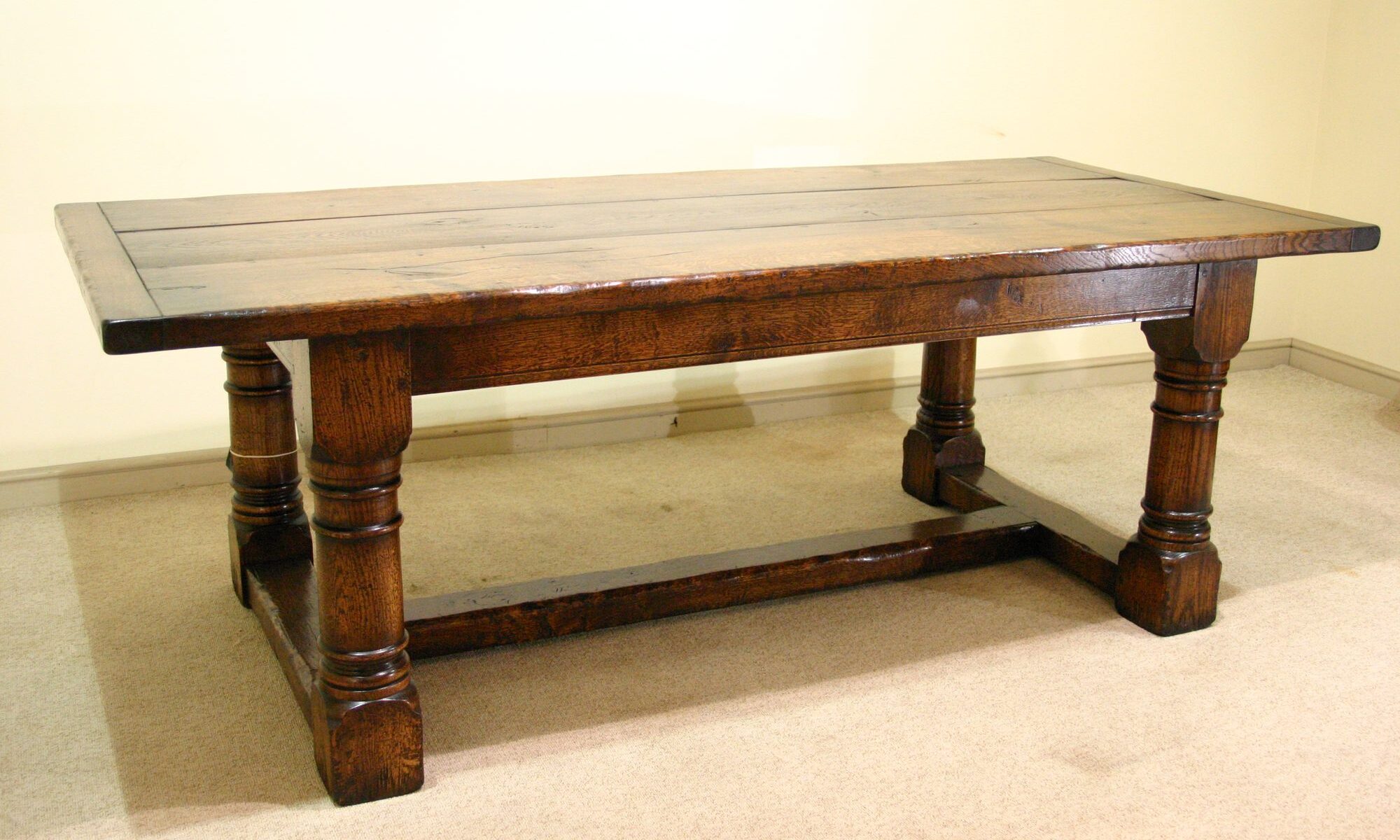
A dining table made from solid oak in a nominal 2in section, jointed properly and finished properly, is not a twenty-year object. It is a hundred-year object, and there is plenty of hundred-year-old furniture about to prove the point. Some of it comes into this workshop to be matched.
Set that against the alternative. A table bought cheaply, used for eight years, damaged in a way that cannot be repaired because it was never made to be taken apart, and taken to landfill. Then bought again. And again. Over a lifetime that is four or five tables, four or five deliveries and four or five disposals, against one.
The furniture we make is designed to be repaired. Solid timber can be re-planed, re-polished and refinished. Joints can be knocked apart, cleaned and re-glued. A drawer that has worn can have its runners renewed. Ironmongery can be taken off, cleaned and put back. Nothing structural is bonded in a way that has to be destroyed to get at it.
That is not a green feature we have added. It is simply how furniture was made before it became disposable, and it is how we still make it.
We repair and restore our own work
If you own a piece we made and something has happened to it, bring it back to us.
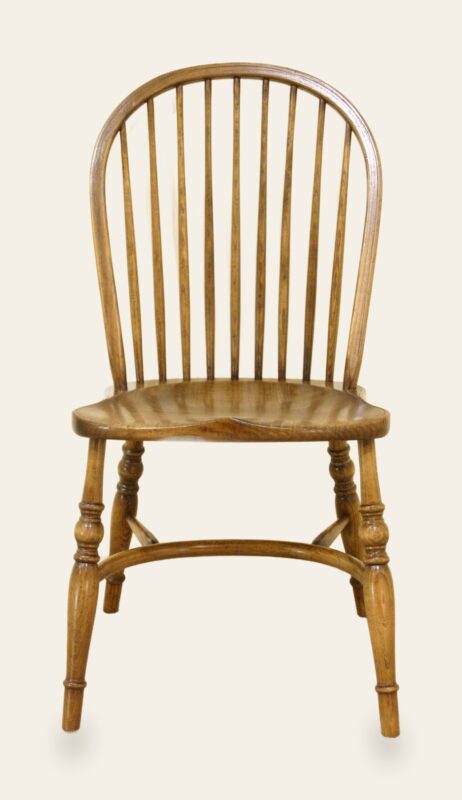
Water damage, a burn, a knock, a drawer that has stopped running, a top that needs refinishing after thirty years of family dinners, a chair that has loosened. All of it is repairable, and it is repaired by the people who built the piece in the first place, using the same timber, the same mouldings and the same colours.
Because the drawings and the colour records are still here, a repair or an addition matches. That is the practical benefit of a workshop that has not moved and a name that has stayed with the makers. See care for how to look after a piece day to day, and contact to ask about a repair.
Made to order means nothing is made in vain
There is no basket on this site, and one of the reasons is environmental.
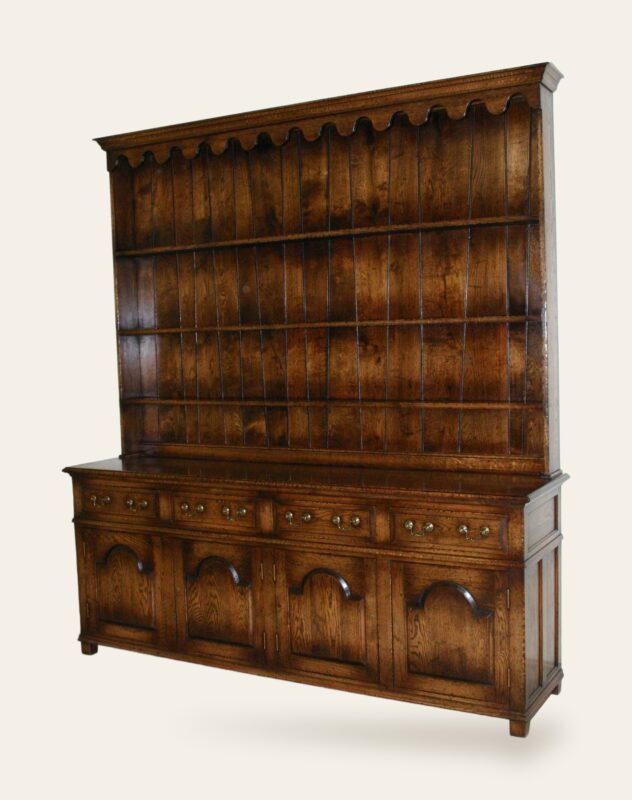
We hold no finished stock. Nothing is made speculatively, in the hope that somebody will want an oak dresser base in that particular size and shade. Every piece has a name against it before the timber is selected.
That means no unsold inventory. No warehouse of near misses. No end-of-season clearance, no discounting to shift things nobody chose, and nothing being written off and disposed of because it did not sell. The timber we buy goes into a piece somebody has asked for.
It also means we buy timber for the job. Selection happens against the specification in hand, which is why we can offer character oak, clean knot-free oak and oak selected for medullary ray as separate choices: we are choosing boards for your piece rather than working through a standing stock.
The oldest circular economy there is
Good furniture does not get thrown away. It gets inherited, sold on, restored, adapted and matched to. The trade this business grew out of exists precisely because furniture made two centuries ago is still in daily use.
Buy something made properly, look after it, and in due course somebody will ring a workshop and ask whether it can be matched. That is the point of the whole exercise, and it is why we make furniture this way.
Ask us anything
If there is something on this page you want evidence for, ask, and we will tell you plainly what we can and cannot substantiate.
Order timber and finish samples · Enquire about a piece or a repair · Book a workshop visit · 01449 710500