 Skip to content
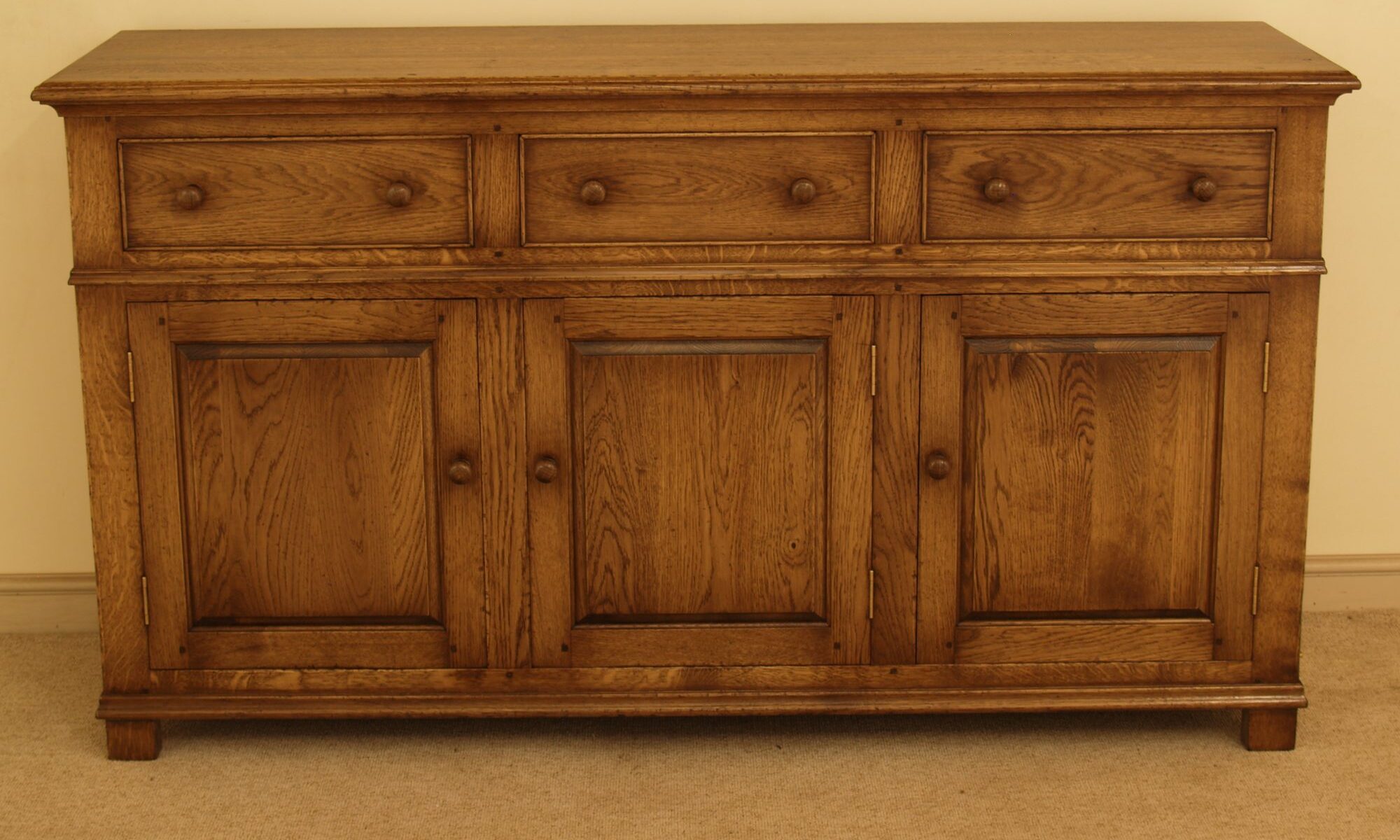
This is the vocabulary we use on drawings and on quotations. Once you know it, you can describe exactly what you want. Every term below appears somewhere in our work.
On this page
Panels and mouldings
Raised and fielded panel
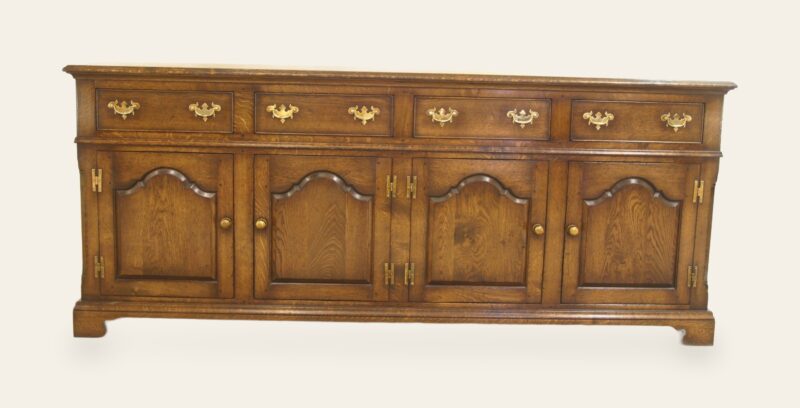
A panel worked so that the central area — the field — stands proud of a bevelled border around it. It gives a flat door depth, and it lets a solid panel be thick in the middle and thin at the edges, so it can move in its frame without splitting anything. The defining detail of the Denbigh range.
Framed side panel
The side of a carcass built as a frame with a panel floating inside it rather than as one wide board. A wide solid side would cup and split as it moved; a framed side stays flat for centuries, and carries the same panel treatment as the doors.
Cock beading
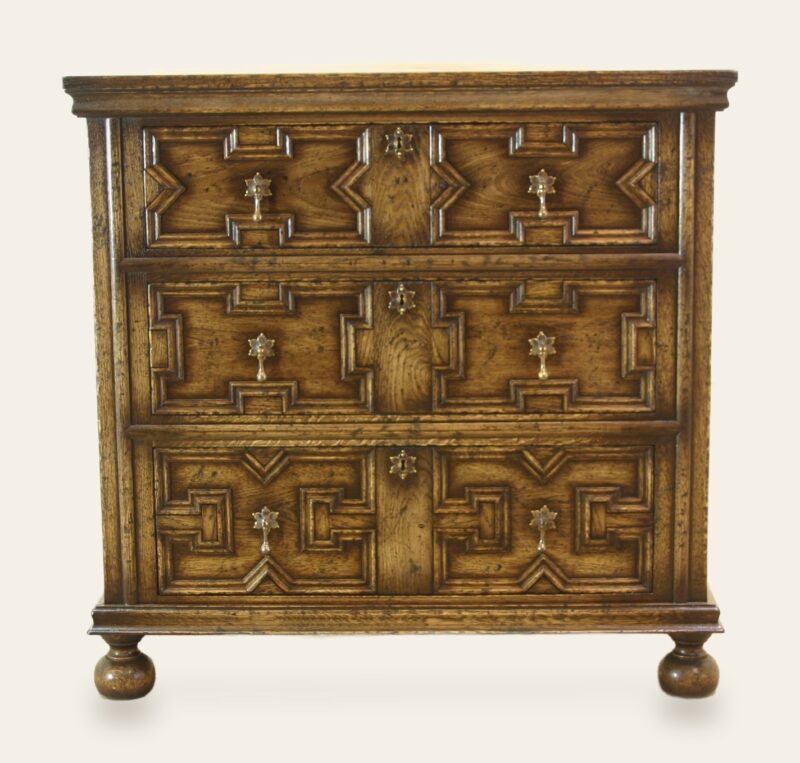
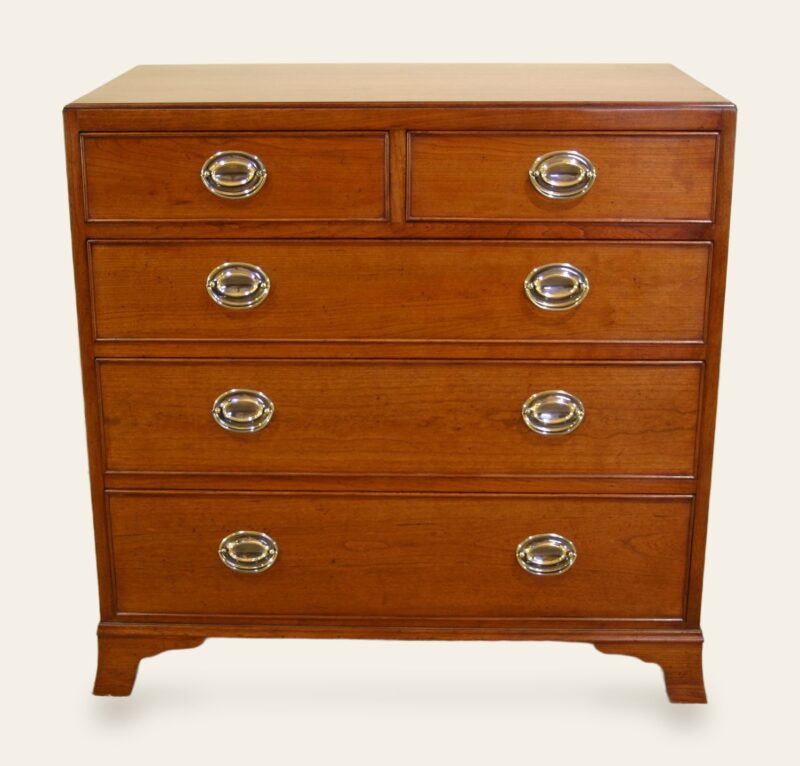
A fine raised bead run around each drawer front, standing slightly proud of the surface. It catches the light, crisps the outline, and hides the gap between drawer and carcass — a gap that changes with the seasons whatever anyone does. Standard on Denbigh.
Thumbnail profile
An edge moulding shaped like the back of a thumbnail: a shallow convex curve rolling into a small step underneath. Used on tops to soften the arris and throw a shadow line, so a thick top reads as elegant rather than heavy.
Moulded plinth
The base of a carcass piece, run with a moulding rather than left as a plain board. It gives the piece a visual foot and lifts the carcass clear of a damp floor.
Decorative plinth cut-out
A shaped cut removed from the bottom edge of the plinth, leaving feet at the corners. It lightens a heavy base and lets the piece stand properly on a floor that is not flat. Part of the Denbigh signature.
Frieze
The horizontal band immediately beneath a table top, between the top and the legs. It ties the legs together, carries the top, and holds any drawers. Oakamoor uses a simple historic frieze that frames the space between the legs.
Cross banding
A border of veneer laid around a drawer front, door or top with its grain running across the border rather than along it. The change of direction catches light differently and frames the panel. Offered on chests of drawers with or without it.
Ironmongery
Exposed butt hinge
A traditional hinge with its knuckle visible on the outside of the door, cut in flush. Modern furniture hides its hinges; period furniture shows them, because an exposed hinge can be adjusted, oiled and replaced. Visible ironmongery is a Denbigh characteristic.
Solid brass knob
A turned brass knob, solid rather than a plated pressing, threaded through the drawer front. It wears rather than flakes, and takes on a colour over years that plating never does. Wooden knobs are an alternative.
Swan neck handle
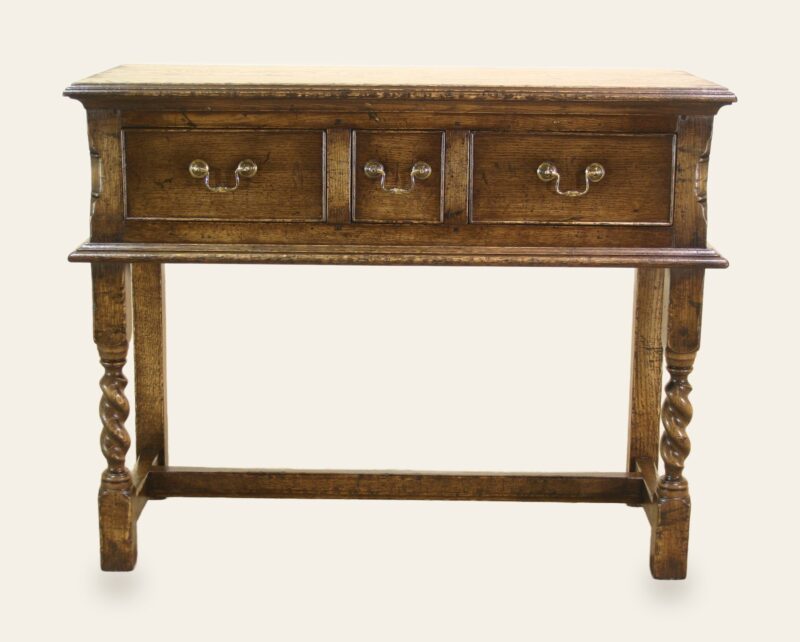
A drawer handle whose backplate and bail curve up and over like a swan’s neck, giving the fingers a grip well clear of the drawer front. The standard handle in solid brass on both formal Denbigh and plain Oakamoor pieces.
Legs, bases and turnings
Tapered leg
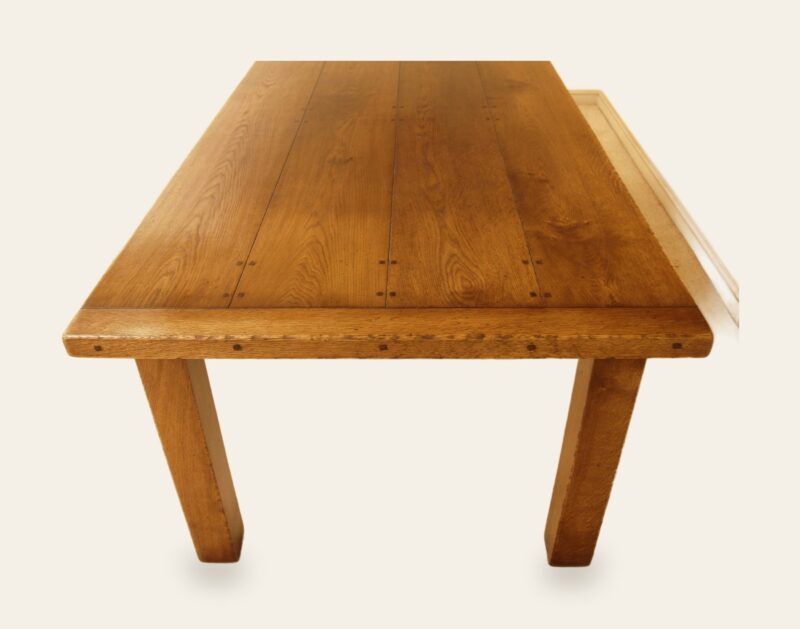
A square leg that narrows as it descends. The quintessential farmhouse leg and the standard on the Pendleton tables. It makes a heavy table look lighter without losing strength where it is needed, at the top.
Bevel to the inside edge of a leg
A small chamfer run down the inner corner of a square leg. It takes the sharpness off the edge nearest your knee and puts a fine shadow line down it. Oakamoor uses it on its substantial legs.
Cabriole leg
A leg that curves out at the knee and back in at the ankle, ending in a foot. An 18th-century form, cut from a thick blank rather than bent. Seen on dressing tables and on the farmhouse drawleaf table with cabriole legs.
Baluster turning
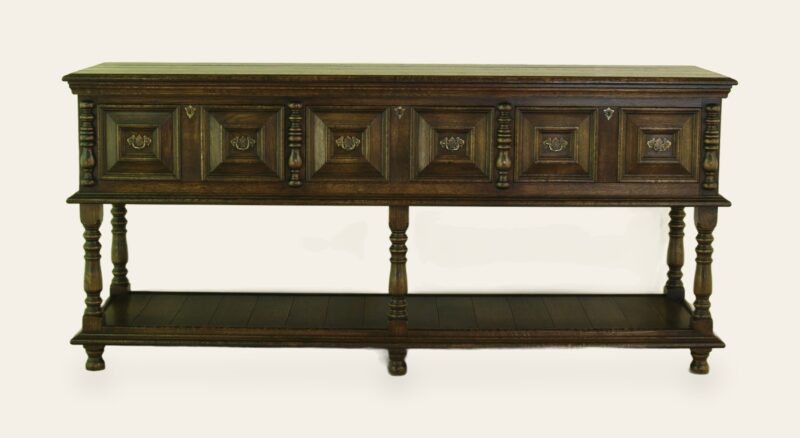
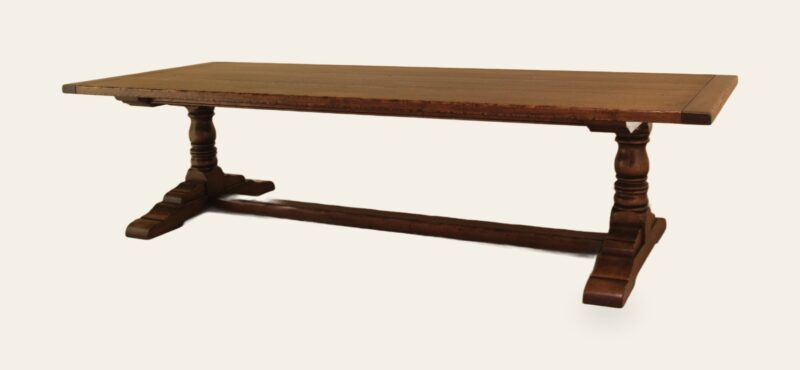
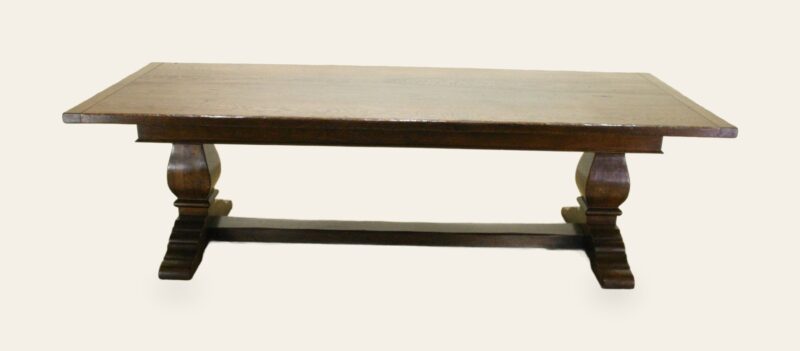
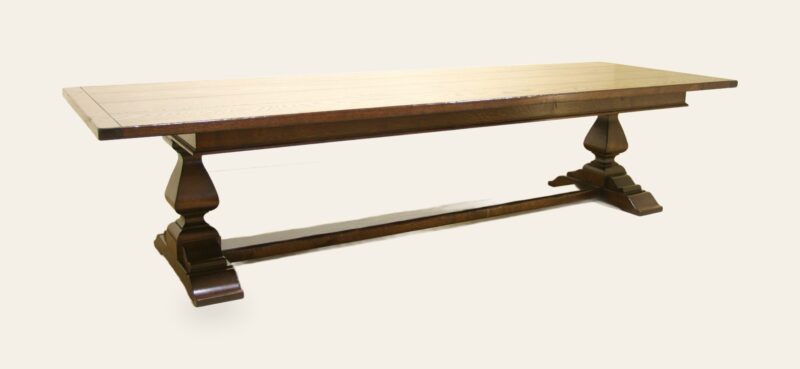
A turned leg with the profile of an architectural baluster: a swelling waist above a narrower foot. Dressier than a plain leg. Used on the baluster refectory tables and, cut square, on the square-cut baluster leg drawleaf refectory.
Bulbous turning
A more emphatic version of the same idea: a pronounced rounded swelling, often carved, reading as early and substantial. Used on carved bulbous leg buffet sideboards and single pedestal tables.
Barley twist
A turning cut as a continuous spiral, like a twist of barley sugar. Entirely decorative, which is the point: it puts movement into a static upright. Seen on barley twist bases.
Bandsaw base
A base whose standards are cut from the solid on the bandsaw rather than turned, giving broad shaped panels at each end instead of legs. Very stiff, and heavier visually than turned work. Used on bandsaw-base refectory tables, including twin pedestal versions.
Trestle
A base of two uprights, each with a foot and a head, joined by a stretcher rather than a frame. The oldest table base there is. Used on trestle and truncated-leg trestle tables.
Stretcher
A low horizontal rail tying the legs of a table or chair together so the frame cannot rack. The pattern is named for its plan shape:
- Cross stretcher — two rails crossing under the centre of a round or square table.
- H stretcher — two side rails joined by one central rail.
- X stretcher — a diagonal crossing corner to corner, often with a turned finial at the intersection.
- C stretcher — a curved rail, used where a straight one would look wrong under a shaped top.
Tops, shelves and mechanisms
Draw-leaf
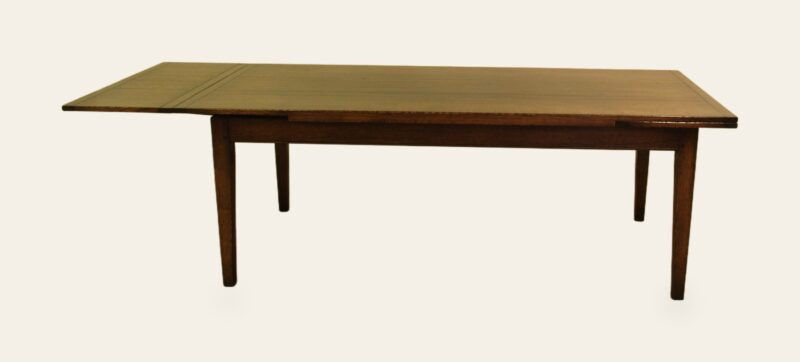
An extension where two leaves live under the main top and draw out level at either end, the main top dropping as they come so the surface stays continuous. Nothing is stored elsewhere, which is why it is specified so often on refectory and Pendleton tables.
Potboard
A low shelf running between the legs at the bottom of a dresser base or side table, originally for standing pots on. It stiffens the frame considerably and gives a base a lighter, more open look than a cupboard. See potboard dresser bases.
Caddy top
A top with a moulded, slightly raised edge standing above the surface, like the lid of a tea caddy. It contains what is on the top and gives a plain rectangular piece a defined outline. The signature of the Rowton pieces.
The look of the timber
Patternation of oak
The overall pattern the grain makes across a surface: figure, rays and colour variation taken together. Oakamoor uses generous width in the front frame pieces so there is enough surface for the patternation to be seen.
Medullary ray
Sheets of cells running radially out from the centre of the trunk. Cut on the quarter they show as broad silver flecks that flash as you move past. We select oak for ray on request, either within the timber, where it is quiet, or without the timber, where it is prominent. See timbers.
Pippy oak
Oak carrying dense clusters of small burr-like pips, in light, medium and heavy grades. Used for tops only, since it is not predictable enough structurally for legs and rails. A painted base with a pippy oak top is one of our most-requested combinations.
Use the vocabulary
Tell us you want a cock beaded drawer front, a moulded plinth with a cut-out and swan neck handles in solid brass, and we can quote it without a misunderstanding. Or describe it in your own words and we will supply the terms.
Order timber and finish samples · Enquire about a piece · 01449 710500
Frequently asked questions
What is cock beading?
A fine raised bead run around each drawer front, standing slightly proud of the surface. It crisps the outline, catches the light, and conceals the gap between drawer and carcass — a gap that changes with the seasons whatever anyone does. It is standard on the Denbigh range.
What is a potboard?
A low shelf running between the legs at the bottom of a dresser base or side table, originally for standing cooking pots on. It stiffens the frame considerably and gives a base a lighter, more open look than a cupboard.
What is medullary ray oak?
Medullary rays are sheets of cells running radially out from the centre of the trunk. Cut on the quarter they show as broad silver flecks that flash as you move past the piece. We select oak for ray on request, either within the timber, where it is quiet, or without the timber, where it is prominent.
What is a raised and fielded panel?
A panel worked so the central area, the field, stands proud of a bevelled border around it. It gives a flat door depth, and it lets a solid panel be thick in the middle and thin at the edges so it can move in its frame without splitting.
What is a draw-leaf table?
A table where two leaves live under the main top and draw out level at either end, the main top dropping as they come so the surface stays continuous. Nothing has to be stored elsewhere, which is why it is specified so often on refectory and Pendleton tables.