 Skip to content
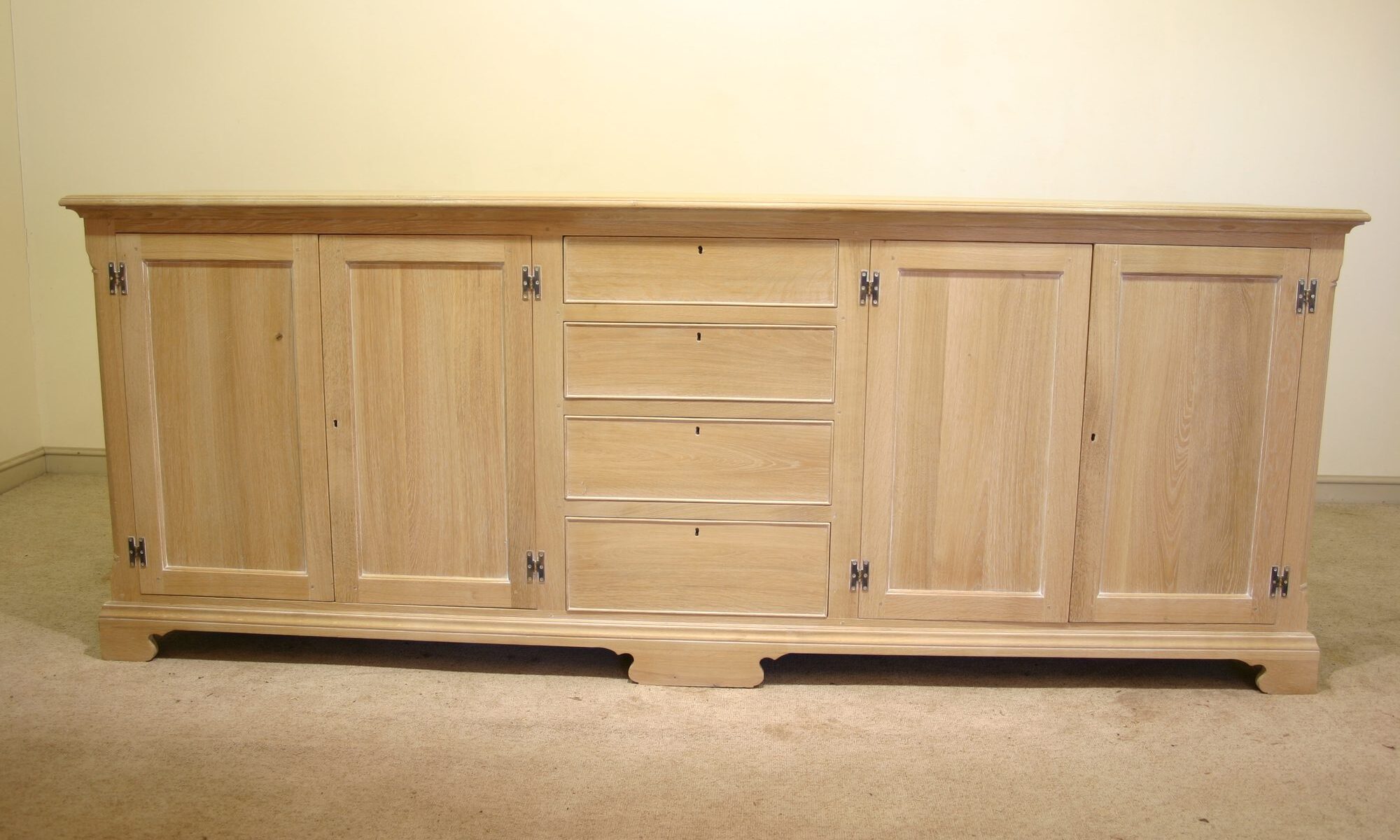
The finish decides how a piece looks in your room more than almost anything else. Two identical oak dressers, one polished and one limed, do not belong to the same world.
On this page
There are seven ways we finish furniture, and they can be combined on one piece. All of them are done in our own finishing shop at Mickfield, by our own polishers, on the piece we made.
Polished
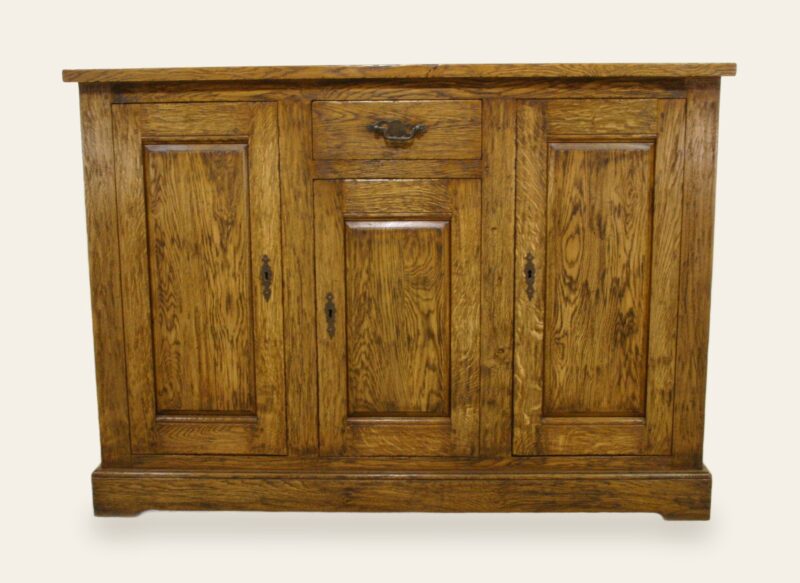
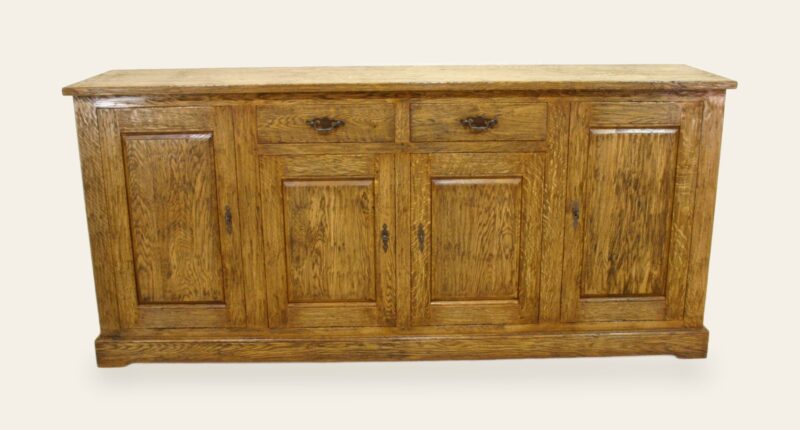
The default and the most-specified finish. The timber is prepared, coloured, and then polished to build depth in the surface, so that you are looking into the wood rather than at a film on top of it.
Polished finishes are available across the shade range, from a pale natural through to a dark antique brown. On oak the polish emphasises the grain and the patternation. On cherry and mahogany it does what those timbers do best, which is glow.
Sheen is a choice as well as colour. A satin surface suits most rooms; a fuller sheen suits formal mahogany work; a very low sheen reads as older and quieter. Say which you want, or hold the samples and point at one.
Painted
Paint on furniture is not a cover-up. It is a way of separating a piece into its parts, and it is how a great deal of English country furniture was originally treated.
The classic Bryn Hall version is a painted base with a pippy or standard oak top: the frame, legs and rails painted, the top left in timber and polished. It is a signature treatment on the Pendleton tables and on the Georgian pieces, and it is the single most requested combination we do outside plain polished oak.
The reason it works is that the top gets to be the timber and the base gets to be the furniture. On a large table it also lightens the whole thing visually, which matters in a kitchen.
Any colour is possible. Bring us a paint reference, a fabric, or a piece of your existing skirting.
Limed
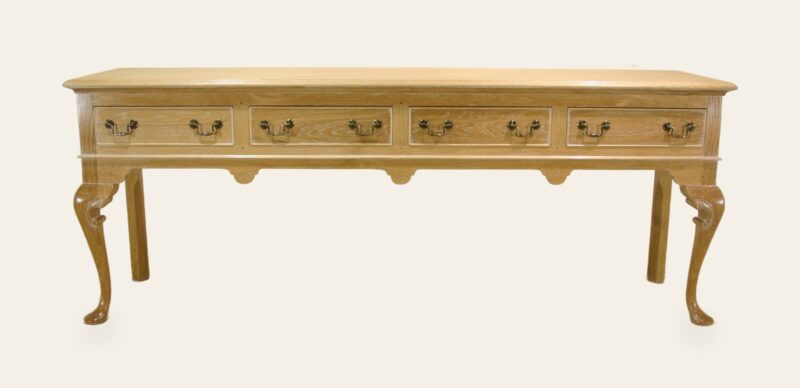
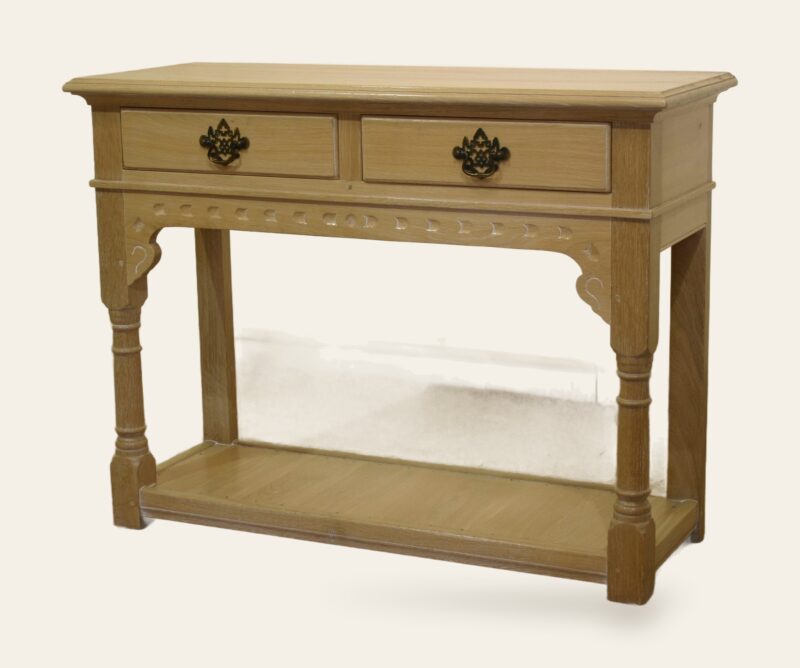
Liming works a white or pale pigment into the open grain of the timber and then cleans it back off the surface, so the grain reads as fine pale lines against a darker background. It only works properly on an open-grained timber, which in practice means oak.
The effect is chalky, cool and slightly weathered, and it takes a room in a completely different direction from a polished finish. It is the defining characteristic of the Windrush dresser bases, and it appears on the cab-leg sideboards.
Sand-blasted
The surface is blasted so that the softer early wood erodes faster than the harder late wood, leaving the grain standing proud. You can feel it under your hand. It is a texture rather than a colour, and it can be polished, limed or painted afterwards.
Sand-blasting suits big, plain, timber-led pieces — dresser bases, potboard bases, coffee tables — where the point is the material rather than the decoration. On a fine cabinet with cock beading and fielded panels it would fight the detail.
Rub-through paint
Paint applied and then rubbed back on the edges, arrises and handle areas where a piece would naturally have worn, letting the timber or an underlying colour show through.
Done well it looks like time. Done badly it looks like a technique, and the difference is entirely in the restraint. We rub through where wear would actually have happened and nowhere else.
Natural and undistressed
No colour added. The timber finished as it is, with a clear protective surface, and left to do its own ageing.
This is the honest option, and it is increasingly what clients want, particularly on oak and on contemporary pieces. It is also less forgiving than it sounds. With no colour to even things out, every board has to be matched to its neighbours at the selection stage, and any variation in the surface preparation shows.
Natural finishes are priced on application for exactly that reason: they are bought in preparation and polishing time rather than in materials.
Colour matched to a sample
The finish that brings most people here. You send us a physical sample — the piece itself, a drawer, a door, an offcut — and our polishers build the colour against it, in daylight, checking between coats until the new piece and the old one read as one.
We can match furniture that is 100 years old to new reproduction purchases made the year before. The method, what to send us and the honest limits are set out in full on matching antique furniture.
Colour matching is priced on application. That is not a premium for the sake of it. A standard shade goes on in a known sequence; a match goes on in stages, with drying and assessment between each, and sometimes with a pass stripped back and started again because it has gone a shade warm. You are paying for polishing hours, and there is no way to know in advance exactly how many a particular match will take.
Combining finishes
Most of the interesting work combines two. A painted base with a polished oak top. A limed carcass with a natural top. A sand-blasted base with a polished top. A rub-through frame with polished drawer fronts.
Ironmongery is part of the decision too. Solid brass knobs and swan neck handles read warm and formal; wooden knobs read plainer; exposed butt hinges are part of the look on the Denbigh pieces rather than something to hide. See construction.
Order the samples. They are free.
This is the page where samples matter most. Finish is the thing screens misrepresent worst — every monitor is calibrated differently, and photographs of a polished surface depend entirely on the light in the room where they were taken.
We post out timber and finish samples at £10 each, refunded against your order, with no obligation. Put them on the piece of furniture you already own, in the room they are going to live in, and look at them in the morning and again under lamplight. The decision usually makes itself.
Order timber and finish samples · Ask about a colour match · Book a workshop visit · 01449 710500
Frequently asked questions
Can you match a finish to a piece I already own?
Yes, and it is one of the main reasons clients come to us. Send a physical sample — the piece, a drawer, a door or an offcut — and our polishers build the colour against it in daylight, checking between coats until the two read as one. Colour matching is priced on application because you are buying polishing hours.
What is the difference between limed and sand-blasted?
Liming is colour: a pale pigment worked into the open grain and cleaned back off the surface, so the grain reads as fine pale lines. Sand-blasting is texture: the softer early wood is eroded away so the grain stands proud and you can feel it. They can be combined, and both need an open-grained timber, which in practice means oak.
Which finish wears best on a dining table?
A polished top. It builds depth in the surface, it can be refreshed, and it copes with daily use better than a painted or limed top. The common arrangement on a farmhouse or Pendleton table is a painted base with a polished oak top, which gives you the look of paint where it will not be worn and the durability of polish where it will.
What is a painted base with a pippy oak top?
The frame, legs and rails are painted in any colour you choose, and the top is left in timber and polished. It is a signature treatment on the Pendleton and Georgian pieces, and the most requested combination we do outside plain polished oak.
Can I choose the sheen as well as the colour?
Yes. A satin surface suits most rooms, a fuller sheen suits formal mahogany work, and a very low sheen reads as older and quieter. Tell us which, or hold the samples and point at one.