 Skip to content
Furniture making has kept its own vocabulary, and most of it is genuinely useful rather than decorative — the words describe things that have no shorter name. Here are the ones you are most likely to meet on one of our drawings or quotations.
Parts of a piece
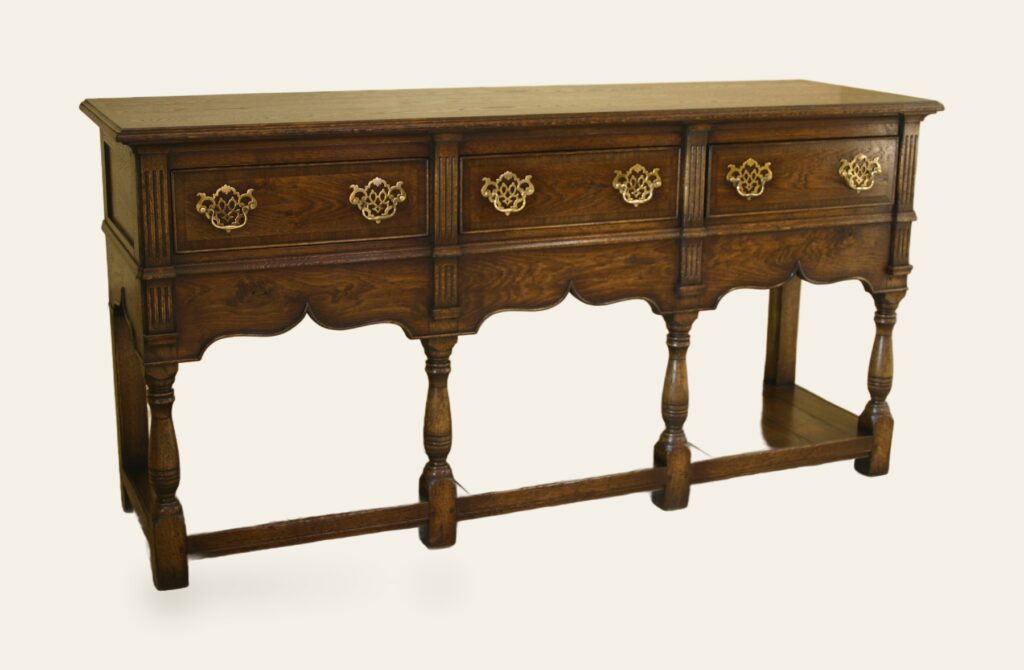
- Apron — the rail running below a table top or beneath a cabinet, between the legs. It stiffens the piece and hides the joint.
- Carcase — the box of a cabinet: sides, top, bottom and back, before doors, drawers or feet.
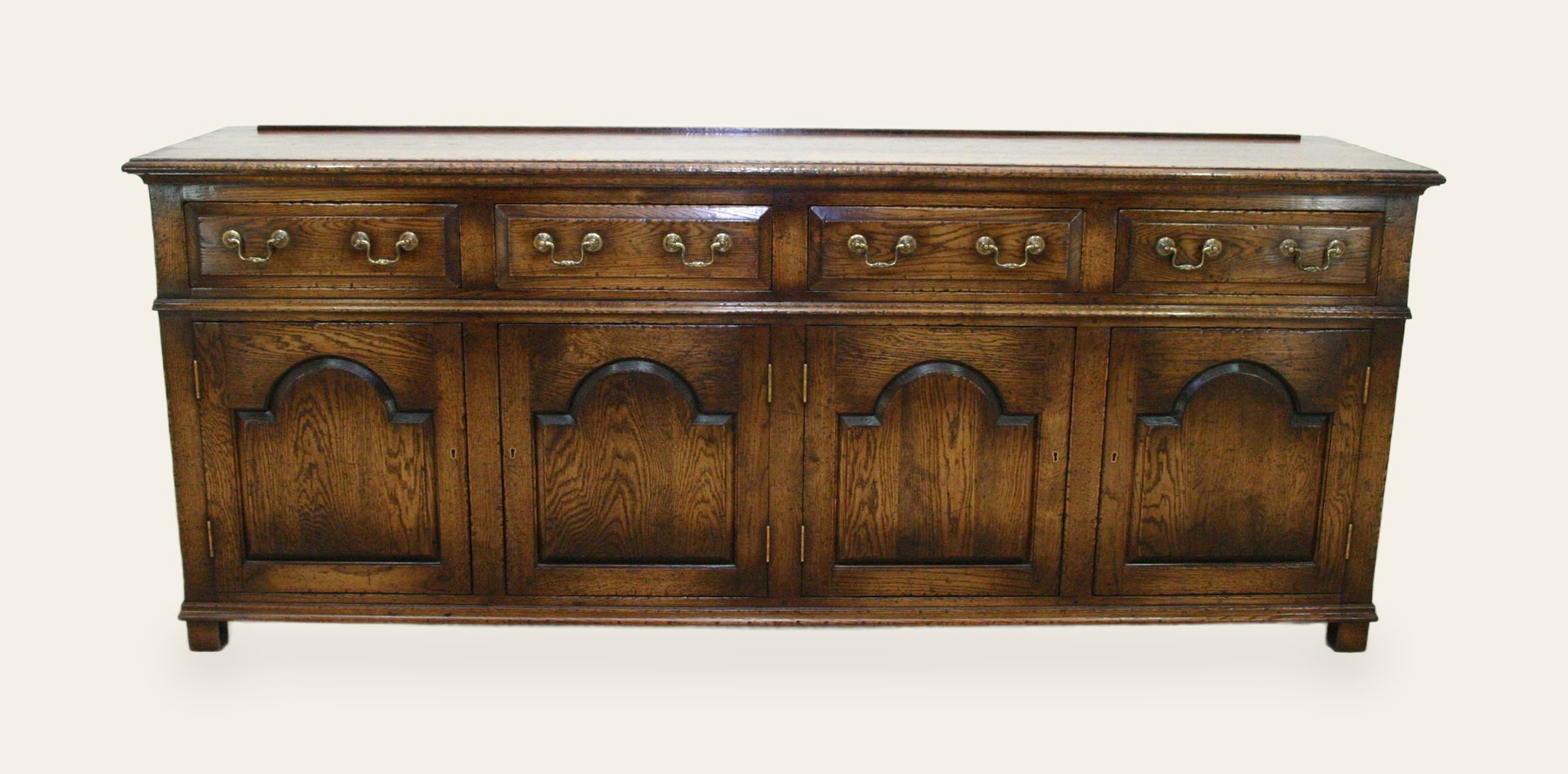
- Plinth — the base a cabinet stands on, running to the floor rather than sitting on legs.
- Rail — a horizontal member. Stile — a vertical one. A framed and panelled door is stiles and rails with panels between.
- Stretcher — a low rail running between legs to stop a piece racking. Central to a refectory table.
- Tester — the rectangular frame overhead on a four poster bed, tying the posts together. A half tester covers the head end only.
- Potboard — the open shelf low between the legs of a dresser base, at one time for pots.
Construction
- Dovetail — the fan-shaped joint used at the corners of drawers. Hand-cut dovetails are irregular by a fraction and that is how you tell them.
- Mortice and tenon — a peg of timber cut on one member fitting a slot in another. The joint most of a piece of furniture is held together with.
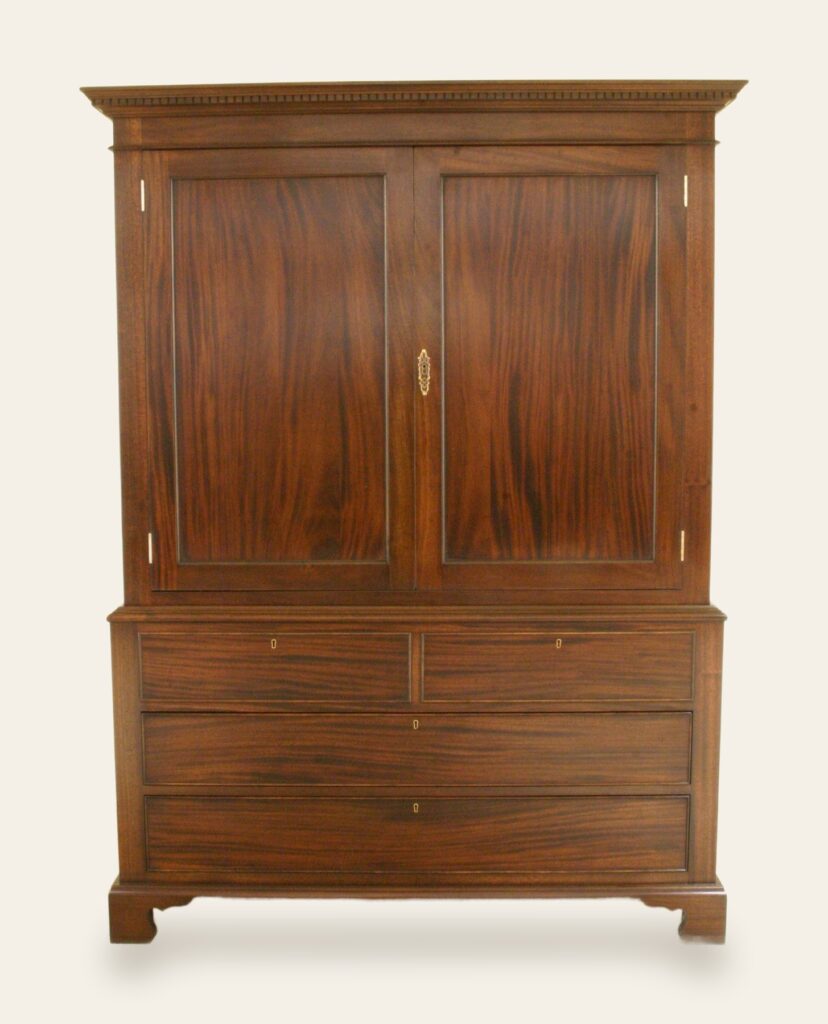
- Fielded panel — a panel with its edges bevelled back so the centre stands proud. What makes a panelled door read as a panelled door.
- Cock beading — a small bead standing proud around a drawer front. Traditional, and it protects the edge.
- Draw runner — the timber a drawer slides on. On a well-made piece it is a replaceable part.
- Rod — a full-size drawing of the piece set out on a board, used at the bench. Every commission here is drawn twice: once in CAD, and again as a rod.
Timber
- Character oak — oak with knots, shakes and sapwood deliberately left in rather than cut out.
- Pippy oak — oak with dense clusters of small pin knots, in light, medium and heavy grades.
- Burr — the swirled figure from a growth on the trunk. Not the same as pippy, though the two are often confused.
- Medullary ray — the flecked figure that appears when oak is quarter-sawn. Sometimes called silver grain.
- Quarter-sawn — boards cut radially from the log. More stable than plain-sawn, and more wasteful, which is why it costs more.
- Shake — a natural split along the grain. In character oak, a feature. Elsewhere, a defect.
- In stick — timber stacked with spacers between the boards so air can move through it while it seasons.
Finishing
- Limed — white pigment worked into open grain and cleaned off the surface, so the grain reads pale.
- Rub-through — paint worn back at the edges where a century of hands would have worn it.
- Sand-blasted — soft grain blasted out to leave the hard grain proud, giving a textured surface.
- Sheen — how much light a finish returns, from dead flat to full gloss. Two pieces can be the same colour and look nothing alike at different sheens.
- Colour match — building a finish to match something you already own, from a chip, a photograph or the piece itself.
On a quotation
- Made to order — drawn and made for you. Every dimension is open.
- Standard sizes — the sizes we hold patterns for. Starting points, not limits.
- From price — the starting figure for a piece in oak at a standard size. Timber, size and complexity move it.
- Lead time — normally twelve weeks from order, and up to sixteen when the workshop is busy. A genuine one-off usually adds about four.
Anything here you would like explained further, ring the workshop on 01449 710500. If you are choosing timber or finish, the samples are more use than any amount of vocabulary — £10 each and refunded against your order.