 Skip to content

Standard designs typically take ten to twelve weeks from order to delivery. A genuine one-off bespoke piece typically adds around four weeks to that, so fourteen to sixteen.
On this page
Those are the figures from our own price list, and we present them as typical guidance rather than a contractual promise. Timber, the length of the current programme and the complexity of a piece all move the date, and we would rather say that plainly than quote something we cannot hold to.
What follows is where that time goes. It also tells you when you can change your mind cheaply and when you cannot.
Before the clock starts
The lead time runs from order, not from your first telephone call, and the part before the order is entirely under your control.
Samples take a few days to arrive and are worth living with for a week. If you are matching an existing piece, allow longer, and look at the samples against the original in several different lights before deciding.
Drawings for a one-off take as long as the conversation takes. Two people who know what they want can settle a design in a fortnight. A design that keeps changing can run for months, and none of that counts towards the ten to twelve weeks.
If you have a fixed date, say so at the enquiry stage. We will tell you honestly whether it is realistic rather than discovering the problem in week nine.
Phase one: timber selection
This is the phase people are least aware of and the one that most affects the finished piece.
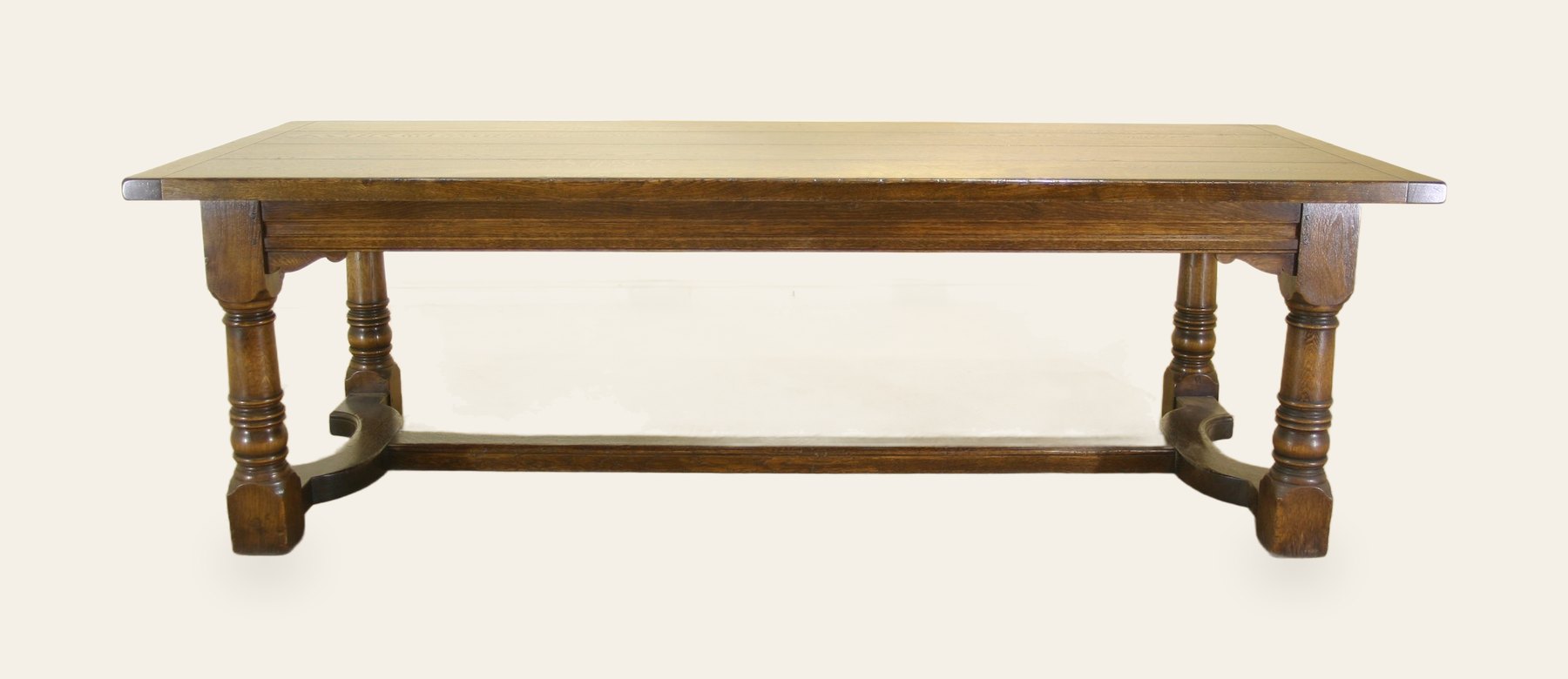
Boards are selected for the piece they are going into, not pulled off the top of a stack. A pair of doors that need to look like a pair have to be cut from the same board, or from boards chosen to sit together. A four-planked refectory top has to be laid out so the four boards read as one surface. A piece matching an existing one may need several boards rejected before the right one appears.
Specials take longer again. Character oak has to be selected for the right amount of character. Pippy oak comes in light, medium and heavy grades and has to be picked to the grade. Timber selected for medullary ray, and clean timber with no knots at all, both mean going through more boards to find fewer.
Timber machined and then left to settle for a few days before final dimensioning stays flat. Timber taken straight from the saw to the assembly bench frequently does not. This is a large part of why the honest answer is ten to twelve weeks and not four.
Phase two: the carcase
Cutting, machining, jointing and dry assembly.
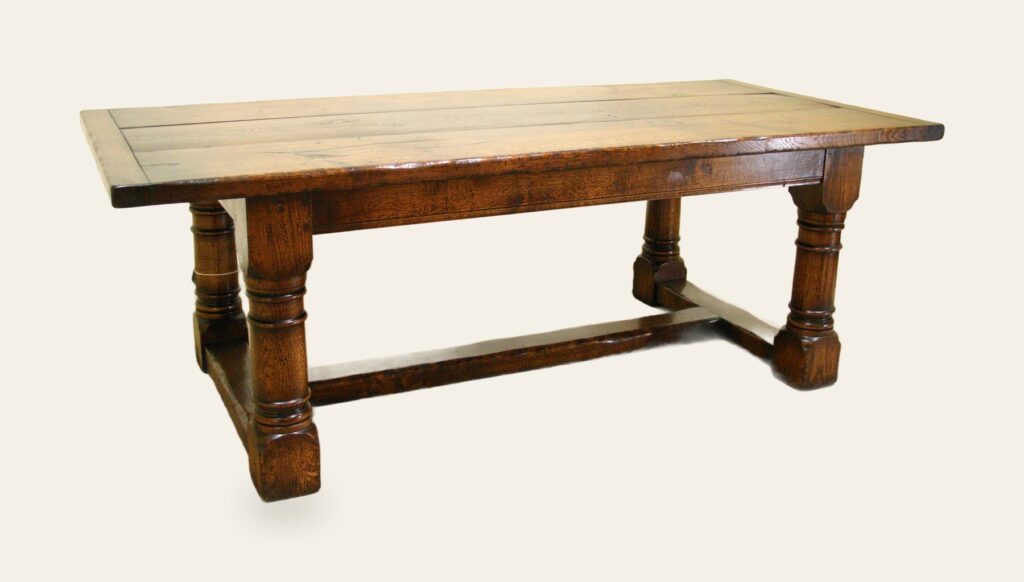
The frame goes together first, without glue, so it can be checked square and adjusted. Raised and fielded panels are made to float in their frames rather than being glued in, so the timber can move seasonally without splitting. Getting that clearance right takes judgement: too little and the panel splits in a damp August, too much and a gap shows in a dry February.
Then mouldings are run, plinths are cut, and any decorative cut-out is worked.
Phase three: doors and drawers
This is the slowest part of a good piece and the fastest part of a poor one.
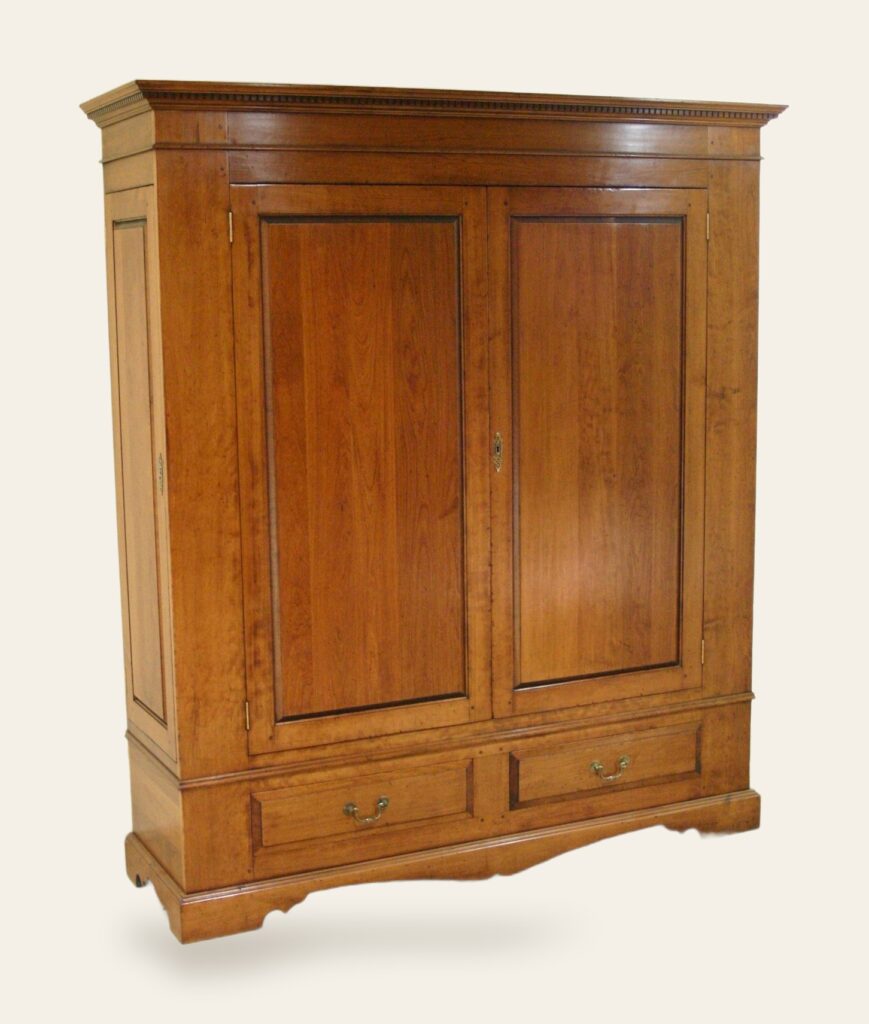
Each door and each drawer is fitted individually to its own opening. Not to a standard size, and not hung on a runner system that takes up the slack. That is the reason a Denbigh framework sits so precisely around its doors and drawers, and it is also the reason it takes as long as it does.
Cock beading, the fine raised bead run around each drawer front which catches the light and hides the gap, is applied at this stage. Ironmongery is fitted and then taken off again for finishing.
Carving and turning happen alongside this, and carved work is the single biggest variable in the whole programme. A carved four poster or a carved credence cabinet is simply not a ten-week piece.
Phase four: finishing
Finishing happens in our own polishing shop, which is the reason we can be held to a colour.
Polishing is a sequence of operations with drying time between them, and drying time cannot be compressed by wanting it more. A colour match is built up in stages and checked against your sample in daylight rather than under workshop lights. That is why colour matching and natural finishes are priced on application: they take extra polishing time.
Painted and limed work has its own sequence. A painted base with a pippy oak top is finished as two separate operations and brought together at the end. Rub-through paint has to be built up before it can be worn back.
Phase five: assembly, checking and delivery
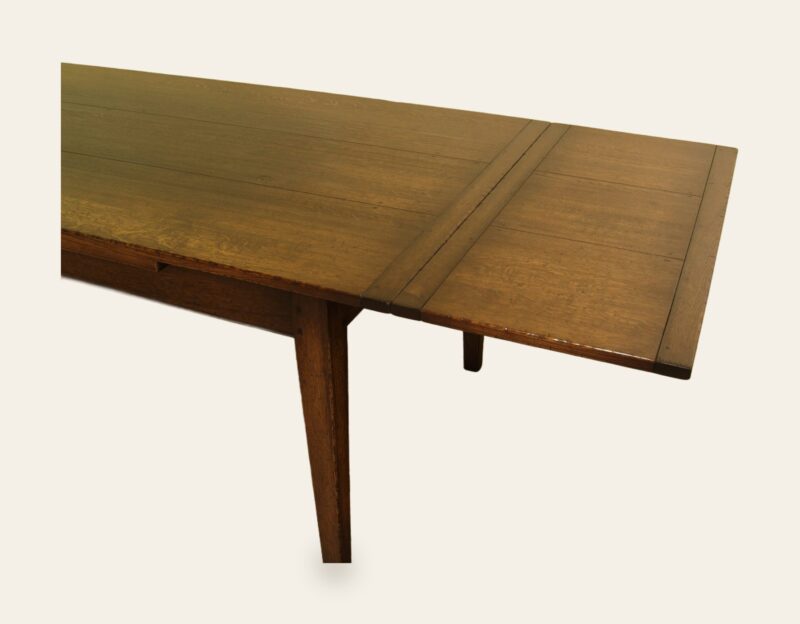
The piece is assembled, ironmongery refitted, drawers and doors checked, draw-leaf mechanisms run.
Then delivery is arranged around your diary. Two of our own people bring it into the room of your choice, assemble beds and large pieces on site, and take the packaging away.
Why a one-off adds around four weeks
Three reasons, in order of size.
Drawing and setting out. Elevations and sections, and where the detail warrants it full-size setting-out of a moulding or a carved panel. Nothing is cut until you have approved it.
Making the things that do not exist. New cutters for a moulding that is not in the shop. A turning pattern that has to be made before the first leg can be turned. A carved detail that has to be drawn out, cut once as a trial, and looked at.
No second chances. On a repeat pattern, a mistake is annoying. On a one-off in specially selected timber, there may not be another board like it, so the work goes more carefully and more slowly.
What makes it longer, and what makes it shorter
Longer: carved work, unusual timber, colour matching to an existing piece, very large pieces, complicated extending mechanisms, and changes made after the order is placed.
Shorter: a catalogue piece in a standard timber and finish, with the dimensions altered. That is the commonest order we take and the one most likely to sit at the shorter end of ten to twelve weeks.
The time of year matters less than people think, with one exception: everybody wants a dining table in time for Christmas, so an order placed in September for December is optimistic and one placed in June is not.
Is it worth the wait?
That depends entirely on whether you want the piece you actually want.
Ten to twelve weeks is the price of a table built to your dimensions, in your timber, in your colour, with drawers fitted individually to their openings and a finish matched to the piece already in the room. Nobody can do that from stock, and the alternative is not a faster version of the same thing. It is a lesser thing that arrives sooner.
Order timber and finish samples, and read how commissioning works for the full sequence.
How commissioning works · Delivery · Call 01449 710500
How Long Does Bespoke Furniture Take to Make?
3 pieces from the workshop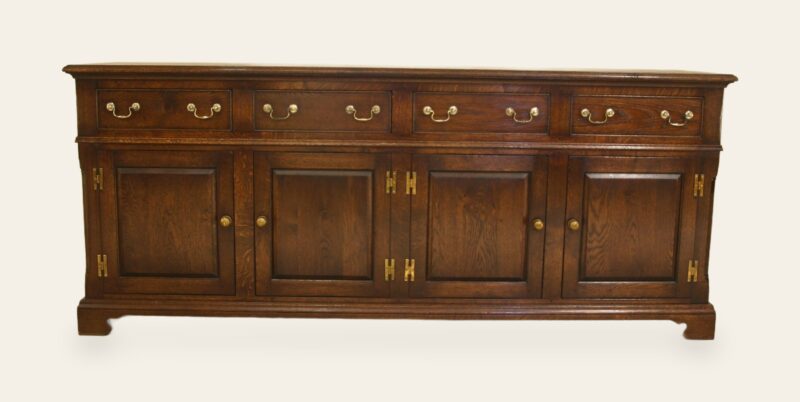
Fitted work runs to its own timetable, set by the site. Reeve & Co Interiors programmes panelling and built-in joinery around the builder, and Square & True does the same for kitchens.