 Skip to content

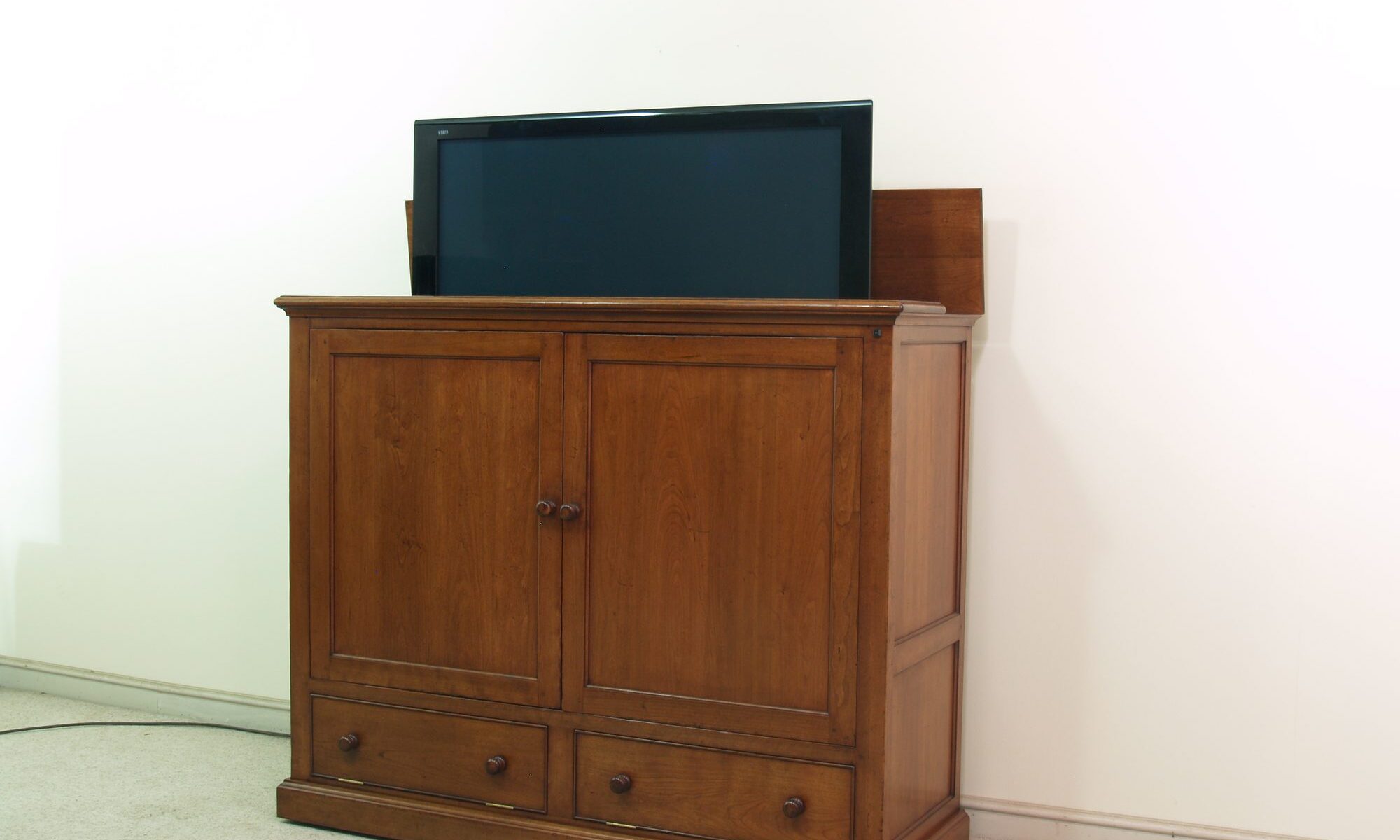
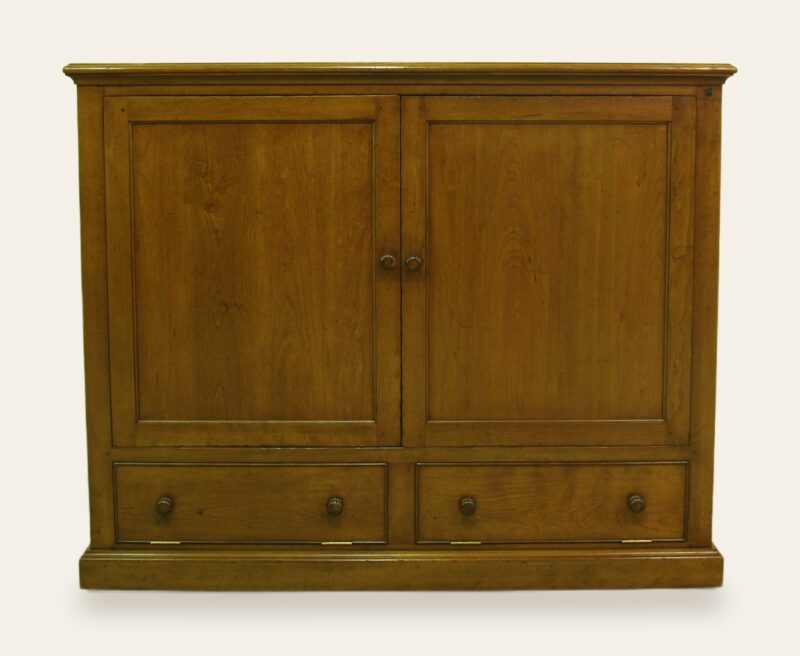
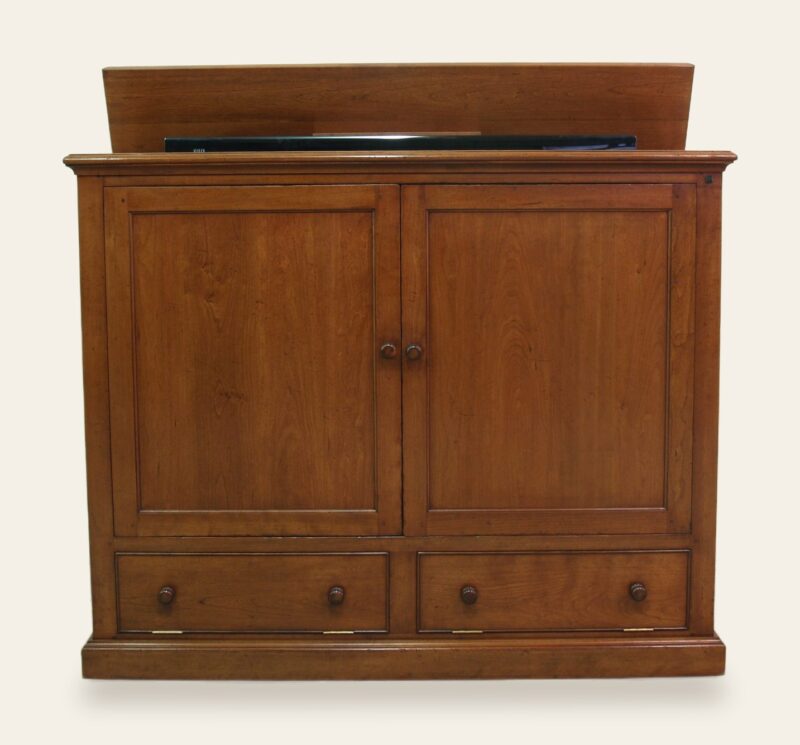
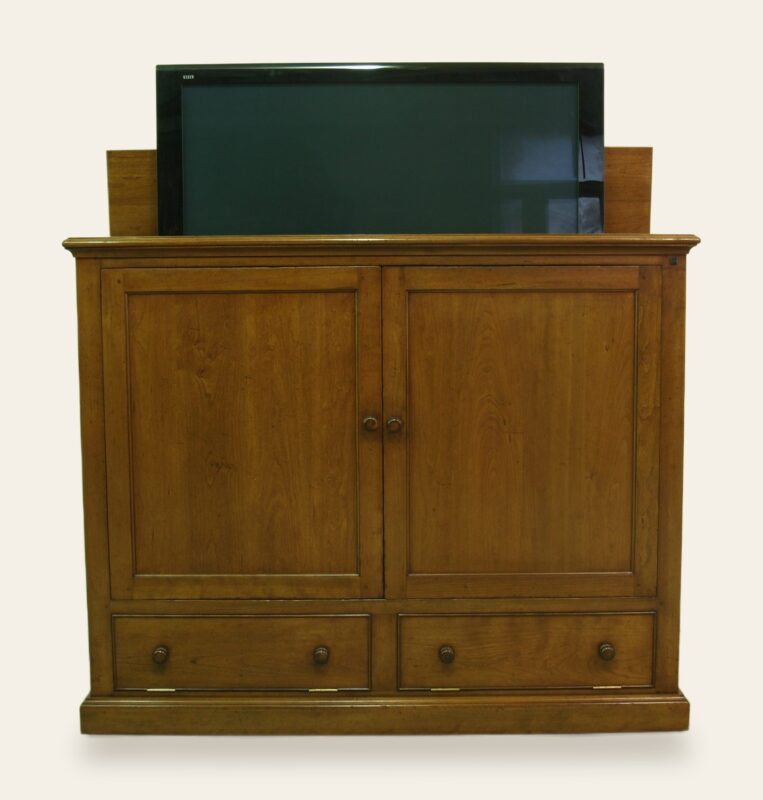
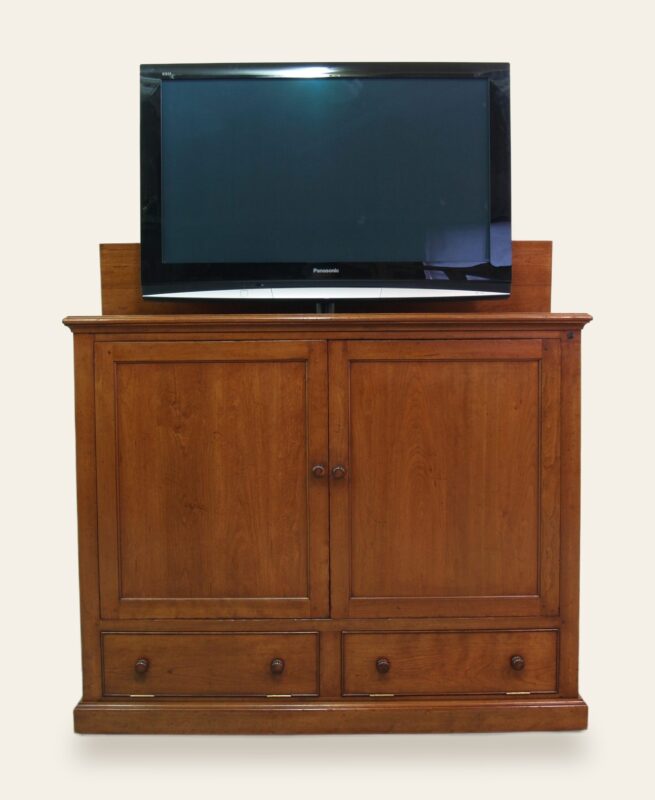
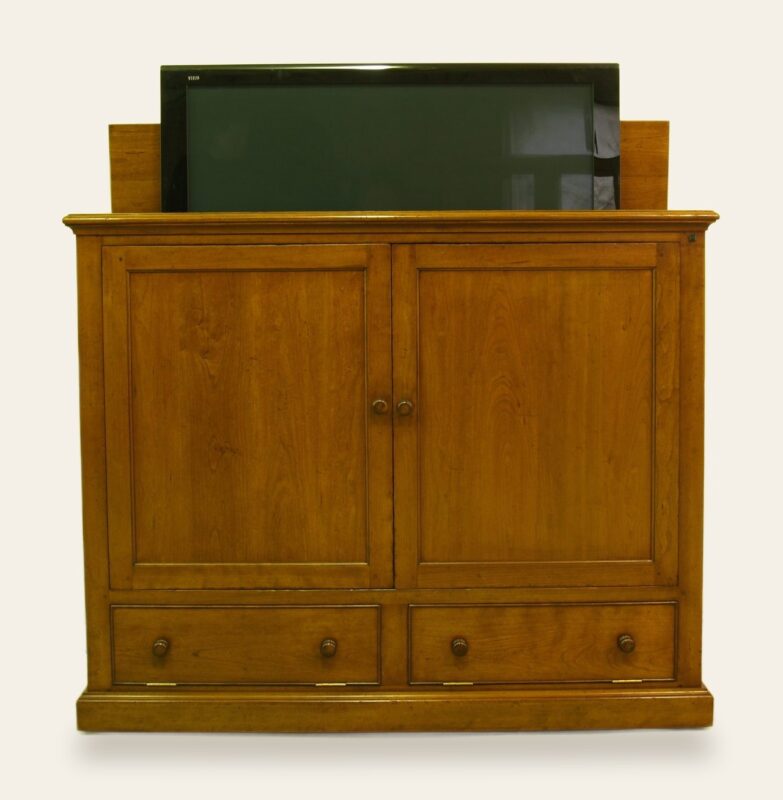
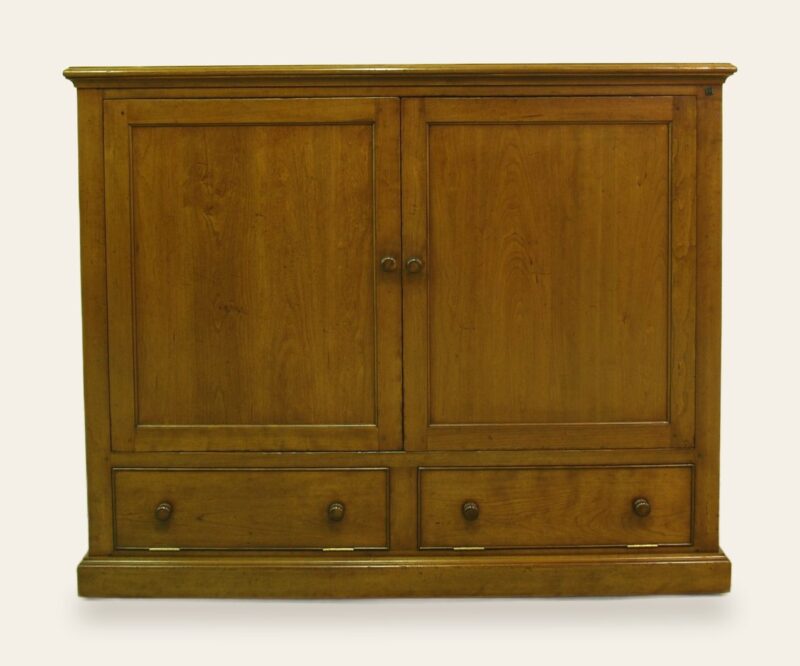
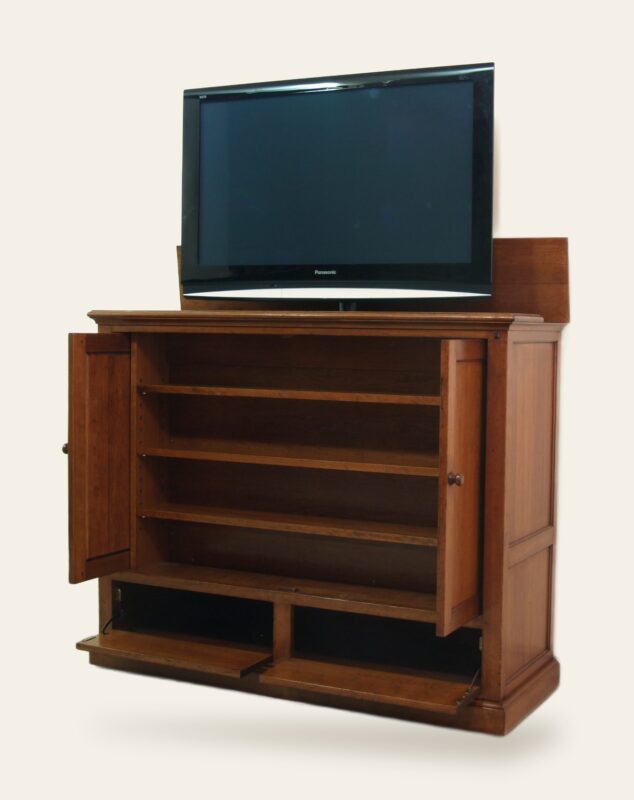
A TV lift cabinet holds the television inside it. Press a button and the screen rises out of the top on a concealed rise-and-fall mechanism; press it again and it drops back inside, the lid closes, and the room has furniture in it instead of a television.
On this page
Almost no traditional maker offers this. Lift mechanisms go into contemporary veneered units, and solid timber cabinetmakers stop at a cupboard with doors. We make the cabinet in oak, cherry, mahogany or walnut, in the same Suffolk workshop, with the mechanism designed in from the drawing stage. The one shown is in cherry.
Why you would want one
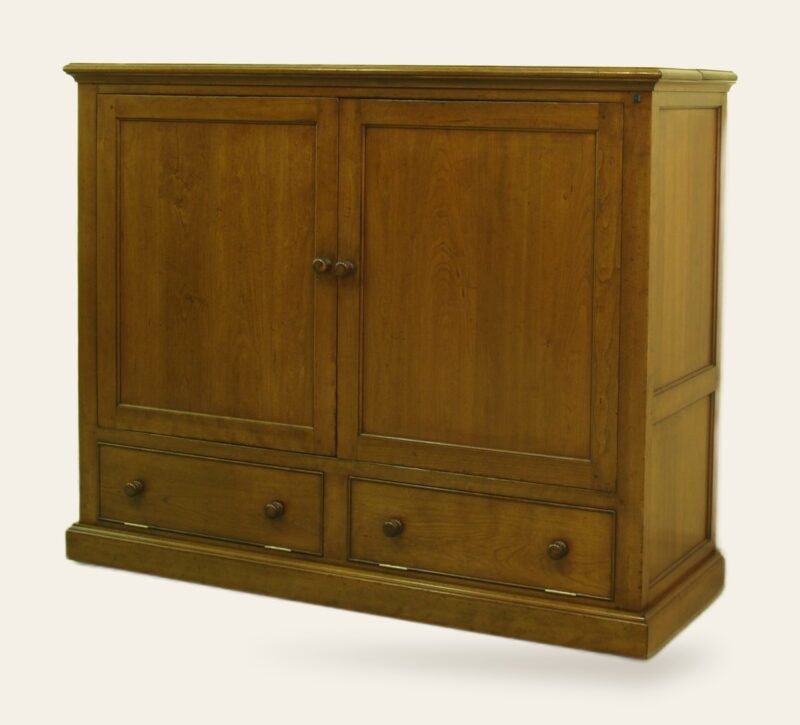
The television stops being the subject of the room. A large screen dominates any wall it hangs on. Down, the cabinet is a sideboard. Up, you have a television.
It solves the bedroom. A cabinet at the foot of the bed puts the screen at the right height when you want it and removes it when you do not. The most common reason clients ask for one.
It solves the room with no good wall. Where the fireplace, window and door take three walls, there is nowhere sensible for a television. This can stand anywhere.
It solves the listed building. No bracket, no chasing cables into a wall, nothing fixed to anything. And it solves the room used two ways: a dining room, or a sitting room that is also a study, does not want a screen in it all day.
How it works
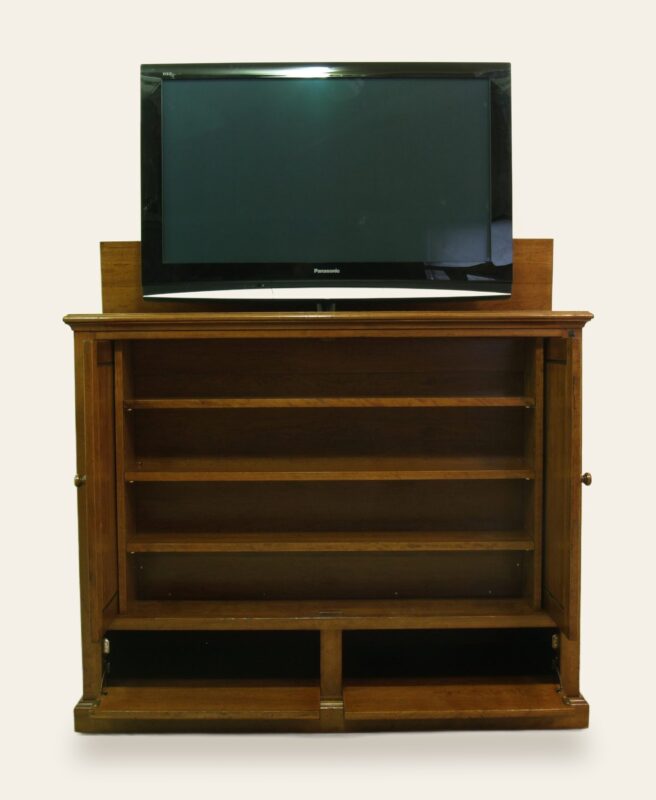
The mechanism is a rise-and-fall lift concealed inside the carcase. The screen is fixed to a carriage driven by an electric motor, and the carriage carries it up through the top of the cabinet and back down inside. The top lifts as a flap, splits and opens, or the screen rises through a slot.
We fit Häfele lift mechanisms. The mechanism is bought in and the cabinet is ours, which is the right way round: the moving part comes from a fittings manufacturer who makes them by the thousand, and the furniture comes from a workshop that has been making case furniture for thirty years.
Specification
| Mechanism | Häfele |
| Maximum screen weight | 40kg |
| Maximum screen size | 55 inches |
| Travel height | 45 inches |
| Power | Standard UK three-pin socket — no electrician required |
| Control | Remote handset |
| Screen fixing | VESA plate supplied |
Those figures decide whether a lift cabinet is possible before anything else does, so read them against your own television first.
Weight and size. 40kg and 55 inches are the limits. Take the weight from your television’s own specification rather than estimating it, because two screens of the same size can differ considerably, and the figure that matters is the set without its stand.
Travel height. The carriage lifts 45 inches. That, together with the height of the cabinet, is what sets where the centre of the screen finishes in the room — which is the number to compare against the seat height of the chair you watch from.
Power. It runs from a standard UK three-pin socket. No electrician is required and nothing needs chasing into a wall, which is much of the reason the cabinet suits a listed building or a rented house. Other arrangements can be made by agreement, so tell us at drawing stage if the cabinet has to be supplied some other way.
Control. A remote handset. The screen goes up and comes down from where you are sitting.
Fixing the screen. A VESA plate is supplied — the standard bolt pattern used on the back of televisions — so the set fixes to the carriage without anything being improvised.
Send us the make, model, screen size and weight of your television and we will confirm the whole specification in writing before you commit.
The cabinet around it
The mechanism is the same in anybody’s cabinet. The cabinet is not, and it is where the piece is good or ordinary.
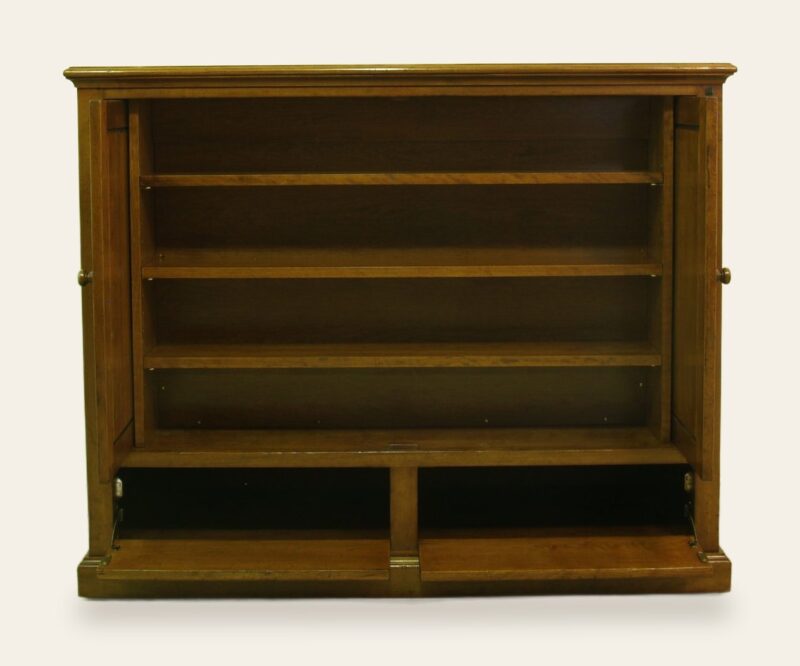
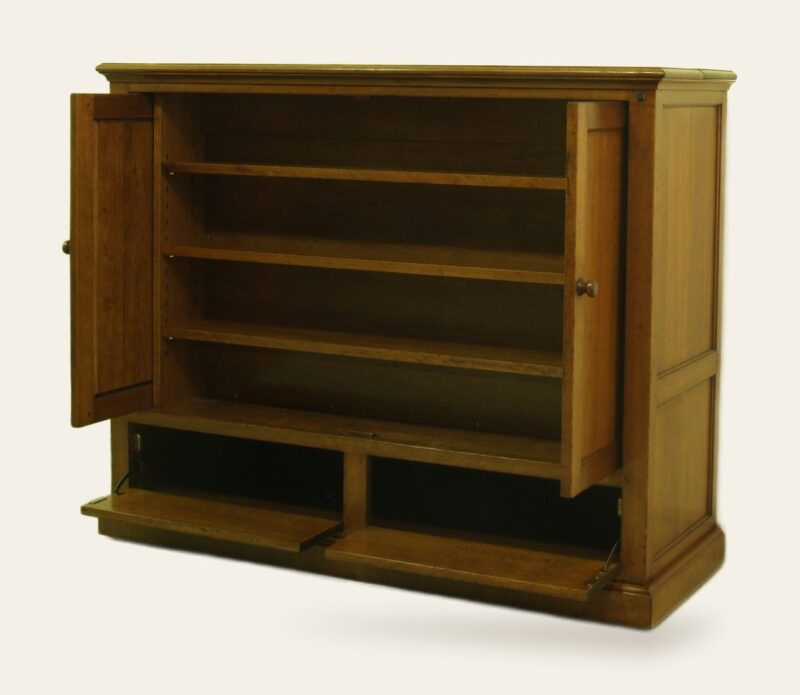
The carcase is built as furniture, not a box with a motor in it: a proper plinth, moulded top edges, framed and panelled sides, solid ironmongery, and a back finished well enough to stand away from a wall. Below the mechanism there is usually a ventilated compartment for the equipment.
The lid is what gives the piece away, or does not. Done properly, the join reads as a panel line.
We make it in any style we make anything else in: a country chest in oak, a panelled cabinet in mahogany, a clean contemporary case in walnut.
Timbers
Oak, cherry, mahogany and walnut are the standard four, and the lift cabinet is made in all of them.
Specials, quoted on application: character oak; pippy oak in light, medium and heavy grades; oak selected for medullary ray, within or without the timber; and clean timber with no knots.
Finishes: polished, painted, limed, sand-blasted, rub-through paint, natural, or colour matched to a sample. Colour matching matters here, because the cabinet is bought to blend into a furnished room. We can match furniture that is 100 years old to new reproduction purchases made the year before.
Order timber and finish samples and hold them against the pieces it must sit alongside.
Made to your size
Every dimension is open, within the constraints the mechanism sets. Send us the television’s make, model, screen size and weight, the seat height you watch from, the room dimensions and socket position, and the equipment going inside. We will give you the finished external dimensions before anything is cut. See bespoke and commissioning.
The mechanism can be reached and replaced without dismantling the carcase. Televisions are replaced far more often than furniture, and a cabinet that cannot take the next screen is poor design.
For fixed alternatives see TV cabinets and stands, and for a screen buried in a wall of joinery see fitted furniture.
Prices
Guide price on request, quoted by cabinet size, timber and finish. The mechanism is quoted separately from the cabinetwork, so you can see what you are paying for. Special timbers and colour matching are priced on application. Lead time is normally twelve weeks, and up to sixteen when the workshop is busy. Your date is confirmed when you order.
We make each TV lift cabinet to sit in a room our own joiners have frequently fitted. Reeve & Co Interiors handles the built-in work and Square & True the kitchens, all from the same yard in Mickfield.
Frequently asked questions
What is a TV lift cabinet?
A piece of furniture with a concealed rise-and-fall mechanism inside. The television is fixed to a carriage that raises the screen through the top at the press of a button, and lowers it back inside.
Will it take my television?
If the screen is 55 inches or less and weighs 40kg or less, yes. Those are the limits of the Häfele mechanism we fit. Send us the make and model and we will confirm the specification and the cabinet size in writing rather than assume it.
Does it need a special power supply?
No. It runs from a standard UK three-pin socket and no electrician is required. Tell us where the nearest socket is so the cable route is designed in. Other arrangements can be made by agreement if the room needs them.
Can the mechanism be replaced when I change the television?
The cabinet is built so the mechanism can be reached and taken out without dismantling the carcase. Screens are replaced far more often than furniture, and it should outlast several.