 Skip to content

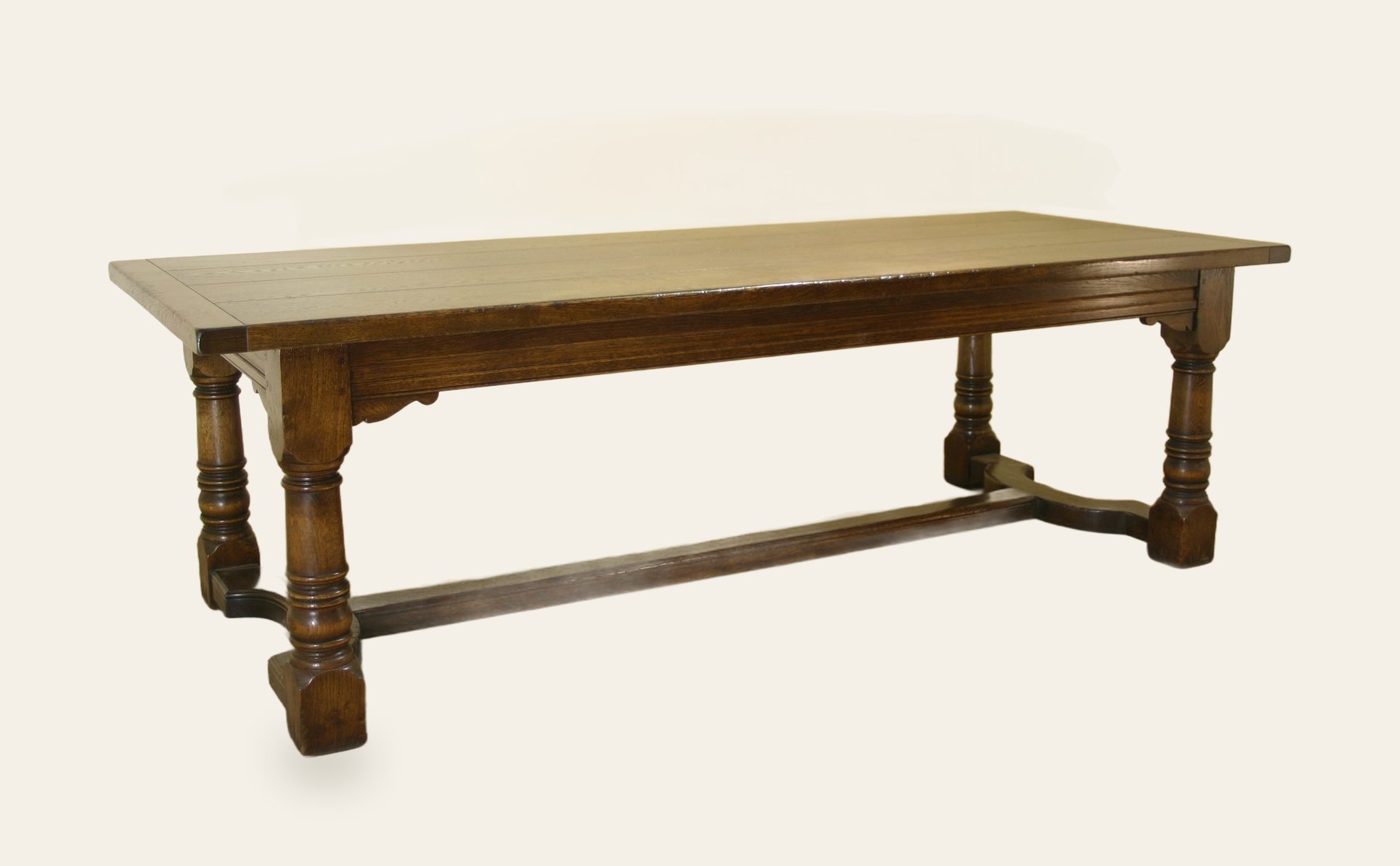
A range is a set of design decisions carried consistently: the same panel treatment, the same mouldings below the top, the same handles and hinges, the same proportions in the framework. That is all it is. There is no part number behind it and nothing sitting on a shelf waiting to be shipped, because every piece is made to order. So the ten named collections are best understood as details we already know how to make well, waiting to be applied to whatever you actually need.
Which means the interesting question is not which range you choose. It is how far you move away from it, what that costs in money and in weeks, and at what point the piece stops being a catalogue design at a different size and becomes a drawing of its own.
The four things clients change first
Nearly every departure from the catalogue falls into one of four categories, and most commissions involve two or three of them at once.
- Size. Width to fit an alcove, height to pass beneath a window or a beam, depth to leave a walkway. This is the most common change by a wide margin.
- Timber. Oak, cherry, mahogany and walnut are the four standard choices and every catalogue piece is priced in all of them. Character oak, pippy oak in light, medium and heavy grades, oak selected for medullary ray, and clean timber with no knots at all are quoted on application.
- Finish. Polished, painted, limed, sand-blasted, rub-through paint or natural, or colour matched to something you send us.
- Ironmongery and detail. Handles, hinges, the moulding below a top, the presence or absence of carving, what happens inside a cupboard.
None of those four requires a new design. They are the ordinary business of the workshop, and a quotation is written against them as a matter of course: the piece, the timber, the finish, the dimensions, the ironmongery and anything unusual.
A change of size has consequences worth discussing
Adding six inches to a width is arithmetic. Whether the piece still looks right at that width is not. Mouldings stay the same section when a carcase grows, panels get wider before they get taller, and a rack that gains length gains it across shelves that were drawn for a particular span. A design holds its proportions over a range of sizes and then stops holding them.
This is why the sizes listed for each piece are described as starting points rather than limits, and why the advice on that page is to telephone the workshop with the size you need and be told what is sensible. The honest answer is sometimes that a different pattern suits your dimension better than the one you started with.
Where the price actually moves
Standard timbers and standard finishes are in the catalogue price. What is priced on application is anything that costs selection time or polishing time. Character oak carries an uplift on tables, because both the selection and the extra work around the knots and shakes take longer. Colour matching to a sample is quoted individually for the same reason: the cost sits in polishing hours, built in stages with drying and assessment between coats, not in a line item.
Carving, interior fit-out and unusual ironmongery move a price the way you would expect. Size moves it less predictably than people assume, since a wider piece needs wider boards and those are not simply priced by the foot. A written quotation covers the specification you have agreed and holds for thirty days, after which timber prices may have moved.
Where the time goes
Standard designs normally take twelve weeks from order to delivery, and up to sixteen when the workshop is busy. A genuine one-off usually adds around four weeks. Colour matching adds polishing time on top of that, which is why a matched piece is dated once it has been seen rather than quoted from a table.
The stage most people do not expect is drawings. A catalogue piece adjusted to your dimensions usually skips formal drawings altogether, because the design is already understood and only the numbers have changed. A one-off gets elevations, sections and full-size detail where it is needed, and that is the cheap moment to change your mind. After the order is placed, changes have to be agreed in writing, can affect both price and delivery date, and past a certain point in the making some of them are simply not possible.
The line between a range piece and a new design
Three things can happen once you decide a catalogue piece is not quite it, and they are genuinely different commissions.
The first is the one above: a range piece at your size, in your timber, with your finish and handles. It is still that range. Nothing has been redrawn, only redimensioned.
The second is a piece that does not exist in a range yet, drawn in that range’s language so it sits beside pieces you already own. A range that covers a dresser and a chest does not necessarily cover a bookcase, and the answer is to take the panel treatment, the mouldings and the ironmongery and apply them to a bookcase. That is a new design, and it is drawn as one, but it is not a leap into the unknown because the vocabulary is settled before the first line.
The third is borrowing details across ranges, which happens more often than clients expect. A base from one pattern, a moulding from another, the handles from a third. Once a piece is being drawn anyway, its parentage stops being a constraint.
The practical marker is whether a drawing has to be made. If it does, you are commissioning a design, the lead time gains its four weeks, and the commissioning process runs its full course. If it does not, you are ordering a known piece at unknown dimensions.
Say early what is fixed, and late what is taste
The information worth sending at the very start is the awkward, unarguable kind: the room and what else is in it, any piece the new one has to sit beside, and the dimensions that cannot move. Alcove widths, doorway sizes, ceiling heights and the turn on a stairwell all belong in the first email, because they constrain the design rather than decorate it.
Timber, finish, handles and moulding details do not need deciding early, and deciding them early tends to be wasted effort. Those choices are far easier once there is a drawing to look at and samples on the table in your own light. What does need saying early is anything that matters to you disproportionately. A detail is easy to allow for in the drawing and awkward to explain away afterwards.
The point past which the design is settled
A deposit of fifty per cent falls due on order and the balance seven days before delivery. The deposit is the moment the commission becomes real: workshop time is allocated, drawings begin and timber is committed to your order, which is why it is not refundable and why an order cannot be cancelled once it is paid. That is worth knowing before you place it rather than after, and it is the reason the workshop would rather have the difficult conversation about size and proportion at the drawing stage.
If you are somewhere between a catalogue piece and a commission, the useful next step is small. Order timber and finish samples and live with them in the room for a few days, download the catalogue for the standard sizes, and send photographs of the space with rough dimensions. The questions that come back will tell you quickly which of the three commissions you are actually having.