 Skip to content
The finish is the last decision and the one clients spend least time on, which is the wrong way round. It decides the colour, the sheen, how the piece feels under a hand, and how it will look after ten years of use. The timber underneath is fixed the moment we cut it. The finish is the part you actually see.
Polished
The traditional finish and still the best one for a formal piece. Built up in coats and cut back between them, it gives depth rather than a film sitting on the surface — light goes into a polished top rather than bouncing off it.
It is at its best on mahogany and walnut, and on any piece where the figure of the timber is the point. It marks more readily than a modern lacquer, but it also repairs: a polished surface can be brought back without stripping the piece, which a lacquered one usually cannot.
Painted
Hand-painted, in any colour, over a properly prepared and primed surface. The timber grain still reads faintly through it on oak, which is what separates a painted solid timber piece from a painted board one.
Choose it when the piece needs to sit quietly in a room, when it is going against a strong wall colour, or when you want a dresser base or a kitchen table to disappear rather than announce itself. It is also the honest choice if the timber underneath is not showing its best face — a painted piece can use perfectly sound boards that would be wrong on a polished top.
Limed
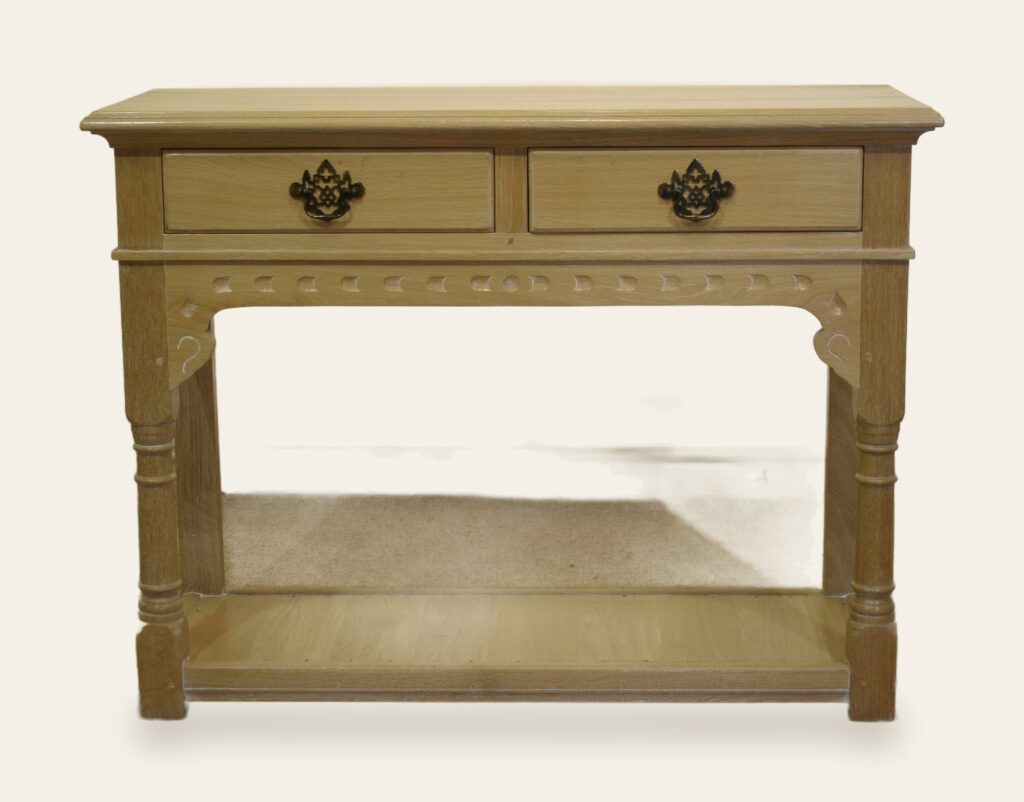
White pigment worked into the open grain of oak and then cleaned back off the surface, so the grain reads pale against a darker background. It only works on oak and other open-grained timbers; there is nothing for it to sit in on cherry or mahogany.
It lightens a room considerably and suits a coastal or a Scandinavian register. It is not a modern fashion — liming is a very old English finish — but it does date more visibly than a plain polish, so think about how long the piece has to look current.
Sand-blasted
The soft summer growth is blasted out of the surface, leaving the hard grain standing proud. The result is textured under the hand and considerably more rustic than anything else we do.
It suits a refectory table in a barn conversion and almost nothing in a drawing room. It also makes a surface that is harder to wipe clean, which matters on a kitchen table and not at all on a hall bench.
Rub-through paint
Paint applied and then worn back at the edges and the places a hundred years of hands would have worn it, so the timber shows through. Done badly it looks like a distressed reproduction. Done properly — and the difference is entirely in where the wear is placed — it reads as a piece that has been in the family.
We will do it, and we will show you a sample first, because it is the finish clients most often imagine differently from how it turns out.
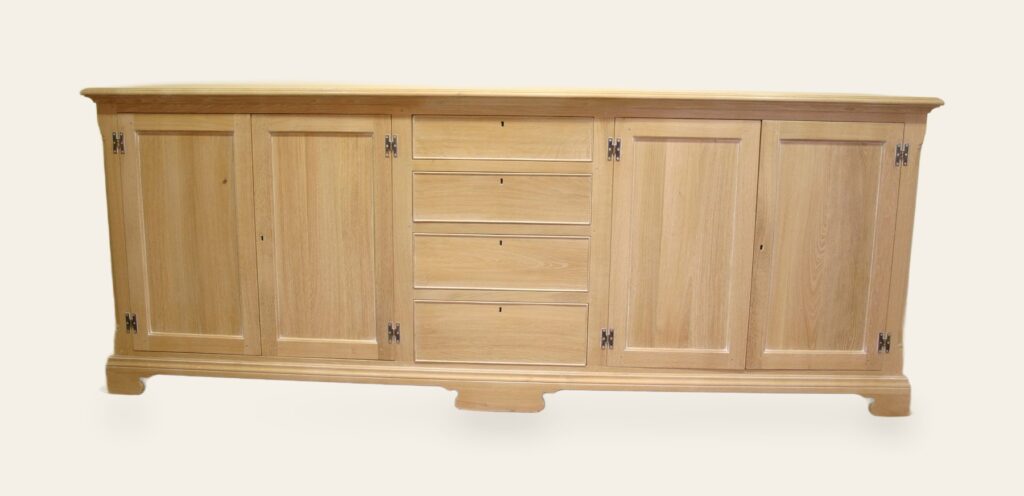
Natural and undistressed
Oil or wax with no colour added, letting the timber do what it will. It is the least interventionist option and the one that changes most over time — cherry in particular will move a long way from where it starts.
Choose it if you like the idea of the piece ageing rather than staying put.
The five standard colours
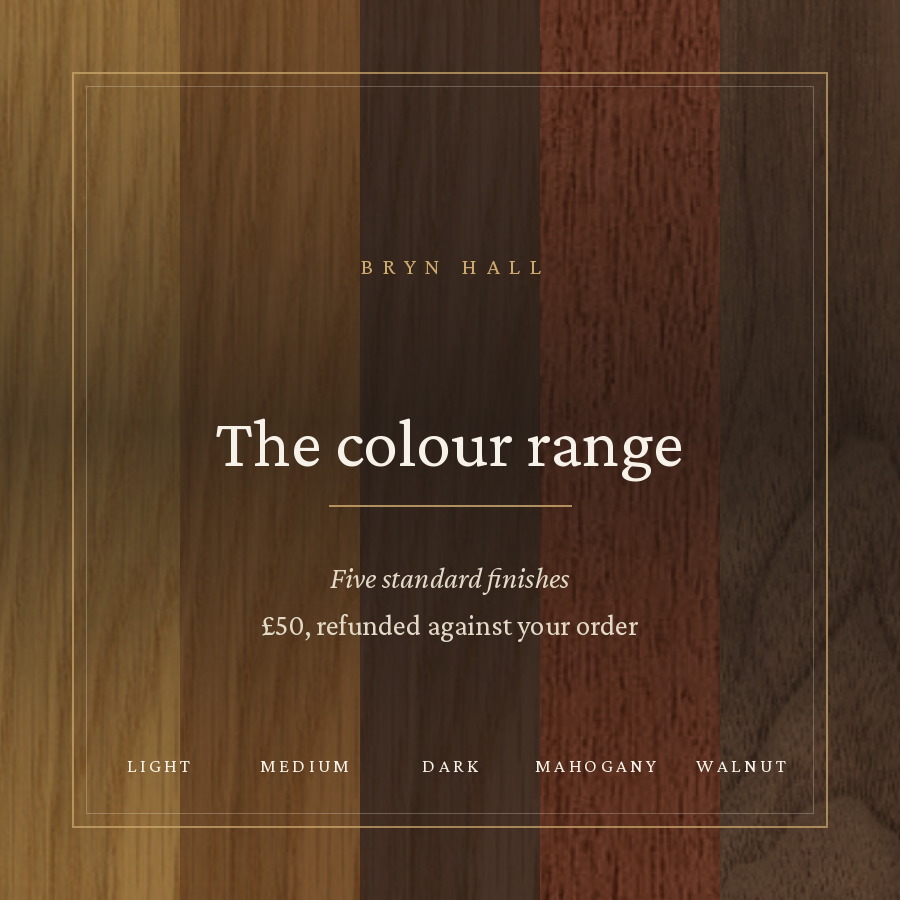
Beyond the finish itself there is colour. Our standard range is Light, Medium and Dark, which go on any of the oaks, and Mahogany and Walnut, which go on those timbers. All five are finished in the same shop as the furniture and to the same sheen, so what you see on a sample is what arrives.
If none of the five is right we colour-match to whatever you give us — a paint chip, a photograph, or a piece you already own. We can match new work to furniture a hundred years old and to reproduction pieces bought last year.
How to choose without guessing
Order the colour range. It is £50, refunded against your order, and it shows all five finishes on real timber rather than on a screen. Then put it in the room, at the time of day the room is most used, next to whatever the piece has to live with.
Furniture is lit artificially more than people expect. Judge a finish under the lamp you will actually use, not by a window at midday.