 Skip to content
We make seven forms of dining table, and the difference between them is not decoration. Each one solves a different problem to do with legs, length and how often the table changes size. Choose on that basis and the aesthetics tend to follow.
Refectory
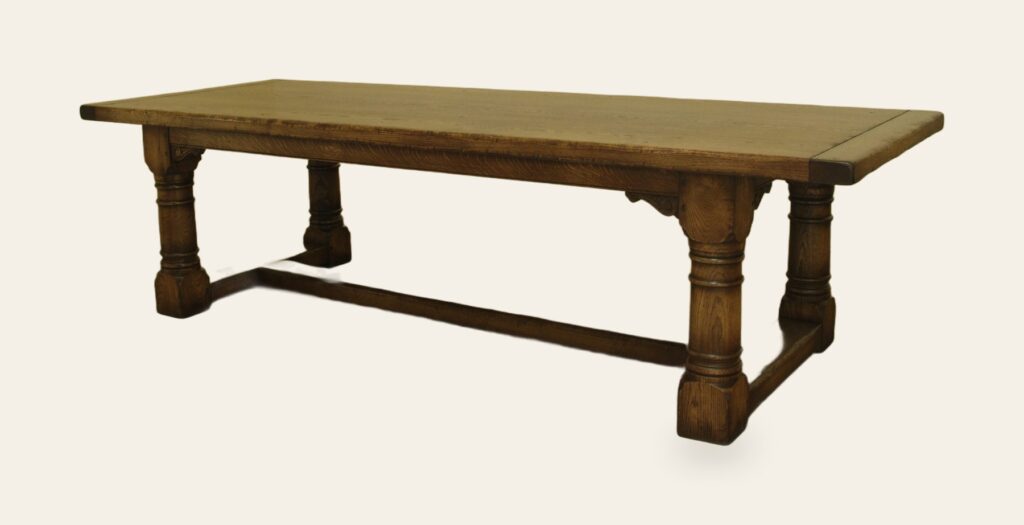
A long table on a stretchered base: wide planked top, legs at the extreme ends rather than the corners, and a low stretcher between them holding the whole thing rigid. The form comes from the monastic refectory, where a table had to seat a great many people along its length and stay solid for centuries.
Choose it when the table is long and permanent, and when you want nobody sitting astride a leg. The stretcher is the one thing to think about — it is near the floor, and some people object to it on their feet. From £4,920.
Farmhouse
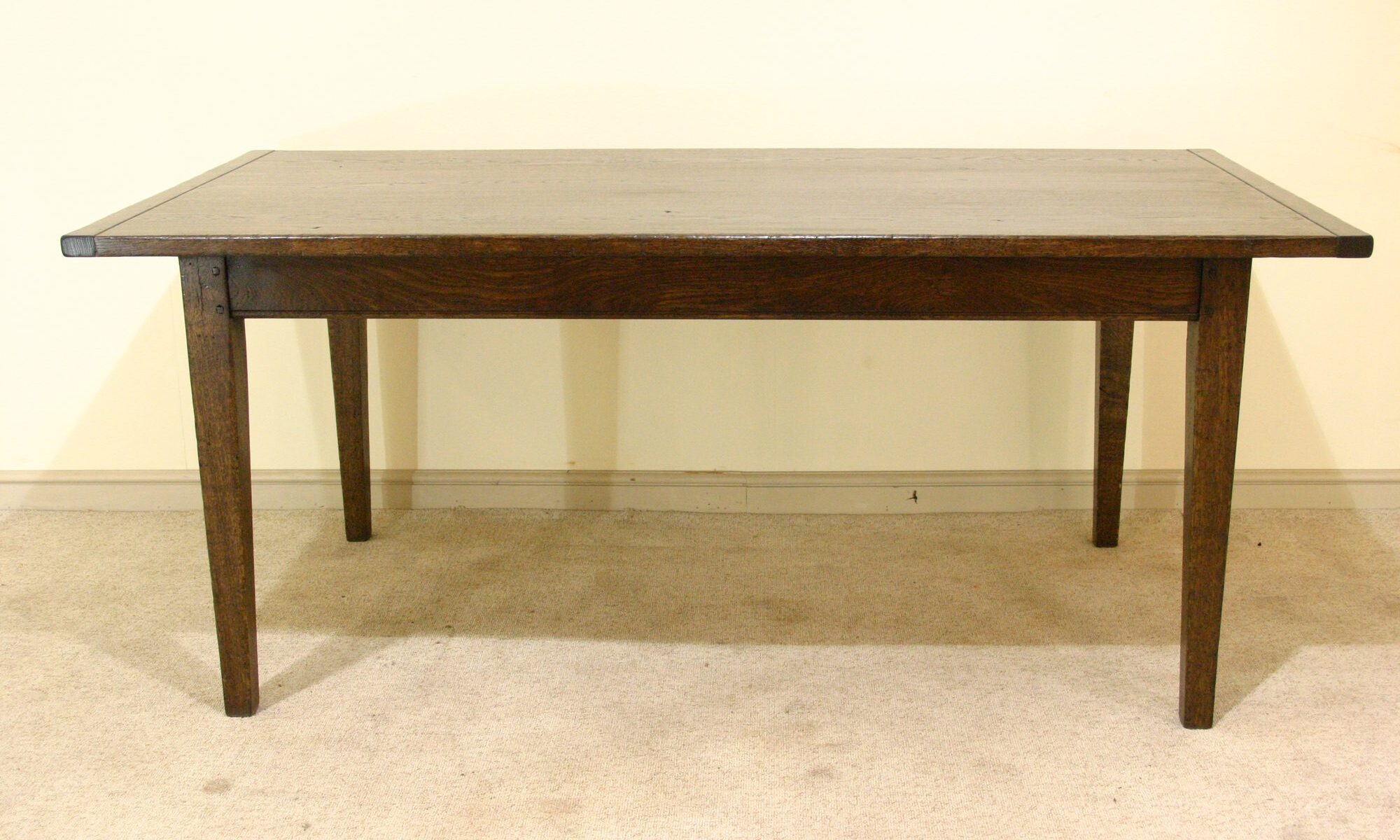
The plain one. A solid planked top on a straightforward frame, made to whatever length your kitchen actually is, and finished to be lived on rather than protected from. It is the table that gets used rather than admired.
Choose it for a kitchen, a family that eats at it three times a day, and a finish that will take marks and look better for them. From £2,850.
Pedestal
The top carried on a central column rather than legs at the corners, in single, double or triple pedestal form depending on length. Nobody sits astride a leg and nobody is trapped in a corner.
Choose it when the table has to seat an awkward number, when people will get up and down during a meal, or when the room is tight enough that chair legs and table legs would otherwise argue. From £3,060.
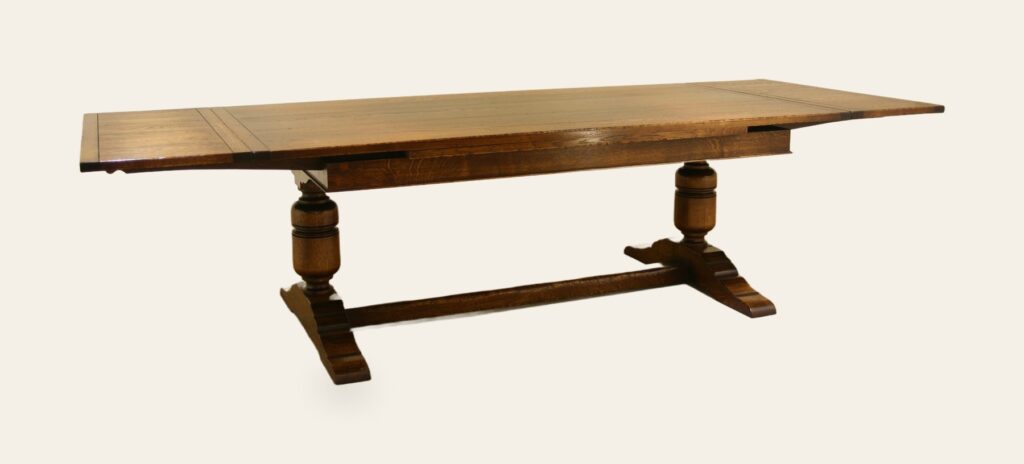
Extending and drawleaf
Both give you length on the days you need it. The difference is where the leaves live.
A drawleaf keeps its two leaves permanently under the main top. Pull one out from the end and it rises as it comes, settling flush with the top in about five seconds. Nothing to store, nothing to carry up from a cellar, nothing to lose. From £3,580.
An extending table keeps its leaves separately, which means it stays slimmer when closed but you need somewhere to put them. From £3,580. Choose drawleaf if you extend often and extending if you extend rarely and want the table to be as small as possible the rest of the time.
Gateleg
A table that folds away entirely. Two hinged leaves hang at the sides, each carried by a leg on a pivoted frame — the gate — which swings out from the base. Close the gates, drop the leaves, and a table that seated six becomes a narrow console against a wall.
Choose it when the room is not really a dining room. It is the right answer in a cottage, a flat or a room that has to be something else most of the week. From £1,170.
Monk’s table
A table and a settle in one piece. The top is hinged to the arms of a settle beneath it: swing it up and back and you have a high-backed bench to sit on; bring it forward and down and it becomes a table across the sitter’s lap.
It belonged in a hall where floor space was scarce and furniture had to earn its keep twice. It still does exactly that in a small cottage or a boot room, and it is the most interesting piece on this list. From £5,500.
How to choose, practically
- Measure the room first. Allow 900mm from the table edge to the nearest wall or furniture for chairs to pull out and someone to walk behind.
- Count the worst case, not the average. The number that matters is Christmas, not Tuesday.
- Decide whether it will change size. If yes, drawleaf or gateleg. If no, refectory, farmhouse or pedestal.
- Then look at the legs. Where people sit is decided by where the legs are, and that is the thing photographs hide.
There is a longer piece on how to size a dining table to your room if the measuring is the part you are stuck on. Every form above is made to order in oak, cherry, mahogany or walnut — see them all under dining tables, or in the shop with prices.