 Skip to content
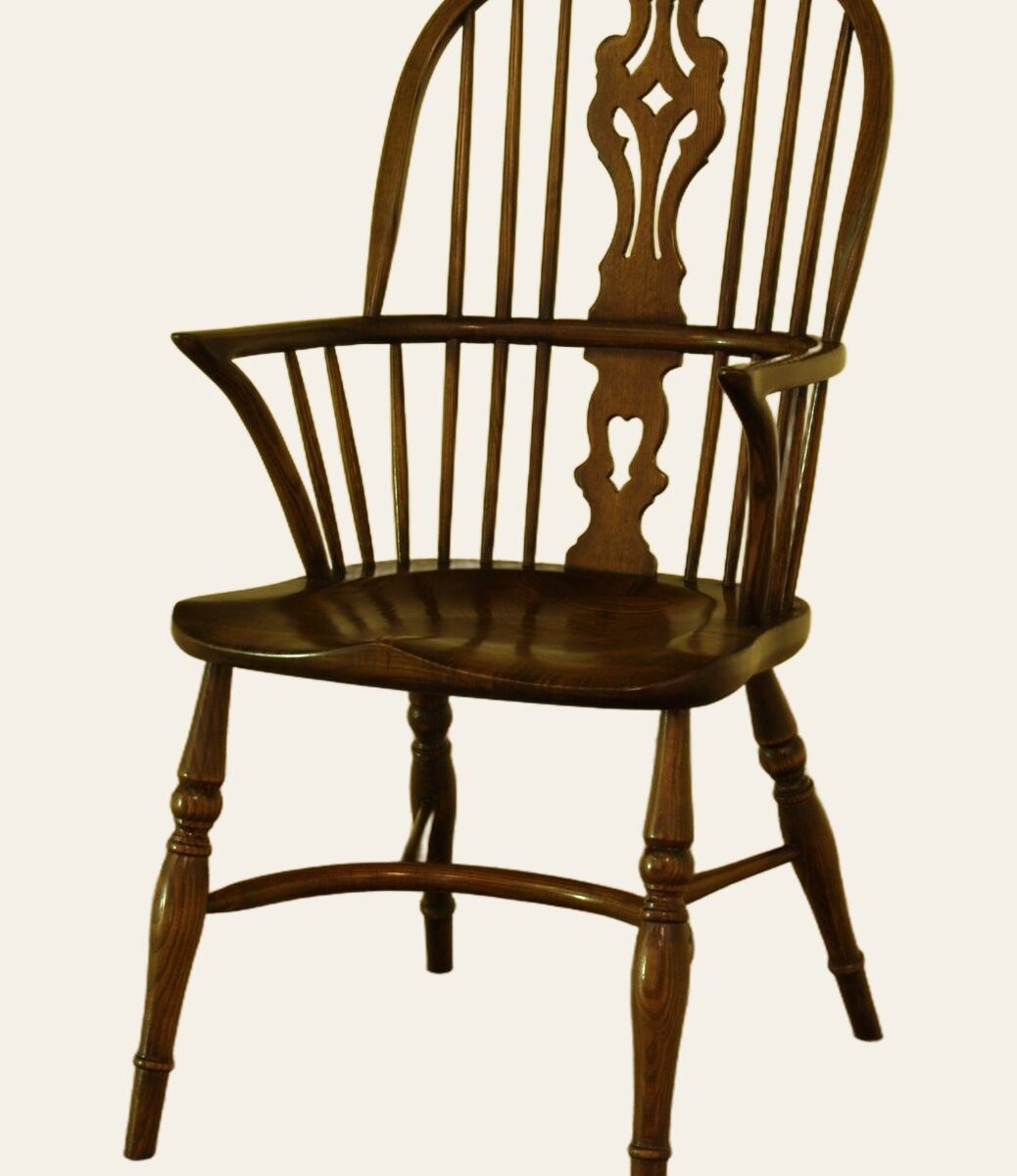
A Windsor chair is built the opposite way round to most chairs. Instead of a frame with a seat dropped into it, it starts with a solid shaped seat, and everything else — legs below, sticks and bow above — is socketed directly into that seat. There are no seat rails at all.
On this page
That is why a Windsor chair is so light and so hard to break: the whole load path runs through one thick piece of timber. We make ours to order in the traditional English patterns, with ash frames.
Why ash
The bow and sticks of a Windsor chair are steam-bent and worked thin, and ash is the timber for that. It bends without splitting, takes a shock without fracturing, and holds a slender section under load, which is what lets a Windsor bow be as fine as it is. Seats are worked from the solid and shaped to the sitter, in oak, cherry, mahogany or walnut.
The patterns we make
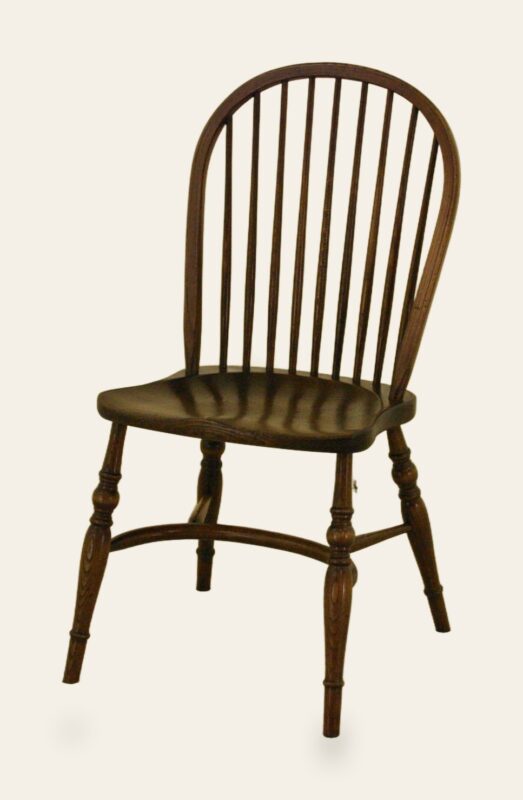
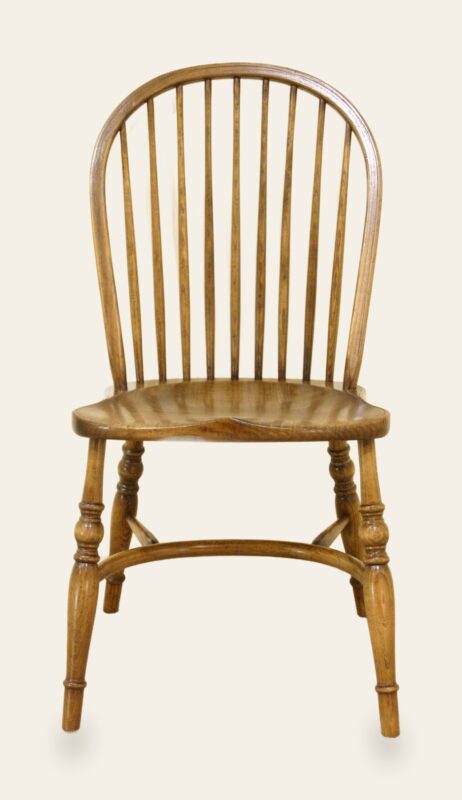
Stick back Windsor. The plainest and best known: a bow above the seat filled with turned or shaved sticks. Nothing carved, nothing to catch the eye but the line of the bow. It is the chair most people picture, and the one most often specified with a refectory or farmhouse table.
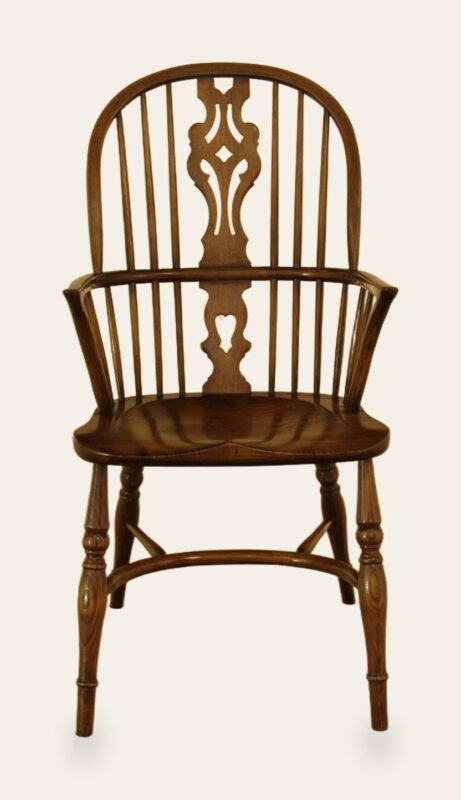
Splat back Windsor. The same construction with a wide shaped board — the splat — set vertically in the centre of the back, with sticks either side. Plain, pierced or shaped, it is dressier and supports the small of the back better than sticks.
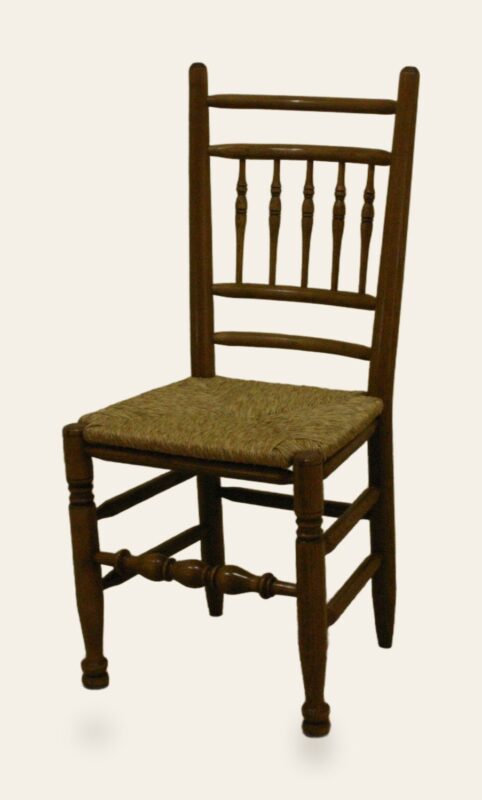
Spindle back. A related pattern with turned spindles in place of shaved sticks. Oakamoor and Henbury stick back. The Oakamoor range’s own stick-back chair.
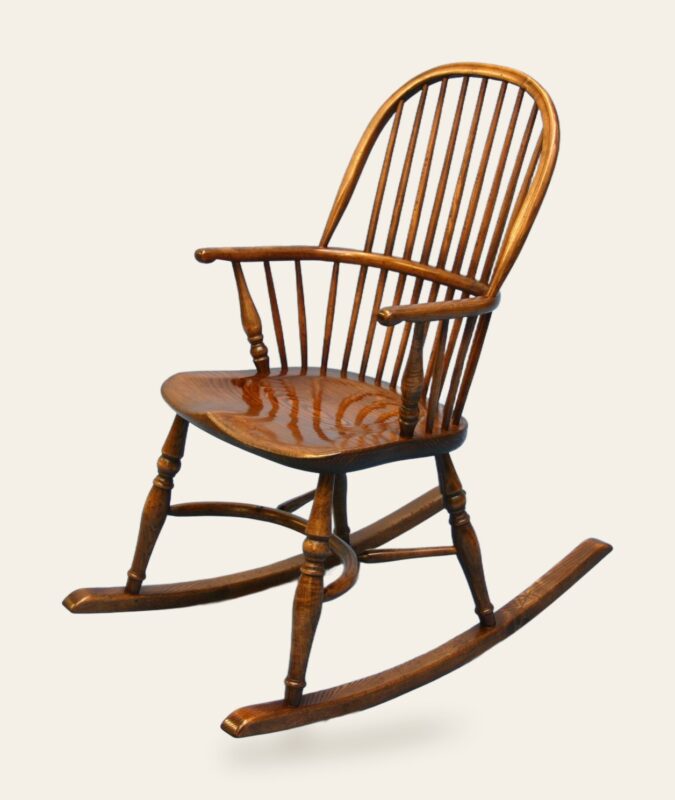
Rocking chair. The Windsor form on rockers.
Seat sizes
Windsor seats are made in three sizes.
Allow about 24in of table edge per chair with a medium seat, more with a large one. Tell us how many chairs you want down each side of a given table and we will tell you which seat size gets you there.
Stick back Windsor single chair, small seat
Width 16″ (40cm)1ft 4in40cm400mmDepth 14″ (36cm)1ft 2in36cm360mmHeight 35″ (89cm)2ft 11in89cm890mm
Stick back Windsor single chair, medium seat
Width 17″ (43cm)1ft 5in43cm430mmDepth 15″ (39cm)1ft 3in39cm390mmHeight 36″ (91cm)3ft91cm910mm
Stick back Windsor single chair, large seat
Width 19″ (48cm)1ft 7in48cm480mmDepth 16″ (40cm)1ft 4in40cm400mmHeight 38″ (97cm)3ft 2in97cm970mm
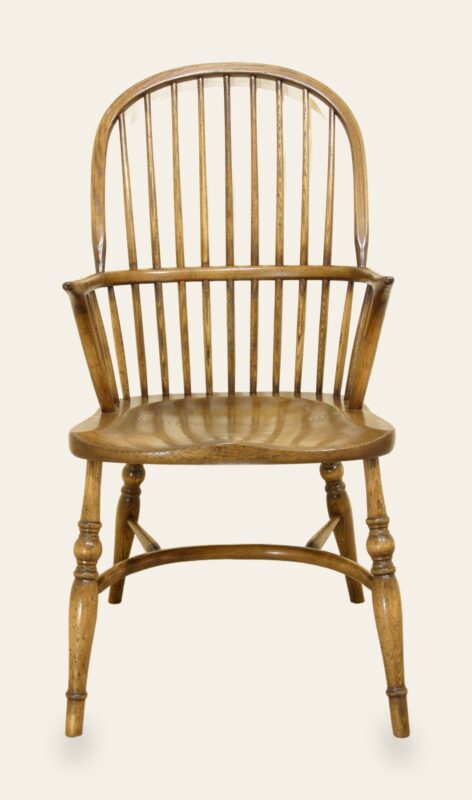
Low back stick back Windsor carver chair
Width 19″ (49cm)1ft 7in49cm490mmDepth 15″ (37cm)1ft 3in37cm370mmHeight 37″ (93cm)3ft 1in93cm930mm
High back stick back Windsor carver chair
Width 20″ (51cm)1ft 8in51cm510mmDepth 17″ (42cm)1ft 5in42cm420mmHeight 41″ (103cm)3ft 5in103cm1030mm
Splat back Windsor single chair, small seat
Width 16″ (40cm)1ft 4in40cm400mmDepth 14″ (36cm)1ft 2in36cm360mmHeight 35″ (89cm)2ft 11in89cm890mm
Splat back Windsor single chair, medium seat
Width 17″ (43cm)1ft 5in43cm430mmDepth 15″ (39cm)1ft 3in39cm390mmHeight 36″ (91cm)3ft91cm910mm
Splat back Windsor single chair, large seat
Width 19″ (48cm)1ft 7in48cm480mmDepth 16″ (40cm)1ft 4in40cm400mmHeight 38″ (97cm)3ft 2in97cm970mm
Low back splat back Windsor carver chair
Width 19″ (49cm)1ft 7in49cm490mmDepth 15″ (37cm)1ft 3in37cm370mmHeight 37″ (93cm)3ft 1in93cm930mm
High back splat back Windsor carver chair
Width 20″ (51cm)1ft 8in51cm510mmDepth 17″ (42cm)1ft 5in42cm420mmHeight 41″ (103cm)3ft 5in103cm1030mm
Child’s stick back Windsor carver chair
Width 13″ (34cm)1ft 1in34cm340mmDepth 11″ (28cm)11″28cm280mmHeight 27″ (69cm)2ft 3in69cm690mm
Made in ash
These are the sizes we make as standard. Every piece is made to order in our own workshop, so any size between — or beyond — those listed can be made for you. Heights and depths can be altered to suit a room, and dimensions are nominal.
Carvers
A carver is the chair with arms, at the head of the table. We make three.
Low back stick back carver. Arms and bow at a lower height, so the chair sits under the table without dominating the room.
High back stick back carver. A taller bow and a longer run of sticks: more presence, more back support, and the right chair at the end of a long refectory table.
Child’s stick back carver. The same chair made small, so a child sits at the table properly. Often ordered alongside an adult set and kept for a generation.
Check the arm height against the underside of your table frieze before specifying a carver — send us the table dimensions and we will do it. Every carver pattern is on the carver chairs page.
Seats and upholstery
Windsor chairs are traditionally left as bare shaped timber, and most of ours are made that way. Where you want more comfort we make loose or tie-on cushions in your own material or in leather we supply. The other seat constructions are explained on the chairs hub.
Timbers and finishes
Frames in ash; seats and turned components in oak, cherry, mahogany or walnut as standard. Specials, quoted on application: character oak; pippy oak in light, medium and heavy grades; oak selected for medullary ray; and clean timber with no knots at all. On a set of eight, clean timber gives eight chairs that match exactly; character oak gives eight that do not.
Finishes: polished, painted, limed, sand-blasted, rub-through paint, natural, or colour matched to a sample. Painted chairs with a bare timber seat are a good-looking and durable combination.
Order timber and finish samples before committing to a set.
Made to your size
Seat height, width and depth, bow height, stick spacing and arm height are all adjustable. Common requests: a seat height set to an unusual table; a high back reduced to clear a low window; arms shortened to pull under a particular frieze; extra chairs made years later to match a set we built before. Where the chair is a new design rather than a variation, our designers draw it first.
See bespoke and commissioning.
Prices
Quoted per chair, with carvers priced separately from singles. Tell us the pattern, the seat size, the numbers, the timber and the finish and we will give you a guide price. Special timbers and finishes are priced on application. Standard lead time is normally twelve weeks, and up to sixteen when the workshop is busy. Your date is confirmed when you order.
Every Windsor chair we make leaves the same Suffolk workshop as our fitted joinery. Where a project also calls for panelling, a library or a fitted kitchen, that work is done by our sister companies, Reeve & Co Interiors and Square & True.
Every size, timber and finish for our windsor chairs is priced on the Windsor chairs order page, where you can choose the options and pay the deposit online.
Frequently asked questions
What is a Windsor chair?
A chair built around a solid shaped seat, with the legs socketed into the underside and the back sticks and bow into the top. There is no conventional frame, which is what makes it light, strong and comfortable.
What is the difference between a stick back and a splat back Windsor?
A stick back has only sticks running from seat to bow. A splat back has a wide shaped board in the centre with sticks either side; it is dressier and gives more support to the small of the back.
Why are Windsor chair frames made in ash?
Because the bow and sticks are steam-bent and worked thin. Ash bends without splitting, takes shock well and stays strong in a slender section.
Which seat size should I order?
Medium suits most dining rooms. Choose small to fit more chairs to a given table length, and large for taller sitters or long evenings. Tell us your table length and we will work out how many will fit.