 Skip to content
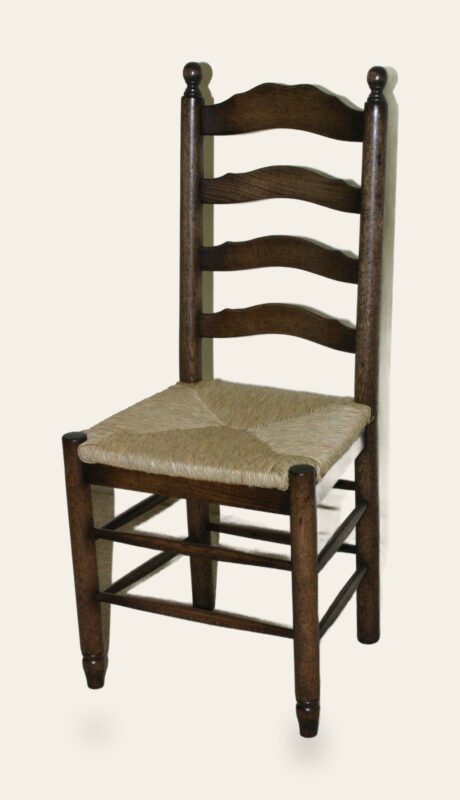
A ladder back chair has horizontal rails running between two uprights, like the rungs of a ladder. It is the plainest way to make a comfortable chair back, and it has been the standard English country dining chair for three hundred years because it does three things at once: it supports the back where support is wanted, it lets light through, and it weighs almost nothing.
On this page
Ours are made to order in solid oak, cherry, mahogany or walnut, with a rush, wooden or upholstered seat.
The patterns we make
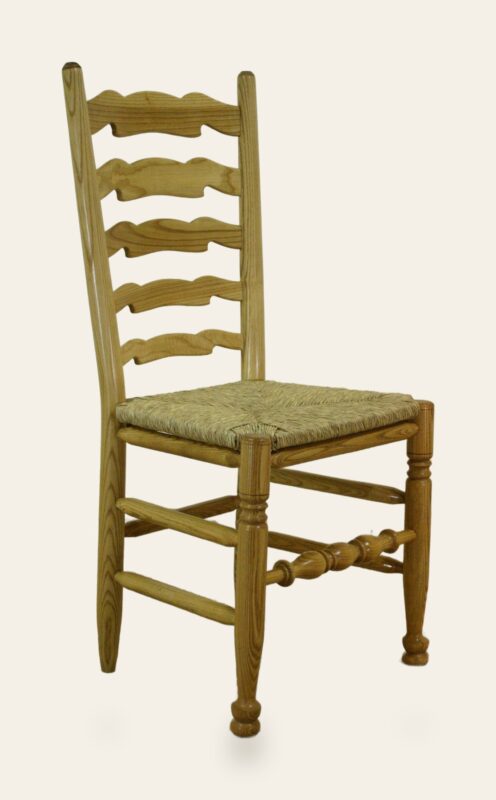
Wavey line ladder back. Our principal pattern. The rails are shaped rather than straight — each cut to a shallow wave — so they follow the shape of a back rather than cutting across it. They are graduated, widest at the top, which makes the chair look taller than it is.
Ribbon back ladder back. The rails cut to a narrower, more decorative ribbon-like profile, giving a lighter and dressier chair for a dining room rather than a kitchen.
Ladder back single. The side chair, in either pattern.
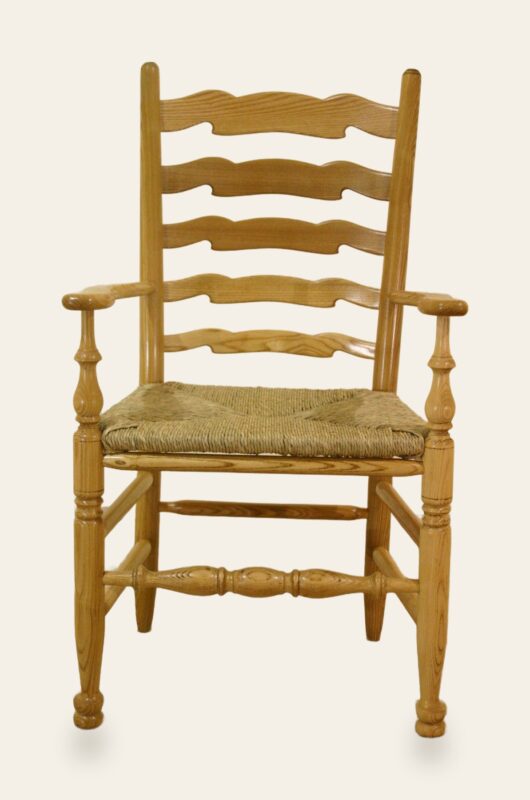
Ladder back carver. The same back with arms, for the head of the table. The arms run from the back uprights to turned front supports, and the seat is made slightly wider to suit. See carver chairs.
Seats
Rush. The traditional seat for this chair, hand-woven over the seat rails in a coiled pattern worked in from four corners. Rush is soft, warm and quiet, and much lighter to look at than any upholstered seat — eight rush-seated ladder backs take up far less visual space than eight covered ones. It is the seat most clients choose, and what the pattern was designed around.
Wooden. A solid shaped seat, for hard daily use in a kitchen.
Drop-in upholstered. A separate pad dropping into a rebate in the seat rails, which lifts out to be recovered later without touching the frame.
Wrap-around drop-in. The pad wraps over the seat rails so the covering shows on the outside faces, softening the outline of the chair.
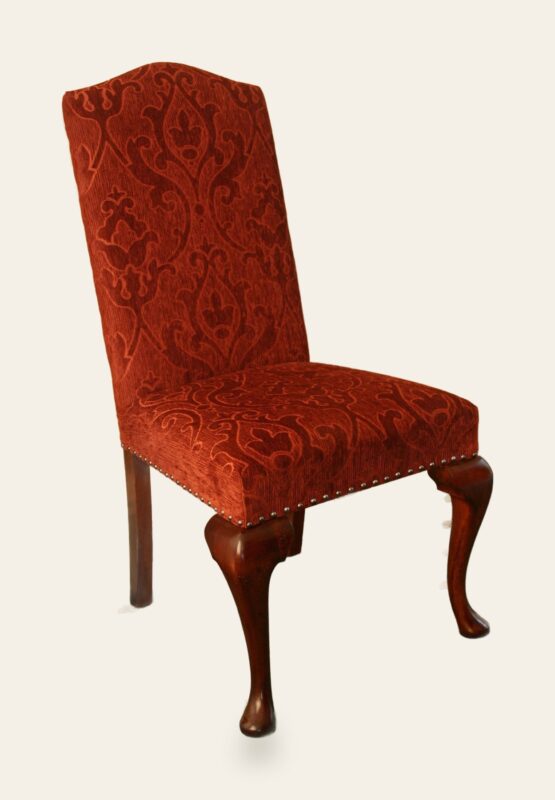
Fully upholstered. Seat and back both covered, for a formal dining room.
You can supply your own material or we can supply leather. The seat options are explained in full on the chairs hub.
Timbers
Oak, cherry, mahogany and walnut are standard, and every ladder back is made in all four. Oak is the usual choice for a kitchen chair, cherry for a dining room.
Specials, quoted on application: character oak; pippy oak in light, medium and heavy grades; oak selected for medullary ray; and clean timber with no knots at all — worth thinking about here, since the graduated rails put the same piece of grain in front of you eight times over.
Finishes: polished, painted, limed, sand-blasted, rub-through paint, natural, or colour matched to a sample. Painted ladder backs with rush seats are very forgiving in a working kitchen.
Order timber and finish samples before you commit to a set of eight.
Standard sizes
2 piecesWavey line ladder back single chair
Width 19″ (48cm)1ft 7in48cm480mmDepth 16″ (41cm)1ft 4in41cm410mmHeight 40″ (102cm)3ft 4in102cm1020mm
Wavey line ladder back carver chair
Width 21″ (53cm)1ft 9in53cm530mmDepth 18″ (46cm)1ft 6in46cm460mmHeight 42″ (107cm)3ft 6in107cm1070mm
Made in oak, cherry, mahogany or walnut
These are the sizes we make as standard. Every piece is made to order in our own workshop, so any size between — or beyond — those listed can be made for you. Heights and depths can be altered to suit a room, and dimensions are nominal.
Made to your size
Seat height, width and depth, back height, rail spacing and arm height are all adjustable; a dining chair seat normally sits at about 18in to suit a 30in table. Common requests: a taller back for a high-ceilinged room; a wider seat; a carver with shortened arms so it clears a table frieze; a set extended years later to match chairs we made before.
Where the chair is a new design rather than a variation, our designers draw it first. See bespoke and commissioning. Ladder backs are most often specified with farmhouse and refectory tables, and suit gateleg and cricket tables too.
Prices
Quoted per chair, with carvers and seat types priced separately. Tell us the pattern, the numbers, the seat, the timber and the finish and we will give you a guide price. Special timbers and finishes are priced on application. Standard lead time is normally twelve weeks, and up to sixteen when the workshop is busy. Your date is confirmed when you order.
A ladder-back chair is often one part of a larger scheme. When it is, the panelling and built-in work alongside it come from Reeve & Co Interiors, and the kitchen from Square & True — the same benches, the same hands.
Every size, timber and finish for our ladder back chairs is priced on the Ladder back chairs order page, where you can choose the options and pay the deposit online.
Frequently asked questions
What is a ladder back chair?
A chair whose back is made of horizontal rails running between two uprights, like the rungs of a ladder. It is the classic English country dining chair: light to move, comfortable, and open enough not to fill a room.
What is the difference between wavey line and ribbon back?
The wavey line pattern has broad rails shaped to a shallow wave, giving a soft country look. The ribbon back has narrower rails cut to a more decorative profile, making a lighter, dressier chair.
How long does a rush seat last?
A well-woven rush seat in domestic use lasts many years, and can be rewoven when it eventually wears without the frame being touched. Keep it out of direct heat and it will stay sound.
Can I have a mix of rush and upholstered seats?
Yes. Some clients rush the singles and upholster the carvers, or the other way round. Tell us what you want on which chair and we will quote it that way.