 Skip to content
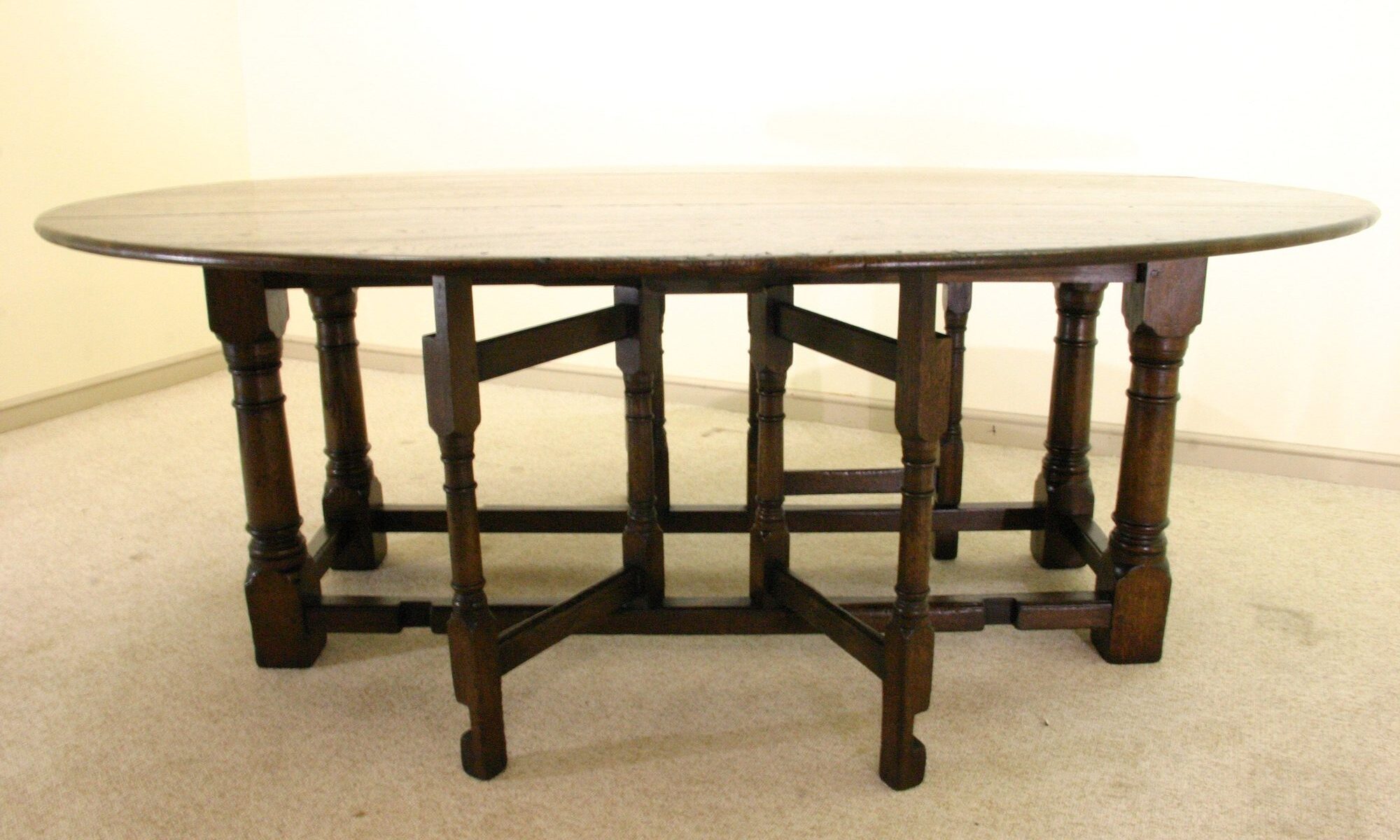
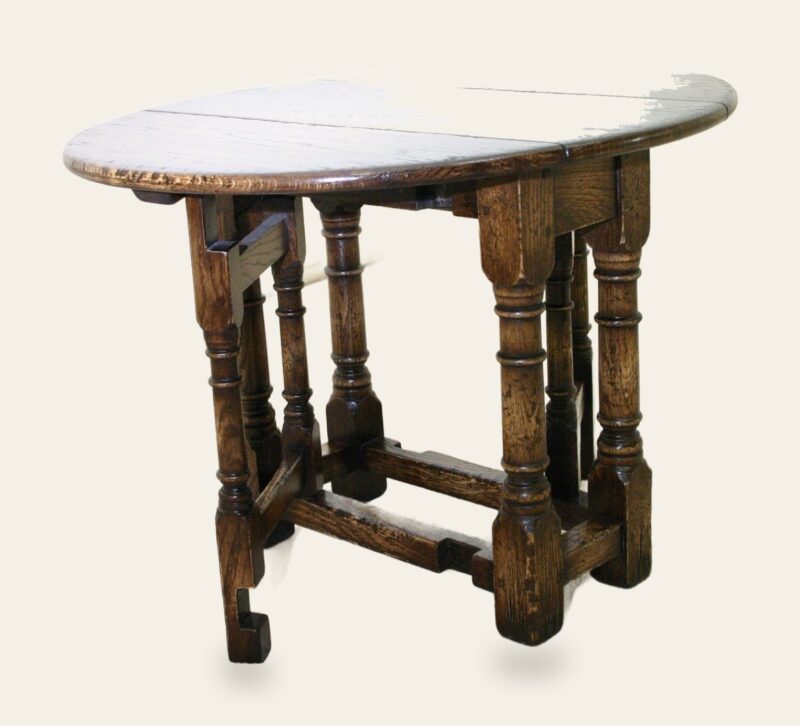
A gateleg table is a table that folds away. Two hinged leaves hang down at the sides, and each is carried by a leg on a pivoted frame — the gate — which swings out from the base to support it. Close the gates, drop the leaves, and a table that seated six becomes a narrow console you can stand against a wall.
On this page
It is the oldest solution to a common problem in English houses: rooms that have to do more than one job. Ours are made to order in solid oak, cherry, mahogany or walnut.
The forms we make
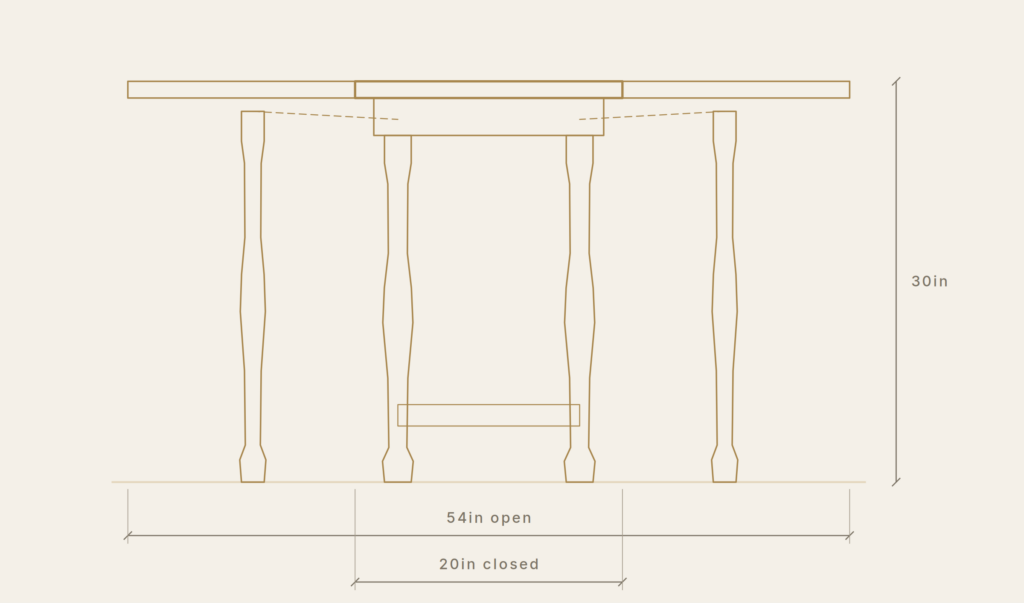
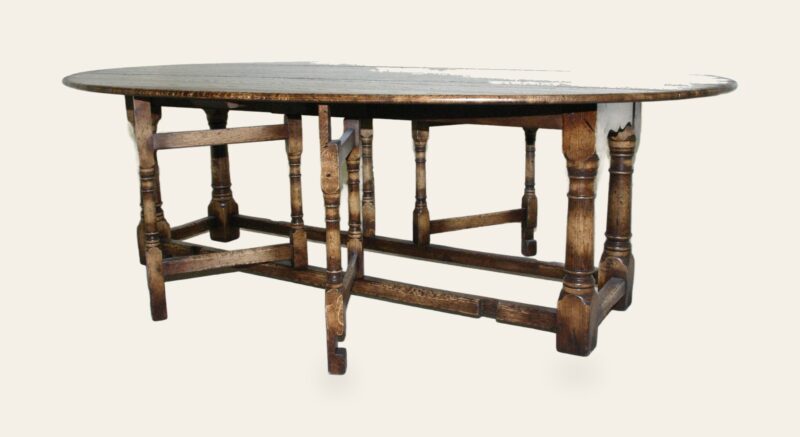
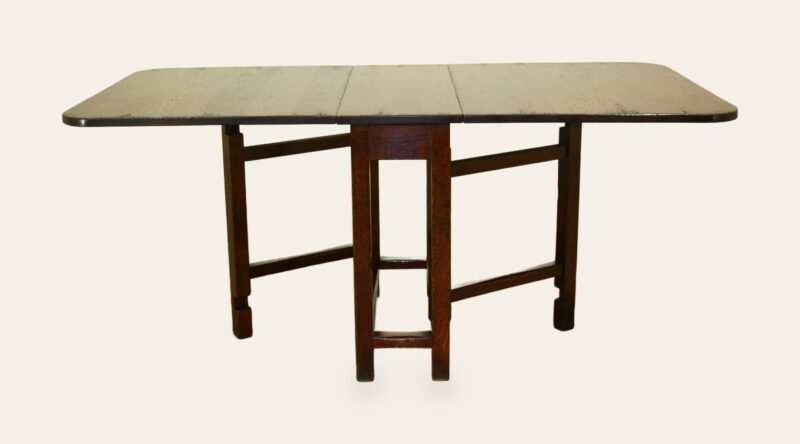
Double gateleg, oval. The full version: a leaf on each side, a gate for each leaf, and an oval top when both are up. Oval is the right shape here because the ends stay clear of the gates and nobody sits on a corner.
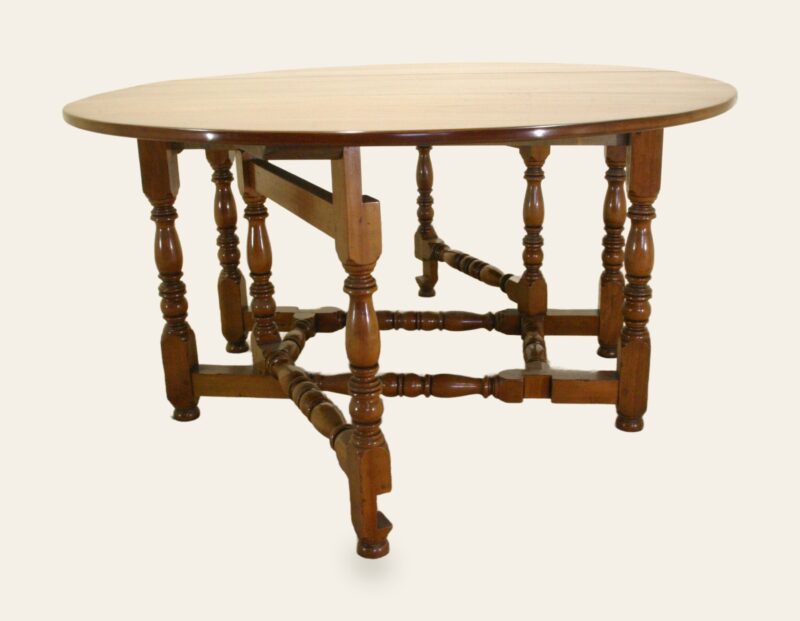
Turned-leg gateleg, round. A round top on turned legs, with the same gate action. Turned legs — worked on the lathe to a bobbin or baluster profile — soften the look, and this is the version most often specified in cherry.
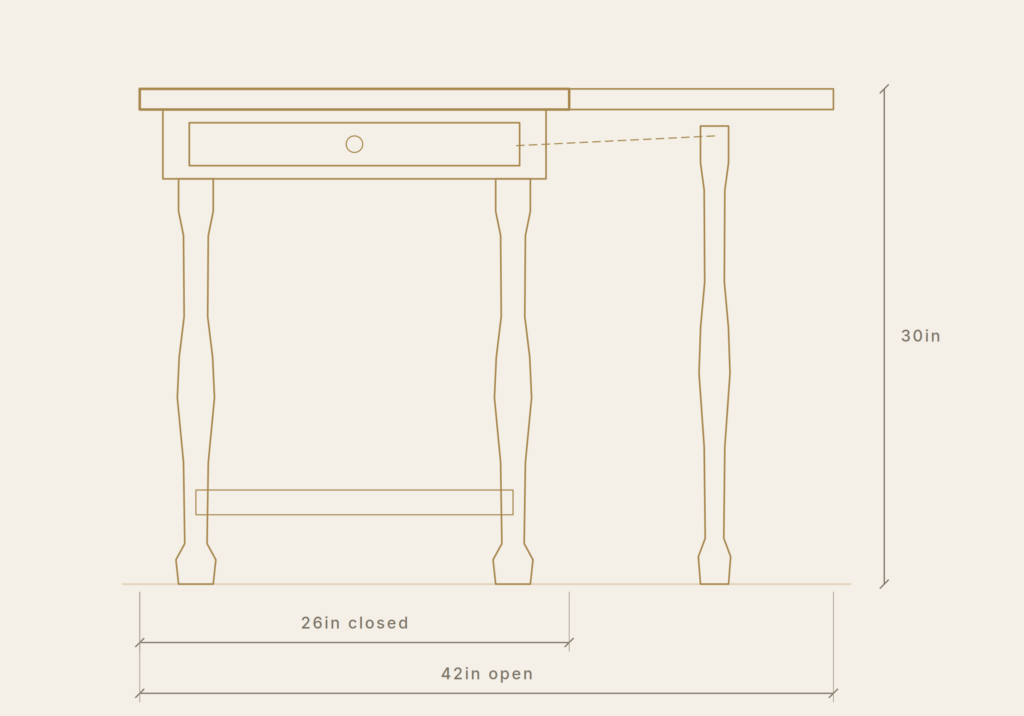
Single gateleg with drawer. One leaf, one gate, and a drawer in the frieze. Designed to live against a wall and open out when needed, which makes it as much a hall table as a dining one.
We also make drop leaf tables without gates, the leaf carried on a pull-out bearer rather than a swinging frame, and gateleg lamp tables and coffee tables.
Sizes
Made to your dimensions. The two numbers that matter are the closed width — what it takes up against the wall — and the open width. A double gateleg opens to a full oval seating four to six; a turned-leg round opens to a round seating four; a single gateleg opens to seat two to four.
Standard height is 30in. Allow about 24in of table edge per person when open, and check the gates have room to swing. Tell us the closed dimension you have to live with and how many people you want to seat, and we will work backwards to a top size.
Double Gateleg table
Oval
Width 69, 84, 96, 108 or 132″ (175–335cm)5ft 9in, 7ft, 8ft, 9ft or 11ft175, 213, 244, 274 or 335cm1750, 2130, 2440, 2740 or 3350mmDepth 57, 60, 67, 72 or 78″ (145–198cm)4ft 9in, 5ft, 5ft 7in, 6ft or 6ft 6in145, 152, 170, 183 or 198cm1450, 1520, 1700, 1830 or 1980mmHeight 30″ (76cm)2ft 6in76cm760mm
Turned leg Gateleg table
Round
Width 66″ (168cm)5ft 6in168cm1680mmDepth 66″ (168cm)5ft 6in168cm1680mmHeight 30″ (76cm)2ft 6in76cm760mm
Single Gateleg table with drawer
Width 66″ (168cm)5ft 6in168cm1680mmDepth 48″ (122cm)4ft122cm1220mmHeight 30″ (76cm)2ft 6in76cm760mm
Double Gateleg coffee table
Width 48″ (122cm)4ft122cm1220mmDepth 34″ (86cm)2ft 10in86cm860mmHeight 20″ (51cm)1ft 8in51cm510mm
Gateleg lamp table
Width 26″ (66cm)2ft 2in66cm660mmDepth 22″ (56cm)1ft 10in56cm560mmHeight 18″ (46cm)1ft 6in46cm460mm
Made in oak, cherry, mahogany or walnut
These are the sizes we make as standard. Every piece is made to order in our own workshop, so any size between — or beyond — those listed can be made for you. Heights and depths can be altered to suit a room, and dimensions are nominal.
Timbers
Oak, cherry, mahogany and walnut as standard. Cherry suits the turned-leg versions particularly well and darkens attractively with age. Oak is the traditional choice for the plainer forms.
Specials, quoted on application: character oak; pippy oak in light, medium and heavy grades, for tops; oak selected for its medullary ray, within or without the timber; and clean timber with no knots at all.
Finishes: polished, painted, limed, sand-blasted, rub-through paint, natural, or colour matched to a sample you send us. Timber and finish samples go out by post before you decide.
Made to your size
Top size and shape, leaf depth, leg pattern, drawer arrangement and height are all open. Common changes: a closed depth set to a particular hallway; a drawer added to a double gateleg; a turned leg swapped for a plain square one; a lower height for use as a side table.
If it is a new design rather than a variation, our designers draw it first. See bespoke and commissioning. Gateleg tables are usually specified with Windsor chairs or ladder backs, light enough to move when the table is closed, with a carver at the end when it is open.
Prices
Quoted to size and specification. Tell us the open and closed dimensions, the timber and the finish and we will give you a guide price. Special timbers and finishes are priced on application. Standard lead time is normally twelve weeks, and up to sixteen when the workshop is busy. Your date is confirmed when you order.
We make each gateleg table to sit in a room our own joiners have frequently fitted. Reeve & Co Interiors handles the built-in work and Square & True the kitchens, all from the same yard in Mickfield.
Every size, timber and finish for our gateleg tables is priced on the Gateleg tables order page, where you can choose the options and pay the deposit online.
Frequently asked questions
What is a gateleg table?
A table with hinged leaves at the sides, each supported by a leg on a pivoting frame that swings out like a gate. With the gates closed and the leaves down it folds to a narrow console; with both open it becomes a full dining table.
Is a gateleg table stable enough to eat at?
Yes. The gate carries the leaf directly under its outer edge rather than cantilevering it, which is why the form has survived four hundred years of use.
What is the difference between a gateleg and a drop leaf table?
Both have hinged leaves. A gateleg supports its leaf on a swinging leg frame; a drop leaf supports it on a pull-out bearer or bracket. The gateleg is stronger and takes more weight; the drop leaf is slimmer when closed.
Which gateleg table is best for a small dining room?
The double gateleg oval, if you need to seat four to six and want the table gone the rest of the time. If it lives against a wall and only occasionally has to grow, the single gateleg with drawer is the more useful piece.