 Skip to content

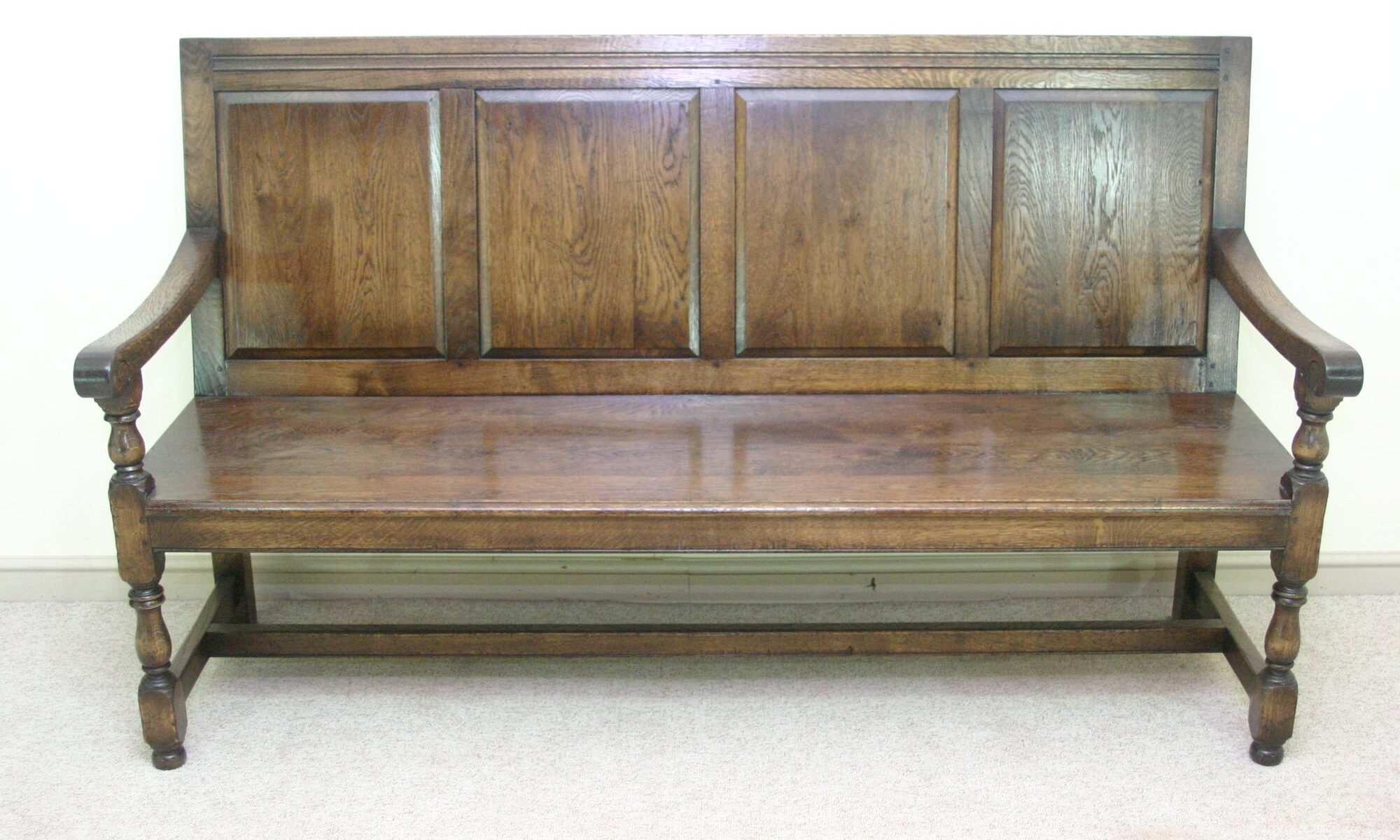
A settle is a bench with a back. It was the standard seat in an English house long before the upholstered sofa, and it survives because it does two things nothing else does: it seats several people in the depth of one chair, and it stands flat to a wall.
On this page
That makes it the right answer on the wall side of a long dining table, where there is no clearance to pull a chair back, and in halls and boot rooms where a chair would be in the way and a sofa would not fit. We make settles, benches and stools to order.
The forms we make
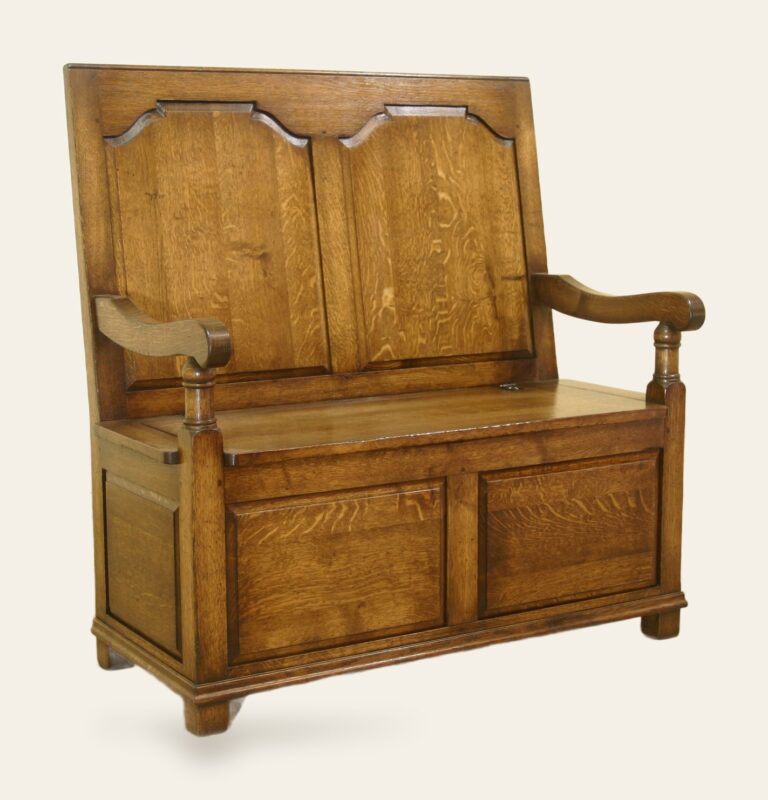
Box settle, 3’6″ and 6′. A hinged seat over a box: the seat lifts to a chest the full length of the bench — boots, logs, blankets. The 3’6″ takes two, the 6′ three.
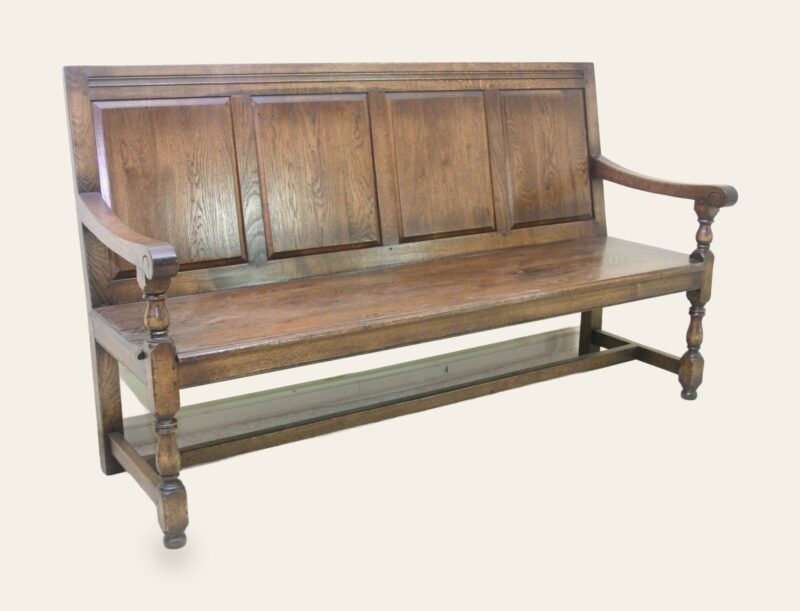
Bench settle. The same without the box: a planked or panelled back over a bench, on legs or solid ends.
Two-person settle. A shorter settle scaled for two, for a hall or a fireside.
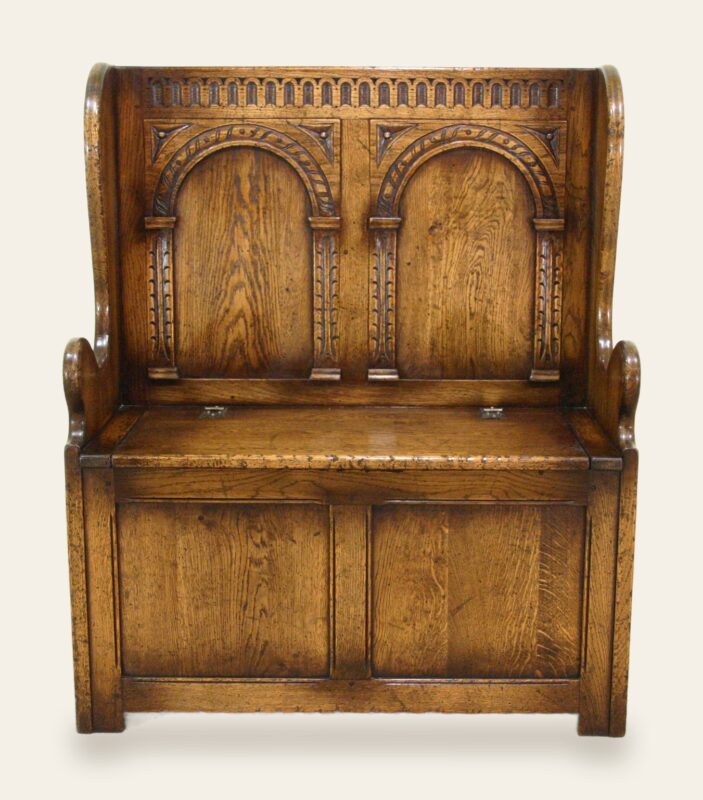
Panelled bench settle. The dressier version, the back framed and filled with panels — plain, raised and fielded, or carved. Usually specified where the settle sits alongside a dresser or a panelled wall.
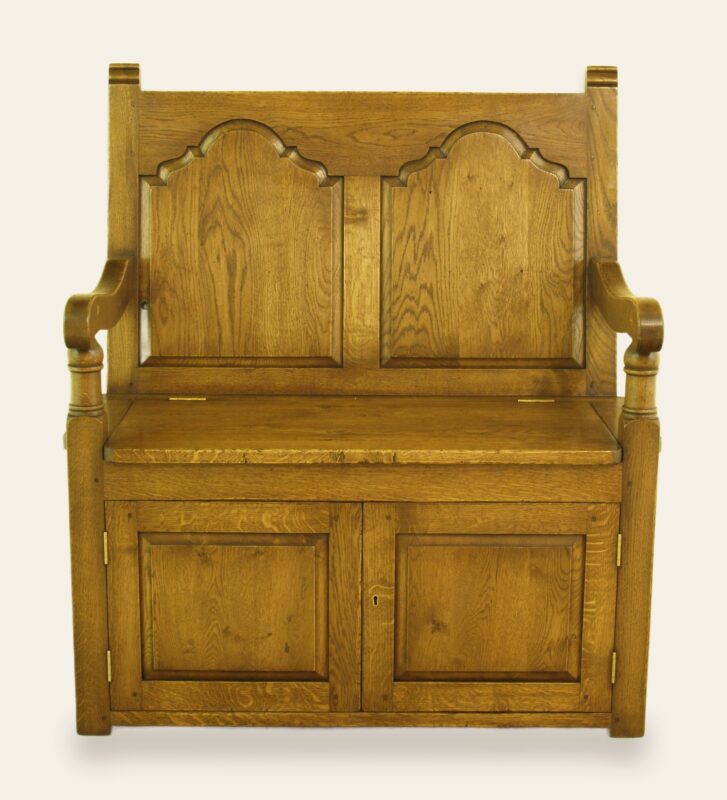
Carved settle. A panelled settle with the top rail, frieze or panels carved. Settle with door. A cupboard door in the base, so storage is reached from the front.
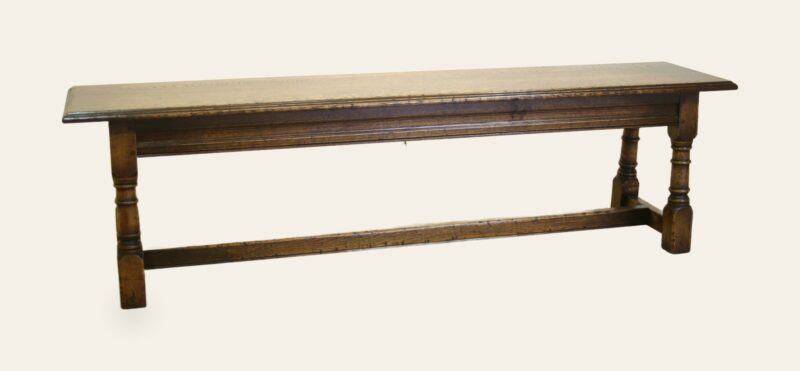
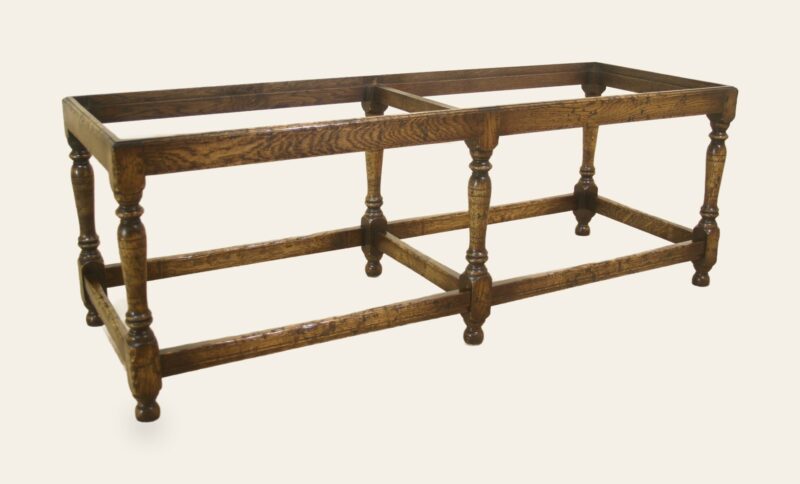
Long stool. A backless bench, made to any length. The classic partner to a refectory or farmhouse table: it slides fully under, which no chair does.
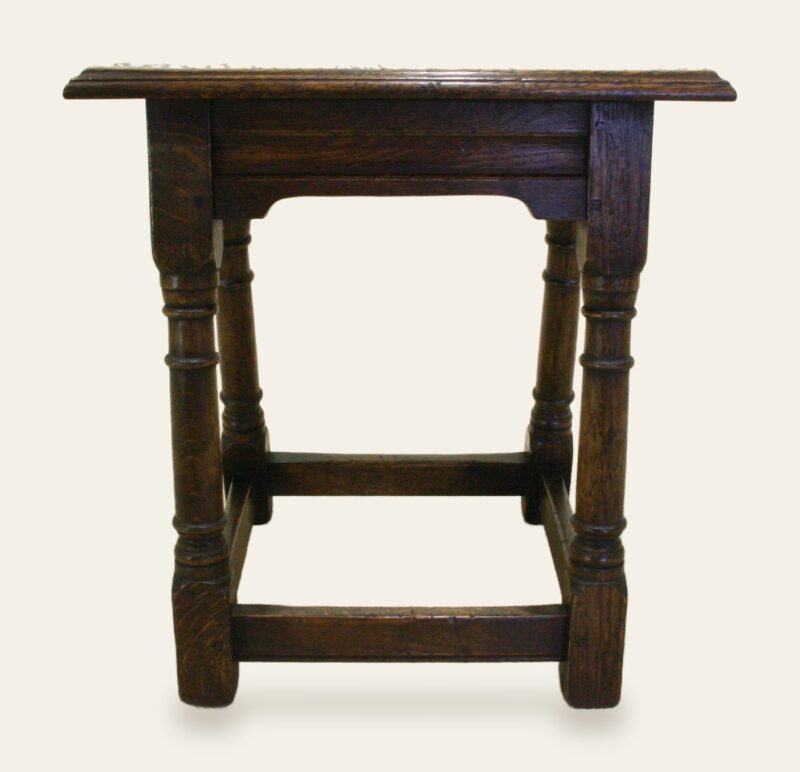
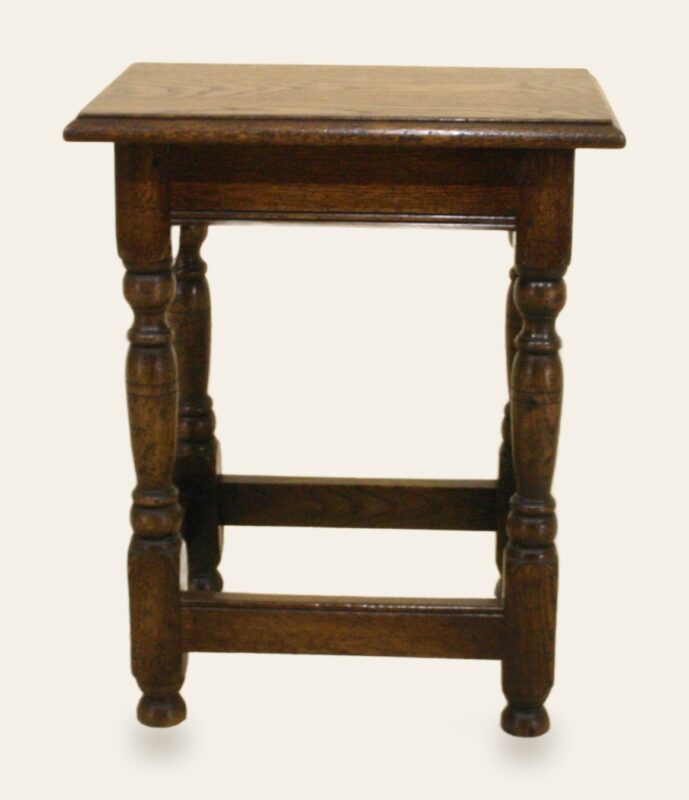
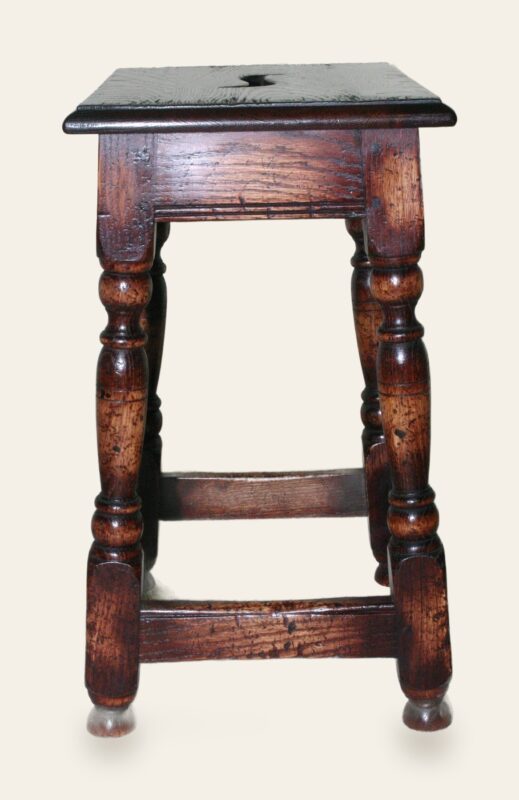
Joint stool. The small four-legged stool with turned legs and stretchers, joined rather than boarded — hence the name.
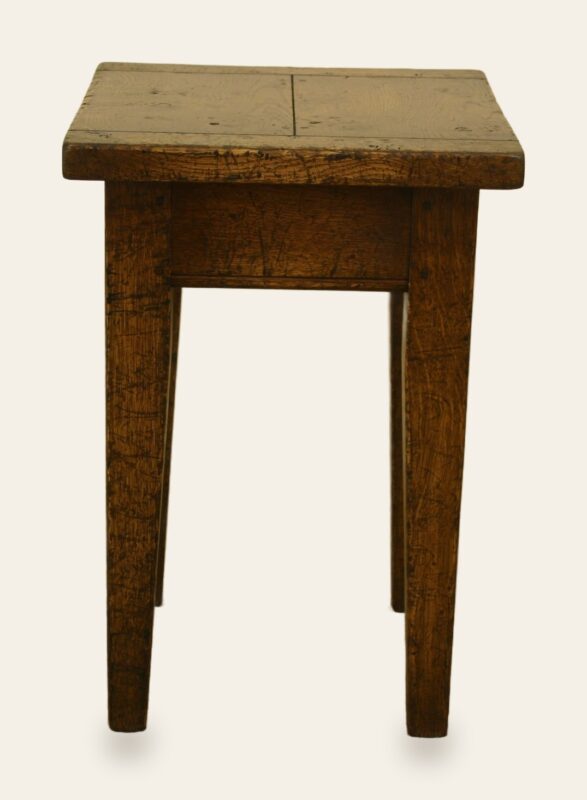
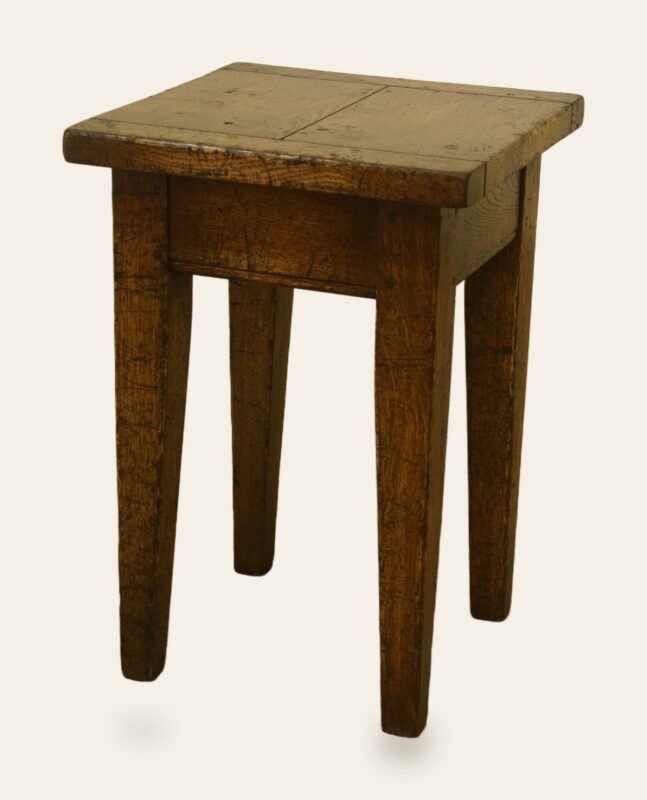
Farmhouse stool. A plainer country stool on tapered or turned legs, and footstools in a range of sizes, wooden-topped or upholstered.
Sizes
Made to your dimensions; the length is set by the wall.
Where a long stool goes under a table, tell us the height to the underside of the frieze and the leg positions and we will size it to slide fully in.
Bench settle (6′)
Width 72″ (183cm)6ft183cm1830mmDepth 39″ (100cm)3ft 3in100cm1000mmHeight 45″ (114cm)3ft 9in114cm1140mm
Box settle
3.5′
Width 42″ (107cm)3ft 6in107cm1070mmDepth 24″ (61cm)2ft61cm610mmHeight 45″ (114cm)3ft 9in114cm1140mm
Box settle (6′)
Width 72″ (183cm)6ft183cm1830mmDepth 45″ (115cm)3ft 9in115cm1150mmHeight 45″ (114cm)3ft 9in114cm1140mm
Made in oak, cherry, mahogany or walnut
These are the sizes we make as standard. Every piece is made to order in our own workshop, so any size between — or beyond — those listed can be made for you. Heights and depths can be altered to suit a room, and dimensions are nominal.
Timbers
Oak, cherry, mahogany and walnut are standard, and every piece is made in all four. Oak is much the most common choice for settles.
Specials, on application: character oak, which suits these forms particularly well; pippy oak in light, medium and heavy grades; oak selected for medullary ray; and clean knot-free timber. Finishes: polished, painted, limed, sand-blasted, rub-through paint, natural, or colour matched to a sample.
Order timber and finish samples before you decide on a colour.
Cushions and upholstery
Settles, benches and stools can be left as bare timber or given a loose cushion, a drop-in seat or a fully upholstered seat, in your own material or in leather we supply.
Made to your size
Length, depth, seat height, back height, panel arrangement, storage depth and carving are all yours to set. Common requests: a settle made to the length of a hall wall; a box settle deeper for boots; a long stool sized to disappear under a table; a back raised to screen one space from another. If the piece does not exist yet, our designers draw it first. See bespoke and commissioning.
Prices
Quoted individually to size and specification. Tell us the length, the form, the timber and the finish and we will give you a guide price. Special timbers, carving, upholstery and finishes are on application. Lead time is normally twelve weeks, and up to sixteen when the workshop is busy. Your date is confirmed when you order.
Clients who commission a settle often ask who does their panelling or their kitchen. The answer is the next bench along: Reeve & Co Interiors for fitted joinery, Square & True for kitchens.
Every size, timber and finish for our settles and benches is priced on the Settles and benches order page, where you can choose the options and pay the deposit online.
Frequently asked questions
What is a box settle?
A bench with a back and a hinged seat, with a storage box underneath the full length and depth of the seat. We make them at 3’6″ and 6′ as standard, and to any length.
Is a bench a good idea at a dining table?
On the wall side, yes. A bench needs no clearance behind it, so it works where there is no room to pull a chair back, and it slides fully under the table. Most clients use a bench on one side and chairs on the other.
What is a joint stool?
A small stool with turned legs and stretchers, joined with mortice and tenon rather than boarded — hence the name. As useful as a lamp table as a seat, and often bought in pairs.
Can a settle be made to fit a specific wall?
Yes, and that is the usual reason to commission one. Send us the wall length and anything we have to work around.