 Skip to content
A sideboard stores. A server serves. The two words get used interchangeably, but the distinction tells you which one you need.
On this page
A sideboard is a cabinet: doors, drawers, a carcase down to a plinth or short feet, and enough enclosed volume to swallow what a dining room accumulates. A server is a table with drawers: legs, a frieze, a top at standing height, space underneath. You put dishes on a server on the way to the table. You put linen and glass inside a sideboard and forget about them.
Every piece here is made to order in our Suffolk workshop, to your dimensions, timber and finish.
The servers we make
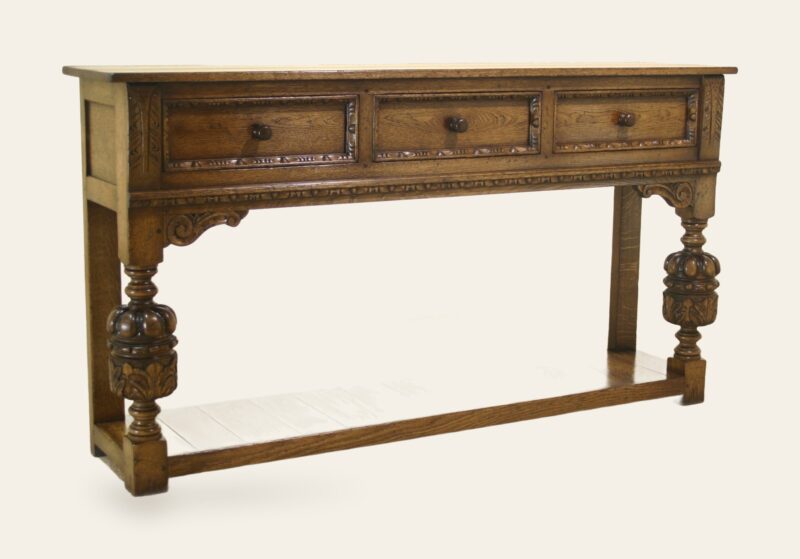
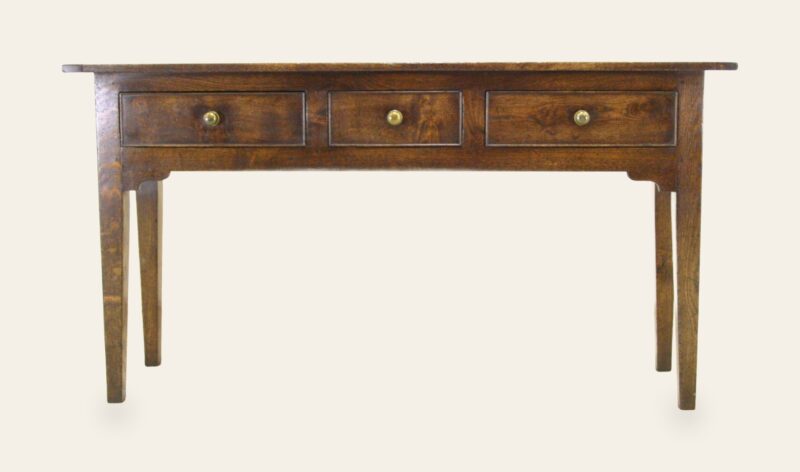
Three-drawer server. The pattern most people start from: three drawers across a frieze, turned or square legs, and a solid top at standing height. It works against a dining room wall, in a wide hallway, or behind a sofa.
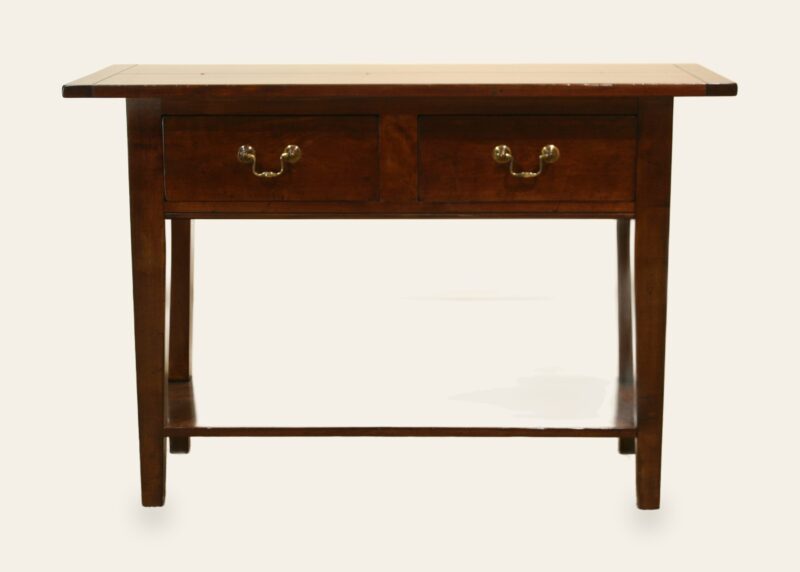
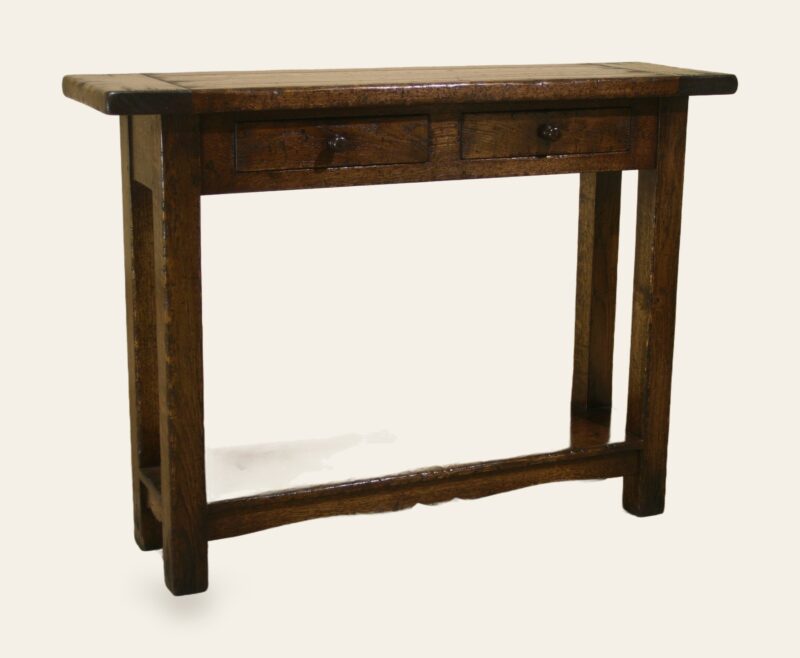
Farmhouse server table, with and without potboard. The country version, with the wide front framing and honest leg sections of the farmhouse patterns. The potboard adds a low open board between the legs, explained on the potboard dresser bases page. Also made as a shorter farmhouse side table with two drawers and potboard.
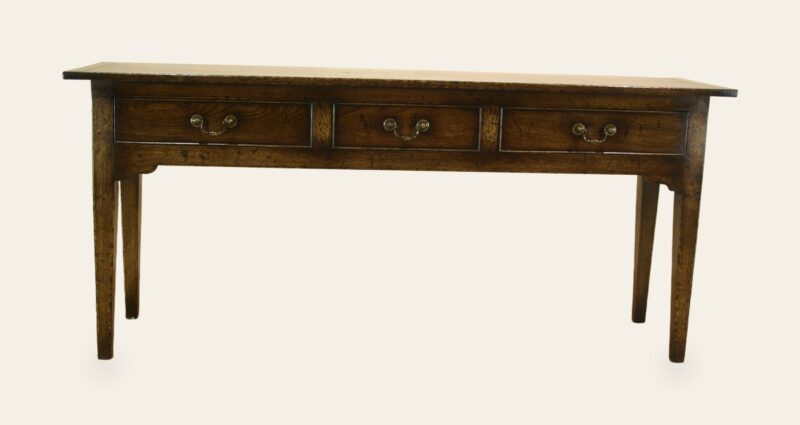
Farmhouse sofa table. Long, narrow and low enough to sit behind or beside a sofa, with three drawers in the frieze.
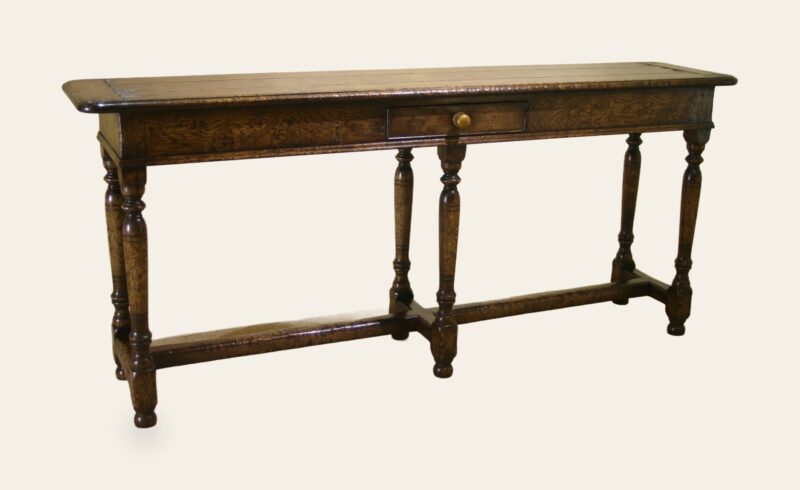
Six-leg server. Six legs instead of four, the extra pair at the centre, which stops a long frieze looking unsupported. Made with one drawer or a full run.
Square leg server. Square-cut legs with a small bevel to the inside edge in place of turning. Plainer, and the version that sits most easily in a contemporary room.
Balustrade server. A run of turned balusters between the top and the lower rail, so the piece reads as an open gallery rather than a solid frieze. Made in large sizes.
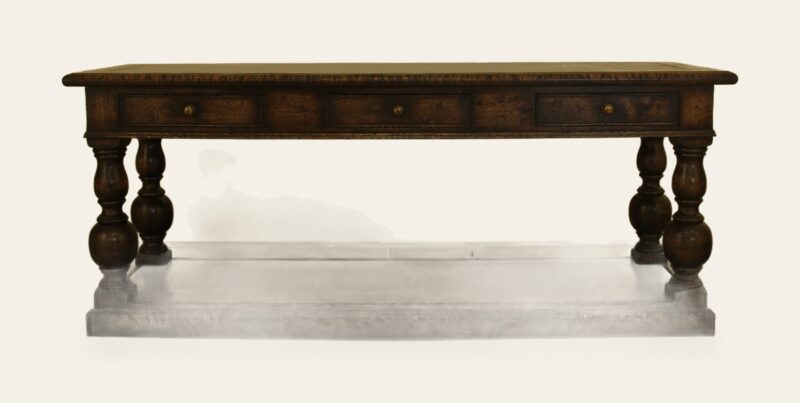
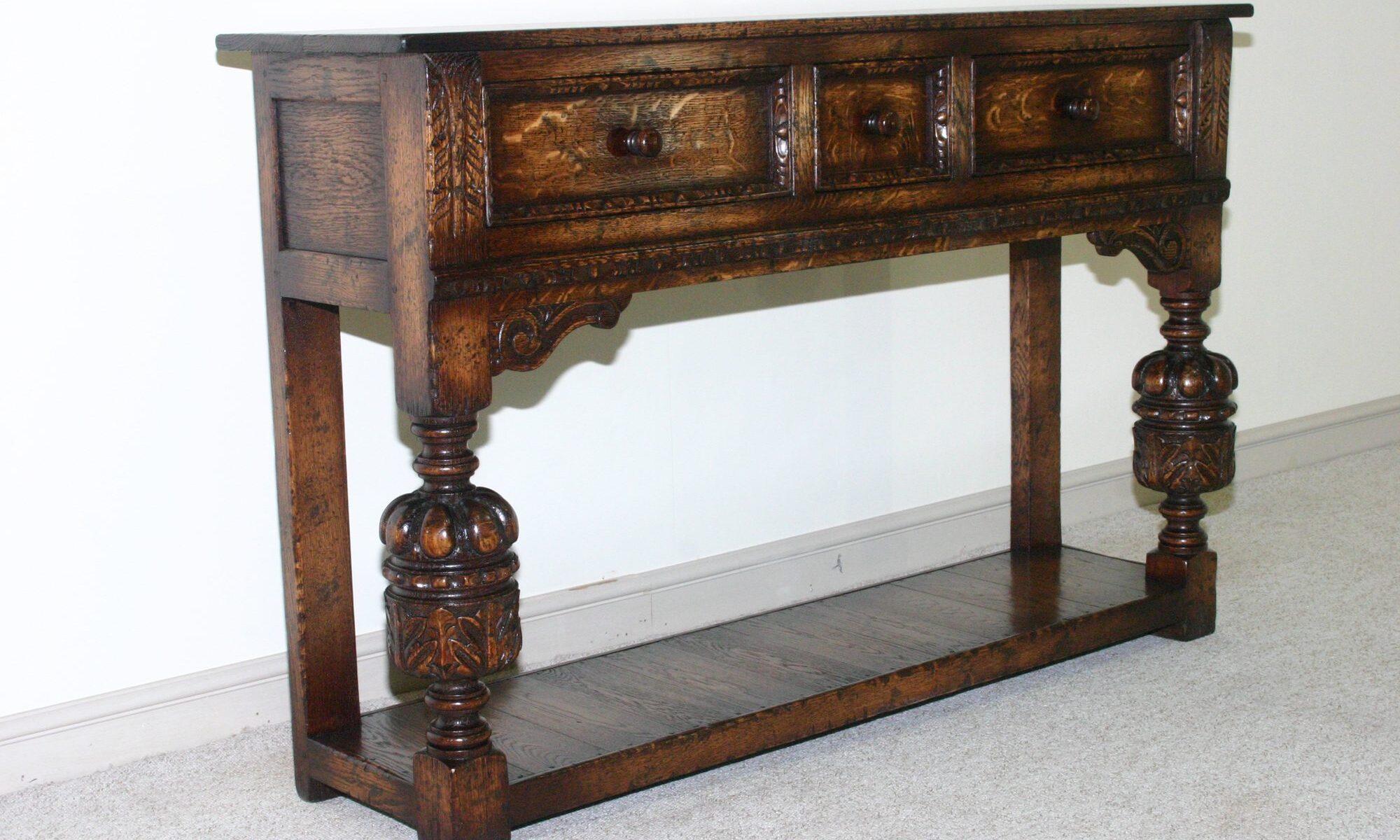
Carved baluster leg buffet. The dressiest piece here: a carved buffet sideboard on bulbous baluster legs, the swelling vase-shaped turning that carries carving well. A two-tier serving piece rather than a cabinet.
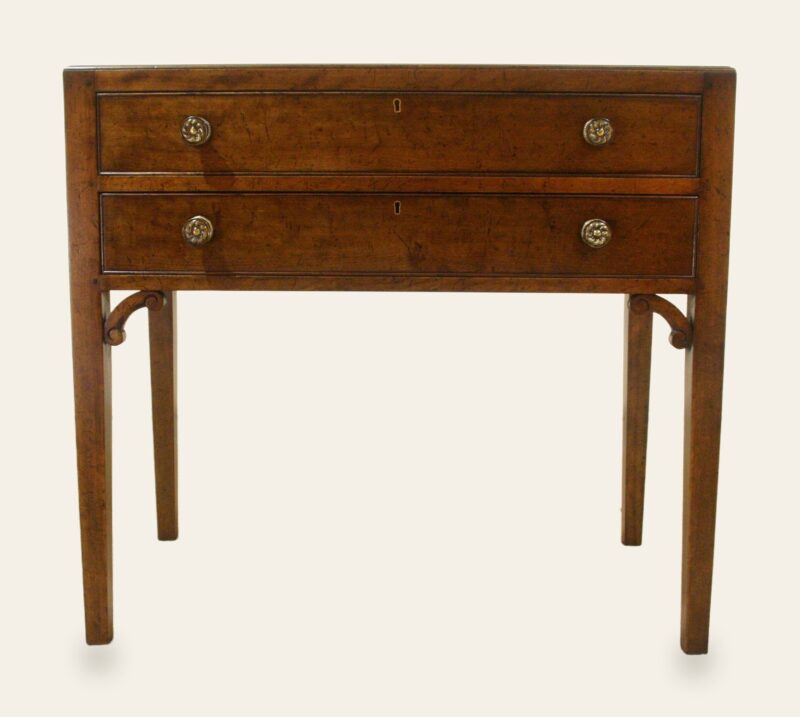
Tea caddy server. Two drawers under a caddy top — a moulded, slightly raised top edge that contains what you put down on it. The signature of the Rowton range, frequently in cherry.
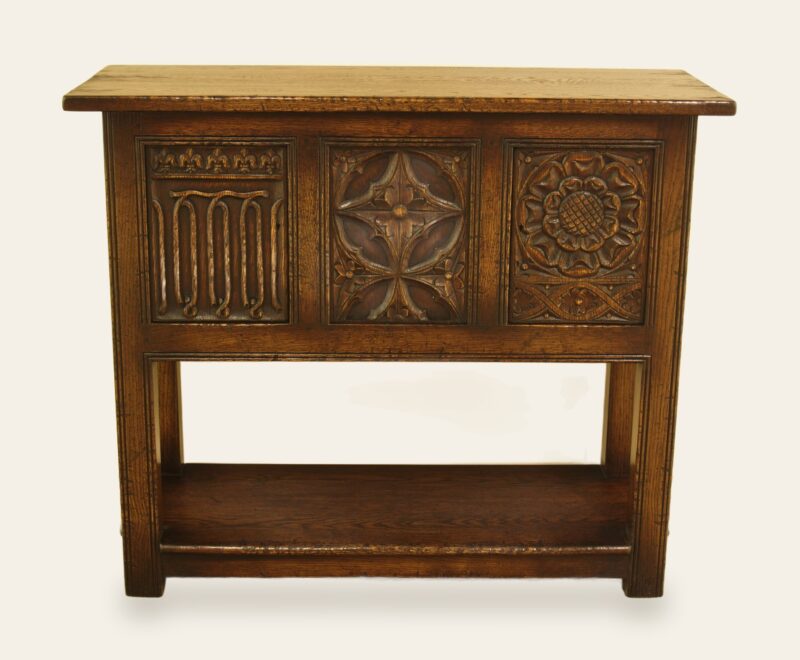
Carved credence cabinet. A small serving cabinet with an enclosed section, carved to the front. It suits a panelled dining room or a stone-floored hall.
Two-drawer side table with carving, in limed oak. Carved detail with the grain filled white and polished back.
The sideboards we make
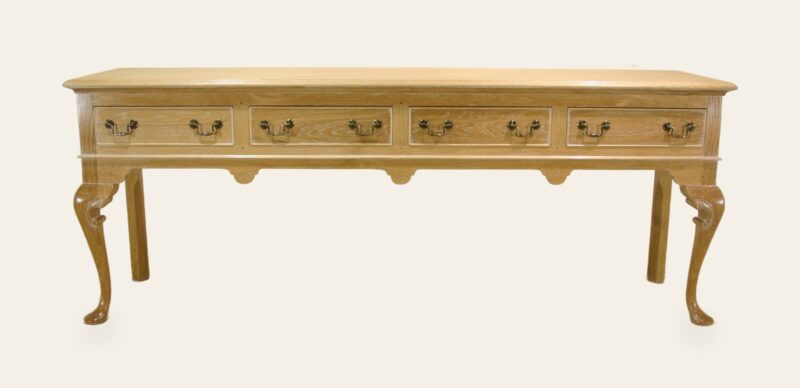
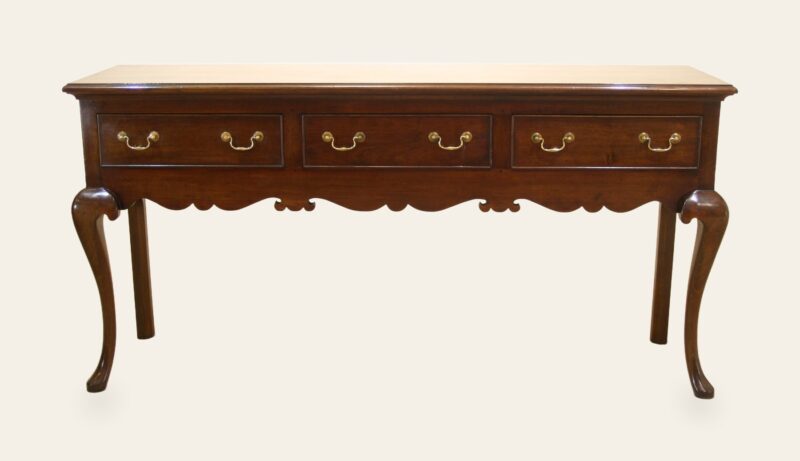
Cab-leg sideboard in limed oak. Four drawers on cabriole legs — the S-curved leg that swells at the knee and tapers to the foot — with a limed finish. Formal in outline, but the liming keeps it light.
Three-drawer sideboard. The enclosed relation of the three-drawer server, with the drawer run over a cupboard rather than open legs.
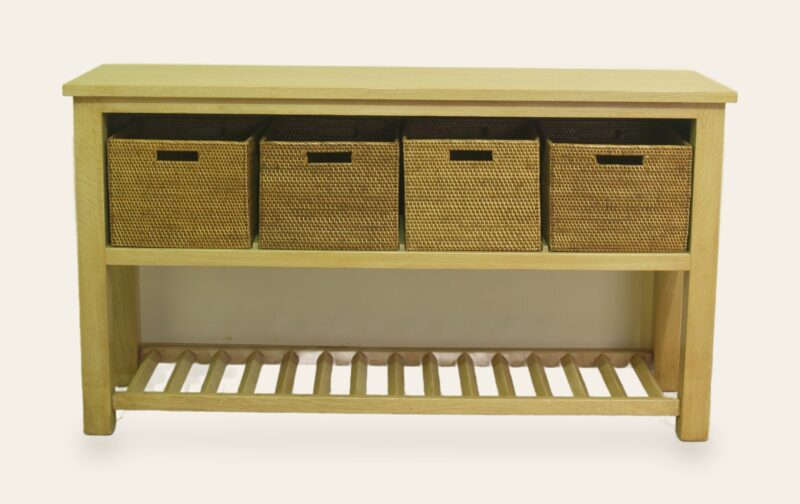
Linen basket sideboard. A slide-out basket built into the carcase, so table linen lives flat and ventilated rather than folded in a drawer. Almost always ordered to a specific basket size.
Cab-leg dresser server. The cabriole-leg server in its three-section form, between a server and a sideboard.
Trolleys and wine racks
Tea trolleys. Made three ways: two-drawer, square and three-tier. On castors, in oak, cherry or character oak.
Wine racks. Small and large, freestanding, with the bottle cradles cut from the solid rather than assembled from strip. Also made with two drawers in the base, and built into drinks cabinets.
Timbers
Oak, cherry, mahogany and walnut are the standard four, and every piece here is made in all of them. Cherry suits the tea caddy and cabriole-leg patterns, mahogany and walnut the buffet and credence forms, oak everything.
Specials, on application: character oak, with the knots and movement left in; pippy oak in light, medium and heavy grades, for tops; oak selected for medullary ray, the silver-grey figure across quarter-sawn oak; and clean timber with no knots at all.
Finishes: polished, painted, limed, sand-blasted, rub-through paint, natural, or colour matched to a sample. Liming is the defining finish on the Windrush and cab-leg pieces. We can match furniture that is 100 years old to new reproduction purchases made the year before.
Order timber and finish samples. A server has to sit in a room where the dining table is already the loudest thing, so the shade matters more than it does on the table itself.
For a sideboard seen as one long elevation, walnut shows its figure well, and mahogany suits the formal servers. See walnut furniture and mahogany furniture.
Standard sizes
3 piecesCarved baluster leg buffet
Width 51 or 60″ (129 or 152cm)4ft 3in or 5ft129 or 152cm1290 or 1520mmDepth 4 or 5″ (14cm)4″ or 5″14cm140mmHeight 36″ (33cm)3ft33cm330mm
Farmhouse server table
Width 60″ (152cm)5ft152cm1520mmDepth 19″ (47cm)1ft 7in47cm470mmHeight 30″ (76cm)2ft 6in76cm760mm
Farmhouse sofa table
Width 60 or 72″ (152 or 183cm)5ft or 6ft152 or 183cm1520 or 1830mmDepth 19″ (48cm)1ft 7in48cm480mmHeight 30″ (76cm)2ft 6in76cm760mm
Made in oak, cherry, mahogany or walnut
These are the sizes we make as standard. Every piece is made to order in our own workshop, so any size between — or beyond — those listed can be made for you. Heights and depths can be altered to suit a room, and dimensions are nominal.
Made to your size
Servers and sideboards are fitted to a wall rather than placed in the middle of a room, so almost every one is changed.
Common changes: length set to the gap between a door and a chimney breast; depth reduced so the piece does not narrow a route through the room; height set to match a worktop or raised to clear a radiator; drawer layout rearranged; a potboard added; cutlery trays and baize linings fitted; a linen basket sized to what you own; six legs on a long piece.
If the piece does not exist yet, our designers draw it before anything is cut. See bespoke and commissioning, or fitted furniture for a whole dining room.
Prices
Quoted individually, because no two are the same length. Tell us the pattern, the length, the depth, the timber and the finish and we will give you a guide price. Special timbers and finishes are on application. Lead time is normally twelve weeks, and up to sixteen when the workshop is busy. Your date is confirmed when you order.
A sideboard is often one part of a larger scheme. When it is, the panelling and built-in work alongside it come from Reeve & Co Interiors, and the kitchen from Square & True — the same benches, the same hands.
Where a sideboard is also meant to hold the television, a rise and fall TV cabinet keeps the screen out of sight until you want it.
Frequently asked questions
What is the difference between a sideboard and a server?
A sideboard is an enclosed cabinet with doors and drawers, built to store. A server is a table with drawers in the frieze and open space beneath, built to put dishes on. If you need volume, choose a sideboard; if you need a surface and a lighter piece, choose a server.
What height should a server be?
Standing height, so you can serve from it without stooping — usually a little lower than a kitchen worktop and higher than the dining table. Tell us who will be using it and we will set the height around them.
Can a server be made to match a dining table I already have?
Yes, including tables we made years ago and antiques we did not. Send photographs, dimensions and a sample of the finish. See matching antique furniture.
Do you fit cutlery trays and baize linings?
Yes, and it is worth deciding early because it affects the drawer depths. Tell us what is going in — canteen, table linen, candles — and we will divide and line the drawers around it.