 Skip to content
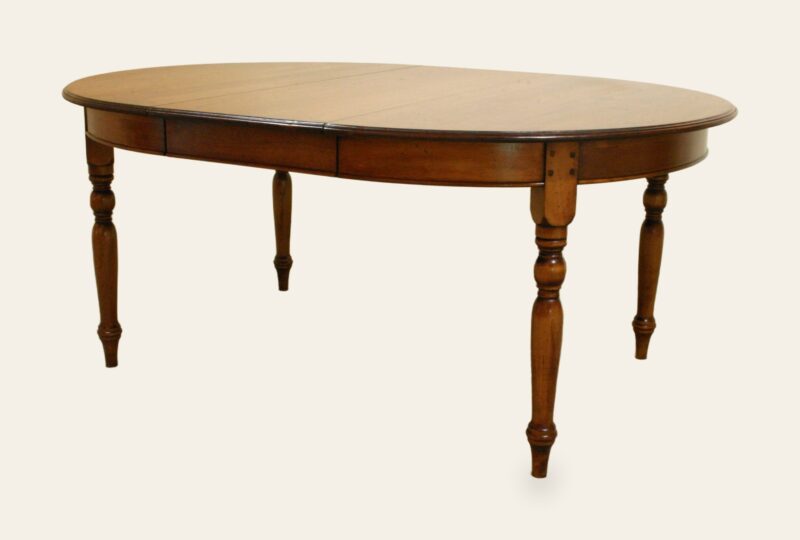
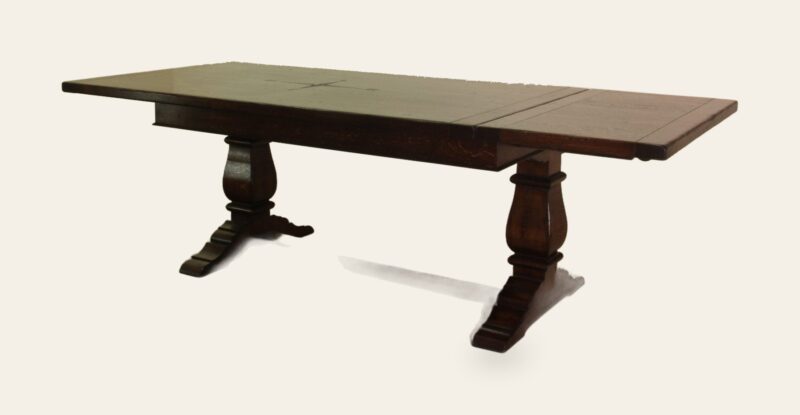
An extending table gives you the room you need on the days you need it, and stays the right size for the rest of the year. Made to order in solid oak, cherry, mahogany or walnut, in either of the two mechanisms below.
On this page
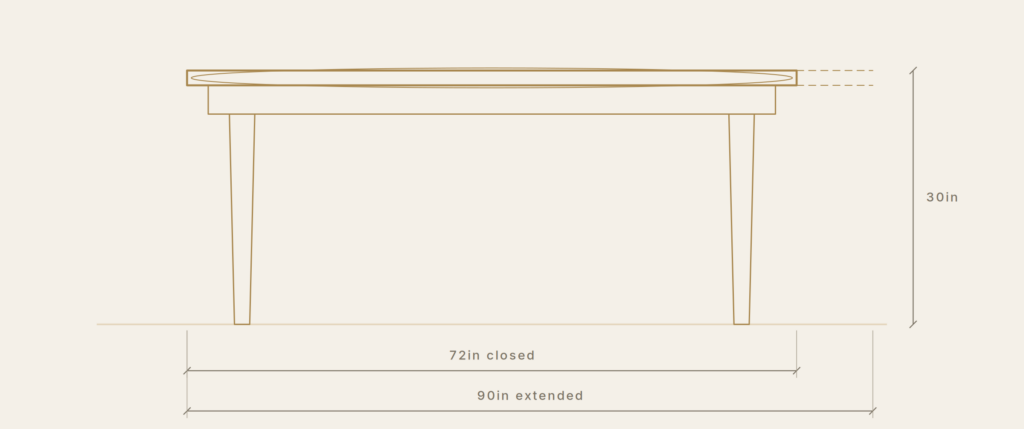
Most dining rooms are sized for the evenings that happen, not the ones that occasionally do. An extending table settles that argument. Closed, it is a table for four or six that leaves room to walk round. Open, it seats ten without anybody eating off a corner.
There are two ways of doing it properly, and they suit different households rather than different budgets.
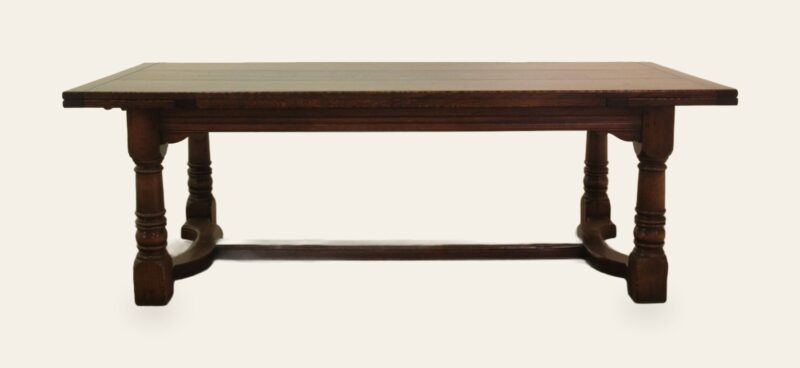
The draw-leaf extending table
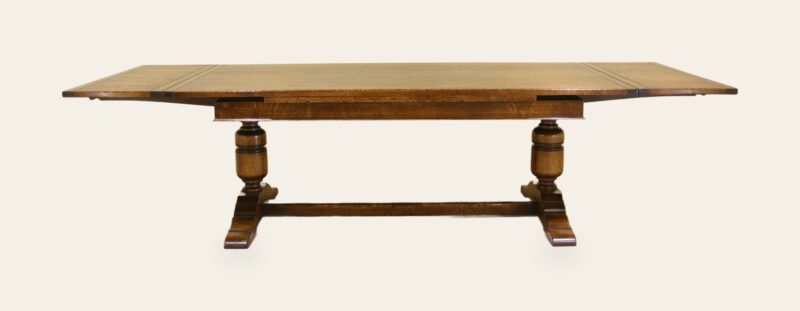
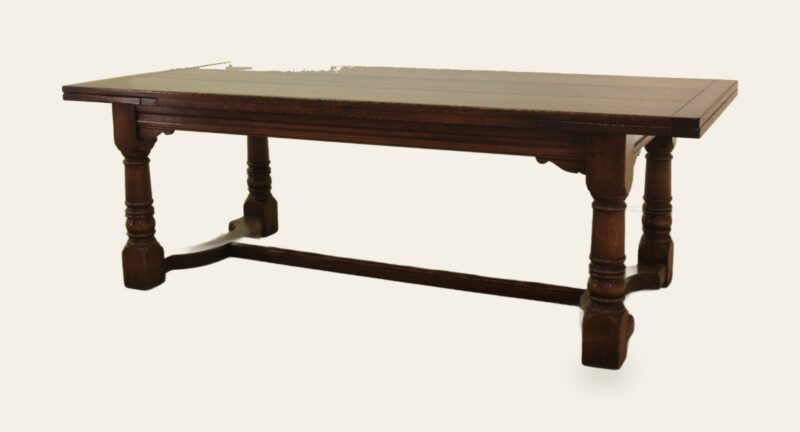
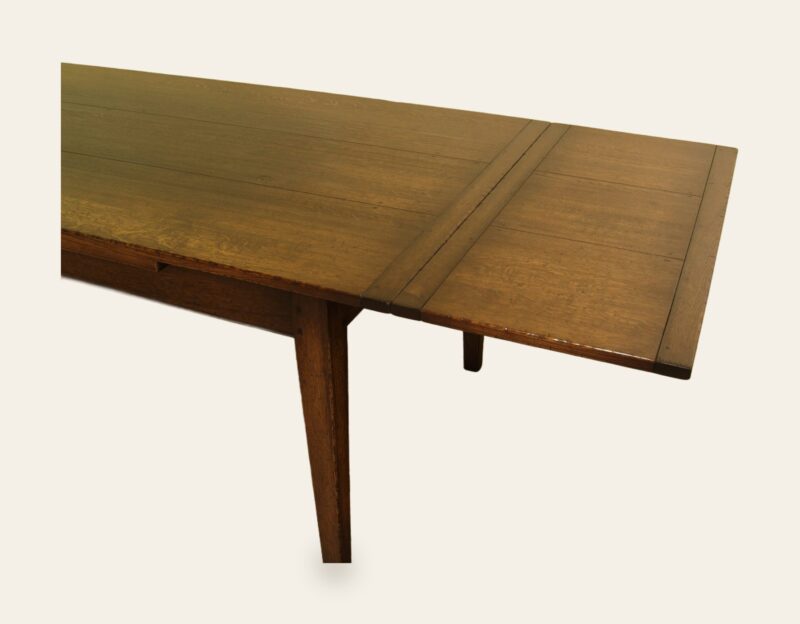
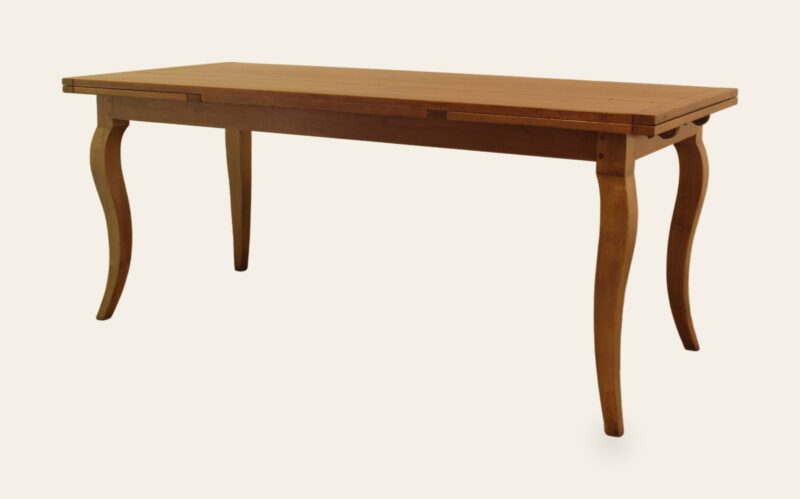
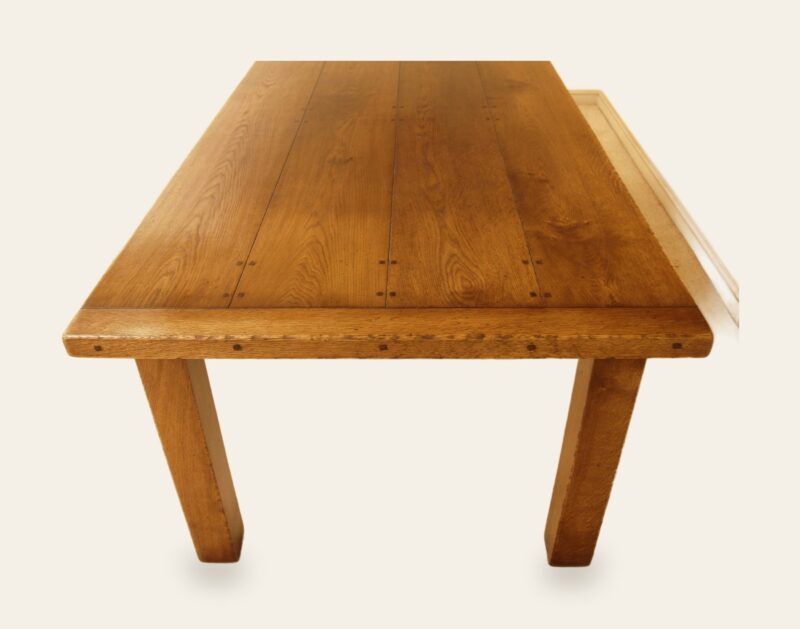
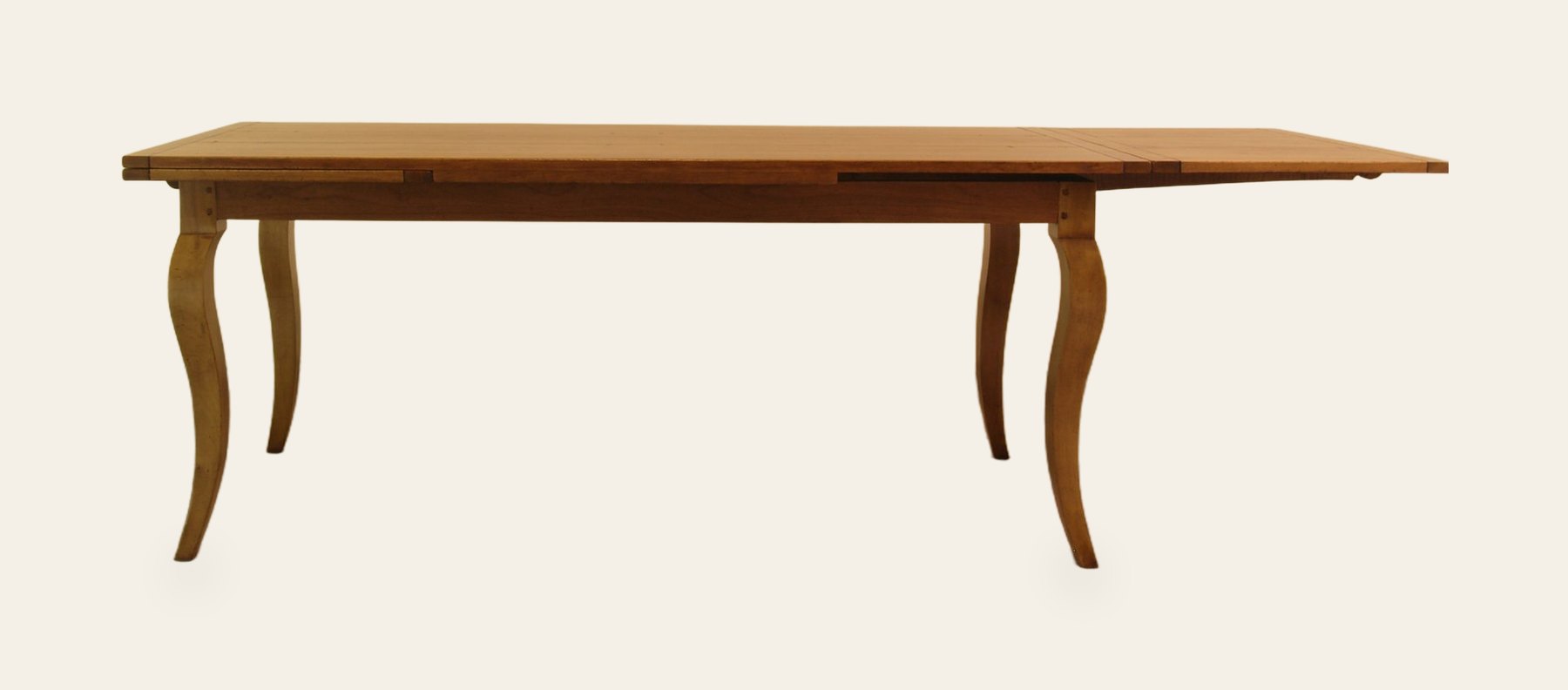
A draw-leaf table carries its two leaves underneath the top, on tapered runners. You take hold of the end of the table, pull, and the leaf rises as it comes out until it sits flush with the main top. The centre section drops on its own weight to meet it. It takes about ten seconds and one person.
The point of a draw-leaf is that nothing is stored anywhere else. There is no leaf in the loft, no leaf behind the wardrobe, and nothing to fetch. It is the mechanism for a kitchen where the table changes size most weeks — Sunday, homework, a birthday — and goes back again.
The trade-off is length. A draw-leaf typically adds around a metre in total, half at each end. That takes a table for six to a table for eight or ten, which is enough for most houses and not enough for a few.