 Skip to content

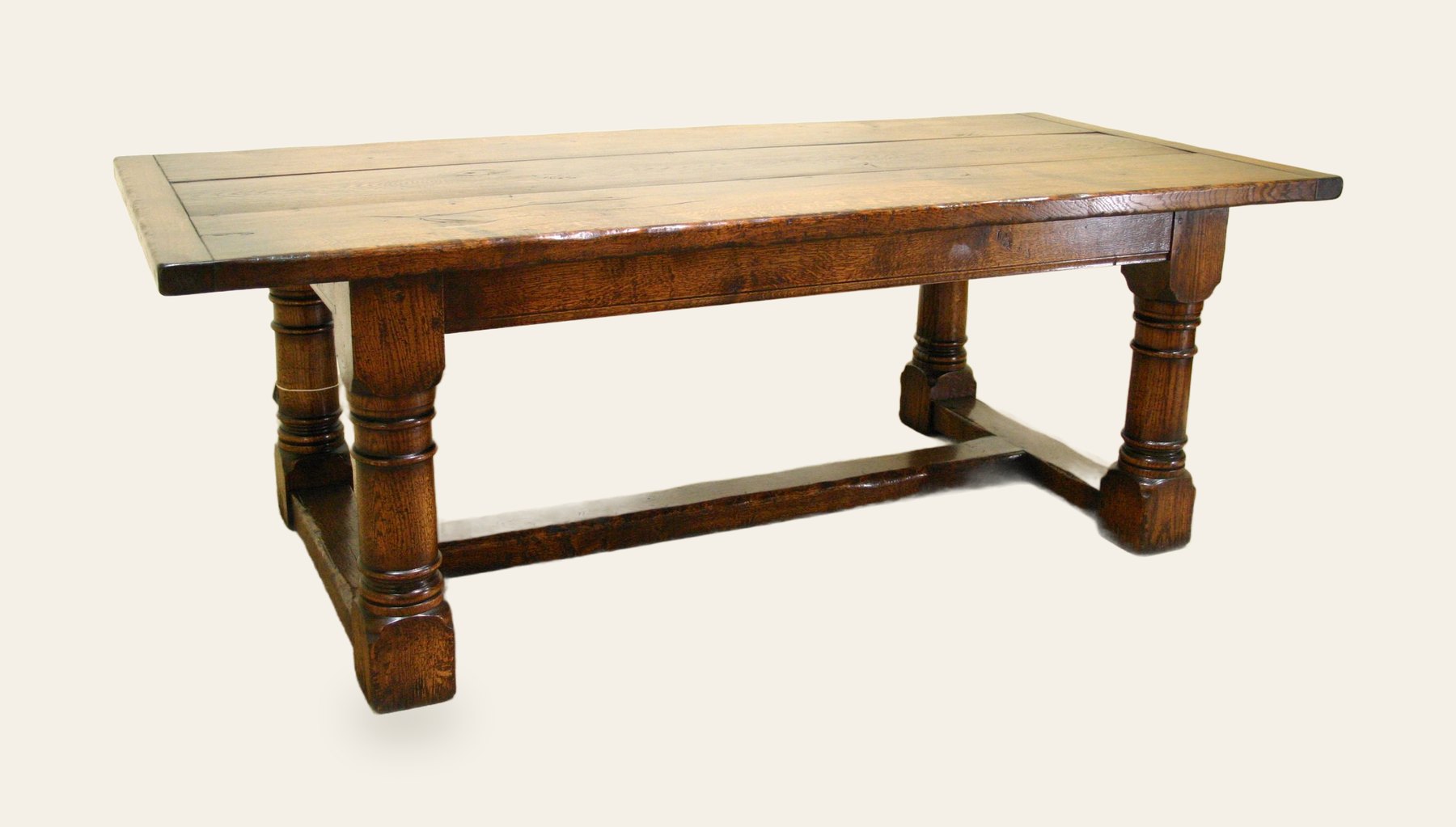
Solid timber furniture is not delicate, but it is alive. It takes up moisture and gives it back with the seasons, and almost every problem people bring to us is caused by that rather than by wear. Handled sensibly, a piece we make will outlast everyone reading this.
Humidity matters more than anything else
Timber moves across the grain as the air around it changes. That is why a table top is never glued rigidly to its frame, why panels sit loose in their frames, and why a well-made piece survives a century while a badly made one splits in its first winter.
The enemy is not damp or dry air — it is rapid change. A room that goes from cold and humid to hot and dry over a weekend is harder on furniture than one that is permanently one or the other. If you have underfloor heating, or a woodburner that takes a room from 12 to 24 degrees in an evening, expect a little seasonal movement and do not be alarmed by it.
A hygrometer costs very little. Somewhere between 40 and 60 per cent relative humidity keeps everything comfortable.
Where not to put it
- Against a radiator. The commonest cause of a split panel we see. A hand-span of air behind a piece is enough.
- In direct sunlight, permanently. Every timber fades, and it fades unevenly — a table with a runner on it for two years will show the runner when you take it off.
- Straight from a van into a hot room in January. Let a piece stand a day before you load it.
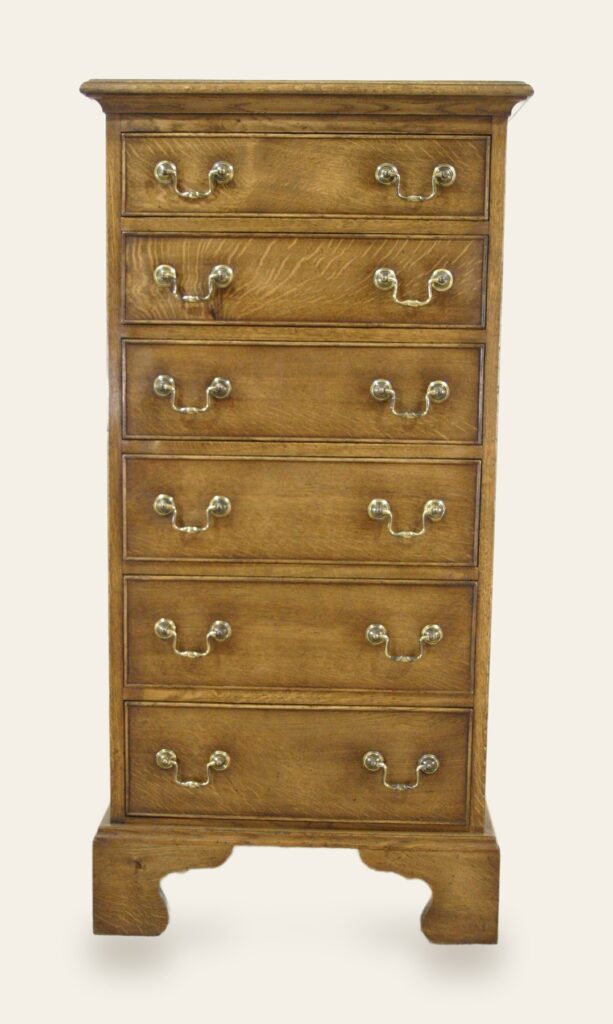
Cleaning, and what to keep away from it
A dry or barely damp cloth for almost everything. Warm water and a little washing-up liquid for anything sticky, dried immediately afterwards.
What does damage: silicone polishes, anything with a solvent in it, baby wipes, and the sprays sold as furniture polish in supermarkets. Silicone in particular builds a film that is difficult to remove and makes any future repolishing a much bigger job. If a product promises shine, do not use it.
Waxing, and how rarely
A polished or waxed piece wants waxing perhaps twice a year, and less on a piece that gets little handling. More often than that simply builds up.
Use a good quality clear or lightly tinted furniture wax, applied thinly with a cloth, left twenty minutes and buffed off. The rule is that the wax should be almost gone by the time you stop. If you can see it, there is too much on.
Rings, heat marks and scratches
A white ring is moisture trapped in the finish, not damage to the timber, and it will usually come out. Warmth and patience do it: a dry cloth and a warm iron on its lowest setting, a second at a time, or in mild cases simply leaving it alone for a fortnight.
A dark ring has gone through the finish into the timber and needs refinishing locally. That is a job for us or for a competent restorer, and it is not expensive on a small area.
Scratches on a polished surface can usually be waxed out. On a painted surface they need touching in, and we will keep a record of your colour so it can be matched years later.
Drawers that stick
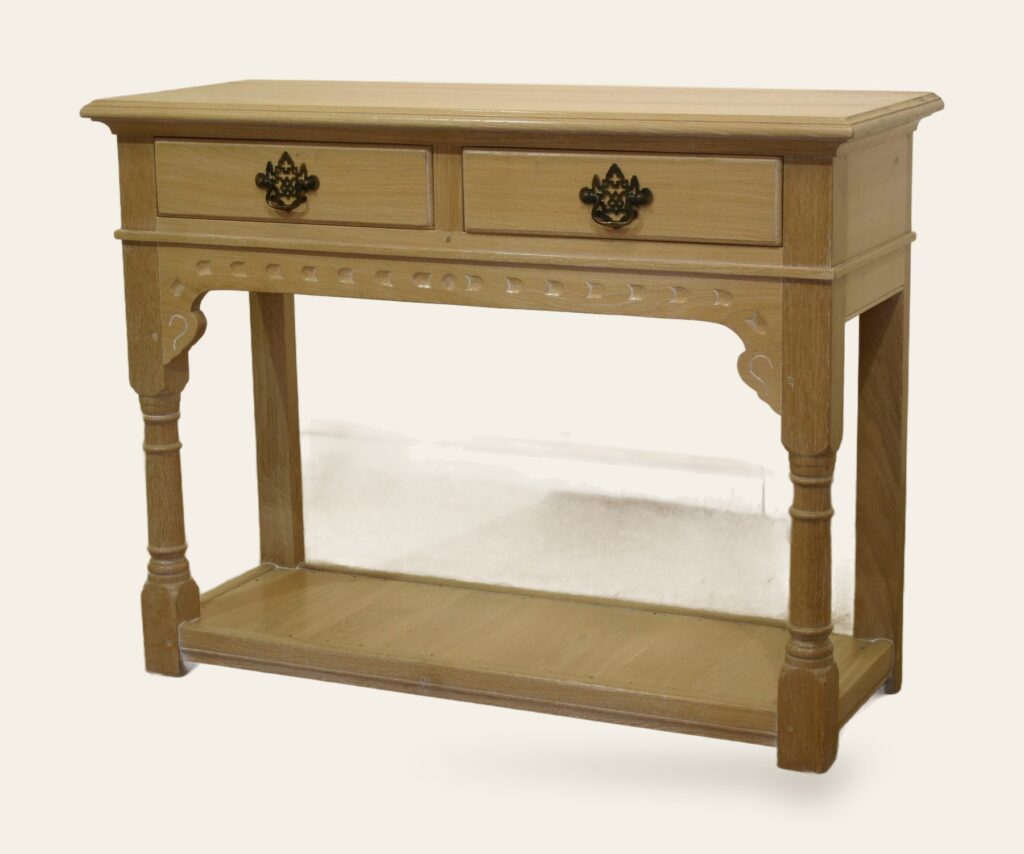
Almost always seasonal. A drawer that runs sweetly in July and tightly in February is behaving correctly. A rub of candle wax or a dry soap bar on the runners solves it. Do not plane anything.
What we would rather you rang us about
A joint that has opened. A panel that has cracked rather than moved. A drawer that has dropped and is catching. A finish that has gone cloudy across a whole surface. None of these are disasters and all of them are cheaper to deal with early.
Every piece leaves here with a record of its timber, finish and colour, so we can match and repair years later without guesswork. Ring the workshop on 01449 710500 or send us a photograph — most questions are answered in a minute from an image.
The short version
Keep it out of direct sun and off a radiator, dust it with a dry cloth, wax it twice a year, use nothing that promises shine, and accept that a solid timber piece will move a little with the seasons. That is the whole of it.