 Skip to content
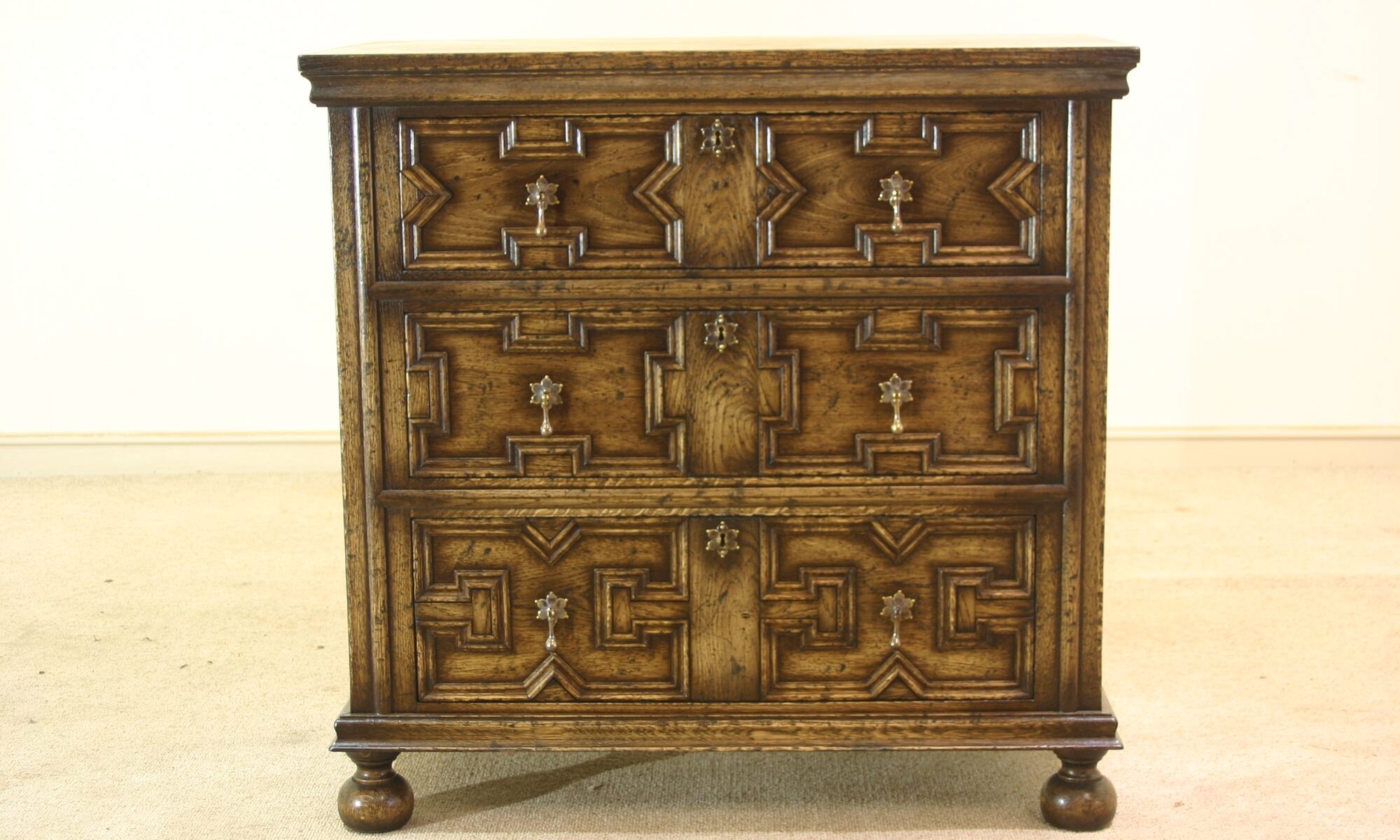
A chest of drawers is judged by how it opens. Everything else — the timber, the mouldings, the handles — is visible in a photograph. The drawer is not. It either runs sweetly with one finger at the corner, or it racks, sticks and drops as it comes out.
On this page
Ours run on timber, in a framed and panelled carcase with framed side panels rather than flat boards, so the case stays square and the drawers keep their fit through the swings of a British year.
Details that distinguish the patterns
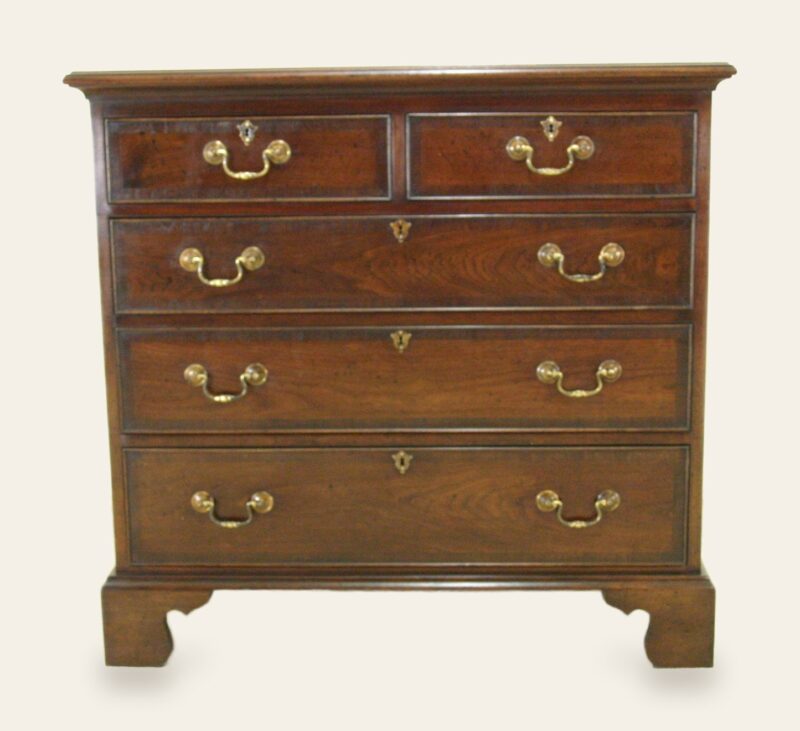
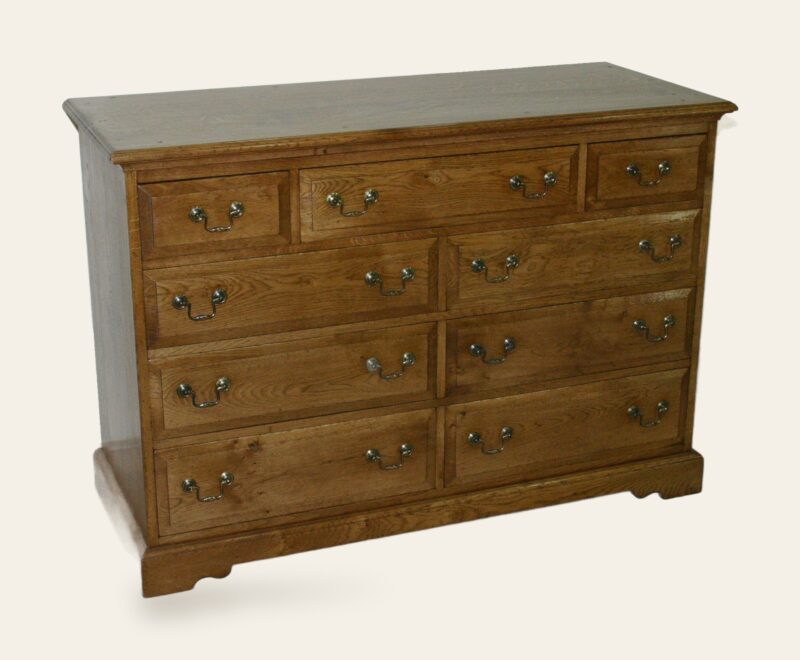
Cock beading. A fine raised bead run round each drawer front. It catches the light, hides the gap, and takes the knocks that would otherwise chip a bare edge.
Cross banding. A border of timber laid with its grain running across the drawer front, framing the main figure. It is the single decision that most changes how dressed a chest looks, and we make every pattern with and without it.
Moulded fronts. A moulding worked around the drawer front rather than on the carcase, so it reads as a framed panel.
Caddy top. A moulded, slightly raised edge to the top, which contains what you put down on it. The signature of the Rowton range.
Ironmongery. Solid brass swan neck handles or knobs as standard, with turned wooden knobs where you want the piece quieter.
The chests we make
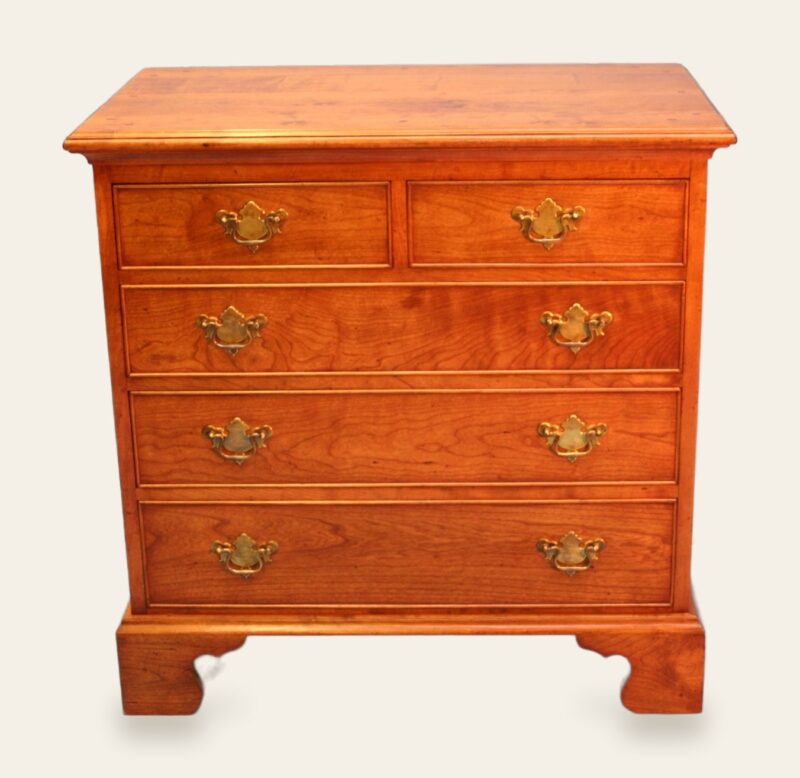
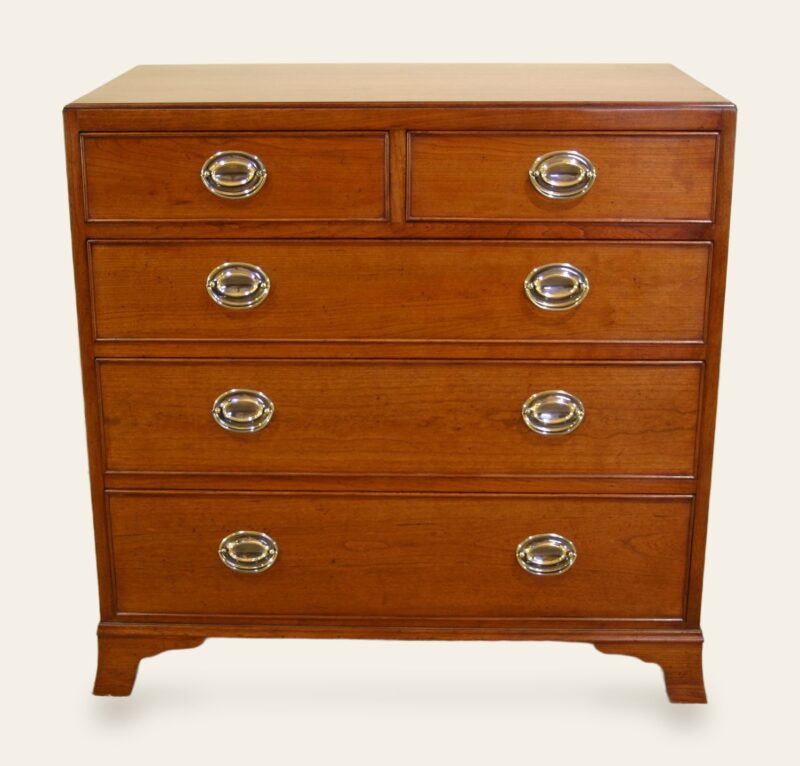
Chest of drawers, with and without cross banding. The core pattern, in a range of drawer counts. Cross banded for a formal bedroom; plain for a country one.
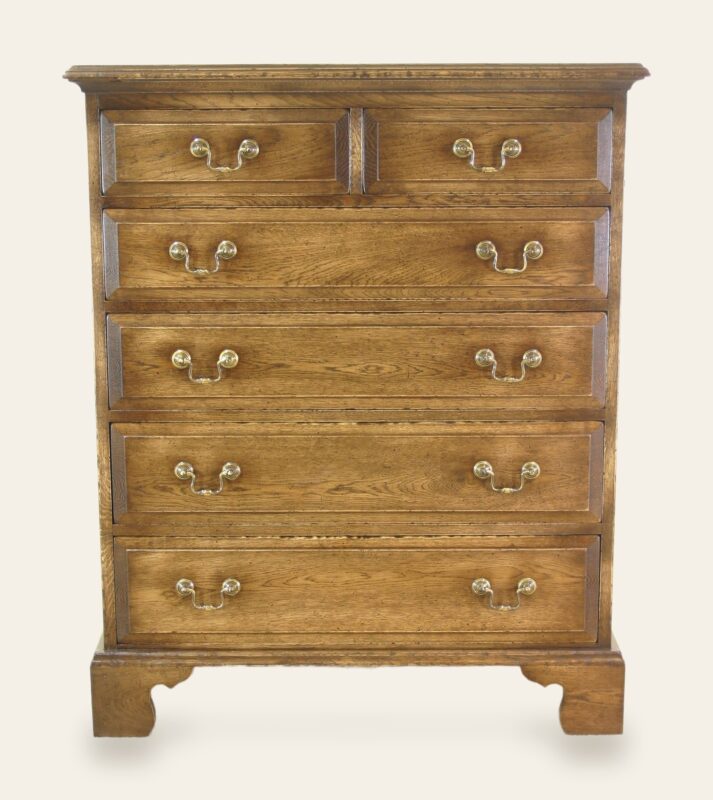
Six- and seven-drawer chests. Two short over four long, or three short over four long. The standard bedroom chests, and the short drawers are where everything small ends up living.
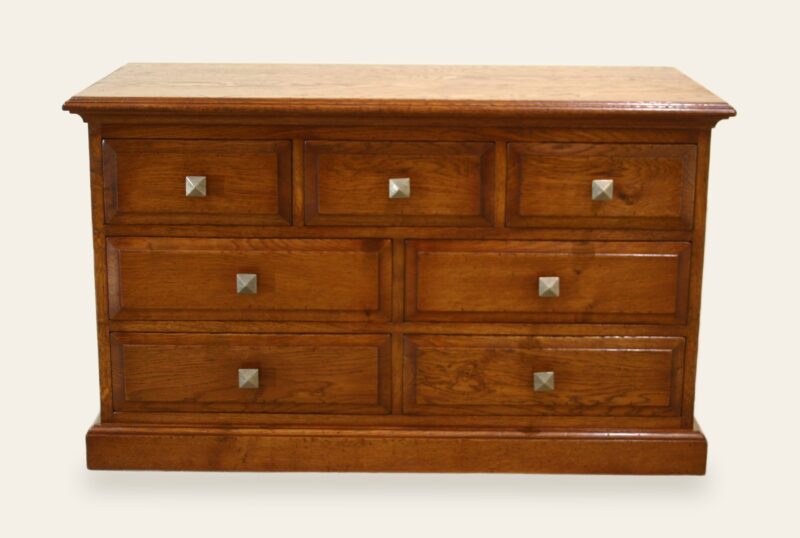
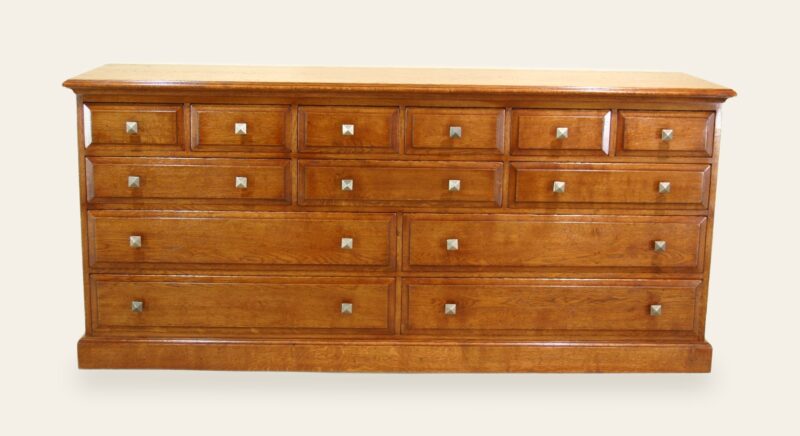
Nine-drawer chest. A wider carcase with three ranks of drawers, for where a chest does the work of a wardrobe run.
Thirteen-drawer chest. The large one, and a useful piece in a dressing room. The drawers are graduated so the deepest sit at the bottom.
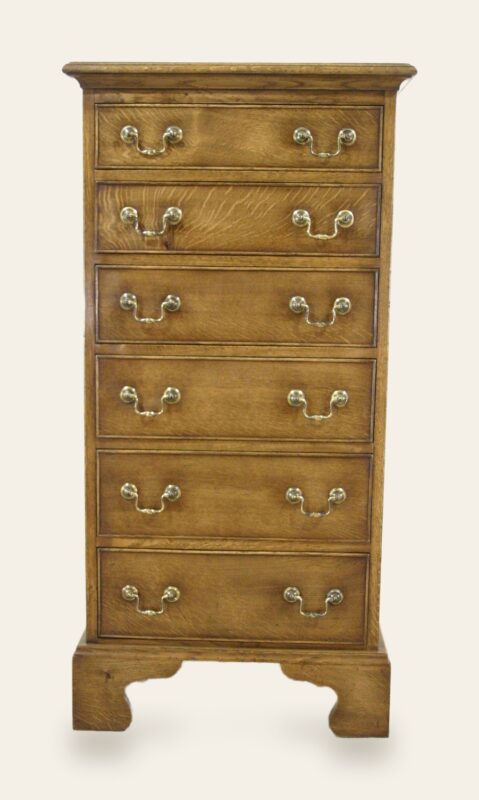
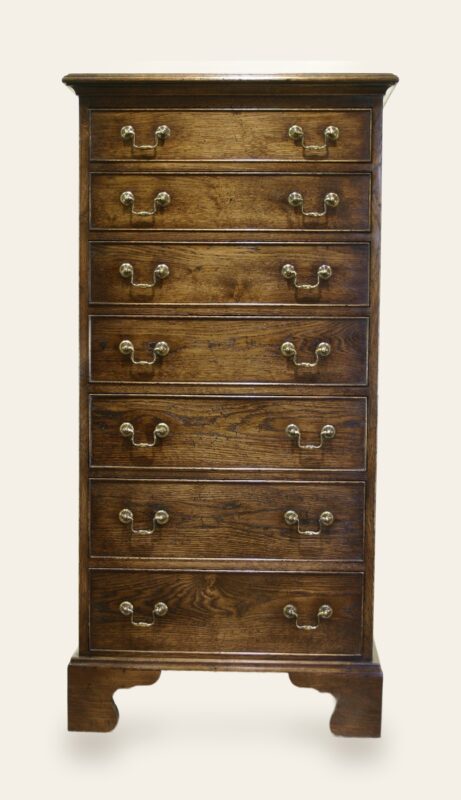
Wellington chest, seven drawer. Tall, narrow, with a hinged locking stile that swings across the drawer ends and secures the whole stack at once. It fits where nothing else does.
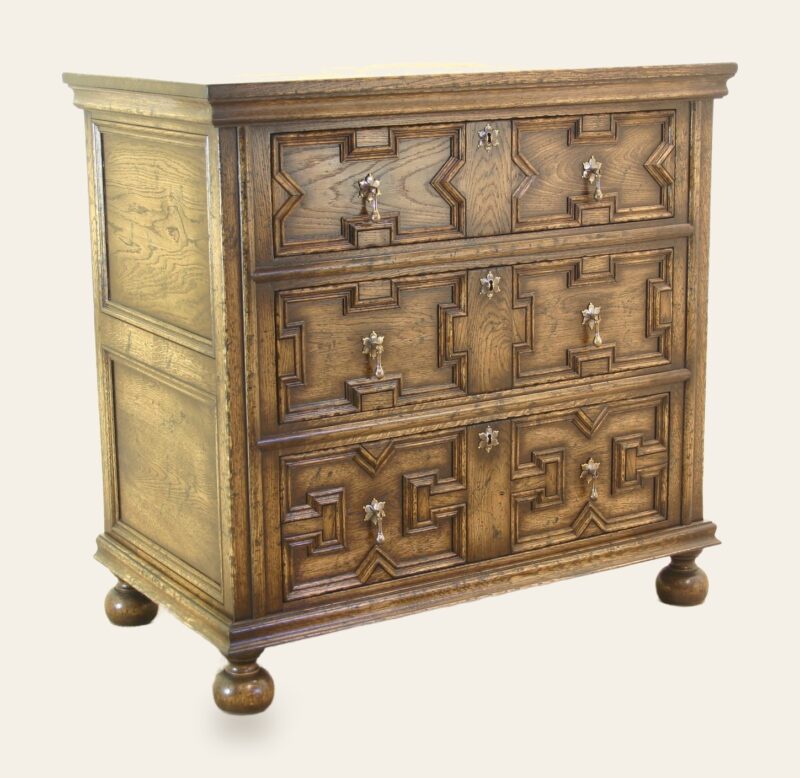
William & Mary chest. The late 17th-century pattern, on turned bun feet with a strongly moulded cornice. The dressiest of the traditional forms.
Tea caddy chest and Rowton caddy-top chest. A chest under a caddy top, with the Rowton mouldings and matching pieces across the range. Frequently made in cherry, which darkens markedly over the first few years.
Moulded front chest, #978. A moulding run round each drawer front so each reads as a framed panel. Between the plain country chest and a cross banded formal one, and much the most-specified pattern we make.
Bedside chests. With and without cross banding, to match any of the chests above. Height is set from the mattress rather than from a standard, so the top sits where you can reach it lying down. See also beds.
Timbers
Oak, cherry, mahogany and walnut are the standard four, and every chest is made in all of them. Mahogany and walnut suit the cross banded and William & Mary patterns, cherry the tea caddy and Rowton chests, oak everything.
Specials, on application: character oak, with knots and movement left in; pippy oak in light, medium and heavy grades, for tops; oak selected for medullary ray, the silver-grey figure across quarter-sawn oak; and clean timber with no knots at all — worth considering here, where the same drawer front repeats six or seven times down the piece and the eye reads them as a set.
Finishes: polished, painted, limed, sand-blasted, rub-through paint, natural, or colour matched to a sample. We can match furniture that is 100 years old to new reproduction purchases made the year before.
Order timber and finish samples. A chest is usually bought to sit with a bed and a wardrobe you already own, and matching those is easier with the timber in your hand.
Standard sizes
7 piecesChest of Drawers
Width 33, 36 or 42″ (84, 91 or 107cm)2ft 9in, 3ft or 3ft 6in84, 91 or 107cm840, 910 or 1070mmDepth 19″ (48cm)1ft 7in48cm480mmHeight 33 or 42″ (84 or 107cm)2ft 9in or 3ft 6in84 or 107cm840 or 1070mm
Chest of Drawers, with cross banding
Width 33, 36 or 42″ (84, 91 or 107cm)2ft 9in, 3ft or 3ft 6in84, 91 or 107cm840, 910 or 1070mmDepth 19″ (48cm)1ft 7in48cm480mmHeight 33 or 42″ (84 or 107cm)2ft 9in or 3ft 6in84 or 107cm840 or 1070mm
William & Mary chest of drawers
Width 33″ (84cm)2ft 9in84cm840mmDepth 20″ (51cm)1ft 8in51cm510mmHeight 33″ (84cm)2ft 9in84cm840mm
Rowton caddy-top chest
Width 36″ (91cm)3ft91cm910mmDepth 20″ (51cm)1ft 8in51cm510mmHeight 36″ (91cm)3ft91cm910mm
Wellington Chest
Width 24″ (61cm)2ft61cm610mmDepth 20″ (51cm)1ft 8in51cm510mmHeight 54″ (136cm)4ft 6in136cm1360mm
Bedside chest of drawers
Width 20″ (51cm)1ft 8in51cm510mmDepth 20″ (51cm)1ft 8in51cm510mmHeight 27″ (69cm)2ft 3in69cm690mm
Bedside chest of drawers, with cross banding
Width 20″ (51cm)1ft 8in51cm510mmDepth 20″ (51cm)1ft 8in51cm510mmHeight 27″ (69cm)2ft 3in69cm690mm
Made in oak, cherry, mahogany or walnut
These are the sizes we make as standard. Every piece is made to order in our own workshop, so any size between — or beyond — those listed can be made for you. Heights and depths can be altered to suit a room, and dimensions are nominal.
Made to your size
Chests are altered more often than any bedroom piece, because they have to fit between a door and a radiator and still open.
Common changes: width, depth and height set to the space; drawer count changed; drawer depths regraduated; a shallow top drawer divided for jewellery; drawers baize lined or cedar lined; the top given a caddy edge; cross banding added or left off; bun feet substituted for a plinth; a bedside chest made to a mattress height; a locking Wellington stile fitted to a pattern that does not normally have one.
We are frequently asked to match an antique, or to complete a set we made years ago. Send photographs, dimensions and a sample of the finish. See matching antique furniture, bespoke and commissioning.
Prices
Quoted individually. Tell us the pattern, the drawer count, the width, the timber and the finish and we will give you a guide price. Cross banding, special timbers and finishes are on application. Lead time is normally twelve weeks, and up to sixteen when the workshop is busy. Your date is confirmed when you order.
Every chest of drawers we make leaves the same Suffolk workshop as our fitted joinery. Where a project also calls for panelling, a library or a fitted kitchen, that work is done by our sister companies, Reeve & Co Interiors and Square & True.
Every size, timber and finish for our chests of drawers is priced on the Chests of drawers order page, where you can choose the options and pay the deposit online.
Frequently asked questions
What is a Wellington chest?
A tall, narrow chest of seven drawers with a hinged stile down one side that swings across the drawer ends and locks the whole stack at once. It suits a narrow wall or a chimney return, and holds a surprising amount for its footprint.
What is cross banding?
A border of timber laid with the grain running across the drawer front, framing the main figure inside it. It reads as a picture frame around each drawer and makes a chest noticeably more formal.
Do your drawers run on wooden runners or metal ones?
Timber as standard, fitted by hand, which is how the pattern was designed and how it will still be running in fifty years. If you would prefer soft-close runners on a contemporary piece, tell us.
Can you line the drawers?
Yes. Baize for silver and jewellery, dividers for small items, and cedar lining as an option where the drawers will hold wool and knitwear. Ask at the drawing stage, because the lining is fitted as the drawer is made.