 Skip to content
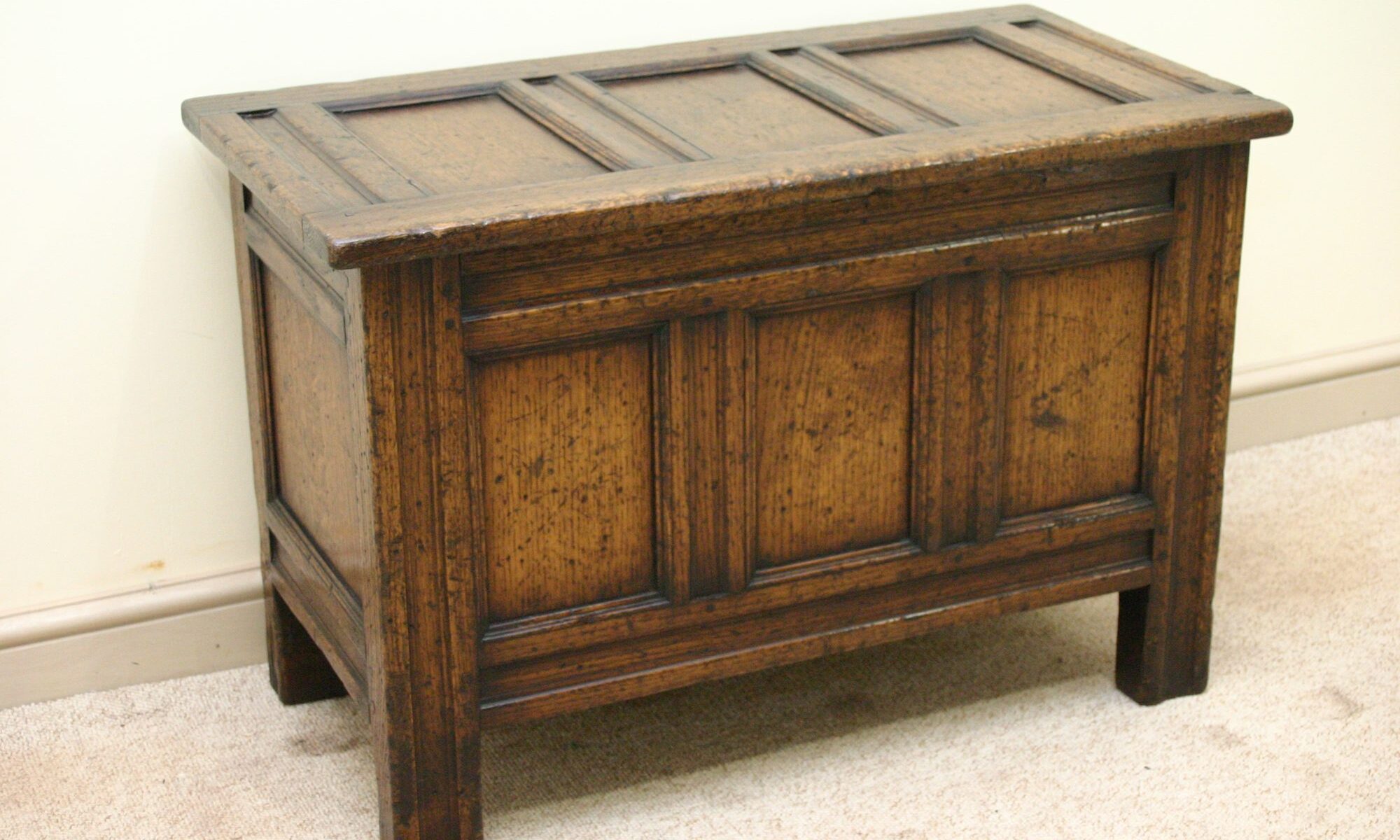
A blanket chest is the oldest piece of furniture there is: a box with a lid. Everything else in a house has been reinvented; this has not, because nothing stores bulky soft things better than a deep box you drop them into and shut. It goes at the foot of a bed, along a landing, under a window or in a hall, and it works as a seat while doing its real job.
On this page
What makes a good one
Panelled, not boarded. A chest built as six flat boards nailed together will split, because solid timber moves across the grain. Ours are framed and panelled, the panels sitting loose in grooved frames and free to move, which is why panelled chests survive centuries and boarded ones do not.
A lid that stays where you put it. The lid is heavy by design, so the hinge and stay matter more than anything else on the piece.
A base that lifts it off the floor. A plinth, bun feet or stiles running past the carcase. A chest sitting flat on a stone floor takes up damp.
Enough depth to be useful. A chest that will not take a folded double duvet is an ornament.
The pieces we make
Carved blanket chest. Carved detail to the front panels and rails, cut into the solid rather than applied.
Plain blanket chest. The same construction with raised and fielded panels — the panel standing proud in the middle and chamfered away at the edges. The version most people choose for a bedroom.
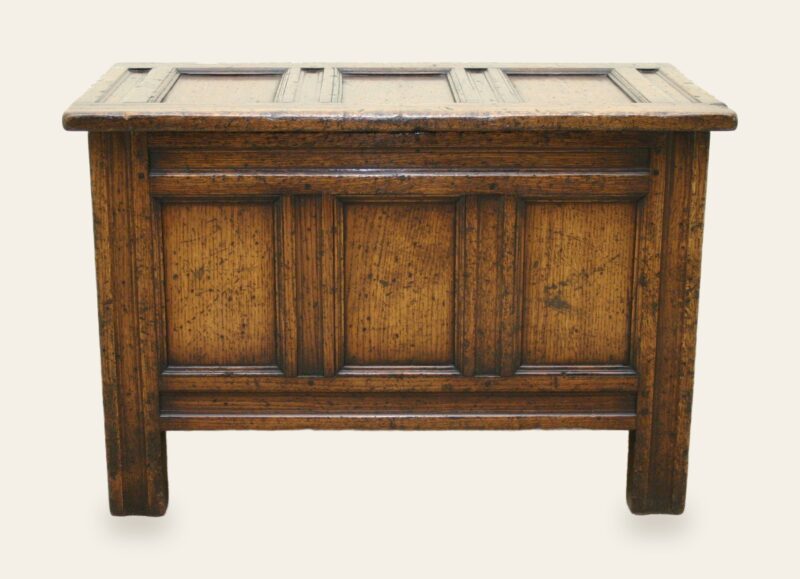
Coffer, #925. The traditional panelled coffer, with a moulded lid and stile feet running past the carcase. The most archaic form here, and the one that reads oldest in a room.
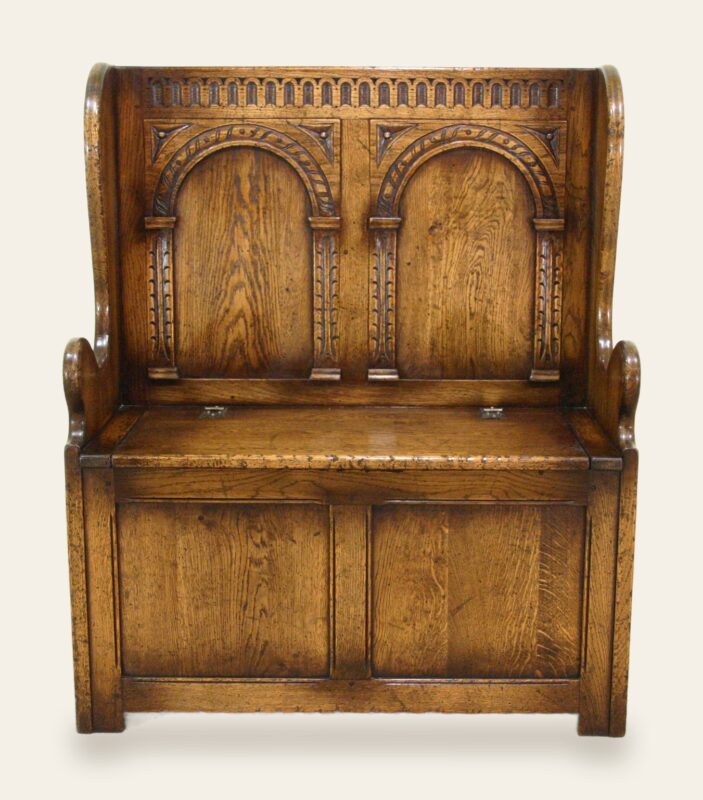
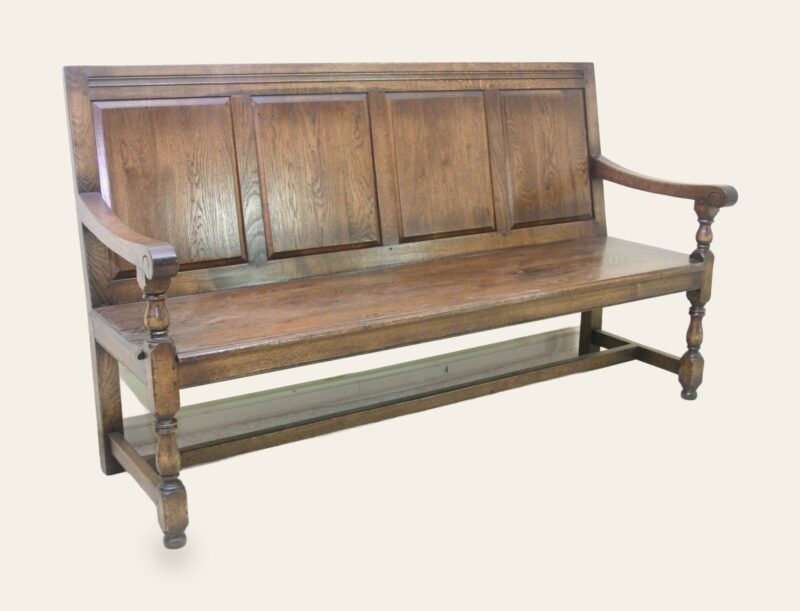
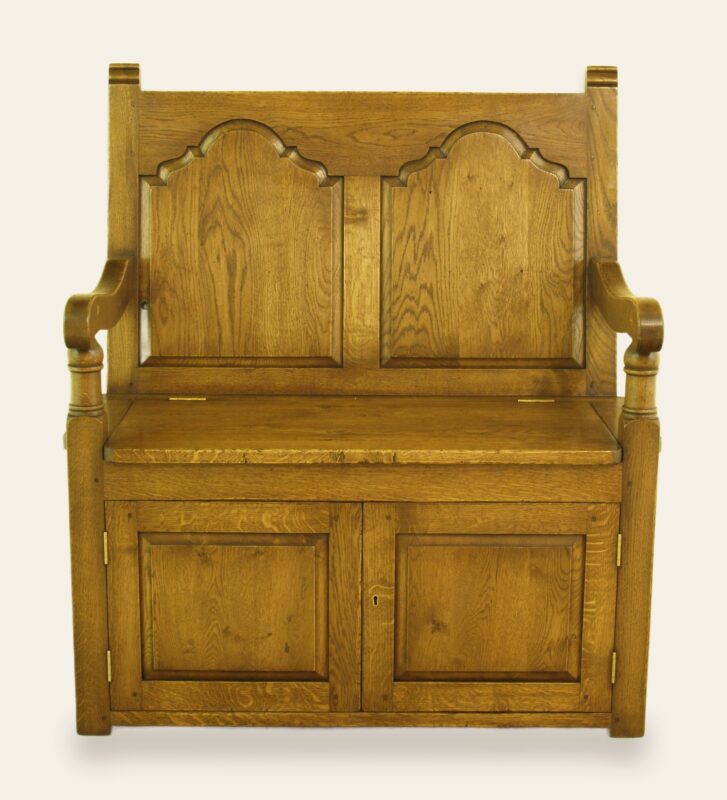
Box settles. A chest with a back and arms, made in 3ft 6in and 6ft lengths alongside two-person and panelled bench settles. See settles and benches.
Timbers
Oak, cherry, mahogany and walnut are the standard four, and every chest and coffer is made in all of them. Oak is the traditional and much the most common choice, and the carved patterns are usually specified in it.
Specials, on application: character oak, with knots and movement left in, which suits a coffer better than almost anything else we make; pippy oak for lids; oak selected for medullary ray; and clean timber with no knots at all.
Finishes: polished, painted, limed, sand-blasted, rub-through paint, natural, or colour matched. Sand-blasting works particularly well here, eroding the softer growth and leaving the harder grain proud, so a new chest reads as long-scrubbed. We can match furniture that is 100 years old to new reproduction purchases made the year before.
Order timber and finish samples. A chest at the foot of a bed sits against the bed frame, so it is the two together you are matching.
Standard sizes
2 piecesCarved blanket chest
Width 37″ (94cm)3ft 1in94cm940mmDepth 20″ (51cm)1ft 8in51cm510mmHeight 24″ (61cm)2ft61cm610mm
Blanket chest
Width 37″ (94cm)3ft 1in94cm940mmDepth 20″ (51cm)1ft 8in51cm510mmHeight 24″ (61cm)2ft61cm610mm
Made in oak, cherry, mahogany or walnut
These are the sizes we make as standard. Every piece is made to order in our own workshop, so any size between — or beyond — those listed can be made for you. Heights and depths can be altered to suit a room, and dimensions are nominal.
Made to your size
Common changes: length set to a particular bed or the space under a window; depth increased to take bedding; height set so the chest works as a seat; a lift-out tray inside; carving added to a plain pattern or left off a carved one; a lock fitted.
Cedar lining is available as an option — the traditional lining for a chest that holds wool and blankets. Ask for it at the drawing stage rather than afterwards, because the lining goes in as the carcase is put together.
If what you want does not exist yet, our designers draw it first. See bespoke and commissioning.
Prices
Quoted individually, because the size differs every time. Tell us the size, the timber and finish, and whether you want carving, and we will give you a guide price. Special timbers and finishes are on application. Lead time is normally twelve weeks, and up to sixteen when the workshop is busy. Your date is confirmed when you order.
A blanket chest is often one part of a larger scheme. When it is, the panelling and built-in work alongside it come from Reeve & Co Interiors, and the kitchen from Square & True — the same benches, the same hands.
Every size, timber and finish for our blanket chests and coffers is priced on the Blanket chests and coffers order page, where you can choose the options and pay the deposit online.
Frequently asked questions
What is the difference between a coffer and a blanket chest?
In our catalogue the coffer is the older, more archaic form: panelled, with a moulded lid and stile feet. A blanket chest is the same idea in a later, more refined pattern, carved or plain. Both are boxes with lids, built the same way.
How big should a blanket chest be?
Big enough for what is going in it, which usually means a folded double duvet and a pair of blankets. At the foot of a bed, the usual choice is a little shorter than the bed is wide.
Can it be used as a seat?
Yes, and most are. Tell us if it will be sat on regularly and we will set the height and specify a stay so the lid cannot drop. A box settle is designed as seating from the start.
Will the lid stay open on its own?
Yes, with the right stay fitted. Decide early rather than adding it later, because the hinge, stay and lid thickness are designed together.