Made to order in Suffolk · Workshop viewings by appointment

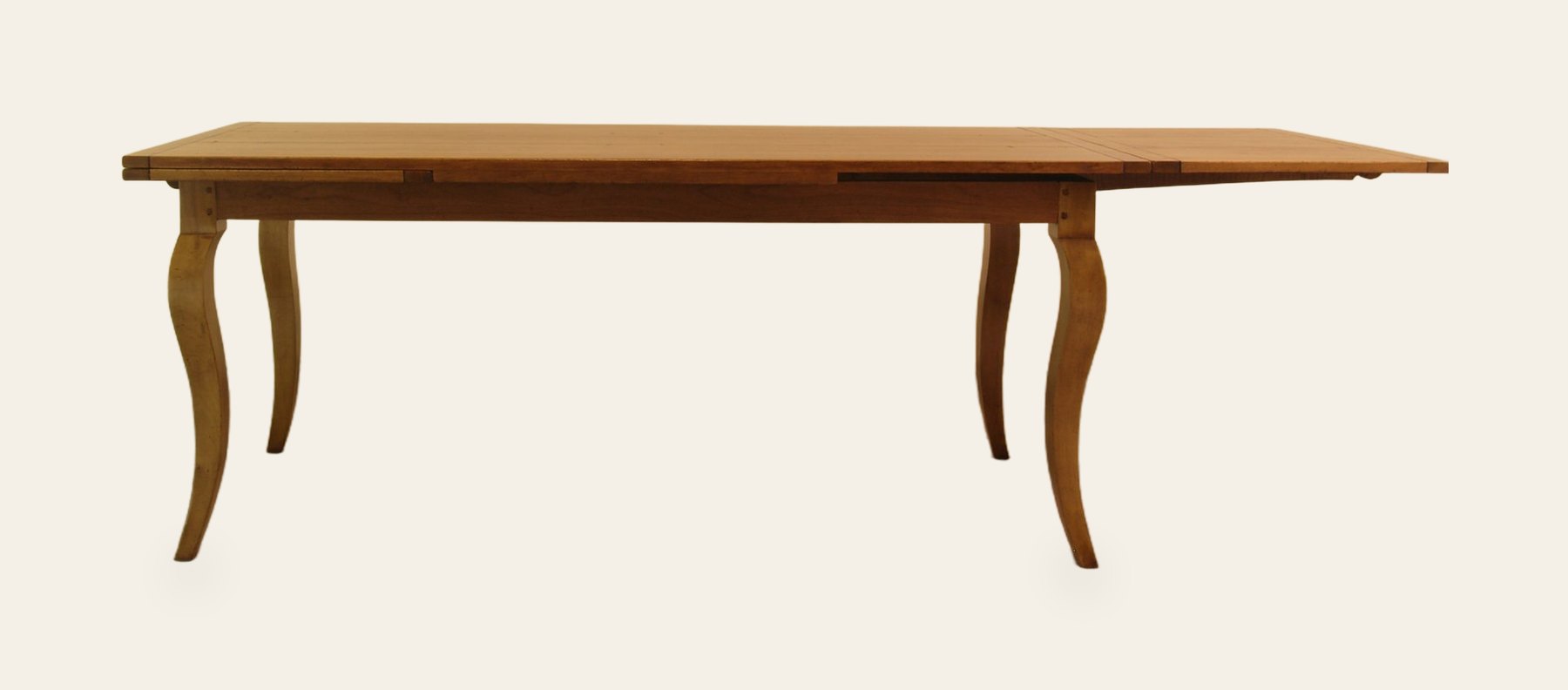
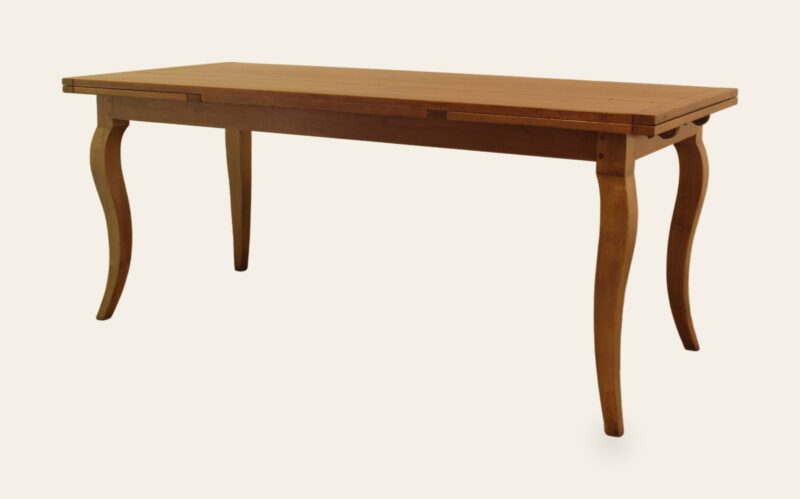
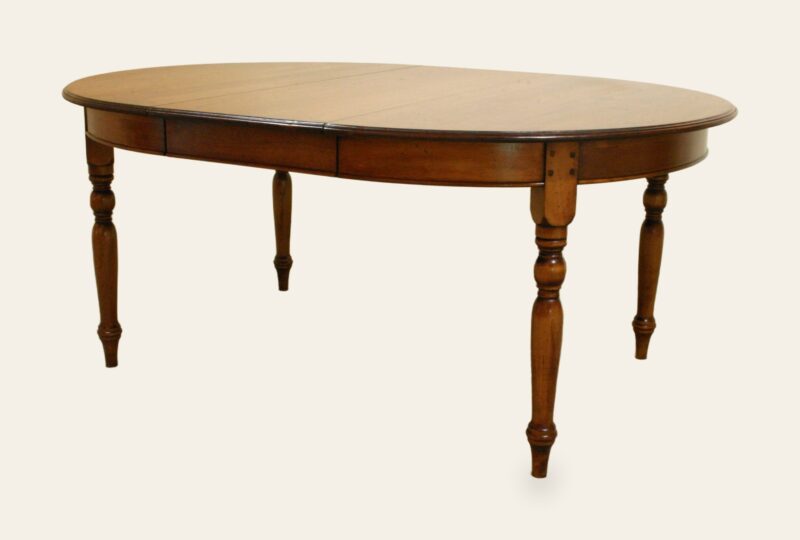
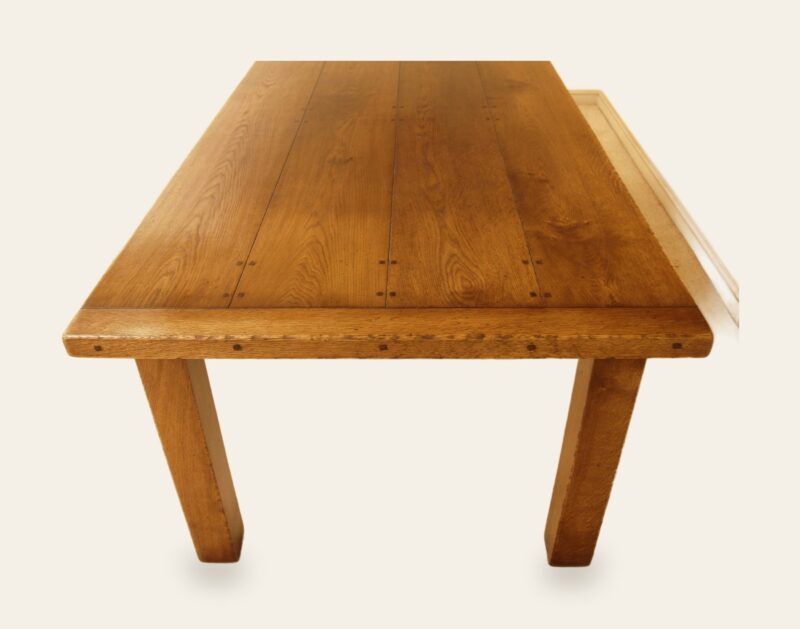
Farm house drawleaf table with cabriole legs, side view with one leaf out — handmade by Bryn Hall in Suffolk

Extending Dining Tables

Extending dining tables made to order in solid oak, cherry, mahogany or walnut. Draw-leaf and telescopic mechanisms, sized to your room open as well as closed.

An extending table gives you the room you need on the days you need it, and stays the right size for the rest of the year. Made to order in solid oak, cherry, mahogany or walnut, in either of the two mechanisms below.

Most dining rooms are sized for the evenings that happen, not the ones that occasionally do. An extending table settles that argument. Closed, it is a table for four or six that leaves room to walk round. Open, it seats ten without anybody eating off a corner.

There are two ways of doing it properly, and they suit different households rather than different budgets.

The draw-leaf extending table

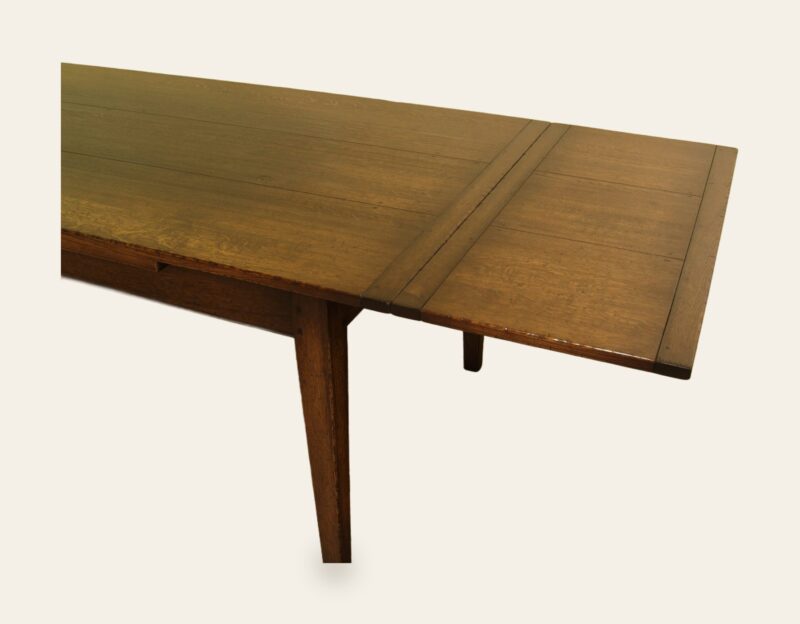
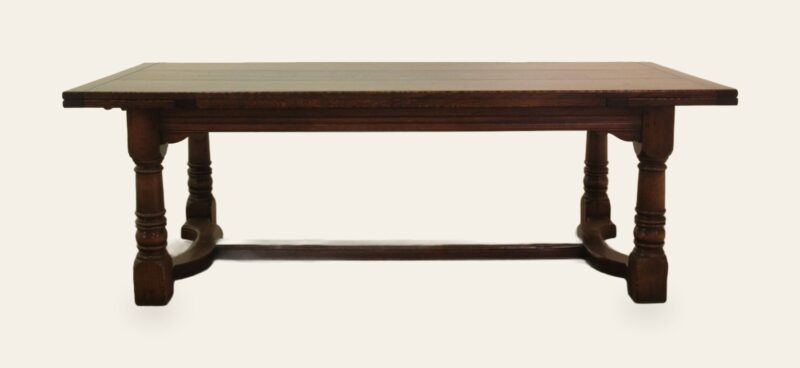
A draw-leaf table carries its two leaves underneath the top, on tapered runners. You take hold of the end of the table, pull, and the leaf rises as it comes out until it sits flush with the main top. The centre section drops on its own weight to meet it. It takes about ten seconds and one person.

The point of a draw-leaf is that nothing is stored anywhere else. There is no leaf in the loft, no leaf behind the wardrobe, and nothing to fetch. It is the mechanism for a kitchen where the table changes size most weeks — Sunday, homework, a birthday — and goes back again.

The trade-off is length. A draw-leaf typically adds around a metre in total, half at each end. That takes a table for six to a table for eight or ten, which is enough for most houses and not enough for a few.
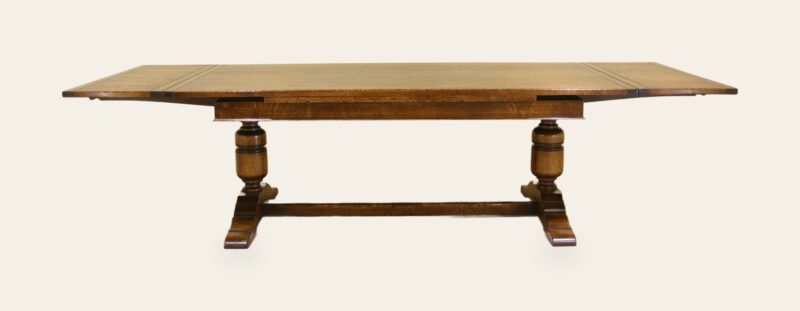
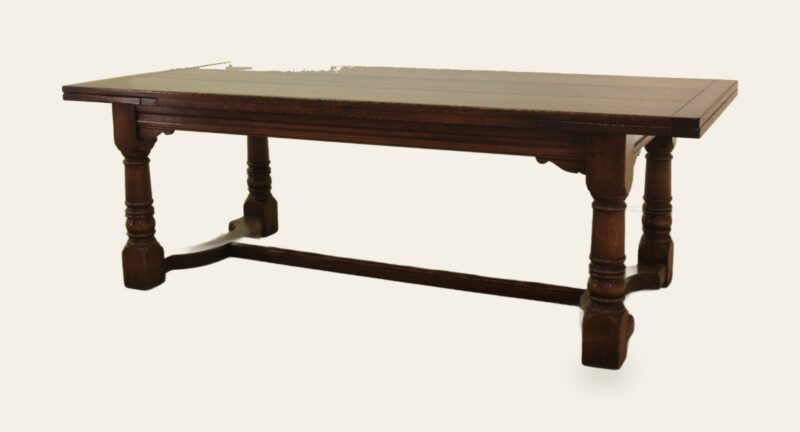
Draw-leaf tables

4 pieces from the workshop

The telescopic extending table

A telescopic table parts in the middle on machined runners and takes one, two or three loose leaves. It will grow further than a draw-leaf — two metres becomes three and a half without difficulty — and because the leaves are separate they can be added one at a time.

The trade-off is storage. The leaves have to live somewhere, and a leaf is a handsome, awkward object roughly the size of a door. We can make a leaf box or a slim cupboard to take them, and on a fitted job the leaves often end up in the base of a dresser or in a window seat.

Extending pedestal and oval tables

3 pieces from the workshop

How much a table actually grows

Allow six hundred millimetres of table edge per person, or eight hundred if the chairs have arms. On that basis:

  • 1,500mm closed — six people. A draw-leaf takes it to about 2,400mm and ten people.
  • 1,800mm closed — six comfortably, eight at a push. Draw-leaf to around 2,700mm, or telescopic with two leaves to 2,900mm and twelve.
  • 2,100mm closed — eight. Telescopic with three leaves reaches 3,400mm and fourteen.

The figure that usually settles the size is not the table but the room. Leave seven hundred millimetres between the table edge and the nearest wall where a chair pulls out, and a full metre where somebody has to walk behind it — and remember to measure that clearance with the table open, because that is the state it will be in when the room is full.

Tops, leaves and matching timber

The leaf has to look like it belongs, which is a matter of selection rather than luck. We cut the leaves from the same boards as the top, at the same time, and keep them together through machining and finishing so that colour and figure run through. A leaf cut from a different board six months later will always announce itself.

Tops are made from wide boards, four or five across a metre of width, thicknessed between thirty-two and forty-five millimetres depending on the span. On a draw-leaf the leaves are made slightly thinner than the main top, which is what allows them to sit flush when they rise.

Tops and leaves

6 pieces from the workshop

Bases that suit an extending table

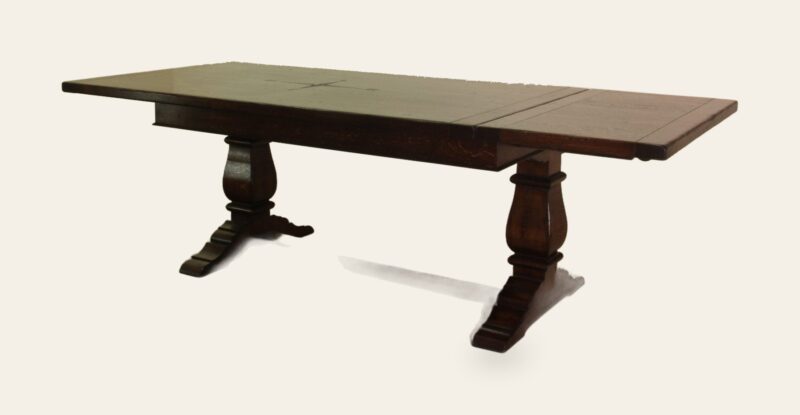
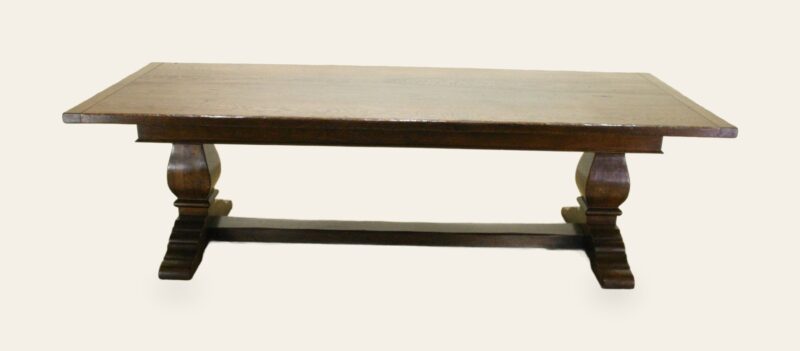
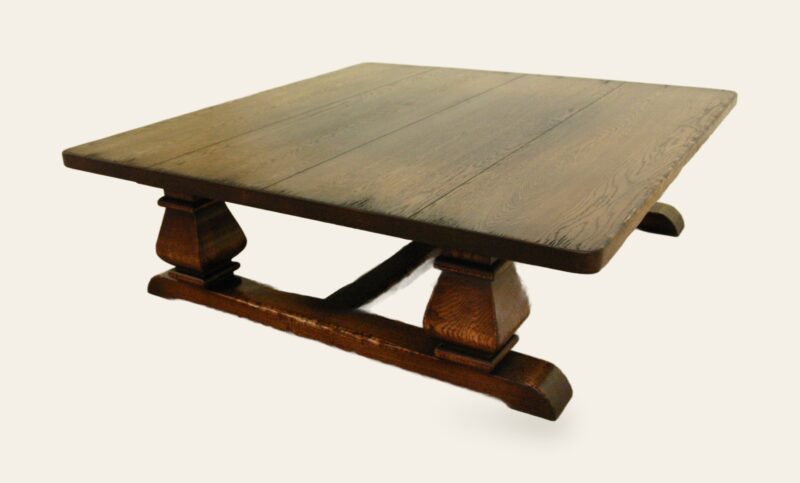
An extending table can sit on legs at the corners, on a pedestal, or on twin pedestals. A single pedestal is right up to about a metre and a half of top; beyond that the base has to be set out around where the top parts, which in practice means twin pedestals or a stretchered frame.

If legroom matters more to you than length, a pedestal dining table is the better answer, and it can be made to extend as well.

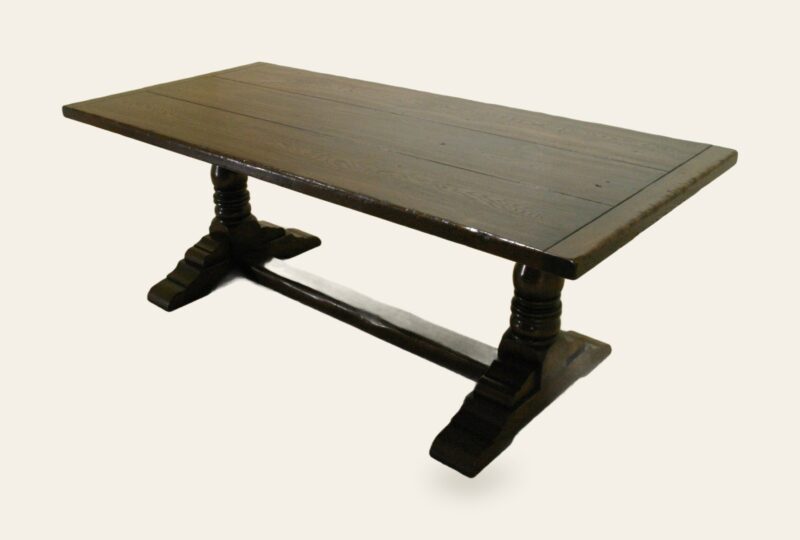
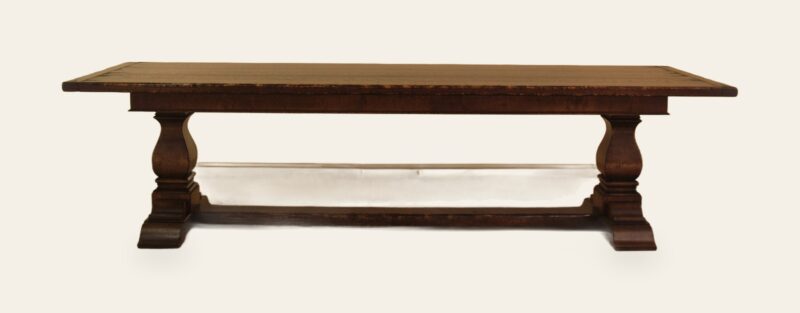
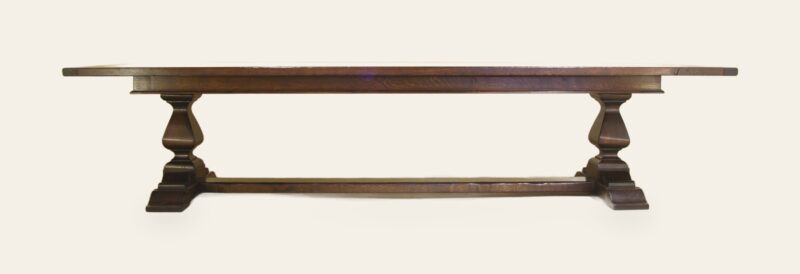
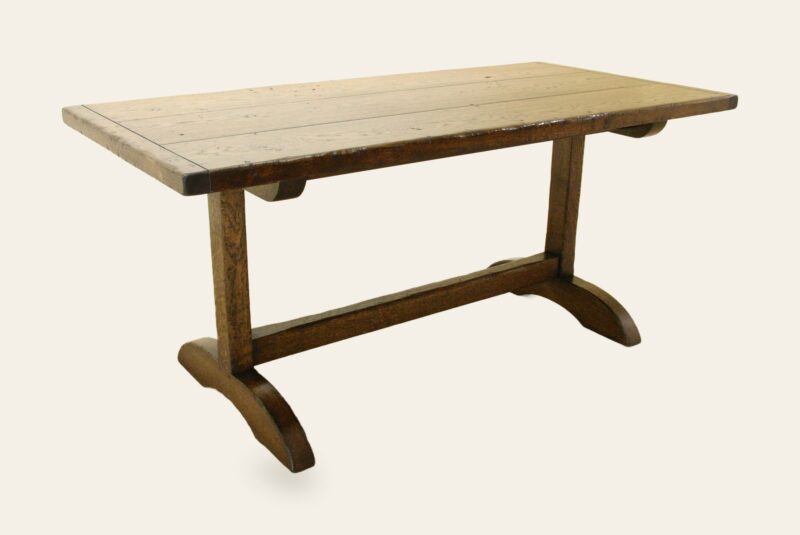
Refectory and trestle bases

6 pieces from the workshop

Chairs

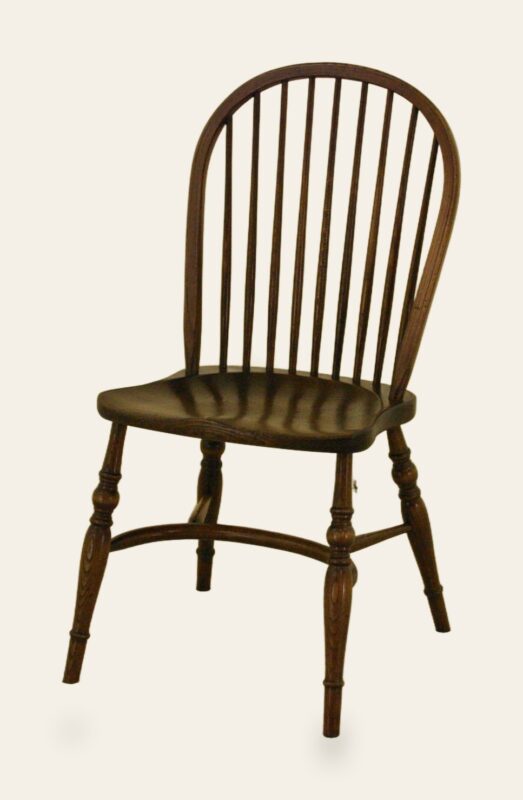
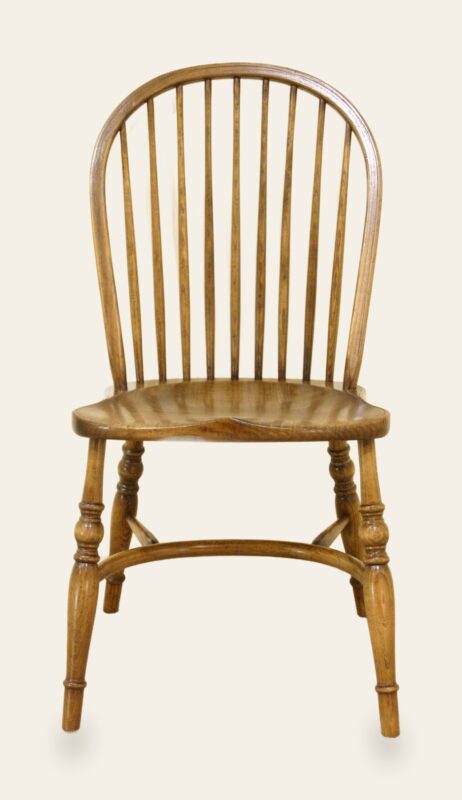
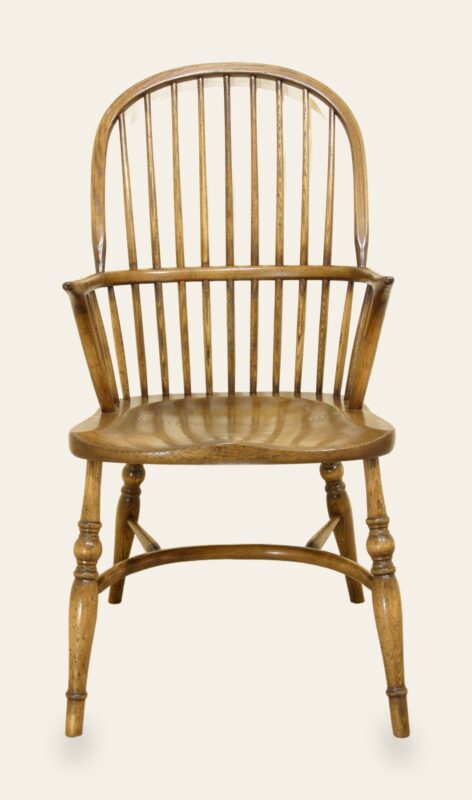
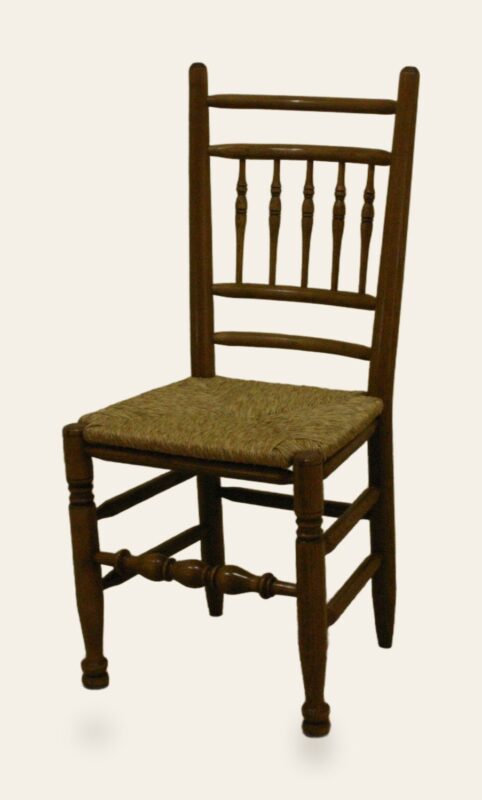
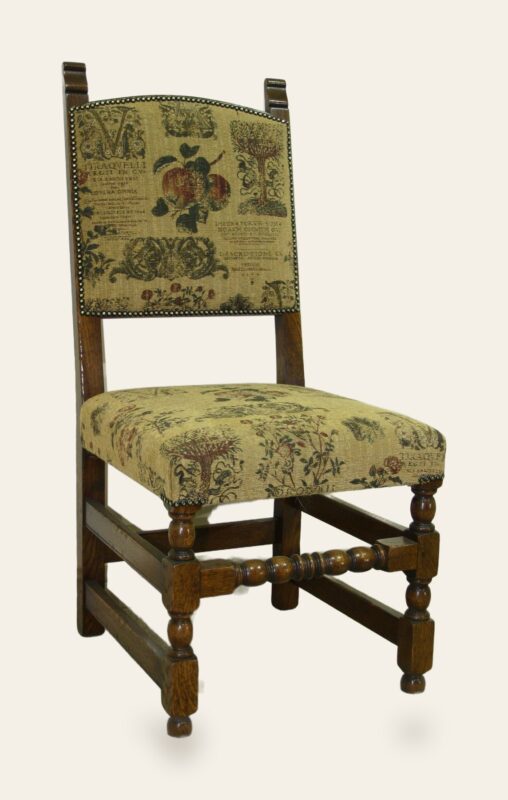
An extending table is the one case where it is worth buying two more chairs than you think you need, because the whole point is the day the table is full. Carvers at the ends, side chairs down the sides, and the two spares living somewhere else in the house until they are wanted.

We make chairs to match every table we make, in the same timber and finish, so the extra pair bought later still matches the first six.

Standard sizes

7 pieces
Show sizes in

Extension leaves

Width 35, 39 or 42″ (90, 100 or 107cm)2ft 11in, 3ft 3in or 3ft 6in90, 100 or 107cm900, 1000 or 1070mmDepth 20″ (31cm)1ft 8in31cm310mmHeight 2″ (5cm)2″5cm50mm

Oak, cherry, mahogany or walnut

Drawleaf Oakamoor table

With 2 leaves, 45 cm (18″) each

Width 60, 84 or 96″ (152, 213 or 244cm)5ft, 7ft or 8ft152, 213 or 244cm1520, 2130 or 2440mmDepth 35 or 39″ (90 or 100cm)2ft 11in or 3ft 3in90 or 100cm900 or 1000mmHeight 30″ (76cm)2ft 6in76cm760mm

Oak, cherry, mahogany or walnut

4-column round extending pedestal table

2 leaves, 45cm (18″) each

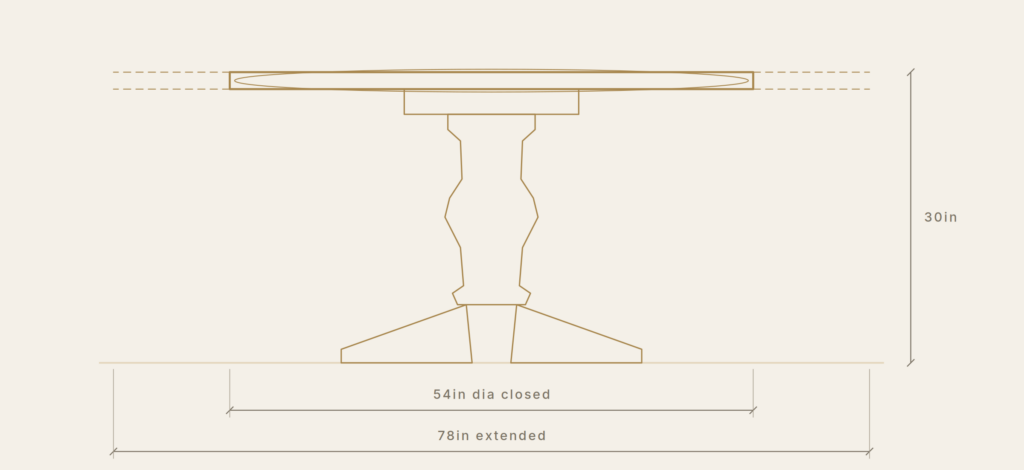
Width 48, 54 or 60″ (122, 137 or 152cm)4ft, 4ft 6in or 5ft122, 137 or 152cm1220, 1370 or 1520mmDepth 48, 54 or 60″ (122, 137 or 152cm)4ft, 4ft 6in or 5ft122, 137 or 152cm1220, 1370 or 1520mmHeight 30″ (76cm)2ft 6in76cm760mm

Oak, cherry, mahogany or walnut

Circular extending table with painted legs and pippy oak top

Width 48, 54 or 60″ (122, 137 or 152cm)4ft, 4ft 6in or 5ft122, 137 or 152cm1220, 1370 or 1520mmDepth 48, 54 or 60″ (122, 137 or 152cm)4ft, 4ft 6in or 5ft122, 137 or 152cm1220, 1370 or 1520mmHeight 30″ (76cm)2ft 6in76cm760mm

Hand-painted · oak, cherry, mahogany or walnut beneath

Circular extending table with painted legs and standard oak top

Width 48, 54 or 60″ (122, 137 or 152cm)4ft, 4ft 6in or 5ft122, 137 or 152cm1220, 1370 or 1520mmDepth 48, 54 or 60″ (122, 137 or 152cm)4ft, 4ft 6in or 5ft122, 137 or 152cm1220, 1370 or 1520mmHeight 30″ (76cm)2ft 6in76cm760mm

Hand-painted · oak, cherry, mahogany or walnut beneath

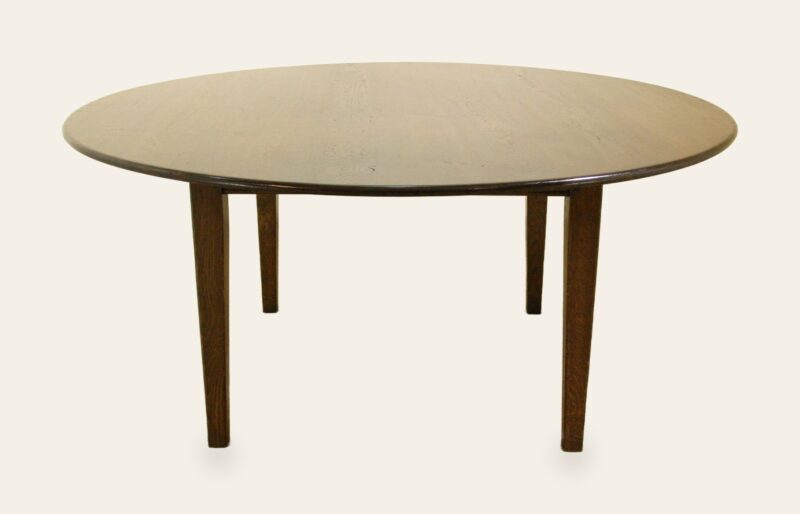
Circular extending table with polished finish

Width 48, 54 or 60″ (122, 137 or 152cm)4ft, 4ft 6in or 5ft122, 137 or 152cm1220, 1370 or 1520mmDepth 48, 54 or 60″ (122, 137 or 152cm)4ft, 4ft 6in or 5ft122, 137 or 152cm1220, 1370 or 1520mmHeight 30″ (76cm)2ft 6in76cm760mm

Oak, cherry, mahogany or walnut

Pendleton table, painted legs & pippy oak top

Drawleaf & turned leg

Width 60, 72, 84 or 90″ (152–228cm)5ft, 6ft, 7ft or 7ft 6in152, 183, 213 or 228cm1520, 1830, 2130 or 2280mmDepth 35″ (90cm)2ft 11in90cm900mmHeight 30″ (76cm)2ft 6in76cm760mm

Hand-painted · oak, cherry, mahogany or walnut beneath

These are the sizes we make as standard. Every piece is made to order in our own workshop, so any size between — or beyond — those listed can be made for you. Heights and depths can be altered to suit a room, and dimensions are nominal.

Chairs for an extending table

5 pieces from the workshop

Prices

An extending dining table in solid oak starts at around £3,200 for a draw-leaf on a frame base and rises with size, timber and the complexity of the base. Telescopic mechanisms and twin pedestals cost more than draw-leaf and frame. Every quotation is drawn and priced for the actual table, not taken from a list.

Every extending table we make leaves the same Suffolk workshop as our fitted joinery. Where a dining room also calls for panelling, a dresser built in, or a kitchen, that work is done by our sister companies, Reeve & Co Interiors and Square & True.

Frequently asked questions

Can a draw-leaf table be left extended permanently? Yes. Nothing is under strain when it is open, and some clients leave one leaf out all year and both at Christmas.

Will the leaves match in ten years? They will move together, because they came from the same boards and live in the same room. A leaf kept in an unheated loft and brought in twice a year will take a day or two to settle back.

How many people can I get round it? Six hundred millimetres of edge per person is comfortable, five hundred and fifty is possible for one meal, and eight hundred is generous. Corners do not seat anybody on a rectangular table, but they will on a round one.

The drawings

2 drawn to the standard size
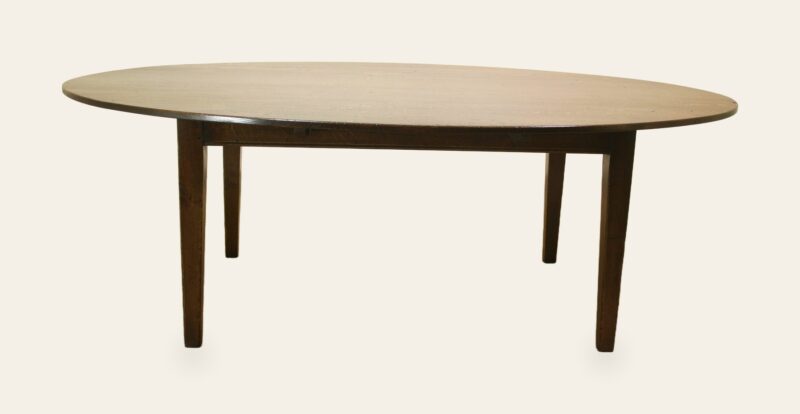
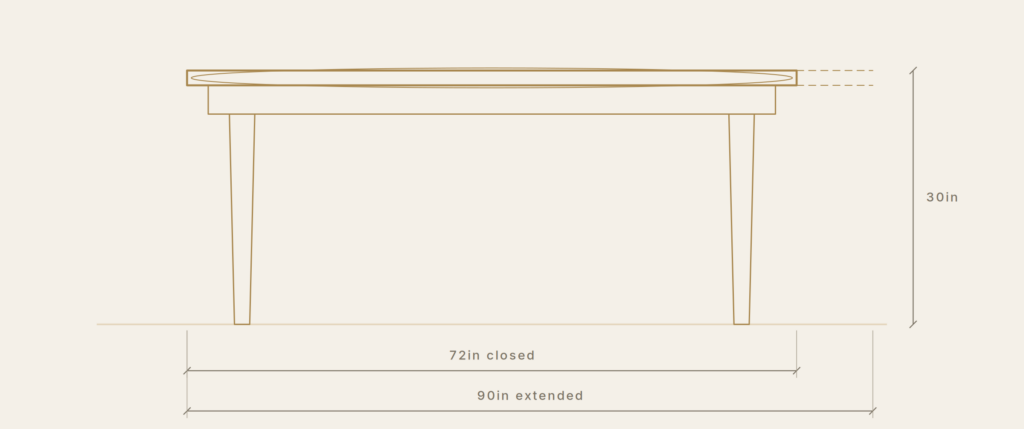
Oval farmhouse extending table — measured front elevation
Oval farmhouse extending table
Circular extending pedestal table — measured front elevation
Circular extending pedestal table

Start with samples

We will post you timber and finish samples so you can see the colour in your own light, against your own walls, before you commit to anything.