 Skip to content
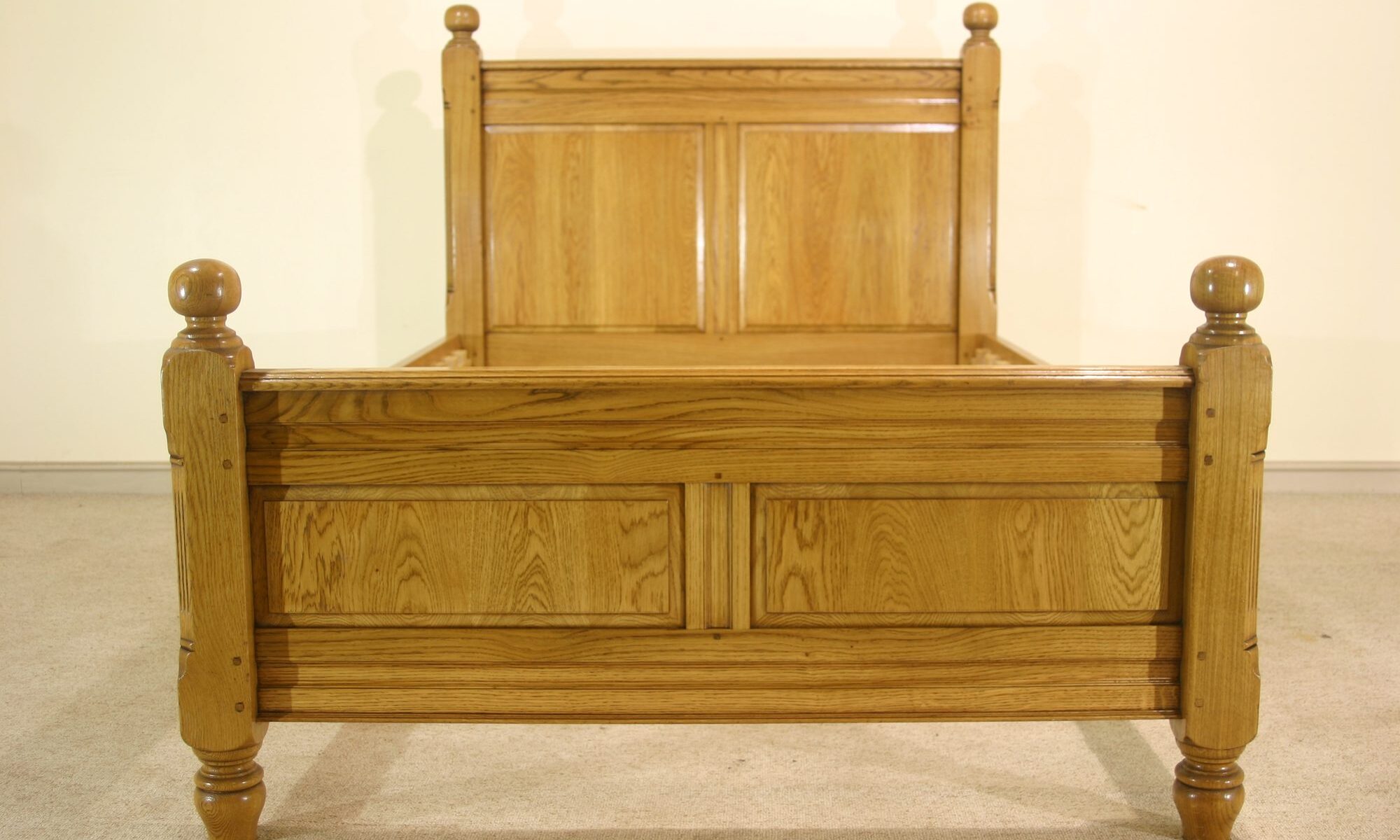
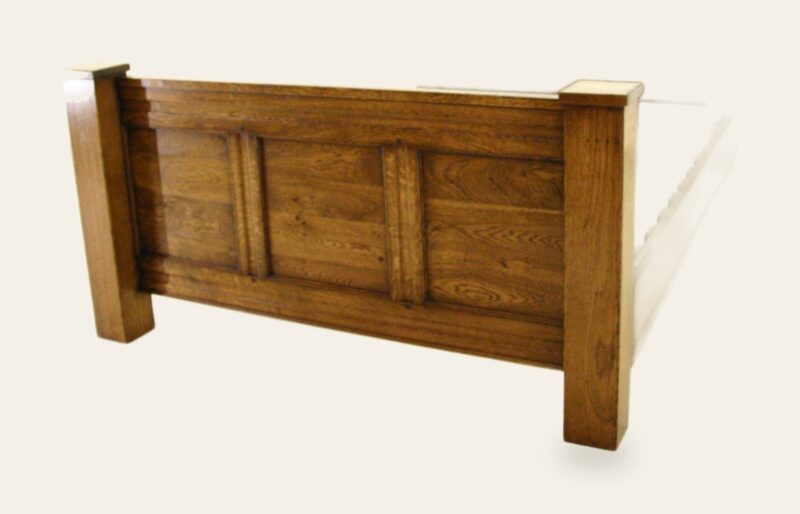
A panelled bed is one where the headboard and footboard are built as framed and panelled joinery: a frame of stiles and rails with solid panels held loose inside it, in the way a good door or a panelled wall is made.
On this page
The reason is not decorative. Solid timber moves across the grain with the seasons, and a wide board fixed rigidly at its edges will eventually split. A panel sitting free in a grooved frame moves and nothing cracks. That is why panelled furniture from the seventeenth century is still with us.
Nothing rises above mattress height at the corners, which makes it the form for a low ceiling, a sloping wall, or a bedroom that already has enough going on.
The forms we make
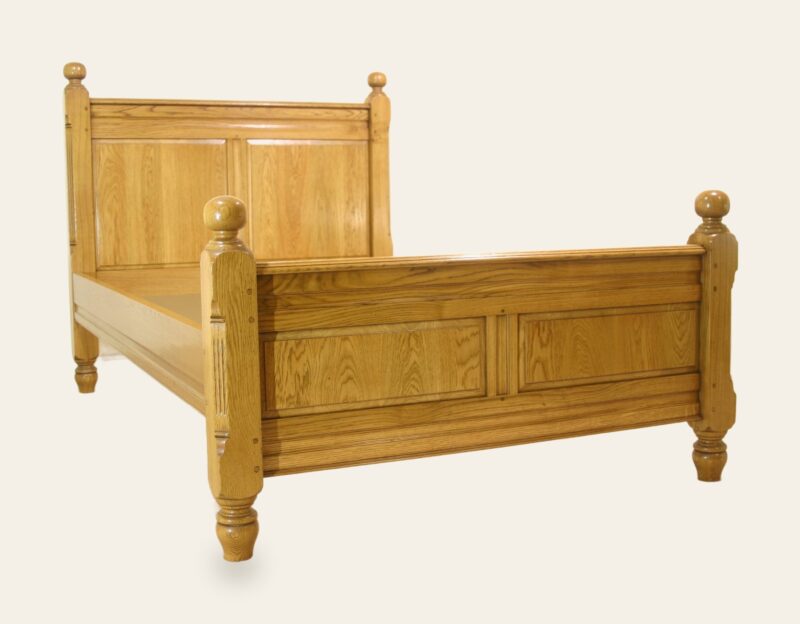
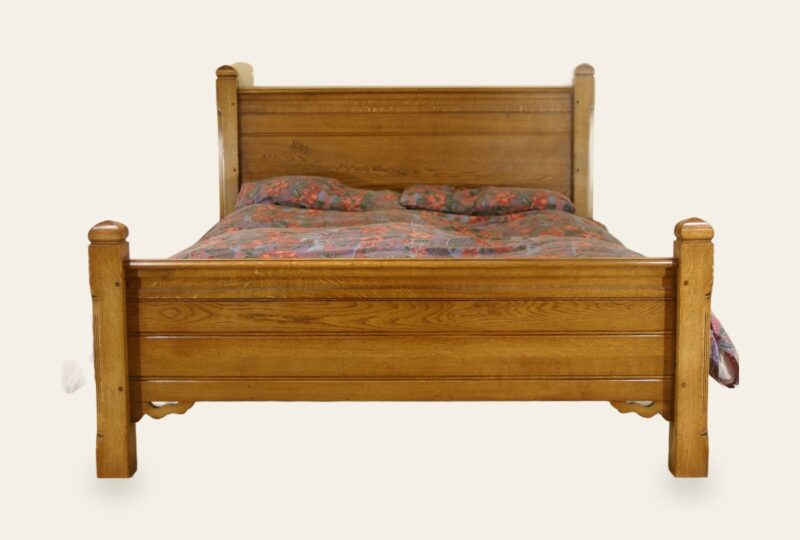
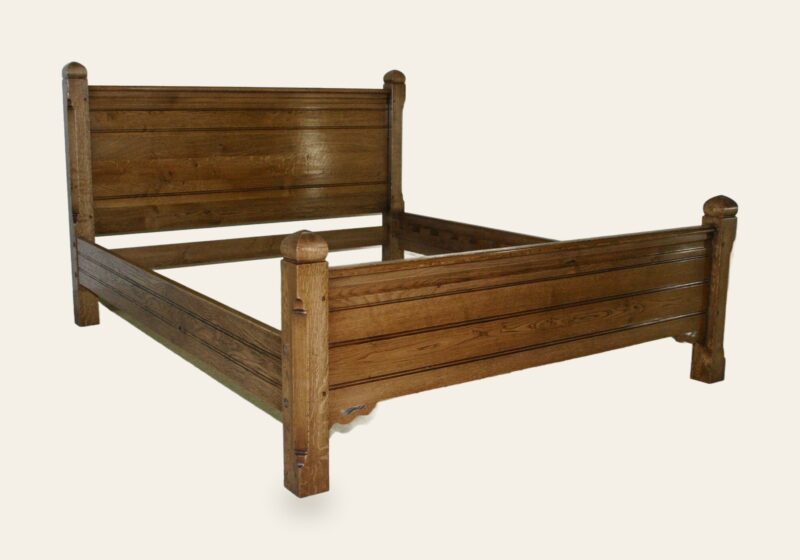
Panelled bed #928. The standard pattern. Framed and panelled headboard and footboard, a moulded top rail and square-cut posts stopping just above the mattress. Plain, well proportioned, and the version most often specified.
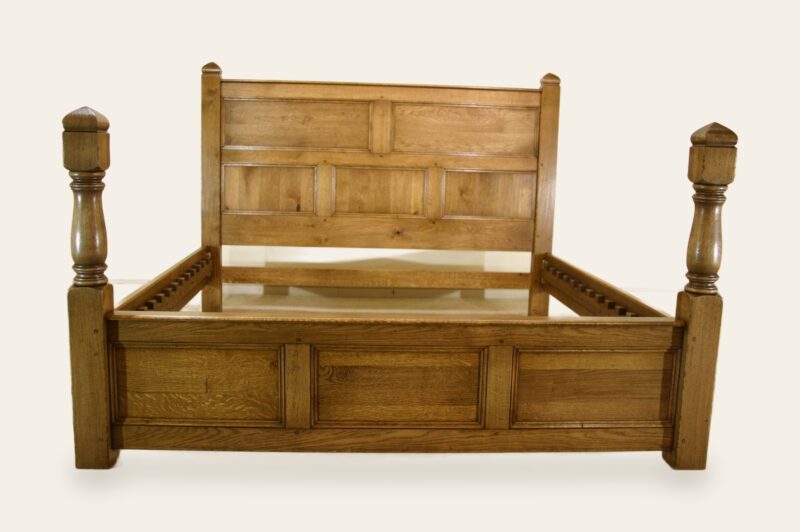
Turned and panelled. The same construction with turned corner posts and turned detail to the top rail. The turning lifts the bed without adding carving, and it suits a house with a turned-leg farmhouse table in it.
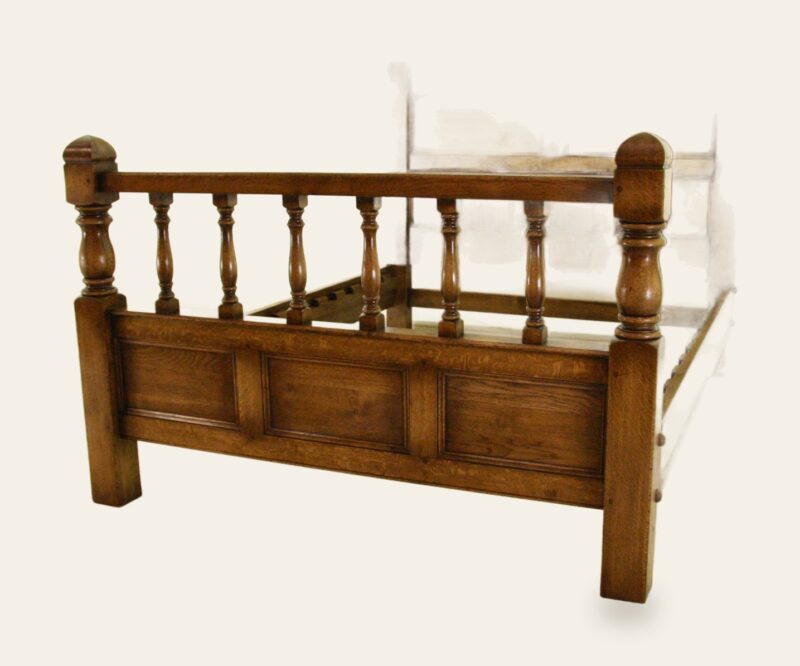
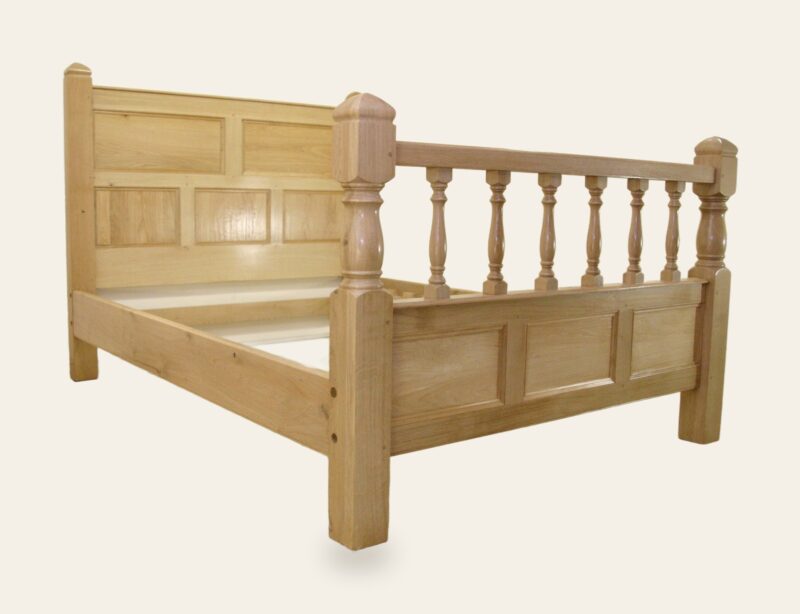
Turned footboard. A panelled headboard paired with a footboard built around turned spindles rather than solid panels, so the foot reads lighter and you see through it. There is a version with the turning taken through both ends.
Small panel bed. The panelled bed reduced in every dimension, with a lower headboard and shorter posts. For an attic room, or a bed that must not block a window.
Gothic beds. Pointed-arch tracery worked into the headboard panels, with ecclesiastical mouldings and, where you want it, a cusped top rail. Part of the Gothic collection, which also runs to wardrobes and dressing tables, so a whole room can be made in one language. Often in cherry.
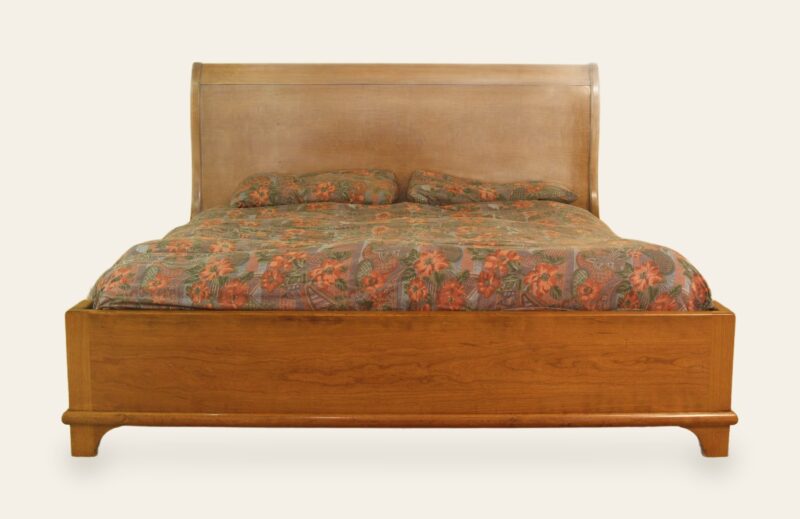
Sleigh beds. The head and foot ends swept outward in a scrolled curve, with the panels following the sweep. The most contemporary bed we make. Made with a high foot end, or with the foot dropped so the curve reads without closing off the bed.
Timbers
Oak, cherry, mahogany and walnut are the standard four, and every panelled bed is made in all of them. Oak is the usual choice and the timber the tradition belongs to. Cherry suits Gothic tracery and sleigh curves.
Specials, quoted on application: character oak, knots and movement left in; pippy oak in light, medium and heavy grades, at its best in the headboard panels against a plain frame; oak selected for medullary ray, the silver figure across quarter-sawn oak, within or without the timber; and clean timber with no knots at all.
The choice of panel timber matters more here than on any other bed. A plain frame with figured panels is a traditional combination, not a compromise.
Finishes: polished, painted, limed, sand-blasted, rub-through paint, natural, or colour matched to a sample. We can match furniture that is 100 years old to new reproduction purchases made the year before.
Order timber and finish samples before you decide between a figured panel and a clean one.
Sizes we commonly make
We commonly make beds 4ft 6in wide with a 6ft 3in mattress length, 5ft wide with a 6ft 6in length, and 6ft wide with a 6ft 6in length. Any size is possible, because every bed is made from scratch.
Send us the mattress width, length and depth. Depth matters here, because a deep mattress can swallow a low headboard.
Panelled bed, 4′6″ width, 6′3″ mattress length
Width 54″ (137cm)4ft 6in137cm1370mmDepth 75″ (191cm)6ft 3in191cm1910mmHeight 48″ (122cm)4ft122cm1220mm
Oak, cherry, mahogany or walnut
Panelled bed, 5′ width, 6′6″ mattress length
Width 60″ (152cm)5ft152cm1520mmDepth 78″ (198cm)6ft 6in198cm1980mmHeight 48″ (122cm)4ft122cm1220mm
Oak, cherry, mahogany or walnut
Panelled bed, 6′ width, 6′6″ mattress length
Width 72″ (183cm)6ft183cm1830mmDepth 78″ (198cm)6ft 6in198cm1980mmHeight 48″ (122cm)4ft122cm1220mm
Oak, cherry, mahogany or walnut
Gothic bed, 4′6″ width, 6′3″ mattress length
Width 54″ (137cm)4ft 6in137cm1370mmDepth 75″ (191cm)6ft 3in191cm1910mmHeight 51″ (130cm)4ft 3in130cm1300mm
Oak, cherry, mahogany or walnut
Gothic bed, 5′ width, 6′6″ mattress length
Width 60″ (152cm)5ft152cm1520mmDepth 78″ (198cm)6ft 6in198cm1980mmHeight 51″ (130cm)4ft 3in130cm1300mm
Oak, cherry, mahogany or walnut
Gothic bed, 6′ width, 6′6″ mattress length
Width 72″ (183cm)6ft183cm1830mmDepth 78″ (198cm)6ft 6in198cm1980mmHeight 51″ (130cm)4ft 3in130cm1300mm
Oak, cherry, mahogany or walnut
Gothic bedside cabinet in Cherry
Width 20″ (51cm)1ft 8in51cm510mmDepth 20″ (51cm)1ft 8in51cm510mmHeight 27″ (69cm)2ft 3in69cm690mm
Cherry
These are the sizes we make as standard. Every piece is made to order in our own workshop, so any size between — or beyond — those listed can be made for you. Heights and depths can be altered to suit a room, and dimensions are nominal.
Made to your size
Every dimension is open. Common changes: headboard raised to read above a deep mattress, or lowered to clear a window sill; footboard removed, which is the most-requested change of all; posts made heavier or lighter; the panel layout changed from three panels to two.
The bed is made as a kit of parts and assembled in the bedroom, so it dismantles and moves. Send us the stair and doorway dimensions first. See bespoke, commissioning and the beds page.
Prices
Guide price on request, quoted by pattern, size, timber, finish and the amount of turning or carving. Special timbers, colour matching and natural finishes are priced on application. Standard lead time is normally twelve weeks, and up to sixteen when the workshop is busy; a one-off commission adds about four weeks on top. Your date is confirmed when you order.
We make each panelled bed to sit in a room our own joiners have frequently fitted. Reeve & Co Interiors handles the built-in work and Square & True the kitchens, all from the same yard in Mickfield.
Every size, timber and finish for our panelled beds is priced on the Panelled beds order page, where you can choose the options and pay the deposit online.
Frequently asked questions
What is a panelled bed?
A bed whose headboard and footboard are made as framed and panelled joinery: a frame of stiles and rails with solid panels sitting loose in grooves. The panels move with the seasons, which is why the construction lasts.
Can I have a panelled bed without a footboard?
Yes, and it is the change we are asked for most often. The bed is made with a plain foot rail instead, or with nothing at the foot at all, which makes a smaller room feel longer.
Will a panelled bed suit a low ceiling?
Yes. Nothing rises above mattress height at the corners, so ceiling height is not a constraint as it is with a four poster. The small panel bed goes further, with a lower headboard.
Do you make sleigh beds in solid timber?
Yes, in oak, cherry, mahogany and walnut, with the panels following the sweep of the head and foot ends. It is built with the same joinery as everything else in the workshop.