 Skip to content
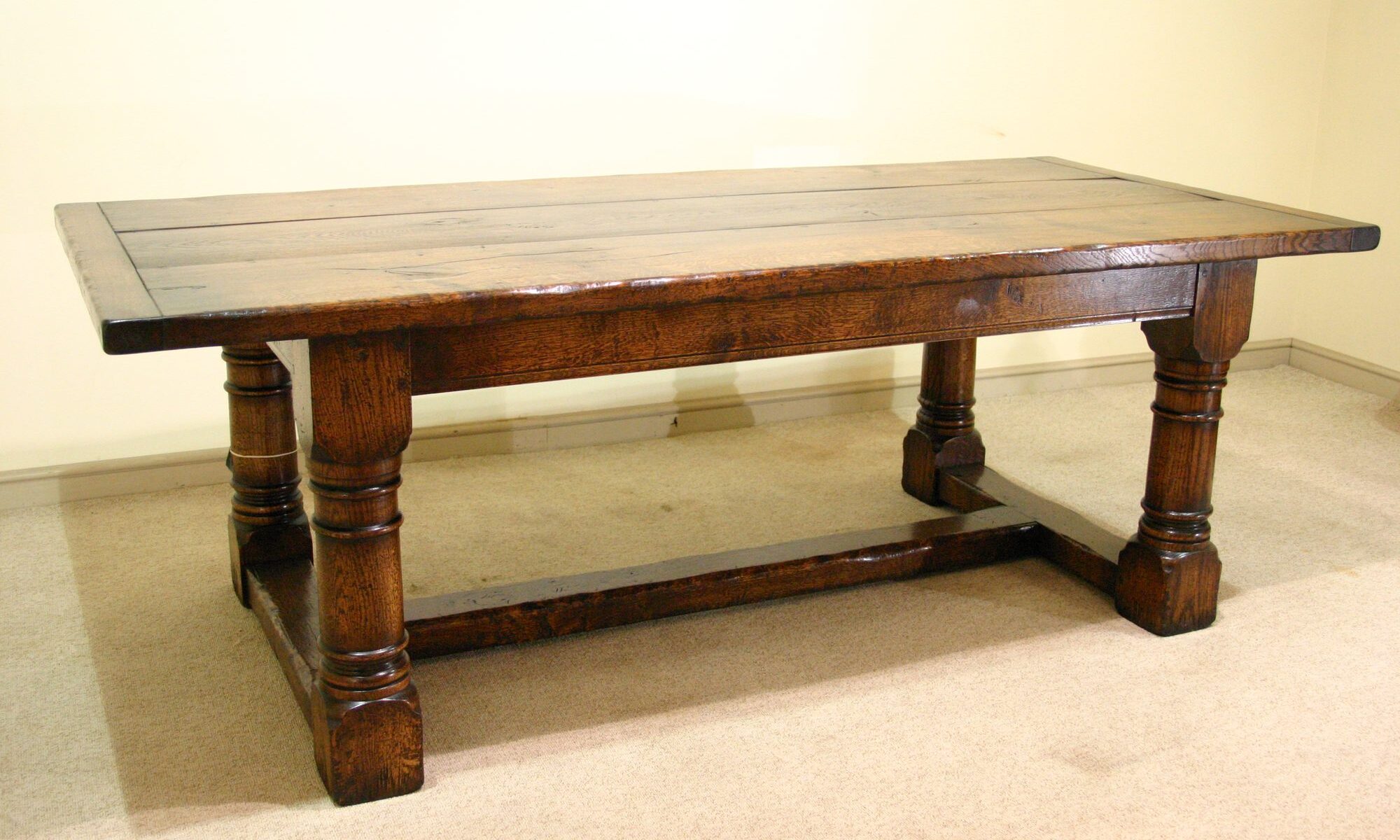
Most people asking what bespoke furniture costs have already been told “it depends”, which is true and useless. So here are real numbers. A farmhouse table starts at £2,850. A refectory table at £4,920. A Welsh dresser at £7,600. A pedestal desk at £7,620. A set of Windsor chairs starts at £890 each. Those are starting prices in oak, including VAT, for pieces made to your size in our own workshop.
What follows is what moves those figures, so you can work out roughly where your own piece sits before you ring anybody.
Size is the first thing, and it is not linear
A table two feet longer does not cost two feet more. Past a certain length the top needs wider boards, and wide boards in solid timber are disproportionately expensive because fewer trees yield them. The same applies to depth on a dresser or height on a wardrobe: once a piece exceeds the standard sizes we hold patterns for, the drawing, the setting out and the timber selection all start again.
Between roughly 5ft and 8ft on a dining table, cost rises gently. Beyond 10ft it rises sharply, because the top becomes a timber-buying exercise rather than a joinery one.
Timber changes the figure more than most people expect
Our four standard timbers are oak, cherry, mahogany and walnut, and the same piece in each is not the same price. Oak is the baseline. Cherry sits a little above it. Mahogany and walnut are appreciably dearer, partly on raw cost and partly because they are less forgiving to work and to finish.
Specials sit above all four. Character oak, pippy oak in its three grades, oak selected for medullary ray, and clean timber with no knots at all are quoted on application, because the yield from a board drops the moment you start selecting.
Complexity, not size, is what makes a piece expensive
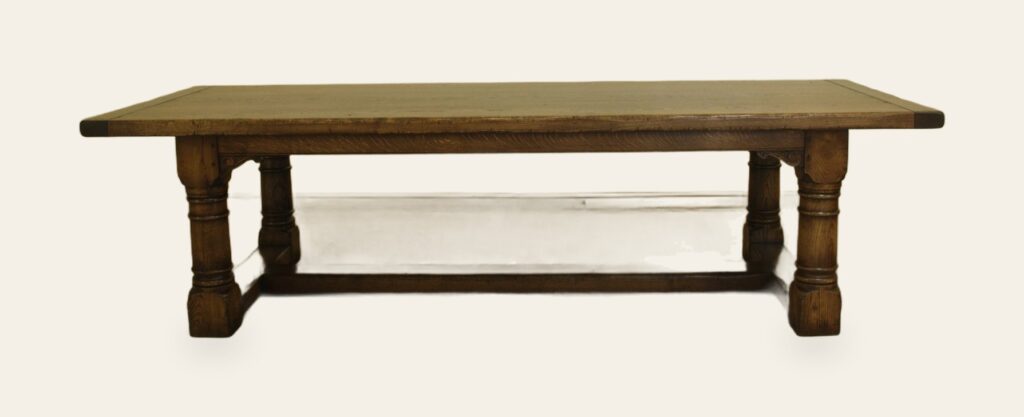
Carving, turning, fielded panels, cock beading, hand-cut dovetails on show, a fitted interior, a leather top with a tooled border — each of these is hours rather than materials. A plain farmhouse table and a heavily carved refectory table of the same length can differ by a factor of two.
The reverse is also true and worth knowing: a simple, well-proportioned piece in a good timber is not expensive, and it is usually the better buy. We would rather make you a plain table in excellent oak than a fussy one in ordinary oak for the same money.
What does not change the price
Making a piece to your dimensions rather than ours costs nothing extra. Neither does choosing a finish, or asking us to match the colour of something you already own. Those are decisions, not extras, and they are included.
Why we quote against a drawing
Every commission is drawn twice — once in CAD, and again at full size as a rod on the bench. We quote from the first of those, because a drawing is the only way to price a piece honestly. A figure given over the phone is a guess, and guesses are either too high, in which case you go elsewhere, or too low, in which case somebody has to have an awkward conversation later.
Tell us the piece, the room, the timber and roughly what you have in mind to spend, and you will get a drawing and a firm figure. If what you want costs more than you expected, we will tell you where the money is going and what you could change.
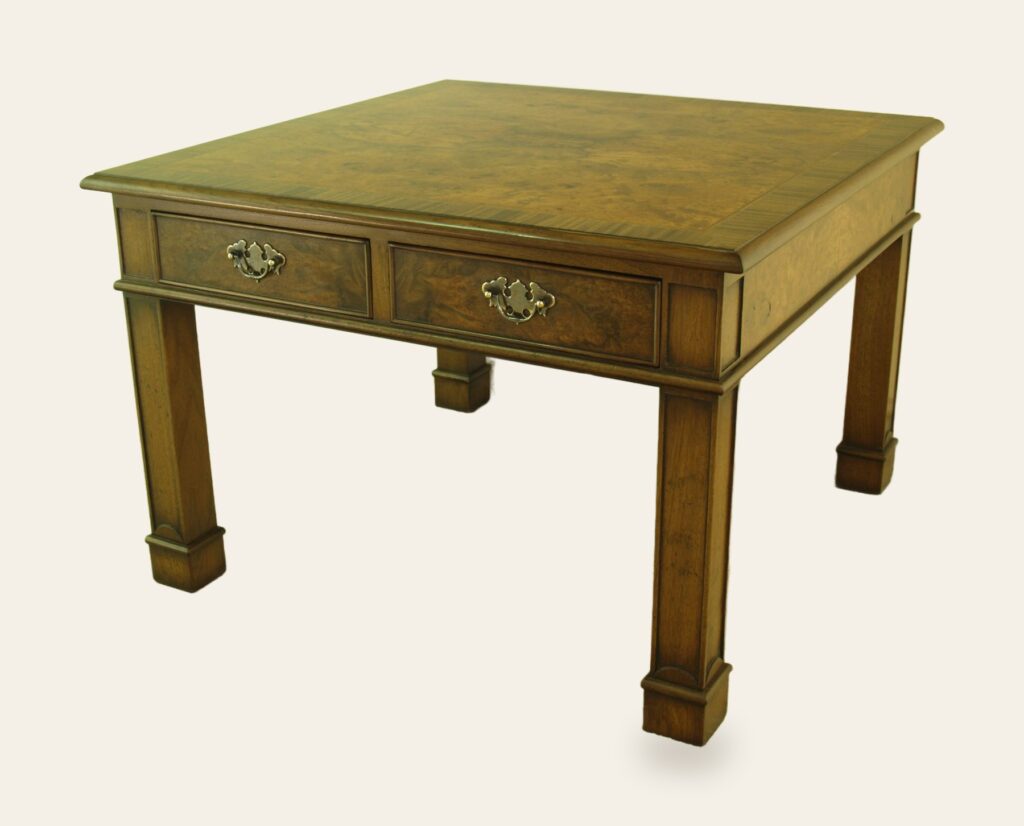
Where the money is best spent
- Timber selection. The single biggest visible difference for the money. A table top in well-chosen boards will look right for fifty years.
- Proportion. Free, but only if the piece is drawn properly before it is cut. This is what separates furniture from carpentry.
- Drawer construction. Invisible in a photograph, obvious every day. Hand-fitted drawers are worth what they cost.
- Finish. The cheapest way to change how a piece reads in a room, and the easiest thing to get wrong from a screen.
Where we would tell you to save
Carving you cannot see from standing height. Timber upgrades on the parts of a piece that face a wall. Matching a rare figure across a whole suite when two pieces would carry it perfectly well. We will say so.
Before you commit to anything
Order timber and colour samples. They are £10 each, £30 for all four timbers, £50 for the full colour range, and every penny comes off your order. Timber photographs badly and screens are worse, so the only sensible way to choose is to put a sample where the piece will stand and look at it at different times of day.
Then tell us about the room. Prices for every piece we make are listed on the catalogue, and you can see the full range in the shop or by furniture type under furniture.