 Skip to content

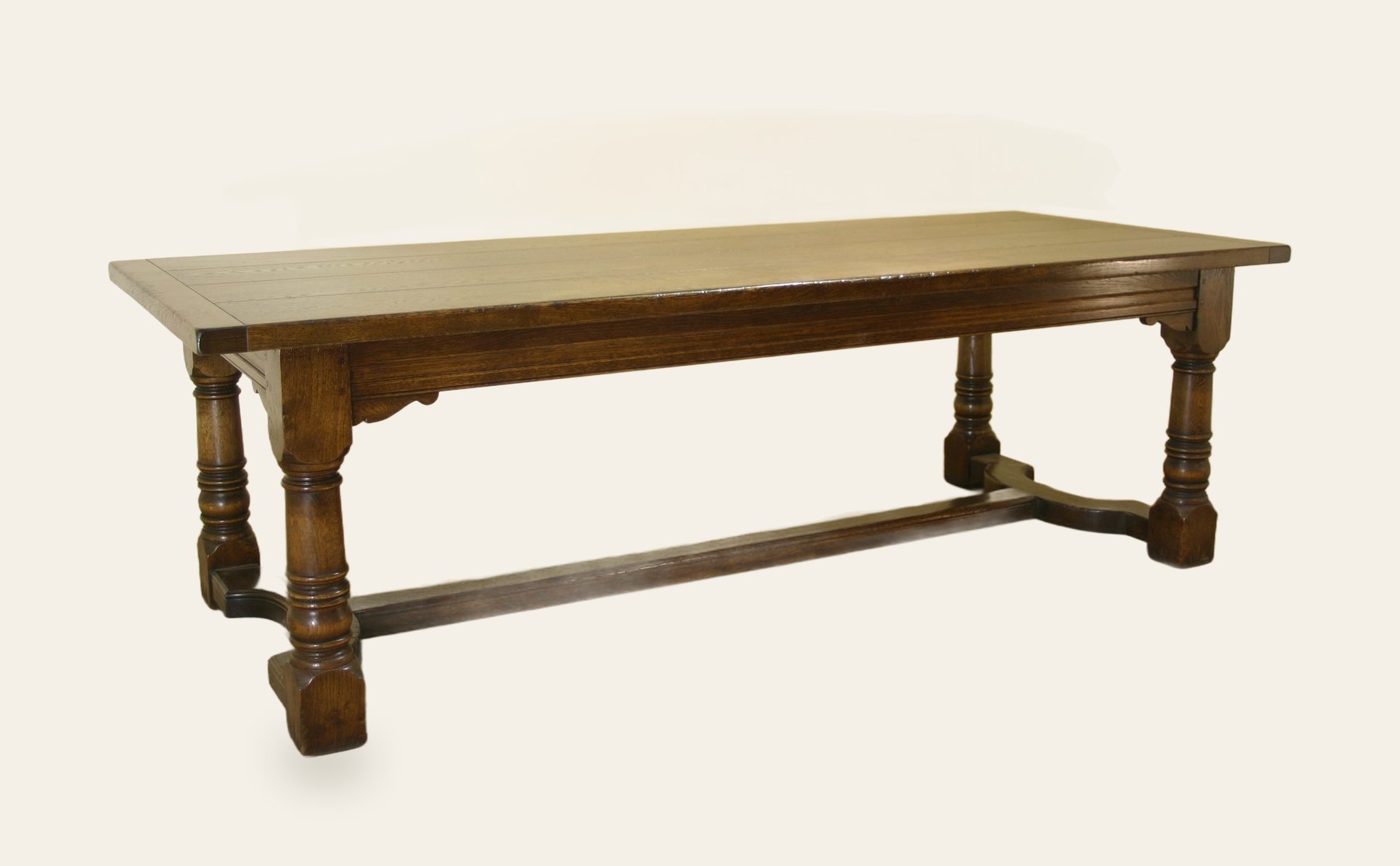
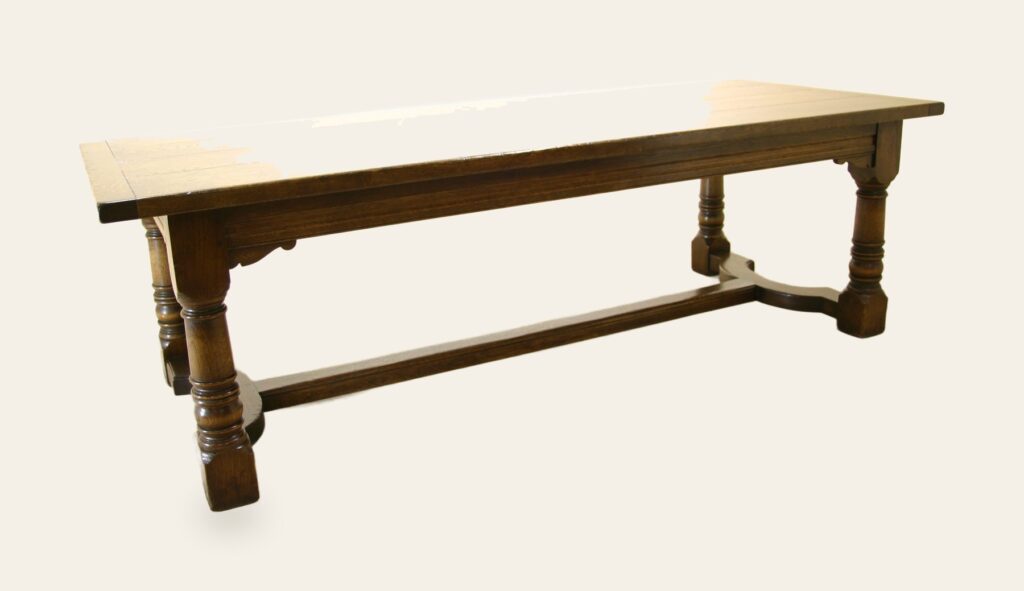
A dining table is usually the largest piece of freestanding furniture in a room. Its proportions, timber and edge detail set the tone for everything around it. The right choice begins with the room rather than the catalogue.
Start with the clearance
Measure the room at its narrowest points, including doors, radiators, fireplaces and circulation routes. Allow room for chairs to be pulled back comfortably. If people need to pass behind seated diners, allow more space than a room used only for occasional meals.
Decide how many people it must seat
Think about everyday use and the occasions the table needs to accommodate. A table that is comfortable for six may be extended for larger gatherings, while a fixed top may give a quieter, more architectural presence.
Our dining tables are made to your size, including refectory, farmhouse, drawleaf, gateleg, pedestal and extending forms. The catalogue gives you the starting proportions; the final dimensions are agreed for your room.
Choose the form before the finish
Long rectangular tables suit formal rooms and larger spaces. Round and oval tables encourage conversation and soften a room with strong architectural lines. Drawleaf and gateleg designs are useful where flexibility matters.
Choose timber and finish in the room
Oak gives a strong, open grain; cherry brings warmth; mahogany is deep and formal; walnut is rich and expressive. A finish changes the timber considerably, so photographs are only a guide. Request timber and finish samples and look at them in daylight and lamplight.
Allow for the details
Leg shape, apron, top thickness, edge profile and the relationship between the chairs and the table matter as much as the overall length. These are the decisions that turn a standard starting point into a piece that belongs to the house.
Talk to the workshop
Send us the room dimensions, a photograph and the number of people you would like to seat. We will help you work out a sensible starting point and quote against a proper specification. Enquire about a dining table.