 Skip to content
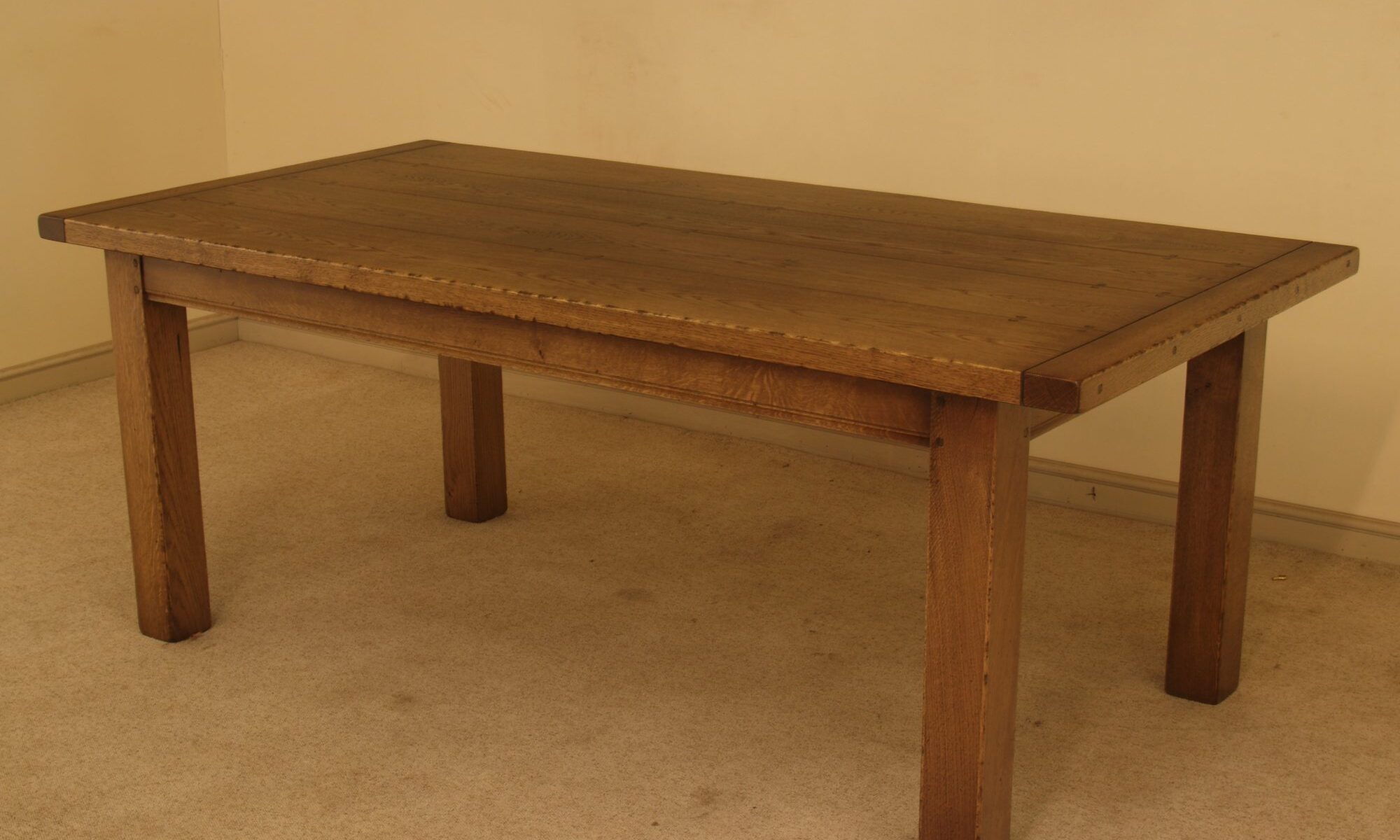
Oakamoor is plain on purpose. There is very little decoration on any piece in the range, because the decoration is the timber. Everything else is there to give the wood room to be looked at.
On this page
That sounds simple, and it is not. Plain furniture has nowhere to hide. The proportions have to be right, the boards have to be chosen and matched properly, and the joints have to be clean, because there is no moulding running past to distract the eye.
Every piece is made to order in our Suffolk workshop. Standard designs are normally twelve weeks from order to delivery, and when the workshop is busy that can run to fifteen or sixteen. A genuine one-off usually adds around four weeks. Your date is confirmed when you order.
Note on spelling: the range is Oakamoor. Some of our photograph filenames read “Oakamore”. That is a typo in the filename, not a second range.
The details that define it
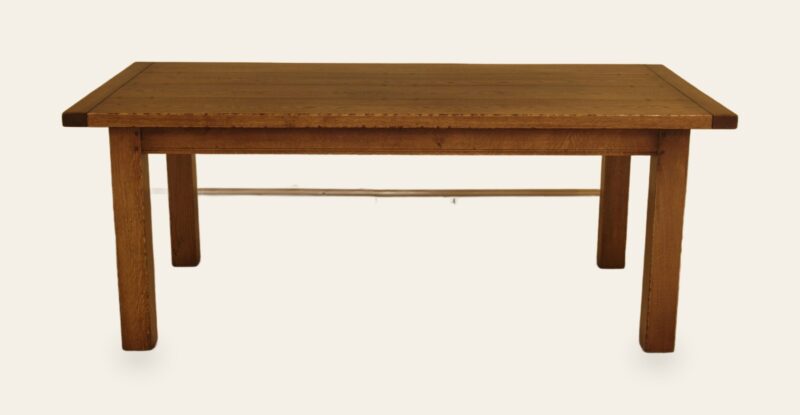
Strong, substantial legs with a small bevel to the inside edge. The legs carry real section. The single bevel worked along the inside arris takes the heaviness off without adding ornament, and it is the detail people notice second, after the timber.
A simple historic frieze framing the space between the legs. The frieze is the rail that runs between the leg tops. On Oakamoor it is deep and quiet, and it frames the void under the table rather than decorating it.
Generous width in the front frame pieces. The stiles and rails on the front of a carcass piece are made wider than they strictly need to be. That is deliberate: it gives you continuous surfaces of oak to look at, and shows the patternation of the grain instead of chopping it into narrow strips.
A traditional edge profile to the top with a simple moulding below. One worked edge on the top, one small moulding underneath it, and nothing else.
Solid brass swan neck handles. The swan neck is the curved brass drop handle that hangs from two backplates. On Oakamoor it is the only real ornament on a drawer front. Every term here is defined on the construction glossary.
What the range covers
The Oakamoor pieces are:
| Piece | Notes |
|---|---|
| Oakamoor drawleaf table | Draw-leaves pull out from under the top at each end |
| Oakamoor fixed top table | The same design without leaves |
| Oakamoor three-drawer dresser base | Used as a base, a sideboard or a server |
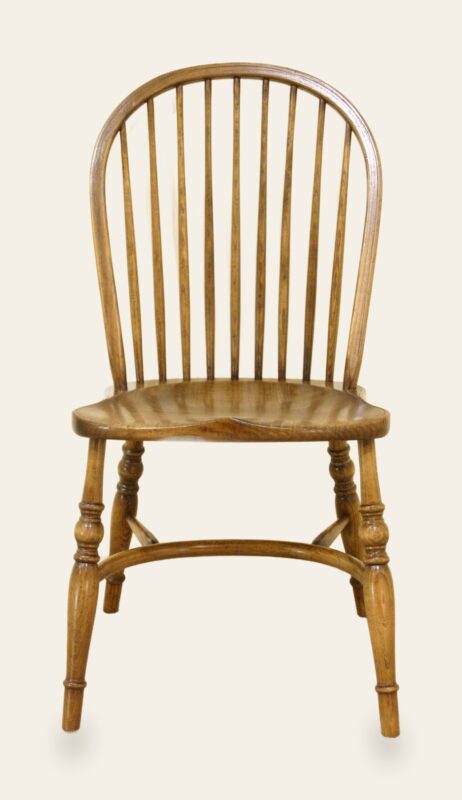
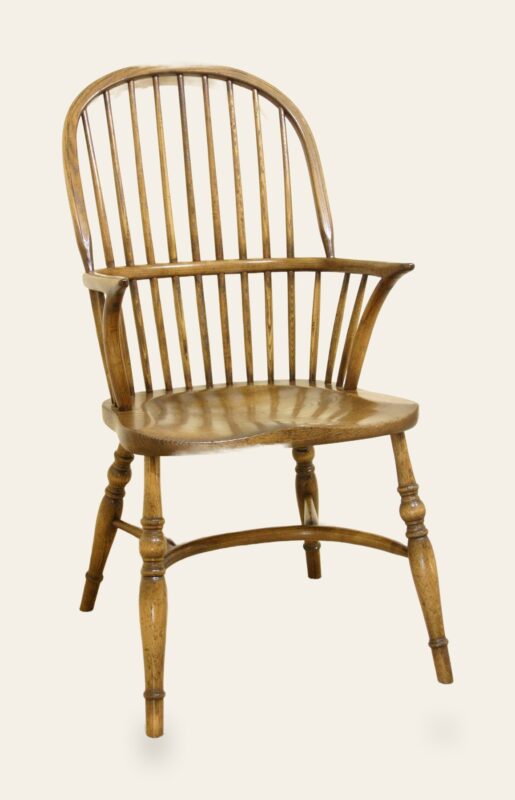
| Oakamoor stick back chair | The Henbury pattern is the chair usually paired with the range |
Related type pages: dining tables, drawleaf tables, dresser bases, sideboards and servers, chairs and Windsor chairs.
Timbers
Oakamoor is priced, like every catalogue piece, in the four standard timbers: oak, cherry, mahogany and walnut.
In practice most Oakamoor goes out in oak, and the range was drawn for it. If you want more movement in the grain, character oak carries an additional ten per cent on tables. Pippy oak is available for tops in light, medium and heavy grades. Oak selected for medullary ray, and clean timber with no knots at all, are both priced on application.
Cherry, mahogany and walnut are all available and all look quite different in this range, because with so little moulding the timber choice is the design choice. More on our timbers, and it is worth ordering samples before you commit.
Make it yours
The usual changes clients ask for:
- Size. Length, width and height to your room and your chairs. Table tops are made to the millimetre.
- Leaves. Fixed top, or draw-leaves at one or both ends.
- Top thickness. A heavier top changes the character of the whole table.
- Leg section. Heavier or lighter than standard, with or without the bevel.
- Drawer count and layout on the dresser base.
- Handles. Solid brass swan neck, brass knobs or turned wooden knobs.
- Finish. Polished, painted, limed, sand-blasted, rub-through paint or natural. Colour matching to a sample is available on application.
If you want an Oakamoor table with a detail borrowed from another range, or a piece the range does not yet include, that is a straightforward commission. Read how commissioning works.
Questions about Oakamoor
Is Oakamoor only made in oak?
No. It is priced in oak, cherry, mahogany and walnut like everything else in the catalogue. Oak is the most commonly specified because the range was drawn around the way oak looks in wide sections, but the others are all available.
What is a draw-leaf table?
A draw-leaf table stores its extension leaves under the main top. You pull a leaf out from the end and the top drops down level with it. Nothing is stored elsewhere, and the table extends in seconds.
Will Oakamoor sit with furniture I already own?
Usually, because it is plain. Where it needs to sit precisely with an existing piece, we can match colour and adjust proportion. We can match furniture that is 100 years old to new reproduction purchases made the year before. See matching antique furniture.
How long will it take?
Standard designs are normally twelve weeks from order to delivery, and when the workshop is busy that can run to fifteen or sixteen. A genuine one-off usually adds around four weeks. Your date is confirmed when you order.